⚡ Key Takeaways
- The creatures in ‘The Cave’ are actually evolved humans mutated by a prehistoric parasite.
- Legendary creature designer Patrick Tatopoulos blended practical suits with limited CGI for a visceral feel.
- The film utilized a massive 750,000-gallon water tank to film its claustrophobic underwater sequences.
- Real-life cave divers served as consultants to ensure the technical gear and ‘cave sickness’ were portrayed accurately.
- The film’s ending suggests a worldwide infection, positioning it as an underrated prequel to a global apocalypse.
Movie Monsters often rely on jumpscares and loud noises to get a reaction out of you, but the 2005 film The Cave built something much more insidious. You might remember the mid-2000s as a time dominated by slasher reboots and J-horror remakes, yet this subterranean thriller attempted something unique. It traded the slasher’s mask for a biological nightmare that turned the human body against itself.
The story follows a group of elite divers who become trapped in a Romanian cave system while investigating a 13th-century abbey. What they find isn’t just a physical barrier to their escape, but an ecological niche where evolution has taken a terrifying turn. These Movie Monsters are not just mindless predators; they are a warning of what happens when the human form is exposed to an alien environment for millennia.
While critics at the time were lukewarm, modern horror fans are rediscovering the film’s technical prowess. From the intricate creature designs to the genuine tension of underwater exploration, it stands as a high-water mark for mid-budget creature features. Let’s peel back the layers of this underrated gem and see why its beasts still haunt our nightmares.
Movie Monsters Evolution and The Cave
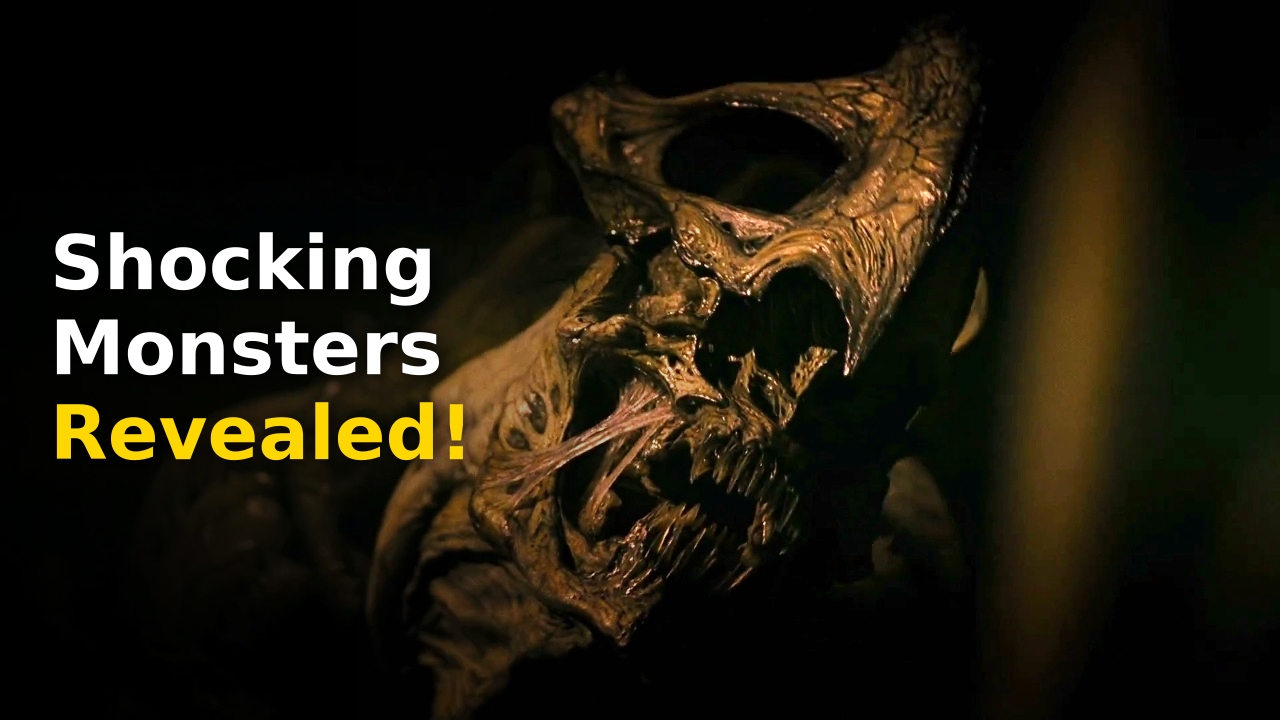
The genius of the creatures in The Cave lies in their biological plausibility. Most horror films introduce a monster with no origin, but director Bruce Hunt and designer Patrick Tatopoulos wanted something that felt earned. The creatures began as humans—13th-century explorers—who became infected by a parasitic fungus. Over centuries, this parasite rewrote their DNA, granting them wings, echolocation, and a predatory instinct.
This evolutionary path is what sets these beasts apart from other Movie Monsters of the era. They aren’t magical; they are the result of extreme adaptation. The transition from human to winged beast is shown through the character of Jack, played by Cole Hauser. We watch as his senses sharpen and his skin changes, providing a front-row seat to the horrific transformation that created the cave’s apex predators.

The production team invested heavily in practical effects to bring these nightmares to life. In an era where many films were moving toward full CGI, The Cave used complex animatronics and suit performers. This physical presence on set allowed the actors, including Lena Headey, to react to something tangible. You can feel the weight of the creatures in every scene, a quality often lost in modern digital-heavy productions.
By the numbers, the creature team spent over six months developing the various stages of the mutation. They studied bats, deep-sea fish, and human anatomy to create a hybrid that looked functional. This dedication to realism is why the film’s visuals have aged remarkably well compared to its contemporaries. The monsters feel like they belong in those damp, dark crevices, waiting for their next meal to swim by.
Expert Take: The Biology of Fear
From an evolutionary biology perspective, the monsters in The Cave represent a concept known as ‘convergent evolution.’ In the isolation of the Romanian cave system, the human body adapted traits similar to those found in real-world cave dwellers, such as the Olm or various bat species. The inclusion of a parasitic catalyst allows for an accelerated timeframe, making the horror both biological and psychological. This level of detail in world-building is rare for a mid-2000s action-horror hybrid.
Comparing Underworld Movie Monsters
To understand why these creatures are so effective, we must compare them to other iconic subterranean threats. The 2000s were a golden age for ‘cave horror,’ most notably with the release of The Descent just months after The Cave. While The Descent focused on humanoid ‘crawlers,’ The Cave went for a more monstrous, winged approach that expanded the scale of the threat.
The following table highlights the differences between some of the most famous underground entities in cinema. Note how The Cave prioritizes biological complexity and aerial mobility, which adds a layer of vertical danger to the already cramped environment. This diversity in movement makes the suspense much harder to manage for the protagonists.
| Film Name | Monster Type | Primary Ability | Effect Method |
|---|---|---|---|
| The Cave | Mutated Parasitic Hybrid | Flight & Echolocation | Practical/Animatronic |
| The Descent | Humanoid Crawlers | Stealth & Climbing | Prosthetic Makeup |
| Pitch Black | Bioraptors | Light Sensitivity | CGI/Practical |
| Tremors | Graboids | Vibration Sensing | Puppetry |
By using a mix of flight and aquatic prowess, the creatures in The Cave dominate every square inch of their habitat. This creates a sense of hopelessness for the characters, as there is no ‘safe’ place to rest. Whether they are swimming through narrow tunnels or climbing rocky outcroppings, the Movie Monsters are always one step ahead. It is this relentless pressure that drives the film’s second half into high gear.
The technical execution of the water scenes was particularly challenging. According to production notes from IMDb, the cast had to undergo rigorous SCUBA training. This realism translates to the screen, where the physical struggle of the divers matches the terrifying agility of the creatures. It’s a masterclass in using environment as a weapon against the audience’s comfort.
Production History and Technical Mastery
Creating a world where Movie Monsters can thrive requires more than just a good script; it requires an immersive environment. The Cave was filmed primarily in Romania, utilizing the real history of the region to ground its fictional narrative. The local legends of demons living beneath the mountains were used to add a layer of folklore to the scientific horror. This blend of old-world myth and modern biology gives the film a unique texture.
The production design team built one of the largest cave sets in movie history. They utilized massive tanks and complex lighting rigs to simulate the total darkness of the deep earth. You can see the attention to detail in the way the light interacts with the water and the slick, wet skin of the monsters. This wasn’t a cheap studio shoot; it was a grueling physical production that pushed the limits of the cast and crew.
Behind the camera, Bruce Hunt brought his experience as a second-unit director on The Matrix to the table. He understood how to frame action in tight spaces, ensuring that even when the screen is chaotic, the geography of the scene remains clear. This is vital in a film where the characters are often upside down or underwater. Without this clarity, the impact of the Movie Monsters would have been lost in a blur of bubbles and darkness.
Interestingly, the film also served as a breakout role for several actors who would go on to massive success. Before she was Cersei Lannister, Lena Headey was battling prehistoric parasites in the dark. Her performance, along with those of Piper Perabo and Daniel Dae Kim, brings a level of gravitas to the story that elevates it above standard B-movie fare. They treat the threat with the seriousness it deserves, making the audience believe in the impossible.
By The Numbers: The Scale of The Cave
The film had a reported budget of roughly $30 million, a significant sum for a creature feature in 2005. To ensure authenticity, the crew utilized over 100 sets and locations across Romania and Mexico. The ‘Abbey’ seen in the beginning was a meticulously crafted set that had to look both ancient and structurally sound. Furthermore, the creature shop employed over 40 artists to maintain and operate the various monster rigs during the 12-week shoot. These figures demonstrate the high level of commitment to practical filmmaking that defines the project.
The Lasting Legacy of Subterranean Horror
Why do we keep coming back to Movie Monsters that live in the dark? It’s a primal fear—the idea that something is watching us from a place where we are naturally disadvantaged. The Cave taps into this fear by removing our most vital senses. In the deep, you can’t see, you can’t hear clearly, and you certainly can’t run. You are at the mercy of things that have spent millions of years perfecting the art of the kill.
The ending of the film remains one of its most talked-about elements. Without spoiling too much, the realization that the ‘monster’ is not just a physical beast but a biological condition changes the stakes entirely. It suggests that the horror isn’t confined to the cave; it can be carried out into the world. This lingering sense of dread is what transforms a simple monster movie into a haunting psychological experience.
In the years since its release, the film has found a dedicated following among horror completionists. It represents a specific era of filmmaking where practical effects were at their peak, just before CGI became the default solution for every creative problem. The creatures in The Cave have a weight and a texture that digital pixels simply can’t replicate. They feel like living, breathing organisms that could actually exist in the unexplored corners of our planet.
As we look forward to the future of the genre, it’s worth looking back at titles like this. They remind us that the best Movie Monsters aren’t just there to scare us—they are there to challenge our understanding of the world around us. Whether it’s through the lens of evolution or the lens of folklore, The Cave provides a masterclass in creature design that deserves a spot in the horror hall of fame.
Frequently Asked Questions
Are the monsters in The Cave actually human?
Yes, the lore of the film establishes that the creatures are the descendants of a group of 13th-century explorers who became trapped in the cave system. A prehistoric parasite infected them, causing a rapid evolutionary mutation that turned them into the winged, blind predators seen in the movie.
Did The Cave use real cave divers for the stunts?
While the lead actors performed many of their own stunts after extensive training, the production employed professional cave divers and technical consultants. This was done to ensure that the diving procedures, equipment, and the portrayal of ‘rapture of the deep’ (nitrogen narcosis) were as realistic as possible.
What was the budget for the creatures in The Cave?
While an exact figure for just the monsters is not public, the film’s overall $30 million budget allowed for a massive investment in Patrick Tatopoulos’s creature shop. This included multiple full-sized animatronic suits, remote-controlled puppets, and digital enhancements to create the fluid movement of the beasts.
Is there a sequel to the 2005 movie The Cave?
Despite the cliffhanger ending that suggests the parasite has reached the surface world, a direct sequel has never been produced. However, the film remains a cult favorite and is often cited alongside ‘The Descent’ as a definitive example of mid-2000s subterranean horror.
Final Thoughts on Movie Monsters
The reality of cinema is that some gems are buried deeper than others. While it might not have the name recognition of Alien or Predator, the 2005 film The Cave offers some of the most meticulously designed Movie Monsters in modern history. The combination of biological realism, high-stakes claustrophobia, and a stellar cast makes it a must-watch for any serious fan of the genre.
You owe it to yourself to revisit this claustrophobic nightmare. In a world where horror is often sanitized for broad audiences, The Cave remains unapologetically dark and physically intense. It serves as a reminder that the most terrifying things aren’t always from outer space—sometimes, they’ve been right beneath our feet all along. Don’t let these underrated Movie Monsters stay hidden in the shadows of history any longer.
More Like This
For more updates, check out our latest entertainment and sports news.