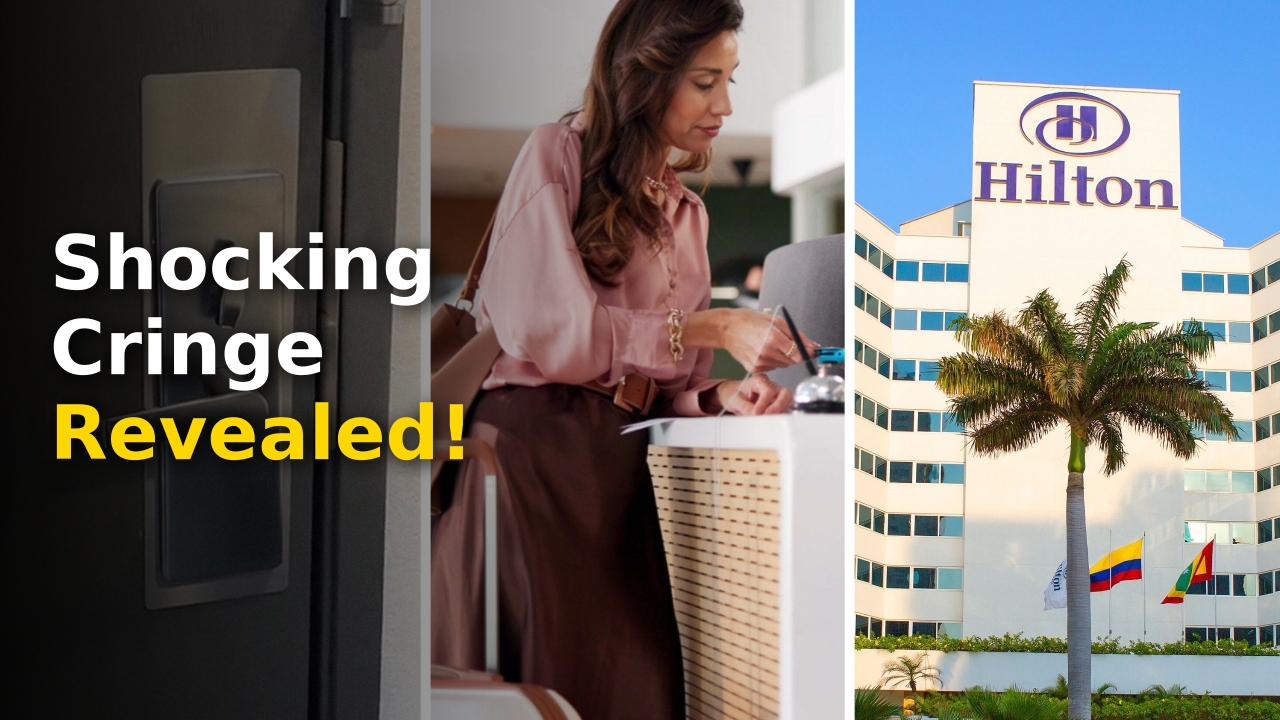
Key Takeaways
| Krista Diamond’s TikTok review of a Moab Hilton went viral for labeling its climbing theme as ‘Millennial Cringe’. |
| The hotel features ‘extreme’ decor including a portaledge wall hanging, a cooler-style fridge, and carabiner toilet paper holders. |
| Internet commenters were divided, with many defending the hotel’s commitment to its local Moab, Utah identity. |
| The controversy highlights a growing generational divide in hospitality design and aesthetic preferences. |
You walk into your room expecting a standard upscale stay, but instead, you find yourself trapped inside a **Millennial Cringe Hotel** that feels more like a Pinterest board gone rogue than a professional lodging establishment. For Las Vegas writer Krista Diamond, this was the startling reality of her recent stop in Moab, Utah, during a promotional tour for her new book, “Close Relationships With Strangers.” What was supposed to be a routine night at a Hilton property turned into a viral masterclass in thematic overreach, sparking a massive debate across social media about where ‘immersive branding’ ends and ‘second-hand embarrassment’ begins.
The **Millennial Cringe Hotel** in question—identified as a rock-climbing-themed Slackline hotel—apparently decided that subtle nods to the local landscape simply weren’t enough. From the moment Diamond checked in, she was bombarded with an aesthetic that leaned so heavily into the “outdoorsy” persona that it felt performative. This isn’t just about a few pictures of mountains on the wall; it is about a total immersion into a lifestyle that many feel is being packaged and sold back to a specific generation with less-than-subtle corporate enthusiasm. You can read more about viral travel trends at Bright Celebrity as we track the latest in influencer culture.
As Diamond moved through the room, the details grew increasingly “extreme,” a word she used repeatedly to describe the experience. The property, located in the heart of Moab, Utah, seems to have targeted the ‘weekend warrior’ demographic with such precision that it crossed the line into caricature. Whether it was the wooden doorknob signs featuring jackrabbits or the functional rock-climbing hangboards installed above the doors, the hotel left no stone unturned in its quest to be the ultimate themed destination.
The Viral Outbreak of the Millennial Cringe Hotel
The story gained traction when Diamond posted a now-deleted TikTok video under her handle @kristadiamondwrites. In the clip, she showcased the various design choices that led her to ask the stinging question: “Hilton dared to ask, ‘What if millennial cringe was a hotel?’” The video quickly racked up over 127,000 views, proving that the internet has a visceral reaction to the specific brand of earnestness often associated with the 1981–1996 birth cohort. This **Millennial Cringe Hotel** became a lightning rod for discussions on whether corporate hospitality has lost its way in pursuit of ‘Instagrammability’.
Diamond’s tour of the room highlighted several key features that triggered her critique. One of the most notable was the “do not disturb” sign. Eschewing the standard plastic or heavy paper card, this hotel utilized a thin wood panel topped with a jackrabbit. While one side offered the usual privacy request, the other side proudly proclaimed the guest was “out on an adventure.” This type of forced whimsy is a hallmark of what critics call ‘millennial aesthetic’—a desperate need to frame every mundane action as part of a larger, more adventurous narrative.
However, the critique didn’t stop at the signage. The room’s refrigerator was designed to mimic a high-end camping cooler, and the toilet paper was secured to the wall via a carabiner. These functional items, reimagined as outdoor gear, represent a shift in how hotels approach local identity. Instead of reflecting the desert’s beauty through colors or textures, the **Millennial Cringe Hotel** chose to literalize the experience, turning a hotel room into a simulated campsite for those who prefer high-thread-count sheets over sleeping bags. For more on how celebrities and influencers are reacting to these trends, check out Bright Celebrity for the latest updates.
Expert Take: The Psychology of Thematic Saturation
Design experts suggest that this “saturation” approach to hospitality is a response to the ‘experience economy.’ According to recent hospitality trend reports, younger travelers are no longer satisfied with sterile, cookie-cutter rooms; they want a sense of place. However, the **Millennial Cringe Hotel** represents a potential misfire in this strategy. When a brand like Hilton tries too hard to be “on-theme,” it can feel disingenuous to the very people it aims to attract. There is a fine line between honoring a location like Moab and commodifying it through kitsch.
Analyzing the Design Why Moab Hilton Went Extreme
To understand why this **Millennial Cringe Hotel** exists, one must look at the competitive landscape of Moab. As a gateway to Arches and Canyonlands National Parks, the town is a mecca for outdoor enthusiasts. Hotels are in a constant arms race to prove their “authenticity.” In this case, the designer appeared to have taken the brief of “rock climbing theme” and pushed it to its absolute limit. This led to the inclusion of a portaledge—a hanging tent system used by rock climbers on long routes—mounted directly on the wall opposite the bed.
Diamond jokingly questioned the liability of such a feature, asking if she were to get drunk and attempt to climb into it, would the responsibility lie with her or the hotel? This highlights a major criticism of the **Millennial Cringe Hotel**: the inclusion of decor that mimics high-risk activities in a space meant for relaxation. The presence of a hangboard—a tool used for training finger strength—above the bathroom door further emphasizes this “always on” adventure persona that can feel exhausting to a guest who just wants a quiet night in.
The internet’s reaction to Diamond’s video was surprisingly polarized. While many agreed with her assessment, a significant portion of the audience accused her of being a “buzzkill.” One commenter, @midwest_ruca, noted that she seemed like the friend who “always brings down the mood.” This divide points to a larger cultural tension. Is it “cringe” to enjoy a well-executed theme, or is the theme itself an embarrassing attempt by a multi-billion dollar corporation to appear “authentic” and “local”? The debate continues to rage on platforms like TikTok and X.
By The Numbers: The Rise of Themed Hospitality
| Generation | Preference for Themed Stays | Willingness to Pay Premium | Primary Value Driver |
|---|---|---|---|
| Gen Z | 68% | 15% | Aesthetic/TikTokability |
| Millennials | 54% | 22% | Experience/Storytelling |
| Gen X | 32% | 10% | Comfort/Amenities |
As seen in the data, millennials are actually more willing to pay a premium for “experience-driven” stays than other generations, which explains why a **Millennial Cringe Hotel** exists in the first place. Brands are following the money, even if it leads them into territories that some find embarrassing. The intersection of luxury and “dirtbag” culture (a term climbers use for their nomadic lifestyle) creates a strange cognitive dissonance that this Moab Hilton personifies perfectly.
The Generational Divide Millennials vs Gen Z Aesthetics
The term “cringe” has become a powerful weapon in the generational wars between Millennials and Gen Z. While Millennials were raised on a diet of earnestness and “hope-core,” Gen Z often favors irony and a more detached, minimalist aesthetic. When these two worlds collide at a **Millennial Cringe Hotel**, the result is a firestorm of social media discourse. Many Gen Z observers view the “out on an adventure” signs and carabiner decor as try-hard, whereas some Millennials see it as a fun, harmless way to celebrate a hobby.
One commenter, @molebucks, pointed out the unfairness of the “cringe” label, noting that millennials get blamed for everything from sterile monochrome design to unusual themed decor. This highlights a “damned if you do, damned if you don’t” scenario for designers. If a hotel is too plain, it’s boring; if it’s too themed, it’s a **Millennial Cringe Hotel**. This aesthetic tug-of-war is reflective of a larger cultural shift where the middle ground of “standard professional design” is rapidly disappearing in favor of polarizing, niche identities.
Interestingly, Forbes reports that millennials remain the most optimistic generation despite the roasting they receive online. This optimism might be what fuels the creation of such vibrant, if controversial, spaces. While a Gen X traveler might look at a portaledge on a wall and see a lawsuit, a Millennial traveler might see an opportunity for a unique photo or a reminder of their last hiking trip. This inherent positivity makes the generation a soft target for parody, but it also makes them a resilient consumer base. Keep up with how these cultural shifts affect the world of fame and lifestyle at Bright Celebrity.
Cultural Impact Why Everything is Labeled Cringe Now
The rise of the **Millennial Cringe Hotel** isn’t an isolated event; it’s part of a broader trend of “cringe-watching” and the public dissection of generational tropes. In an era where every moment of a vacation can be documented and shared, the physical environment becomes a co-star in the traveler’s narrative. When the environment tries too hard to dictate that narrative—as seen in the Moab Hilton—it triggers a defensive reaction in the viewer. We don’t want to be told we are having an “adventure”; we want the agency to decide that for ourselves.
Furthermore, the hygiene concerns raised by TikToker Garett (@hisuiangarrett) bring a practical dimension to the debate. He pointed out that the carabiner-style toilet paper holder used “very porous material that can’t be easily cleaned.” This suggests that in the rush to create a **Millennial Cringe Hotel**, basic hospitality standards like sanitation might be compromised for the sake of the “vibe.” This is a common pitfall in themed design: when form doesn’t just follow function but actively impedes it.
Ultimately, the Moab Hilton story serves as a cautionary tale for major brands. While niche marketing is essential in a crowded marketplace, there is a risk of alienating the very audience you seek to attract if the execution feels like a corporate board room’s idea of “cool.” The **Millennial Cringe Hotel** may be embarrassing to some, but to others, it’s just a highly committed version of the themed hotels we’ve seen for decades, from the kitschy honeymoon suites of the Poconos to the immersive worlds of Disney. The only difference is that now, we have a name for the feeling it evokes.
People Also Ask
What happened with the Millennial Cringe Hotel in Utah today?
A Las Vegas writer named Krista Diamond went viral on TikTok after reviewing a Moab Hilton that featured an ‘extreme’ rock-climbing theme, which she labeled as ‘millennial cringe’. The video sparked a wide debate over the ethics and aesthetics of themed hotel rooms in the modern age.
Why is the Moab Hilton trending right now?
The hotel is trending because of its unusual decor choices, including a portaledge hanging on the wall, a cooler-style refrigerator, and carabiners used to hold toilet paper. Critics and fans are debating whether the design is a clever local tribute or an embarrassing corporate attempt to appeal to millennials.
How does the Millennial Cringe Hotel affect Hilton’s brand image?
While some view it as ‘cringe’, the viral attention has highlighted Hilton’s commitment to creating unique, localized experiences under its newer boutique brands. It demonstrates a shift in strategy toward the experience economy, even if it occasionally misses the mark for certain demographics.
Is the Utah hotel really considered ‘cringe’ by everyone?
No, many social media users defended the hotel, arguing that it stayed true to the theme of its location in Moab. The controversy largely stems from a generational divide in how ‘earnest’ or ‘themed’ designs are perceived by Millennials versus Gen Z.
Final Thoughts on the Millennial Cringe Hotel Controversy
Whether you find the Moab property to be a charming tribute to the desert or a quintessential **Millennial Cringe Hotel**, there is no denying its impact on the cultural conversation. It has forced us to look at the ways in which our hobbies and lifestyles are packaged for consumption. For Hilton, the viral moment is a double-edged sword—massive visibility paired with a label that many brands spend millions trying to avoid. As travel continues to evolve, the line between authentic experience and manufactured “cringe” will only become harder to navigate.
As we move forward, the lessons from the **Millennial Cringe Hotel** will likely influence the next wave of hospitality design. We may see a return to more subtle, sophisticated nods to local culture rather than the literal interpretations seen in Moab. For now, Krista Diamond’s book tour continues, leaving behind a legacy of carabiners, portaledges, and one of the most talked-about hotel rooms in the history of TikTok travel reviews.
More Like This
For more updates, check out our latest entertainment and sports news.