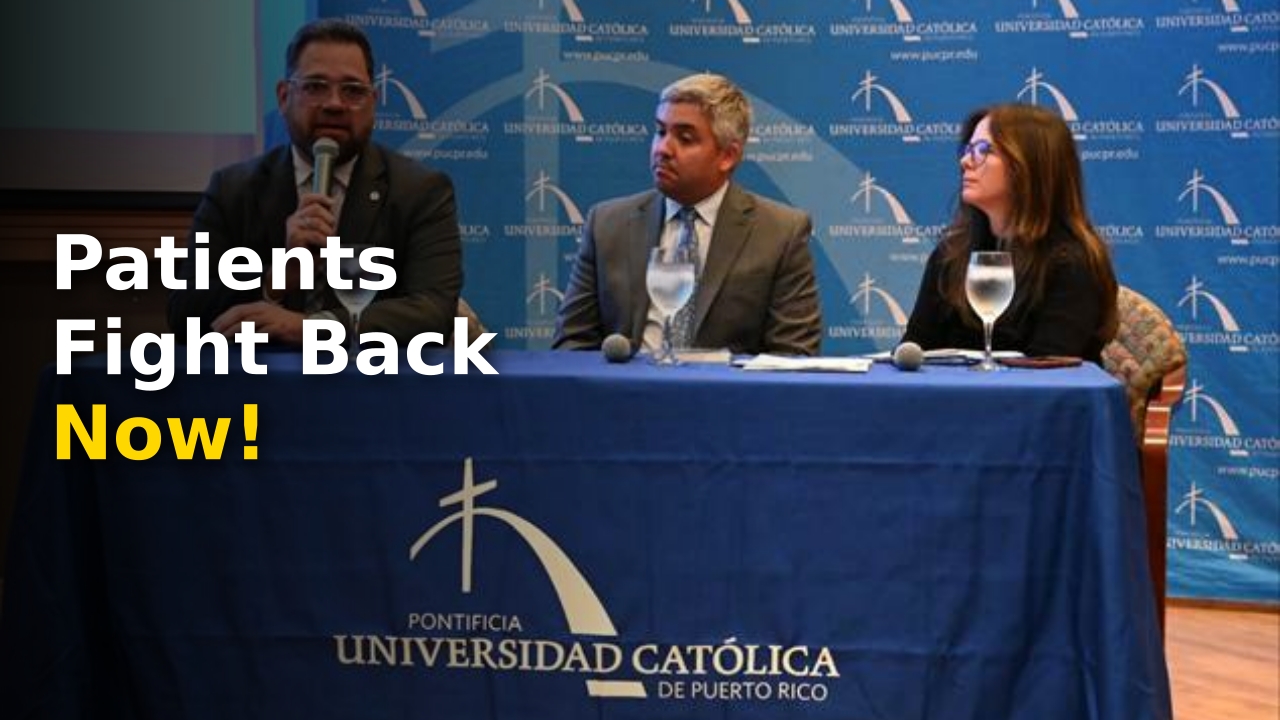
Imagine you are facing a life-threatening diagnosis and your insurance company tells you that the treatment you need is unavailable simply because you live on an island. Medical Access in Puerto Rico has reached a breaking point, sparking a high-stakes legal confrontation at the Supreme Court level that could change everything for patients. You deserve to know why the Pontifical Catholic University of Puerto Rico (PUCPR) and the American Cancer Society are taking a stand against insurance giants today.
This isn’t just about paperwork or fine print; it’s a battle for the lives of thousands of Puerto Ricans who feel abandoned by a crumbling healthcare system. The legal clinic at the PUCPR School of Law, through its Law, Justice, and Health Project, is demanding that insurers stop hiding behind geographical barriers. They argue that if a specialist isn’t reachable within a reasonable time, the insurer must pay for care elsewhere, including the mainland United States.
The controversy centers on the cases of José Julián González López and the Insurance Commissioner v. Triple-S Salud. These consolidated cases represent a massive shift in how we define emergency care and provider availability. If you have ever waited six months for a specialist, you know that ‘availability’ on paper is very different from Medical Access in the real world.
Fighting for Medical Access
The core of this legal challenge is the ‘amicus curiae’ brief presented to the Supreme Court of Puerto Rico. This document isn’t just a legal formality; it is a desperate plea for Medical Access that recognizes the unique struggles of island residents. Led by Lcdo. José A. Frontera Agenjo and Dra. Nylca Muñoz, the team is pushing for a ‘layperson’ standard in medical emergencies.
The Layperson Standard
- Courts should judge an emergency based on what a ‘reasonably prudent’ person with average health knowledge would think.
- Insurers often use hindsight to deny claims, but the law should protect those acting in good faith during a crisis.
- This standard prevents patients from hesitating to seek care due to fear of massive medical debt.
When you feel a sharp pain or a lump that wasn’t there yesterday, you shouldn’t need a medical degree to decide if you need immediate help. The brief argues that the current system puts an unfair burden on the patient to prove their emergency was ‘traditional.’ For a cancer patient, a delay in treatment is an emergency, even if it doesn’t look like a car accident or a heart attack. This expanded view is essential for maintaining Medical Access in a territory with dwindling resources.
Furthermore, the legal team highlights that insurance networks are often ‘phantom networks.’ These lists include doctors who are no longer practicing, have moved away, or aren’t taking new patients. Real Medical Access means being able to actually sit in a doctor’s chair, not just seeing a name on a website. Advocacy groups are becoming the new celebrities of justice, and you can see more about influential figures at Bright Celebrity as they shape public policy.

Cancer Patients in Crisis
For those fighting cancer, time is the most valuable currency, and currently, the system is bankrupt. The American Cancer Society of Puerto Rico joined this legal fight because they see the devastating impact of delays every single day. When a patient is diagnosed with a rare form of cancer, there may only be one or two specialists on the entire island capable of treating them.
The Reality of Wait Times
- Patients often wait months for a single oncology appointment, allowing the disease to progress to later stages.
- Geography plays a huge role; if you live in a rural area, traveling to San Juan for every treatment is a massive barrier.
- Insurers often refuse to reimburse for treatments in Florida or New York, even when those facilities have the necessary technology.
Dra. Nylca Muñoz pointed out that a diagnosis for a rare cancer could literally be a death sentence if the patient cannot get an off-island referral. The brief emphasizes that Medical Access must include the right to a second opinion. Without the ability to consult other experts, patients are trapped in a silo of limited options that may not be the gold standard of care. You can find more data on global health standards at Reuters Health.
The emotional toll on families is immeasurable as they navigate these insurance hurdles. Imagine being told there is a cure, but your insurance company won’t let you travel to get it. This is why the PUCPR and the American Cancer Society are insisting that the Supreme Court intervene. They believe that Medical Access is a fundamental right that should not be dictated by the profit margins of insurance companies.
The Specialist Shortage
Puerto Rico is facing a ‘brain drain’ of medical professionals that is nothing short of catastrophic. A study published in 2024 revealed a terrifying projection: by the year 2030, the island will see a 55% decrease in medical specialists. This isn’t a distant problem; it is happening right now, and it directly limits your Medical Access.
Why Doctors are Leaving
- Low reimbursement rates from insurance companies make it impossible for specialists to maintain their practices.
- The high cost of medical malpractice insurance in Puerto Rico compared to the mainland.
- Rising operational costs and the lure of better working conditions in the United States.
When 55% of your doctors disappear, the concept of a ‘network’ becomes a joke. The PUCPR legal team argues that courts must take this reality into account. If an insurer claims they have an oncologist in their network, but that doctor has a nine-month waiting list, that is not Medical Access. It is a denial of service disguised as a provider list. The system must adapt to the physical reality of the island’s provider shortage.
Lcdo. Fernando Moreno, dean of the PUCPR School of Law, stated that the judicial analysis must reflect the ‘real experience’ of the patient. We cannot live in a world of legal fictions where a name on a list satisfies a contractual obligation. If the care isn’t timely, it isn’t care. Ensuring Medical Access requires insurers to be flexible and allow for out-of-network or off-island care when the local system fails to meet the urgency of the condition.

Insurer Accountability Data
The following data highlights the growing gap between what insurance companies promise and what patients actually receive. This disparity is the driving force behind the current Supreme Court battle for Medical Access. Understanding these figures helps clarify why the legal intervention by the PUCPR is so critical for the future of healthcare in Puerto Rico.
| Metric | Current Status | 2030 Projection |
|---|---|---|
| Specialist Availability | Decreasing | 55% Reduction |
| Average Wait Time | 3-6 Months | Unattainable |
| Insurance Denials | Increasing | Systemic Crisis |
| Patient Out-of-Pocket | High | Catastrophic |
These numbers represent a systemic failure that cannot be ignored. When insurers are pointed to as the primary reason for the doctor shortage, it creates a cruel cycle. They drive doctors away by making practice difficult, then use the lack of doctors as a reason to deny Medical Access to specialized care. The Supreme Court must decide if this ‘nominal existence’ of a network is legally sufficient or if the law demands more protection for the insured.
Protecting Patient Rights
At the heart of the matter is the right to make informed decisions about your own health. Medical Access is not just about getting a prescription; it is about having the autonomy to seek the best possible care. The PUCPR brief argues that the legislation of Puerto Rico should be interpreted in a way that favors the patient, especially in life-or-death situations like cancer treatment.
Why Public Policy Matters
- Laws are intended to protect the vulnerable, not the powerful insurance conglomerates.
- Policy should encourage insurers to maintain robust networks rather than thin ones.
- The geographic isolation of Puerto Rico should be a reason for more flexibility, not less.
The legal team argues that the ‘unreasonable delay’ in getting an appointment should be treated the same as a service not being available at all. If you need chemotherapy today but the only provider can see you in December, the system has failed. This logic is central to the fight for Medical Access. The courts have the power to hold these companies accountable and ensure that the ‘protection’ people pay for actually exists when they need it most.
By challenging the restrictive interpretations of medical coverage, the PUCPR and the American Cancer Society are standing up for the dignity of every patient. They are rejecting the idea that your zip code should determine your survival rate. This case will set a precedent for how Medical Access is handled for decades to come, potentially forcing insurers to reimburse for off-island care more readily.
Future of Medical Access
The outcome of this Supreme Court case will resonate far beyond the courtrooms of San Juan. It is a defining moment for the future of Medical Access in the Caribbean. If the court rules in favor of the patients, it could trigger a massive wave of insurance reform. This would mean that insurance companies would finally have to put the health of the patient above their bottom line.
We are looking at a situation where the law must catch up with the reality of a shrinking medical workforce. Medical Access in the 21st century must be agile and patient-centered. The ‘persona lega’ standard is a huge step in that direction, acknowledging that medical decisions are often made under extreme stress and without professional guidance. The legal community’s involvement shows that this is a societal issue, not just a medical one.
In conclusion, the fight led by the PUCPR and the American Cancer Society is a beacon of hope for those who feel lost in the healthcare maze. Medical Access is a fundamental pillar of a functioning society. As the Supreme Court deliberates on cases CC-2026-0107 and CC-2026-0110, the eyes of the nation are on Puerto Rico. You can be sure that this battle is only the beginning of a larger movement to reclaim the right to health and justice for all.
The bottom line is that the Medical Access you pay for every month with your premiums must be there when your life depends on it. Whether it is a routine check-up or a specialized cancer treatment, the system must work. Let’s hope the Supreme Court hears the call for change and ensures that no patient is ever left behind due to a technicality or a geographic boundary again. The strength of our healthcare system is measured by how it treats its most vulnerable members, and today, that measure is being tested like never before.
More Like This
For more updates, check out our latest entertainment and sports news.