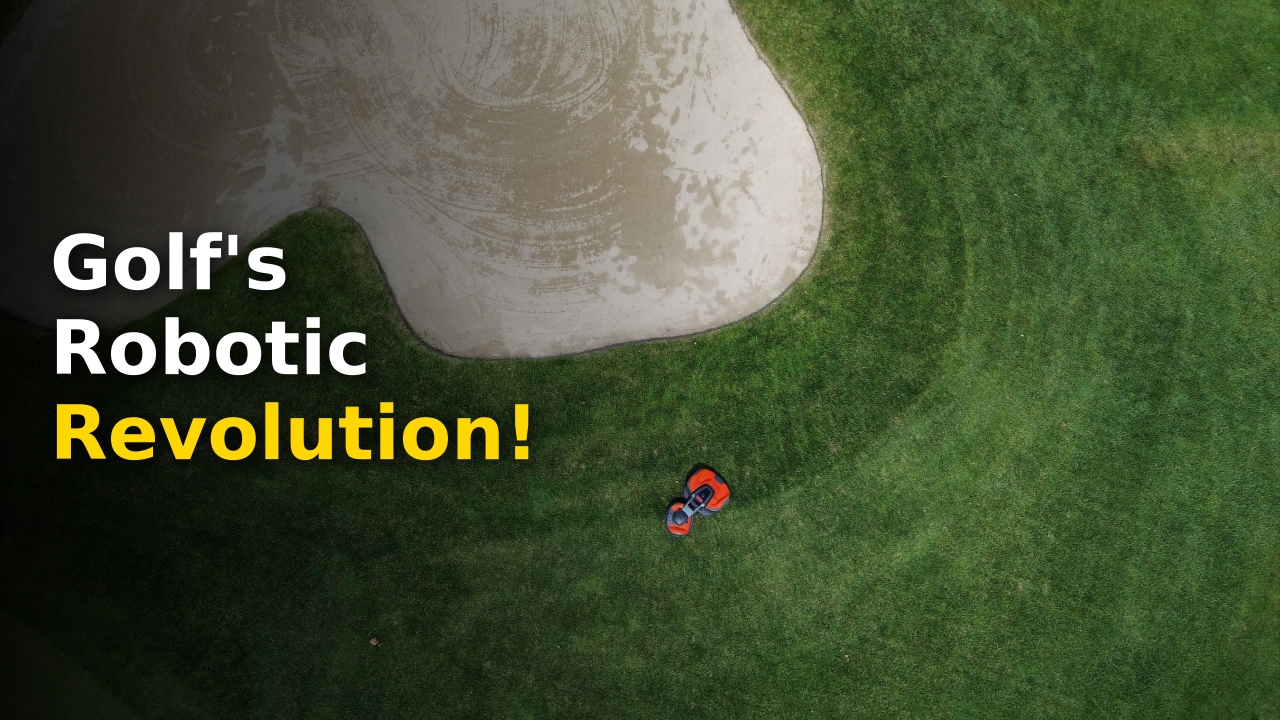
Autonomous Mowing is no longer a sci-fi dream; it is the ground-breaking reality hitting the greens of the 2026 U.S. Senior Women’s Open. Imagine walking the fairways of a championship course and seeing a silent, precise army of robots perfecting the grass under the Michigan sun. You are witnessing a historic shift in how the world’s most prestigious sporting events manage their most valuable asset—the turf.
This isn’t just about cutting grass; it is about absolute precision and the relentless pursuit of perfection. As the Husqvarna fleet prepares to descend upon Barton Hills Country Club, the industry is buzzing with anticipation. You need to understand how this technology is changing the game for players, fans, and superintendents alike.
The partnership between Husqvarna, the United States Golf Association, and local experts is a masterclass in modern innovation. It represents a bold step forward in an industry often tied to tradition. Let’s dive into the mechanics of this robotic revolution and what it means for the future of professional golf.
Autonomous Mowing Evolution
The journey toward Autonomous Mowing began centuries ago, but it has accelerated at a lightning pace over the last decade. Husqvarna Group, founded in the Swedish town of Huskvarna in 1689, has been a pioneer for over three centuries. They didn’t start with robots, but their heritage in engineering laid the groundwork for the Automower revolution. You might be surprised to learn they originally manufactured muskets before moving into sewing machines and, eventually, outdoor power equipment.
By the time 2025 rolled around, Husqvarna reported net sales of SEK 46.6 billion, proving their global dominance. Their commitment to innovation is what led them to the 2026 U.S. Senior Women’s Open. This tournament serves as a high-stakes proving ground for their latest satellite-based navigation systems. Unlike early residential robots that bounced around randomly, these professional units are surgical in their movement.
The Heritage of Innovation
- Founded in 1689 in Sweden.
- Pioneered the first robotic mower in 1995.
- Employs 11,900 people across 40 countries.
- Leading the transition from gas-powered to electric solutions.
The United States Golf Association has always looked for ways to improve course consistency. Traditional mowing can be hit or miss depending on the operator’s skill level and fatigue. Robots do not get tired, and they do not have off-days. They provide a level of uniformity that human-operated machinery struggles to match over long championship weeks.
You are seeing the culmination of decades of research and development in Ann Arbor. The Barton Hills Country Club isn’t just a host; it is a laboratory for the future. By integrating these machines, the club is setting a new standard for every high-end facility in North America. It is a bold statement about where the industry is headed.
Championship Maintenance Standards
Maintaining a course for a USGA event is an ordeal that requires months of preparation. Andrew Christesen, the Golf Course Superintendent at Barton Hills Country Club, has been at the forefront of this transition. He recognized early on that Autonomous Mowing could solve the labor shortages plaguing the industry. Since 2022, his team has been refining the use of these robots to ensure the fairways are tournament-ready.
During the 2026 U.S. Senior Women’s Open, which runs from August 20 through 23, the robots will be in high gear. You will see them maintaining select areas of the course with a level of frequency that was previously impossible. Frequent cutting leads to a denser, healthier turf canopy. This creates a more consistent ball roll, which is exactly what elite players demand during a major championship.

Precision Turf Care
- Robots operate 24/7 regardless of weather conditions.
- Eliminates heavy wheel tracks from traditional large mowers.
- Reduces soil compaction, leading to better root growth.
- Provides daily cutting to maintain exact championship heights.
The 580L EPOS and 535 AWD EPOS models are the stars of the show. These machines use EPOS (Exact Positioning Operating System) technology, which relies on high-precision satellite data. This means no buried wires are required, allowing the maintenance team to change cutting patterns with a few taps on a smartphone. It gives the superintendent total control over the landscape.
The latest in advanced sports entertainment trends shows that technology is the new MVP. Fans attending the event in Michigan will notice a quieter atmosphere. Traditional mowers are loud and disruptive to the gallery and the players’ concentration. These robotic units operate at a fraction of the decibel level, preserving the serene environment that golf is known for.
Robotic Fleet Specifications
You might wonder what makes these specific robots capable of handling a championship course. The Husqvarna Automower 580L EPOS is a beast designed specifically for golf fairways. It features a low-profile design and a high-capacity cutting deck that can handle large acreages with ease. Its ability to navigate complex slopes without losing traction is a game-changer for courses with dramatic elevation changes.
Then there is the 535 AWD EPOS, which is the all-wheel-drive powerhouse of the fleet. This model is built for the roughs and the hillsides that traditional mowers fear. With All-Wheel Drive, it can climb slopes of up to 70 percent. This ensures that even the most difficult-to-reach areas of Barton Hills stay manicured to perfection throughout the tournament week.
Advanced Technical Features
- Satellite Navigation: Accuracy within 2-3 centimeters.
- Pattern Mowing: Ability to create professional stripes and checkerboards.
- App Control: Remote monitoring and scheduling via Husqvarna Fleet Services.
- Safety Sensors: Ultrasonic technology to detect and avoid obstacles.
The 580L model also focuses on grass quality by using razor-sharp blades rather than the blunt force of traditional reel mowers. This results in a cleaner cut that heals faster and is less susceptible to disease. For a high-stakes event like the U.S. Senior Women’s Open, keeping the grass healthy under the stress of heavy foot traffic is a top priority.
Think about the logistics of managing 30 of these machines simultaneously. Husqvarna’s cloud-based management system allows the crew to track every unit in real-time. If a mower encounters an unexpected obstacle, the team receives an instant alert. This level of connectivity ensures that the maintenance schedule is never interrupted, providing a seamless experience for the USGA officials.
Human and Robot Synergy
A common misconception is that robots are replacing humans on the golf course. David Plaster, Vice President of Golf & Sports at Husqvarna North America, clarifies that it is about shifting focus. By using Autonomous Mowing for the repetitive, time-consuming task of cutting fairways, the human crew is freed up. They can now focus on high-value work like bunker shaping, hand-watering greens, and intricate landscaping.
Nate Clemmer, CEO of SynaTek Solutions, plays a crucial role as the integrator in this partnership. His team bridges the gap between the technology and the practical needs of the grounds crew. They ensure that the robots are not just machines sitting on the grass, but a fully integrated part of the club’s ecosystem. This synergy is what allows Barton Hills to maintain its status as a top-25 course in Michigan.
The Role of the Modern Superintendent
- Transitioning from equipment operator to technology manager.
- Optimizing labor for detail-oriented course improvements.
- Reducing the carbon footprint of the maintenance department.
- Improving employee retention by removing mundane tasks.
The 2026 U.S. Senior Women’s Open will highlight how Autonomous Mowing supports championship-level conditions while improving staff morale. Ground crews often have to start work at 4:00 AM to stay ahead of play. With robots working through the night, the team can arrive at a more reasonable hour to perform the finishing touches. This shift is vital for the long-term sustainability of the profession.
You are seeing a more diverse and skilled workforce emerging in the turf industry. Today’s technicians need to understand GPS coordinates and software updates just as much as they understand soil pH. This evolution attracts a new generation of talent to the world of golf course management. It is a win-win for everyone involved in the sport.
Economic Impact Data
The financial benefits of Autonomous Mowing are significant when analyzed over a multi-year period. While the initial investment in a robotic fleet is substantial, the reduction in fuel costs, labor hours, and machinery maintenance provides a clear return on investment. Barton Hills has already seen these results since their initial adoption in 2022. They are now expanding their fleet to include the newest models for the 2026 season.
By removing the need for large, fuel-hungry tractors, the club significantly lowers its environmental impact. The robots are battery-powered and produce zero direct emissions. In an era where sustainability is a major talking point for golf courses, this technology provides a tangible solution. Below is a comparison of how these systems typically stack up against traditional methods.
Maintenance Comparison Table
| Feature | Traditional Mowing | Autonomous Mowing |
|---|---|---|
| Labor Hours | High (Operator Required) | Low (System Monitoring) |
| Power Source | Diesel / Gasoline | Electric (Battery) |
| Noise Level | 90-100+ Decibels | 58-60 Decibels |
| Frequency | 2-3 times per week | Daily / Continuous |
| Soil Compaction | Significant (Heavy Weight) | Minimal (Lightweight) |

Future of Autonomous Mowing
The success of the 2026 U.S. Senior Women’s Open will likely trigger a massive wave of adoption across the global golf community. As viewers see the pristine conditions at Barton Hills, other clubs will be forced to take notice. The technology is already expanding into other sports sectors, including professional soccer and football fields. Husqvarna is currently working with major entities like Liverpool FC to bring this same level of turf care to the pitch.
Looking ahead, the integration of Artificial Intelligence will only make these systems smarter. Imagine robots that can sense moisture levels in the soil and adjust their cutting height accordingly. Or machines that can identify specific types of weeds and apply spot treatments automatically. The potential for data collection is endless, providing superintendents with a wealth of information to make better decisions.
The Global Expansion
- Expanding into professional sports stadiums worldwide.
- Development of AI-driven turf diagnostic tools.
- Increased battery life for larger municipal parks.
- Integration with smart irrigation systems.
Sustainability will remain the driving force behind the Autonomous Mowing movement. As cities and states implement stricter noise and emission regulations, golf courses will need to adapt. Robotic mowers provide the perfect solution for facilities located in residential areas. They allow for maintenance at night without disturbing the neighbors, which is a massive logistical advantage.
Ultimately, Autonomous Mowing is about protecting the future of the game we love. By making course maintenance more efficient and environmentally friendly, we ensure that golf remains a viable and respected sport for generations to come. The tournament at Barton Hills Country Club is just the beginning of a very exciting journey. You won’t want to miss the chance to see this technology in action when the world’s best senior women golfers take the stage in 2026.
More Like This
For more updates, check out our latest entertainment and sports news.