
Key Takeaways
| Historic Acquisition: Hollywood co-owners Ryan Reynolds and Rob McElhenney officially acquired the legendary Turf pub directly adjacent to the Racecourse Ground. |
| Founding Legacy: Wrexham AFC was established inside the Turf Hotel back in 1864, cementing its status as the spiritual birthplace of the historic Welsh club. |
| Landlord Retention: Fan-favorite landlord Wayne Jones remains at the helm of day-to-day operations to preserve authentic working-class matchday culture. |
| Strategic Ring-Fencing: The high-profile purchase unites stadium real estate, hospitality assets, and heritage preservation under a unified operational umbrella. |
If you have followed the meteoric rise of Welsh soccer, the historic Wrexham Turf Pub represents the beating emotional heart of an entire working-class community. In a monumental move that bridges Hollywood ambition with deep cultural preservation, club co-chairmen Ryan Reynolds and Rob McElhenney have officially acquired the establishment that directly flanks the iconic Racecourse Ground. For millions of global viewers who fell in love with FX and Disney+’s Emmy-winning docuseries Welcome to Wrexham, the tavern is far more than a neighborhood watering hole; it is the spiritual crucible where town identity and athletic dreams converge.
The strategic buyout ensures that the commercial encroachment often witnessed in modern football will not erode one of the sport’s most sacred gathering grounds. By bringing the property under unified ownership alongside Wrexham AFC, the celebrity duo continues to demonstrate a rare reverence for regional tradition. You can explore how this fits into their broader entertainment investments across celebrity business ventures that are reshaping athlete-driven and media-led sports ownership.
As the club pushes through unprecedented promotion tiers toward the English Football League summit, this commercial real estate transaction ensures that no outside property developers or corporate conglomerates can dismantle the club’s origin site. Below, we break down every tactical layer of this deal, its cultural significance, the future role of beloved landlord Wayne Jones, and the broader economic footprint left by North Wales’ favorite adopted storytellers.
Preserving Heritage: Inside the Wrexham Turf Pub Buyout
The formal acquisition of the public house represents what the ownership consortium termed an essential maneuver to protect the long-term viability and physical security of the football club. Operating under the stewardship of Reynolds and McElhenney’s RR McReynolds Company LLC, the purchase effectively links the venue with the contiguous Racecourse Ground real estate. In an official communication released by the club, leadership affirmed that the transaction represents a deliberate effort to ring-fence historical landmarks directly connected to Wrexham AFC’s identity.
Rather than converting the venue into an exclusive VIP lounge or sanitized tourist gift store, the primary objective is pure preservation. The neighborhood public house has operated under intense international foot traffic since the docuseries debuted, drawing thousands of travelers from North America, Scandinavia, and Australia who make regular pilgrimages to drink a pint within its brick walls. Safeguarding this space guarantees that local season-ticket holders and international tourists retain uninhibited access to authentic matchday rituals.
Furthermore, maintaining the operational authenticity required keeping publican Wayne Jones and his dedicated staff in complete control of hospitality services. Jones, who took over tenancy more than a decade ago, emerged as the documentary’s breakout working-class philosopher. His on-camera candor regarding municipal struggles, club bankruptcies, and sudden fame made him a worldwide folk hero. Under the new ownership structure, Jones continues running day-to-day operations while gaining institutional financial backing.
Reflecting on the acquisition, Jones expressed deep optimism about the partnership, noting that his team can continue delivering a balance of local grit and cinematic wonder. The transaction removes the existential threat of corporate land speculation that often threatens independent taverns situated next to expanding football stadiums across the United Kingdom. Supporters can discover more about modern Hollywood executives balancing arts and commerce via exclusive entertainment profiles tracking executive producer moves.
Why Unifying the Real Estate Footprint Matters
From an infrastructure standpoint, acquiring the land parcel immediately resolves critical spatial limitations. As the club proceeds with the construction of the new Kop stand—which will elevate the Racecourse Ground’s seating capacity past 15,000 spectators—having full control over neighboring boundaries prevents costly legal easement disputes, zoning headaches, or logistical bottlenecks during major construction phases. The strategic synergies include:
- Elimination of third-party boundary disputes along the stadium’s primary turnstile concourse.
- Creation of synchronized matchday ingress and egress protocols under unified crowd-safety management.
- Integration of stadium hospitality packages with pre-match and post-match pub experiences.
- Direct reinvestment of beverage and food turnover back into regional club operations.
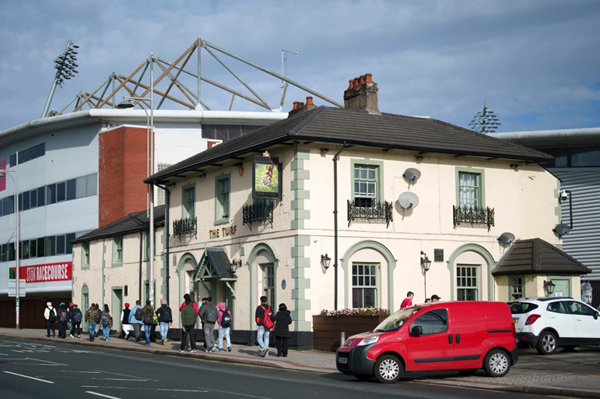
The Birthplace of Wrexham AFC: 1864 to Present
You cannot fully appreciate why this buyout sent shockwaves through the sporting landscape without understanding British soccer genealogy. In October 1864, members of the local Wrexham Cricket Club gathered inside what was then known as the Turf Hotel to discuss establishing a seasonal winter sporting club to keep athletes conditioned through freezing months. Led by local businessmen and sportsmen, including Evan Morris and Edwin Bowman, that historic meeting marked the official founding of Wrexham Football Club.
This founding date makes Wrexham AFC the third-oldest professional association football team in world history, trailing only Notts County and Stoke City, and the oldest professional club in Wales. Moreover, the Racecourse Ground itself stands recognized by the Guinness World Records as the oldest international football stadium on Earth that continues to host international competitive fixtures. The pub is not merely adjacent to history; it is the physical cradle where Welsh football drew its very first breath.
Throughout the 20th century, the venue survived the dramatic booms and busts of North Wales’ industrial economy, sheltering coal miners, steelworkers, and brickmakers through generations of grueling shifts. When the Gresford Colliery disaster struck in 1934, claiming 266 lives just miles away, the community sought solace within the very taprooms where supporters gathered prior to kickoff. Preserving that deep-seated emotional foundation is precisely why Reynolds and McElhenney intervened before outside private equity groups could capitalize on their television popularity.
For rigorous historical documentation on football origins and the evolution of Welsh sporting clubs, historical overviews provided through BBC Sport’s Wrexham coverage and archival records showcase how intertwined the tavern has been with Welsh civic life across three different centuries. The current era represents the zenith of its global visibility.
Expert Take: Sports economists and urban heritage sociologists emphasize that contemporary club acquisitions frequently fail because foreign owners alienate the native fan core by gentrifying physical meeting points. By funding the preservation of the Wrexham Turf Pub and maintaining its blue-collar operational staff, Reynolds and McElhenney have created a textbook case study in sustainable community stewardship that sports business executives across the NFL, Premier League, and MLS are actively analyzing.
Economic Reality: Wrexham Hospitality by the Numbers
The transformation of Wrexham from an overlooked post-industrial municipality into a global media juggernaut has generated stunning economic dividends. Local businesses across Regent Street, Mold Road, and High Street have experienced unprecedented commercial windfalls since the documentary series premiered in August 2022. The Turf sits at the epicenter of this financial resurgence, converting Hollywood storytelling into tangible local jobs and regional tourism growth.
International tourism figures recorded by regional Welsh tourism councils indicate an exponential jump in American and Canadian travelers visiting North Wales specifically to explore stadium landmarks. The hospitality figures surrounding matchdays and summer tourism demonstrate how television reach converts into localized retail revenue, revitalizing an entire metropolitan footprint.
| Metric Indicator | Pre-Takeover (2019-2020) | Docuseries Era (2022-2024) | Current Outlook (2025-2026) |
|---|---|---|---|
| Matchday Turnout | 4,000 – 5,000 avg | 9,900 – 10,200 (Capacity) | 15,000+ (Projected Post-Kop) |
| Overseas Visitor Footfall | Negligible / Trace | Estimated 40,000+ Annually | 75,000+ High-Intent Fans |
| Global Streaming Audience | 0 (Local Radio Only) | Millions across FX/Hulu | Top-10 Global Docuseries |
| Pub Hospitality Wait Times | 5 – 10 Minutes | 1 – 2 Hours on Matchdays | Managed Queue System |
| Merchandise Retail Reach | UK Regional Distribution | Shipped to 80+ Countries | Global Direct-to-Consumer Powerhouse |
To grasp the wider corporate scope behind these sports investments, comprehensive financial breakdowns published by Forbes sports enterprise valuations illustrate how celebrity-backed micro-investments compound exponentially once multimedia content engines are activated. The Turf is no longer a simple taproom; it is an invaluable brand asset producing organic marketing equity.
Hollywood Stars, Royalty, and Pint-Pouring Culture
Over the past four seasons of the docuseries, the establishment has doubled as an unlikely salon for Hollywood A-listers and international royalty. Regular patrons have looked up from their lagers to find Academy Award nominee Will Ferrell chatting at the bar counter, comedic superstar Paul Rudd enthusiastically participating in traditional terrace chants, and British royals stopping by for civic engagements.
One of the most viral cultural moments occurred when Prince William, the Prince of Wales, stepped behind the copper draught taps to pull pints alongside McElhenney during St. David’s Day festivities. These surreal spectacles could easily have cheapened the local atmosphere if handled clumsily. Yet, because the ownership consistently puts local patrons at the forefront, the venue has maintained its dignity as an authentic working-class haven.

The Ryan Reynolds & Rob McElhenney Sports Blueprint
When Reynolds and McElhenney initially completed their takeover of Wrexham AFC in February 2021—pledging an initial investment of over $2.5 million into club infrastructure—skeptics across the UK dismissed the venture as an American public relations stunt. However, their subsequent operational decisions have systematically proven cynics wrong. Through successive promotions from the National League to League Two and then League One, the club has combined calculated fiscal management with smart media rights exploitation.
The acquisition of the tavern reflects a broader trend where sports owners buy adjacent stadium acreage to engineer experiential entertainment districts. While billionaire owners across the NFL and NBA build massive glass-and-steel entertainment complexes that displace legacy neighborhoods, the Wrexham leadership model flips the playbook by protecting existing brick-and-mortar landmarks.
Rather than clearing out historical property to build lucrative luxury corporate boxes, the co-chairmen are investing in structural conservation. This approach mirrors the cultural sensitivity required in modern global media, a topic regularly examined across our analysis of pop culture business developments. The duo understands that Wrexham’s primary commercial asset is its heart, warmth, and grit.
By The Numbers: Commercial data shows that Wrexham AFC’s digital shirt sponsorships, international broadcast revenue, and stadium merchandise sales place the League One outfit among the top 30 most visible football clubs globally on social media platforms. By securing control of the Wrexham Turf Pub, ownership ensures that peripheral commercial revenues stay insulated within the club’s balance sheet rather than leaking to corporate landlords.
Wayne Jones: The Working-Class Pillar at the Center
Central to this transaction is the continuing leadership of landlord Wayne Jones. Throughout the rapid ascent of Wrexham AFC, Jones has remained the grounded voice of the town. While juggling thousands of pints on Saturday afternoons, he regularly conducts community charity drives, organizes youth sports fundraisers, and serves as an informal town ambassador for starry-eyed American travelers arriving on cross-country trains.
In media statements following the purchase announcement, Jones emphasized that his role will not change. He will continue to handle beer procurement, cellar management, and staff scheduling, ensuring that the establishment’s storied walls never feel like a fabricated theme park. It is this balance of grass-roots authenticity and Hollywood amplification that makes the ongoing story in North Wales so endlessly fascinating.
People Also Ask
Why did Ryan Reynolds and Rob McElhenney buy the Wrexham Turf pub?
The Hollywood co-owners bought the historic pub to protect Wrexham AFC’s heritage, ring-fence key real estate around the Racecourse Ground stadium, and ensure external corporate developers could never compromise the club’s birthplace.
Who will continue running the day-to-day operations of The Turf?
Longtime publican Wayne Jones will remain as the landlord and continue managing daily operations, maintaining the pub’s traditional matchday atmosphere and staff.
What historical significance does The Turf have to Wrexham AFC?
Wrexham AFC was officially founded inside the venue in October 1864 when it was known as the Turf Hotel, making it the third-oldest professional football club in the world.
Where is The Turf pub located in North Wales?
The Turf pub is located directly adjacent to the Racecourse Ground on Mold Road in Wrexham, North Wales, immediately beside the stadium turnstiles.
Securing the Future: Legacy and Next Steps for The Turf
As Wrexham AFC sets its sporting sights on the EFL Championship and eventually the English Premier League, maintaining an unbreakable bond with its regional heritage remains vital. The purchase of the Wrexham Turf Pub by Ryan Reynolds and Rob McElhenney is an emphatic demonstration that athletic advancement does not have to come at the expense of working-class tradition. You are watching a masterclass in sports brand development, real estate integration, and civic storytelling.
By securing the historic birthplace of Welsh club soccer, empowering local heroes like Wayne Jones, and guaranteeing that the stadium concourse remains unified, ownership has solidified both a physical fortress and an emotional sanctuary for generations of supporters to come. As the cameras continue rolling for upcoming seasons of Welcome to Wrexham, fans around the world can raise a glass knowing that the town’s most legendary taproom is safeguarded forever.
More Like This
For more updates, check out our latest entertainment and sports news.