Winnie-the-Pooh officially marks a century of honey-filled adventures, proving that some childhood magic never actually grows old. Can you believe that the silly old bear we all adore first wobbled into the literary world exactly 100 years ago? While he technically peeked out in a 1924 poetry book, 1926 was the year A.A. Milne and Ernest H. Shepard truly changed children’s literature forever.
You might think you know everything about the Hundred Acre Wood, but a new anniversary book is pulling back the curtain on the creative chaos that birthed a legend. How a Bear Became a Book: The Collaboration That Created Winnie-the-Pooh explores the deep bond between an author’s words and an illustrator’s pen. This isn’t just a story for kids; it is a masterclass in how iconic branding and emotional storytelling collide to create a billion-dollar legacy.
As we celebrate this 100-year milestone, the world is looking back at Edward Bear—the original name for our beloved Pooh. The journey from a nursery floor in London to the global stage involves secret sketches, revolutionary printing tech, and a bond between two men that wasn’t always as smooth as honey. Let’s dive into the fascinating evolution of the bear who taught us that sometimes ‘doing nothing’ is the best something of all.
Winnie-the-Pooh Origins and Early Days
The story of Winnie-the-Pooh didn’t start in a studio; it started with a real boy and his real toys. Christopher Robin Milne, the author’s son, owned a collection of stuffed animals that would eventually become the world’s most famous friendship circle. While Edward Bear was the centerpiece, the introduction of Piglet, Eeyore, Kanga, and Roo transformed a simple nursery into a universe of its own. You have to wonder if Milne knew that his bedtime stories for his son would eventually become a global phenomenon.
In the early 1920s, A.A. Milne was already a successful playwright and humorist. However, his shift toward children’s writing was seen as a gamble by some in the London literary scene. He first tested the waters with the book of poems When We Were Very Young in 1924. This was where the world got its first glimpse of the “short and fat” bear. But it wasn’t until the 1926 collection that the character we recognize today truly solidified his place in history.
The character of Winnie-the-Pooh was actually named after two different animals. “Winnie” came from a Canadian black bear named Winnipeg that Christopher Robin frequently visited at the London Zoo. “Pooh” was the name of a swan the family met while on holiday. Combining these two created a name that was quirky, memorable, and quintessentially British. It was this specific naming convention that helped the book stand out in a crowded market of animal fables.
The Real Toys Behind Characters
- Tigger: Added later to the collection, inspired by a bouncy real-life stuffed toy.
- Eeyore: Based on a plush donkey that had lost its ability to hold its head up, giving him his gloomy personality.
- Piglet: A tiny, nervous-looking toy that perfectly matched the character’s anxious but brave nature.
- Kanga and Roo: Symbols of maternal care and youthful energy in the Milne household.
Author Annette Bay Pimentel highlights that Winnie-the-Pooh wasn’t just a character; he was a living entity in the minds of the Milne family. The way the toys interacted in real life dictated their personalities on the page. This authenticity is likely why readers still connect with them today. You aren’t just reading about a bear; you are peeking into a private world of childhood imagination that feels remarkably familiar.
By the time 1926 rolled around, the stage was set for a masterpiece. The collaboration between Milne and Shepard was about to enter its most intense phase. They weren’t just making a book; they were inventing a new way for words and pictures to live together on a single page. This synergy is what modern creators still strive to achieve when building the legacy of beloved literary icons that stand the test of time.

The Shepard and Milne Collaboration
The relationship between A.A. Milne and Ernest H. Shepard was the secret sauce that made Winnie-the-Pooh a visual triumph. Shepard wasn’t just hired to draw pictures; he was an investigative journalist of sorts. He spent significant time at Ashdown Forest in the U.K., where the Milnes lived, sketching the actual landscapes that would become the Hundred Acre Wood. This commitment to realism grounded the fantasy elements of the stories.
You can see Shepard’s genius in the way he captured the movement of the characters. He didn’t just draw a bear; he drew a stuffed bear that moved with a certain stiff-limbed grace. Pimentel notes that Shepard always carried a sketchbook, capturing the way Christopher Robin played with his toys. This observational style meant the illustrations felt like a documentary of a childhood, rather than a generic cartoon.
However, the collaboration was incredibly precise. Milne was known for being particular about his prose, and Shepard had to ensure his art didn’t just mirror the words but expanded upon them. They played with the idea of characters literally interacting with the text. If Pooh was climbing a tree, the words might stack up to represent the height. This was a radical departure from the standard book layouts of the 1920s.
Mapping the Hundred Acre Wood
Shepard’s most famous contribution might be the map of the Hundred Acre Wood. This wasn’t just a decoration; it was a guide that made the world feel tangible. When you look at the original map, you see the “Pooh Trap for Heffalumps” and “Eeyore’s Gloomy Place.” It gave the reader a sense of geography and belonging. It invited you to step inside and walk alongside the characters.
The creative process involved constant back-and-forth communication. Milne would send drafts, and Shepard would return sketches that often influenced the final wording. They were early pioneers of what we now call “transmedia storytelling.” They understood that the visual identity of a character is just as important as their dialogue. Without Shepard’s delicate line work, the bear might have remained a forgotten nursery toy.
Interestingly, Shepard didn’t use the actual Winnie-the-Pooh toy as his primary model. Instead, he modeled the bear after his own son’s teddy bear, Growler. This subtle shift gave the illustrations a different personality than the literal toy Christopher Robin owned. It shows that even in a “true” story, artistic license is required to find the soul of a character. This blend of reality and imagination is why the 100-year-old bear feels so vibrant today.
Innovative Printing and Page Design
During the 1920s, most books followed a strict template: a block of text followed by a full-page illustration. Winnie-the-Pooh broke this mold using a technology called offset printing. This allowed Methuen Publishing to wrap words around images, making the book feel more like a modern graphic novel than a traditional Victorian tome. This technological leap was essential for the book’s massive success.
Milne and Shepard experimented with the page as a canvas. In the new book by Pimentel and Faith Pray, they describe how the duo stacked words like trees or made them bounce off the line. This wasn’t just for flair; it was a psychological trigger to keep children engaged. When the text mimics the action, the reader becomes more immersed in the story. You feel the “bump, bump, bump” of Pooh going down the stairs because the words themselves seem to vibrate.
This level of design required a very close working relationship with the editorial team. They weren’t just authors; they were designers. They understood that the physical experience of holding a book and turning the page was part of the magic. This attention to detail ensured that Winnie-the-Pooh didn’t just look like every other book on the shelf. It looked like the future of publishing.
| Publishing Feature | 1926 Standard | Pooh’s Innovation |
|---|---|---|
| Illustration Style | Static full-page plates | Integrated action sketches |
| Text Layout | Standard block justified | Dynamic, moving text |
| Printing Tech | Letterpress | Offset printing pioneers |
| Character Models | Generic sketches | Based on real-life toys |

The 100 Year Global Impact
How does a bear from a small English forest become a global icon worth billions? The answer lies in the universal themes of the Winnie-the-Pooh stories. Whether you are in New York or Tokyo, the concepts of friendship, anxiety, and the simple joy of a snack are relatable. Milne’s writing style, often described as having a “whimsical logic,” appeals to both the innocence of children and the nostalgia of adults.
As the bear reached its 100th year, his influence has spread far beyond the pages of a book. The character transitioned into a massive franchise under Disney, which introduced him to a whole new generation. However, many purists still point back to the original Shepard illustrations as the “true” version of the bear. There is a raw, emotional honesty in the black-and-white sketches that some feel the modern colorized versions lack.
You also see Pooh’s influence in philosophy and psychology. Books like The Tao of Pooh have used the character to explain complex Eastern philosophies. This proves that Milne’s character wasn’t just a “bear of very little brain.” He was a vessel for deep human truths. Pooh’s ability to remain calm in the face of Eeyore’s depression or Tigger’s chaos is a lesson in mindfulness that we all need in 2026.
Key Cultural Milestones
- 1926: First official publication by Methuen in London.
- 1961: Disney acquires the film rights, launching a global merchandising empire.
- 2006: Pooh receives a star on the Hollywood Walk of Fame.
- 2022: The character enters the public domain, leading to a surge in creative reimagining.
- 2026: The official centenary celebration and the release of new historical books.
The 100th anniversary isn’t just about looking back; it’s about seeing how the character evolves. With the original stories now in the public domain, we are seeing everything from horror movies to avant-garde art featuring the bear. While some of these adaptations are controversial, they ensure that Winnie-the-Pooh remains a central figure in our cultural conversation. He is no longer just a character in a book; he is a piece of global folklore.
The Making of How a Bear Became a Book
The new book How a Bear Became a Book is a love letter to the creative process. Authors Annette Bay Pimentel and Faith Pray spent years researching the archives to get the voices of Milne and Shepard exactly right. They wanted to show children that books don’t just appear out of nowhere. They are the result of hard work, collaboration, and a lot of waiting for editors and illustrators to do their thing.
Pimentel specifically focused on the linguistic patterns of the original books. She noticed that Winnie-the-Pooh rarely used contractions and had a very specific way of phrasing his thoughts. By mimicking this voice, she creates a sense of continuity that honors the original work. This level of dedication is rare in modern children’s books and shows why this anniversary edition is so special. You can read more about the historical context of such works on Wikipedia’s detailed Pooh history.
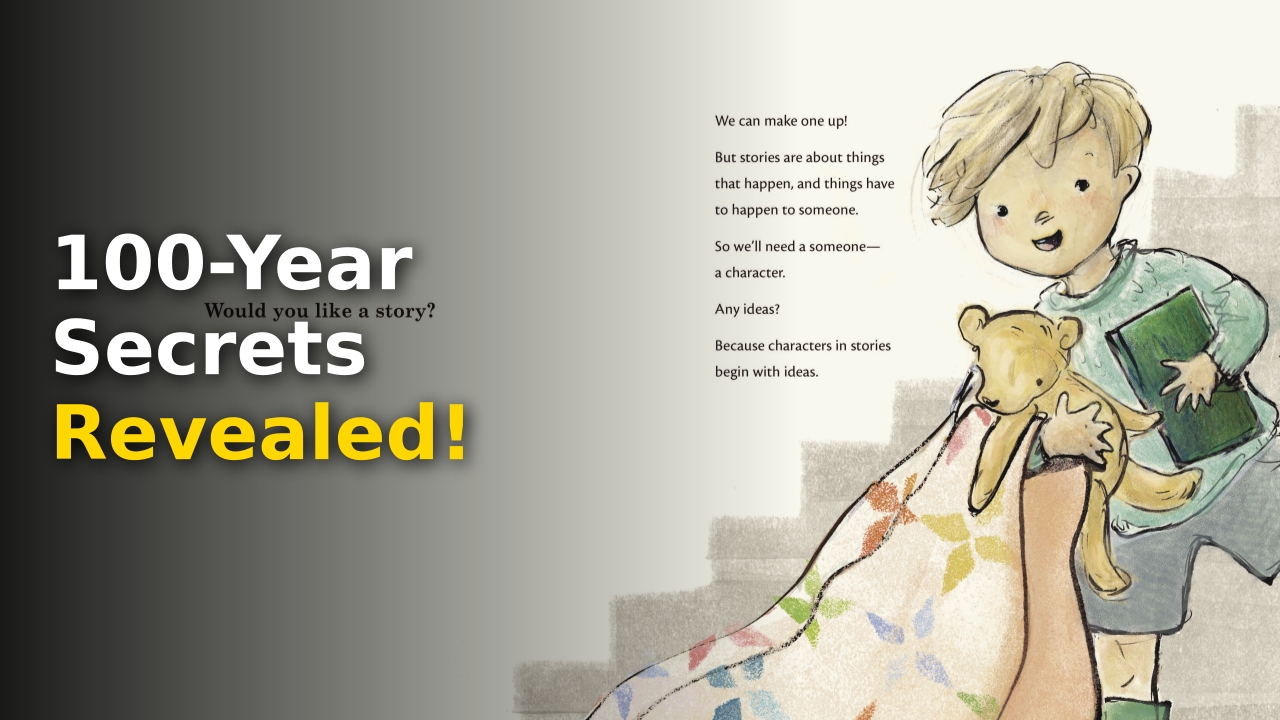
The illustrations in the new book also pay homage to Shepard’s style. Faith Pray used a see-through, translucent character for Pooh at the start of the book. As the publishing process continues and the character becomes more “real,” he becomes more solid. This visual metaphor is a brilliant way to explain the concept of character development to young readers. It shows that characters are born in the mind but made real through the synergy of words and art.
Why This Anniversary Matters
- Preservation: It keeps the original, non-Disneyfied version of the bear alive for new readers.
- Education: It teaches children about the history of art and publishing.
- Inspiration: It encourages the next generation of authors and illustrators to collaborate.
In a world of fast-paced digital media, How a Bear Became a Book reminds us of the slow, deliberate craft of storytelling. It reminds you that 100 years ago, a man with an idea and a man with a sketchbook changed the world. This anniversary is a celebration of the human spirit and the enduring power of a simple, honey-loving bear.
Final Legacy of Winnie-the-Pooh
As Winnie-the-Pooh enters his second century, his legacy seems more secure than ever. The stories written by A.A. Milne and illustrated by Ernest H. Shepard have survived world wars, economic shifts, and the digital revolution. Why? Because they speak to the part of us that never wants to leave the Hundred Acre Wood. They remind us of a time when our biggest worry was a blustery day or a missing pot of honey.
The 100-year milestone is a testament to the power of high-quality storytelling. When words and pictures find each other, as Pimentel writes, characters truly spring to life. We see this in the way Pooh has become a symbol of comfort for millions. He isn’t just a bear; he is a friend. And as long as there are children—and adults who remember being children—there will always be a place for him.
Whether you are revisiting the original 1926 stories or discovering the new anniversary book, the magic remains the same. You are invited to go back, back, back through the pages of time to a place where a boy and his bear are always playing. Winnie-the-Pooh has reached 100, but in many ways, he’s just getting started. Here’s to another century of honey, hums, and heart.
More Like This
For more updates, check out our latest entertainment and sports news.