Key Takeaways
| Award-Winning Pedigree | Won the 1978 Grand Prix at the Cannes Film Festival. |
| Experimental Sound | Features a score by Genesis members Tony Banks and Mike Rutherford. |
| Literary Origins | Based on a 1929 short story by the legendary writer Robert Graves. |
| Stellar British Cast | Stars Alan Bates, John Hurt, and Susannah York in career-defining roles. |
You have likely never experienced a cinematic soundscape so visceral that it feels like a physical assault on your senses. **The Shout Movie 2025** reintroduces audiences to Jerzy Skolimowski’s 1978 masterpiece, a film that remains one of the most unsettling explorations of sound and mysticism ever committed to celluloid. As it enters the prestigious Criterion Collection, this psychosexual thriller demands a re-evaluation for its avant-garde approach to the horror genre.
This surreal journey begins in the unlikely setting of a cricket match at a psychiatric hospital, where a mysterious man named Charles Cross claims he can kill with a single vocalization. The narrative layers of **The Shout Movie 2025** challenge your perception of reality, blending folklore with the domestic tensions of a modern marriage. It is a film where the boundaries between sanity and supernatural power are intentionally blurred to maximize psychological dread.
By revisiting this cult classic, viewers can appreciate how Skolimowski utilized high-fidelity audio techniques to create a sensory experience that predates modern atmospheric horror. The film’s focus on the “Terror Shout,” an ancient Aboriginal magical practice, serves as a catalyst for a haunting story about obsession and the fragility of the human mind. It remains a cornerstone of British countercultural cinema that continues to influence directors today.
The Shout Movie 2025: A Psychosexual Terror Odyssey
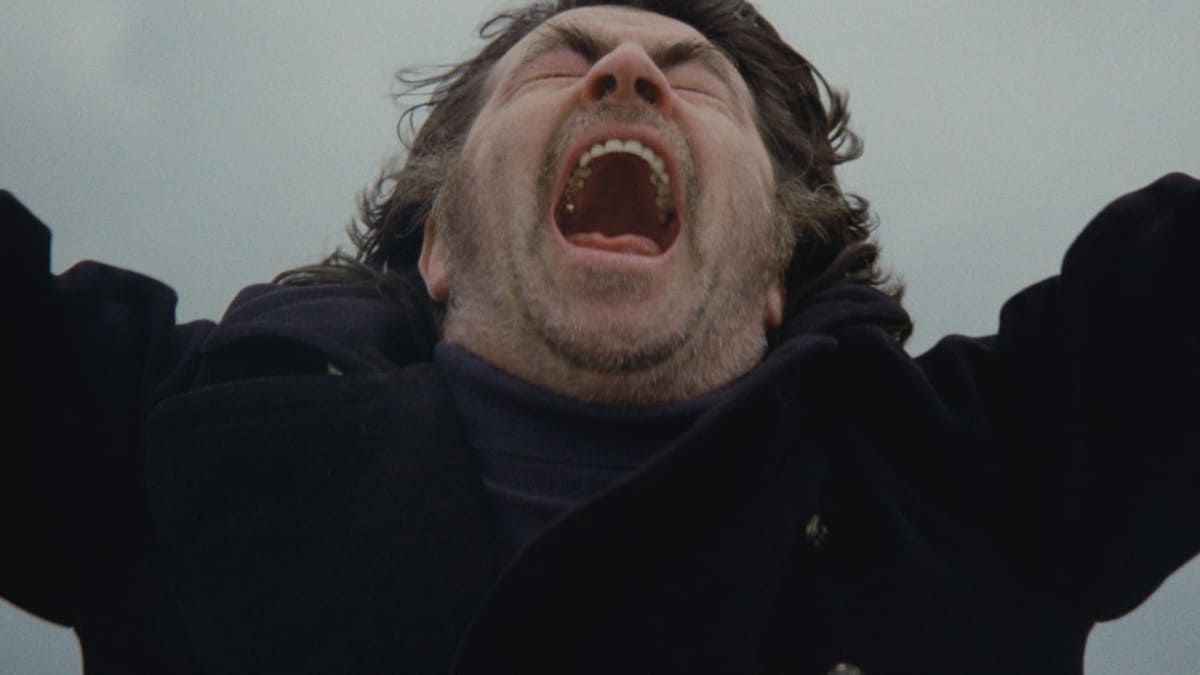
The core of **The Shout Movie 2025** lies in its nested narrative, which frames the supernatural events as a story told by a patient to an outsider. **Alan Bates** delivers a towering performance as Charles, a drifter who invades the lives of an experimental composer named Anthony and his wife Rachel. Bates’ presence is physically imposing, carrying a latent threat that oscillates between seductive charm and explosive violence. He claims to have spent years in the Australian Outback, learning the secrets of the soul and the lethal power of the voice.
Anthony, played with a fragile intensity by **John Hurt**, is the perfect foil to Charles’ primal energy. As an electronic musician who captures the sounds of nature, Anthony is both fascinated and repelled by the stranger’s claims. The domestic space of their North Devon home becomes a battleground where traditional social niceties are stripped away. **Susannah York** provides a grounded yet increasingly vulnerable performance as Rachel, the woman caught between her husband’s intellectualism and the drifter’s magnetic, magical aura.
Skolimowski uses the Devon coastline to great effect, transforming the sandy dunes into a liminal space where anything is possible. The film avoids traditional jump scares, opting instead for a slow-burn tension that builds through unsettling imagery and jagged editing. This approach ensures that **The Shout Movie 2025** feels more like a fever dream than a standard thriller. The director’s history with Polish avant-garde cinema is evident in every frame, as he rejects linear storytelling in favor of atmospheric immersion.
The relationship between the characters mirrors the complex throuple experienced by the original story’s author, **Robert Graves**. Graves, who appears in the film in a cameo played by **Tim Curry**, was known for his unconventional personal life and his fascination with ancient mythology. This literary weight gives the film a depth that transcends its horror trappings, making it a profound meditation on the nature of belief and the power of the subconscious mind.
The Legacy of Jerzy Skolimowski
Jerzy Skolimowski has always been a director who pushes the boundaries of the medium, and this film is no exception. Having won accolades for films like *Deep End* and more recently *EO*, Skolimowski’s work often features protagonists who are outsiders or social outcasts. In this film, he explores the intersection of high art and primal instinct, questioning whether modern civilization has truly left magic behind. His collaboration with British talent created a unique hybrid of European art-house style and English gothic horror.
For fans of contemporary directors like Peter Strickland, who directed Berberian Sound Studio, the influence of this work is undeniable. Strickland’s focus on foley work and the physical toll of sound clearly draws from the foundations laid here. You can find more about the history of such directors in our guide to Jerzy Skolimowski’s filmography. This connection highlights the film’s enduring relevance in the 21st century.
Analyzing the Innovative Sound Design and Horror
Sound is not merely a background element in **The Shout Movie 2025**; it is the primary weapon and the film’s most significant character. The production was one of the first to utilize the Dolby System to its full potential, creating an immersive auditory environment that was revolutionary for 1978. The sound design incorporates everything from the mundane—like the sound of a cigarette being puffed—to the extraordinary, such as the jet-engine roar of a fly’s wings. These choices serve to sensitize the audience to the power of noise.
The musical score, provided by **Michael Rutherford** and **Tony Banks** of the rock band Genesis, adds a layer of prog-rock surrealism to the proceedings. Their use of synthesizers and experimental textures perfectly complements the film’s themes of electronic manipulation and ancient magic. The score doesn’t just provide a mood; it acts as an extension of Anthony’s work, bridging the gap between his mechanical recordings and the organic horror of the shout itself.
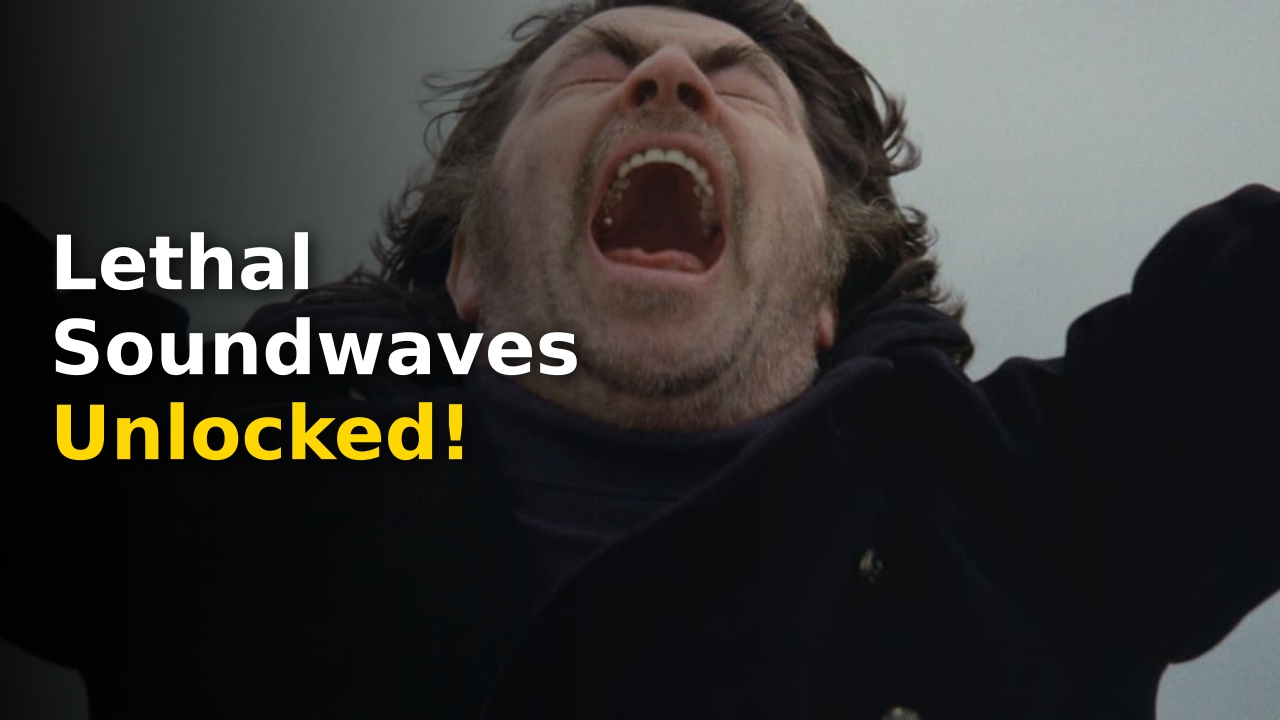
When Charles finally demonstrates his power, the film uses every technical trick in the book to convey the magnitude of the sound. It is described as a frequency that can tear the life from a living being, a concept that Skolimowski treats with absolute gravity. The result is a sequence that remains one of the most frightening in cinema, achieved without CGI or expensive visual effects. It relies entirely on the synchronization of image and audio to create a sense of overwhelming power.
Expert Take: From an acoustic standpoint, the film explores the concept of ‘infrasound’ and ‘sonic weaponry’ long before they became staples of military discussion. By grounding the supernatural in the physical sensation of sound, Skolimowski creates a sense of dread that is difficult to shake. It suggests that our bodies are vulnerable to the environment in ways we cannot control, turning the very act of hearing into a potential threat. This is a rare example of a film that understands the science of sound as deeply as it understands the art of the image.
| Category | Film Statistics & Data |
|---|---|
| Release Year | 1978 (Grand Prix Winner) |
| Runtime | 86 Minutes |
| Audio Format | Dolby Stereo (Pioneering Use) |
| Filming Location | North Devon, England |
Historical Context and Countercultural Weirdness
To understand **The Shout Movie 2025**, one must look at the landscape of British cinema in the late 1970s. This was an era defined by a departure from traditional social realism toward something more mystical and avant-garde. Films like *The Last Wave* by Peter Weir were also exploring Indigenous Australian magic, reflecting a broader Western fascination with ‘the exotic’ and the occult during this period. Skolimowski’s film fits into this trend but adds a uniquely claustrophobic, British sensibility.
The 1978 Grand Prix win at Cannes was a major moment for this type of experimental horror. It shared the prize with *Bye Bye Monkey*, another film that pushed boundaries with its bizarre imagery. This era of Cannes was particularly receptive to directors who challenged the status quo. For those tracking the history of international cinema, the 1970s represents a peak of creative freedom that allowed projects like this to receive mainstream recognition. You can explore more about this era in our look at 1970s horror trends.
The film’s inclusion of Australian Aboriginal folklore—specifically the practice of ‘bone pointing’ and the lethal shout—has been viewed through various lenses over the years. In the context of 1978, it was a way to inject a sense of ancient, untapped power into the sterile environment of a British village. Today, it serves as a reminder of how 20th-century cinema often utilized Indigenous cultures as a source of ‘the uncanny.’ However, the film is less about the culture itself and more about how the protagonist, Charles, has weaponized this knowledge to dominate others.
By The Numbers: The film’s budget was relatively modest, yet it featured some of the most sought-after talent in the UK. At the time of filming, Alan Bates was a major international star, and John Hurt was on the verge of massive fame following *Midnight Express*. The involvement of Genesis members also signaled a high-profile cross-media collaboration that was rare for an indie psychodrama. The film’s 86-minute runtime is exceptionally lean, proving that psychological terror does not require a bloated narrative to be effective.
Visual Symbolism and Francis Bacon
One of the most striking visual elements in the film is the presence of Francis Bacon’s painting, *Head VI*, which hangs in Anthony’s studio. The painting features a screaming figure, caged within a geometric structure, which serves as a perfect visual metaphor for the film’s themes. It represents the entrapment of the human spirit and the raw, silent power of the scream. Skolimowski’s choice to include this work aligns the film with the tradition of visceral, disturbing British art.
The use of freeze-frames and jagged cutaways also mirrors the fractured psychological state of the characters. These techniques were common in the French New Wave but were used here to enhance the sense of horror. The film doesn’t just show you a story; it forces you to experience the mental disintegration of its protagonists. This visual language is part of what makes the movie a staple for students of film theory and fans of cult classic revivals alike.
People Also Ask
What is the Terror Shout in the movie?
The Terror Shout is a supernatural vocalization that Charles Cross claims to have learned from Australian Aboriginal people. It is described as a sound so powerful and at such a specific frequency that it causes the immediate death of anyone who hears it without protection.
Why is The Shout Movie 2025 trending right now?
The film is trending due to its recent high-definition restoration and inclusion in the Criterion Collection’s ‘Cult of Criterion’ series. Modern audiences are rediscovering its unique sound-based horror and its influence on contemporary directors like Peter Strickland.
Is The Shout based on a true story?
The film is based on a 1929 short story by Robert Graves, which was inspired by his real-life complex relationships and his interest in mythology. While the ‘shout’ itself is a fictionalized element of folklore, the interpersonal dynamics reflect Graves’ own experiences in a throuple.
Where was The Shout filmed?
The movie was primarily filmed on the North Devon coastline in England, specifically around Saunton Sands. The vast, desolate beaches and dunes provide a surreal and isolating backdrop that enhances the film’s psychosexual tension.
Final Legacy of The Shout Movie 2025
In conclusion, **The Shout Movie 2025** remains a formidable entry in the canon of international horror. Its ability to marry experimental sound design with high-concept psychological drama ensures its place as a unique cinematic achievement. Whether interpreted as a literal supernatural tale or the delusions of a fractured mind, the film’s impact is undeniable. The collaboration between Jerzy Skolimowski, a world-class cast, and pioneering sound artists created something that truly stands the test of time.
As you revisit this film, pay close attention to how it uses every element of the medium to unsettle the audience. From the haunting imagery of the Devon dunes to the crushing weight of the audio, it is a masterclass in atmospheric storytelling. The Criterion Collection’s dedication to preserving such works allows a new generation of film fans to experience the ‘Terror Shout’ in all its lethal glory. It is a reminder that the most terrifying things are often those we cannot see, but only hear.
Ultimately, the film serves as a cautionary tale about the dangers of obsession—whether that obsession is with art, magic, or another person. It blurs the lines between the physical and the metaphysical, leaving the viewer with more questions than answers. For those who seek cinema that challenges the intellect while stimulating the senses, this film is essential viewing. Experience **The Shout Movie 2025** today and discover why it remains one of the most discussed and debated films in the history of the Cannes Film Festival.
More Like This
For more updates, check out our latest entertainment and sports news.