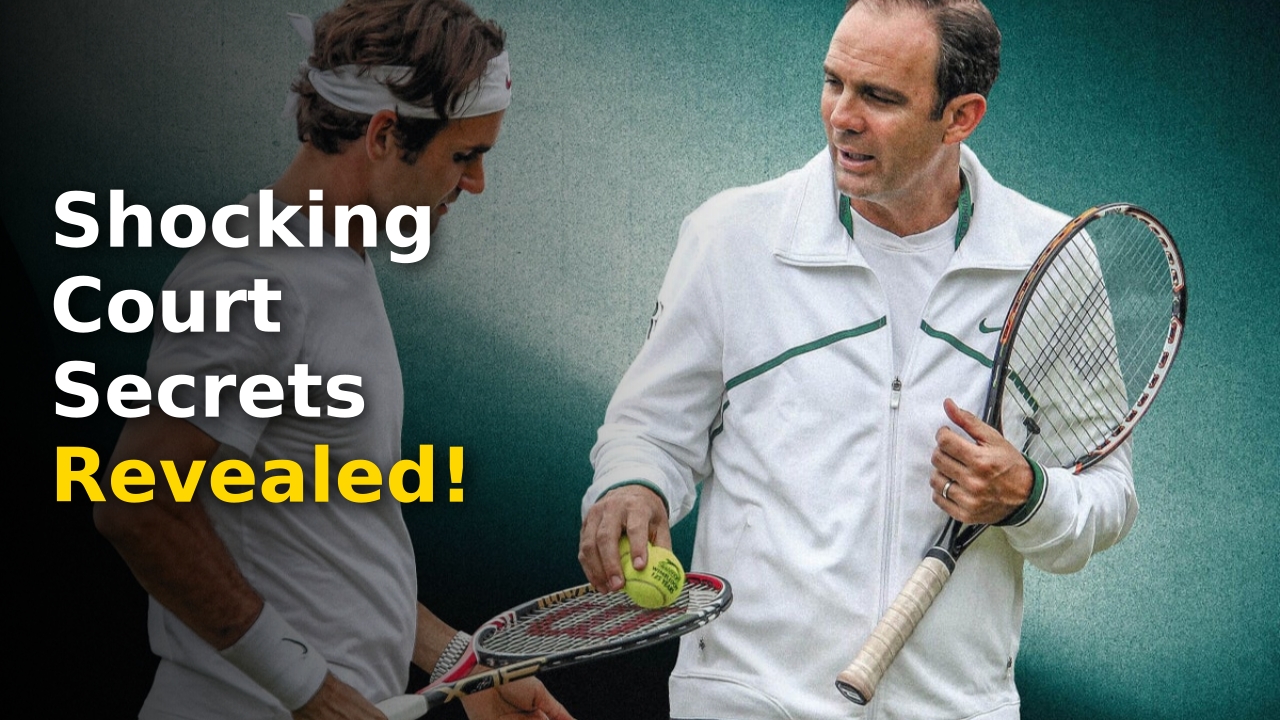
Do you wonder what truly separates ordinary athletes from elite tennis legends who dominate the global stage for decades? When we look at superstars like Pete Sampras and Roger Federer, we often see flawless machines executing historic triumphs on court. Yet, behind the scenes, these two icons possessed completely contrasting mental engines that fueled their record-shattering careers.
Former coach Paul Annacone, who guided both men during their peak championship years, recently lifted the veil on their private philosophies. His fascinating insights reveal that greatness does not follow a single, standardized blueprint.
Whether you are an aspiring athlete or a corporate leader, understanding how these superstars managed pressure can change how you view your own daily battles. Let’s explore the mind-bending secrets of the sport’s most legendary figures.
Tennis Legends Secrets Exposed
To achieve greatness, you must first understand your own personal motivation. Coach Paul Annacone noticed immediately that his pupils operated on completely opposite ends of the emotional spectrum. While one thrived on isolating pressure, the other drew energy from the vibrant world around him.
Sampras’ Intense Internal Tunnel
Pete Sampras was a man driven by a singular, unyielding obsession to win Grand Slam trophies. From a very young age, the American star calibrated his entire existence to dominate on the fastest courts in the world. He was not interested in the luxury lifestyle or the constant corporate glad-handing.
According to Paul Annacone, who coached him from 1995 to 2002, Sampras was his own harshest critic. He placed a level of self-imposed pressure on his shoulders that would have crushed almost any other athlete. Yet, miraculously, he performed his absolute best when the stakes were at their highest.
Let’s look at the core traits that defined Sampras’ mental game. These principles kept him at the top of the tennis legends hierarchy.
- Uncompromising focus on Grand Slam victories above all minor tournaments.
- Incredible ability to win matches even when his physical play was completely average.
- Absolute acceptance of his career’s conclusion, retiring immediately after his 2002 US Open victory at age 31.
- A quiet confidence that shielded him from external media distractions.
This uncompromising attitude allowed him to walk away from the sport completely at peace. After winning the US Open in 2002, he simply decided he had nothing left to prove to himself. He retired at age 31 and never looked back.
Federer’s Joyful Global Journey
In stark contrast, Roger Federer operated on an entirely different psychological frequency. The Swiss maestro did not just love winning; he genuinely loved the entire ecosystem of professional tennis. He relished the exhausting travel, the grueling practice sessions, and the constant fan interaction.
This profound joy allowed Federer to maintain a remarkably healthy work-life balance despite living in an artificial fishbowl. Where other stars burned out from the relentless tour schedule, Federer thrived by traveling the globe with his family.
Here are the key elements that fueled Federer’s legendary longevity. These habits helped him play elite tennis well into his late thirties and secured his status among tennis legends.
- Deep passion for the tennis lifestyle, including practice and promotional tours.
- Remarkable emotional resilience that allowed him to bounce back from painful losses.
- An insatiable curiosity about the world, playing in smaller venues like Turkey just to experience new cultures.
- The ability to treat tennis as an artistic expression rather than a stressful job.
His ability to remain well-adjusted despite his abnormal existence amazed everyone in his inner circle. He took the chaos of fame and turned it into fuel for his artistic expression on the court.

Emotional Agility Under Fire
How do you handle devastating setbacks in your own life when everything goes wrong? For tennis legends, emotional agility is the difference between an early exit and holding a golden trophy aloft. Paul Annacone recalls a pivotal moment after Federer suffered heartbreaking semifinal losses to Novak Djokovic at the US Open in both 2010 and 2011.
Instead of wallowing in self-pity or dissecting his tactical errors for weeks, Federer displayed a breathtaking big-picture perspective. He reminded his coaching staff that tennis is a long journey filled with unexpected turns. He focused on the matches he had won that he easily could have lost.
This exact mental fortitude paid massive dividends at Wimbledon in 2012. Early in the tournament, Federer suffered a severe back injury that threatened to force his retirement. While a lesser player would have panicked, Federer remained incredibly calm and trusted his medical team.
By managing the extreme highs and lows with equal grace, he secured his place among elite tennis legends. It is a masterclass in psychological preservation that you can apply to your personal career challenges.
Sampras possessed a parallel, yet distinct, version of this emotional stability. He understood that he could not play perfect tennis all the time, so he mastered the art of winning while playing poorly.
By maintaining a stone-faced composure, Sampras would convince his opponents that he was completely in control, even when his body was failing. This psychological warfare allowed him to steal victories from the jaws of defeat throughout his prime years.
The Beverly Hills Dinner
Imagine sitting at a quiet table in Beverly Hills, watching two of the greatest minds in sports history dissect each other’s motivations. Paul Annacone organized exactly this dinner, bringing together a retired Pete Sampras and an active Roger Federer. The dynamic was electric, fueled by Sampras’ intense curiosity about Federer’s longevity.
Sampras, who spent his final years on tour husbanding his energy strictly for Grand Slams, could not comprehend why Federer still played smaller events. He asked the Swiss maestro why he bothered traveling to minor tournaments in distant countries when his legacy was already secure.
Federer’s answer was disarmingly simple: “Because I love it.” This moment perfectly encapsulates why these two tennis legends achieved immortality through completely different pathways.
For Pete, the pressure was a tool to prove a point to himself and the world, and once that point was proven, he happily walked away. For Roger, the sport was a lifelong love affair that he was in no rush to end.
You can find inspiration in both approaches depending on your current phase of life. Sometimes, you need the laser-focused, result-oriented drive of Sampras to push through a massive career milestone.
Other times, you need the holistic, joyful perspective of Federer to avoid burnout and sustain long-term creativity. The key is knowing your own identity and refusing to copy someone else’s formula.
Career Defining Statistics
To truly understand the historic impact of these tennis legends, we must examine the raw data that defined their eras. Let’s look at how their career achievements stack up side-by-side.
While Sampras dominated the fast grass of Wimbledon and the hard courts of New York, Federer’s versatility allowed him to conquer every surface imaginable. Let’s explore their incredible milestones in detail.
| Metric | Pete Sampras | Roger Federer |
|---|---|---|
| Grand Slam Singles Titles | 14 | 20 |
| Wimbledon Titles | 7 | 8 |
| Career Singles Titles | 64 | 103 |
| Weeks at World No. 1 | 286 | 310 |
| Retirement Age | 31 Years Old | 41 Years Old |
This table illustrates the incredible longevity of Federer compared to the highly concentrated peak of Sampras. Both methods yielded historic results that elevated the sport’s global popularity of these tennis legends.
When you examine these numbers, you realize that both strategies are incredibly effective if executed with total self-belief. You do not need to choose one style over the other to achieve your dreams.
If you want to read more about the lifestyles of the rich and famous on the professional circuit, check out Bright Celebrity news and updates for exclusive interviews. This portal offers a behind-the-scenes look at your favorite sports stars.
Understanding the financial and emotional costs of these careers helps put their statistical achievements into a realistic perspective. It shows you the true human cost of reaching the absolute top.
Mindset Rules for Success
In his memorable 2024 commencement speech at Dartmouth College, Federer shared a shocking statistic: throughout his career, he only won 54 percent of the individual points he played. Even the most dominant tennis legends lose almost half of the points they contest on any given day.
This realization is a profound lesson in resilience for anyone striving for success in their personal or professional lives. It teaches you that failure is not a permanent state, but rather a constant, natural byproduct of trying to achieve something difficult.
If you lose a point, or if a major business deal falls through, the only thing that matters is how you approach the next opportunity. You must cultivate a relentless sense of optimism, completely shedding the weight of past mistakes.
Sampras applied this exact concept through his unwavering confidence on key serve-and-volley points. He knew that even if he missed three consecutive returns, his serve would eventually rescue him if he stayed positive.
By focusing entirely on the present moment, both champions freed themselves from the paralyzing fear of failure that stops most players from winning. They did not let temporary setbacks dictate their long-term destiny.
For a deeper dive into the historical records of legendary tennis icons, you can explore the comprehensive Wikipedia history of tennis. This resource outlines how the game evolved into the global juggernaut it is today.
Legacy of Tennis Legends
Ultimately, the contrasting journeys of Pete Sampras and Roger Federer show us that there is no singular path to greatness. These tennis legends achieved immortality by being completely true to their unique individual identities.
Sampras was the ultimate tennis warrior, a quiet assassin who conquered the sport through sheer willpower and a relentless focus on his goals. He did not need the adoration of the public to validate his immense talents.
Federer was the maestro, an artistic genius who elevated tennis into a global cultural phenomenon through his sheer joy and elegance. He thrived on the energy of the crowds and the beauty of the traveling lifestyle.
By studying their unique mindsets, you can learn to embrace your own strengths and build a customized strategy for your own life. You do not need to mimic anyone else’s personality to achieve spectacular success.
Whether you align more with Sampras’ intense focus or Federer’s joyful curiosity, the secret is to remain authentic to who you are. Greatness is not about fitting into a mold; it is about shattering it entirely.
As these incredible tennis legends proved, the only way to reach the top is to play the game on your own terms. Trust your instincts and let your passion guide your path forward.
More Like This
For more updates, check out our latest entertainment and sports news.