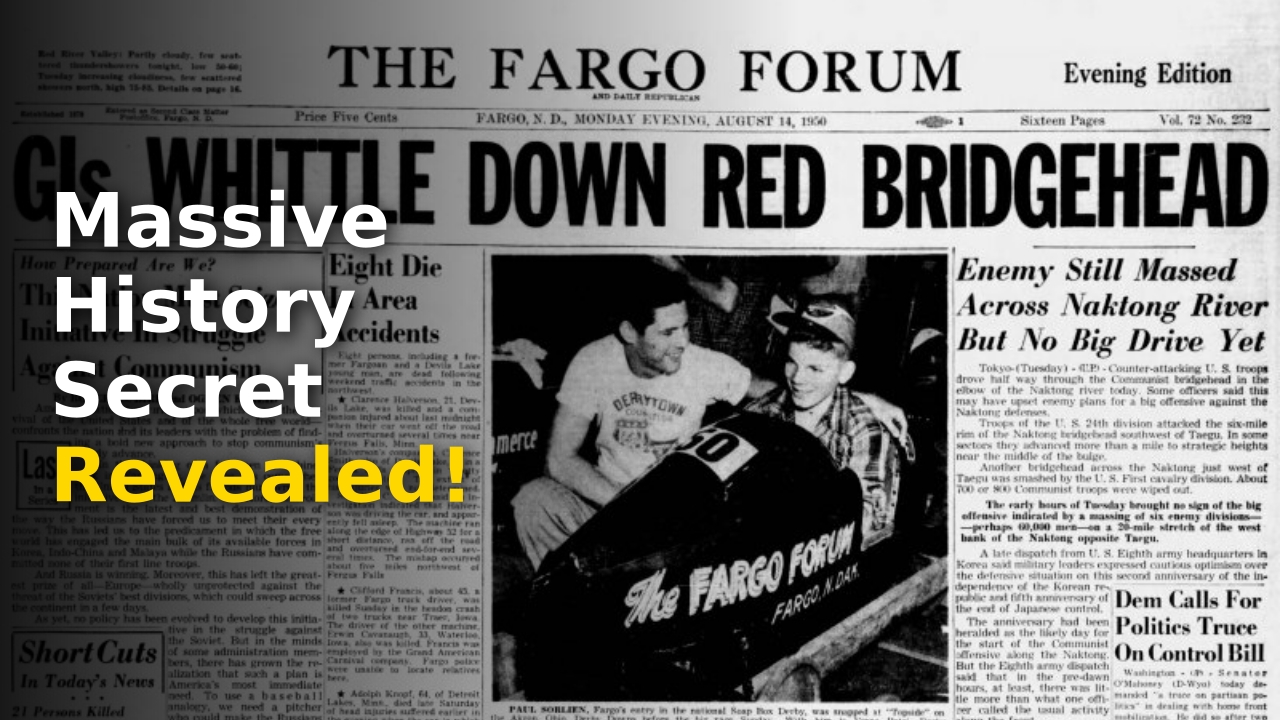
Soap Box racing in 1950 wasn’t just a weekend hobby; it was a cultural phenomenon that captivated 75,000 screaming spectators in Akron, Ohio. When young Paul Sorlien climbed into his homemade car to represent Fargo, he wasn’t just chasing a finish line; he was chasing the American Dream on four wooden wheels.
You might wonder what it actually felt like to hurtle down a concrete track, wind howling against your face, with nothing but gravity and grit keeping you in the race. This was a time before the digital age, where mechanical ingenuity and raw talent defined your success on the track.
The Soap Box Racing Legacy
The All-American Soap Box Derby represented more than just a race; it was a rite of passage for thousands of boys across the United States. In 1950, the competition in Akron was fiercer than ever, with 147 entries competing for the glory of becoming the world champion.
You can see the intensity in the accounts from that era, where Paul Sorlien narrowly lost his heat by less than half a car length. The race was decided by electric-eye cameras, capturing the hair-thin margins between victory and a long drive home.
The physical toll on the drivers was immense, especially with high-wind conditions impacting the aerodynamics of cars with vertical front designs. Drivers like Harold D. Williamson, the 14-year-old victor, proved that precision engineering and a bit of luck were essential components of the win.

Many participants, such as Mike Walsh from Bismarck and Virgil Paggen from Grand Forks, faced similar battles against both their opponents and the elements. The atmosphere at Derby Downs was electric, with grandstands packed to capacity hours before the first heat even began.
These young racers spent months in their garages, refining axle alignments and sanding wood to perfection. It was a gritty, hands-on education that taught boys about velocity, friction, and the sting of losing a close race. You can discover more about historical youth phenomena at Bright Celebrity for a deeper look into the lives of those who grew up in the spotlight.
The role of the Akron partisans was legendary, as they fiercely supported their local entries while mourning the elimination of favorites. Even when their own champion was defeated, the roaring crowd created a cacophony that defined the spirit of the event.
Defining The Engineering Era
- Aerodynamic design was often the deciding factor in heat times.
- The use of electric-eye cameras provided unmatched accuracy for that period.
- Safety gear was minimal compared to modern standards.
- Community support fueled the growth of local heats nationwide.
Race Statistics And Performance
The 1950 race saw a record-setting performance by Harold D. Williamson, who clocked a 27.22-second run. This data highlights the immense talent pool present during that era of the sport.
| Placement | Driver Name | Hometown |
|---|---|---|
| 1st | Harold D. Williamson | Charleston, W. Va. |
| 2nd | Donald Alter | Williamsport, Pa. |
| 3rd | Richard Dougan | Muncie, Ind. |
Understanding these statistics requires recognizing the conditions of the Derby Downs course. Weather patterns in Ohio often created cross-winds that favored specific car designs over others, proving that racing was as much about physics as it was about the driver.
You see, the competitive landscape was not limited to speed alone; awards were given for design, construction, and sportsmanship. This ensured that the event celebrated the holistic development of the young racers, rather than just the fastest machine.
These historical records offer a glimpse into the evolution of gravity-based racing in America. Many of these participants went on to pursue engineering or mechanical fields later in life.
Every heat in 1950 told a story, from the nerves of a 14-year-old at the starting gate to the roar of a crowd watching history unfold. The logistical effort to coordinate 50 heats was a massive undertaking for Akron city officials.
For racers like Paul Sorlien, the trip wasn’t just about the heat result. It was about the travel, the sights of Chicago, and the camaraderie built with boys from all corners of the nation.

The Human Element
Beyond the metal and the speed, the Soap Box event was fundamentally about the people. You see it in the story of Harold D. Williamson, a boy who carried a Sunday school testament as a talisman while competing.
These small, personal details add humanity to the racing statistics. The shyness of a 14-year-old champion contrasts sharply with the high-stakes environment of the track. It reminds us that these were children, navigating pressure that even adults would find daunting.
The role of parents in this process was significant, serving as coaches, mechanics, and unwavering supporters. Whether it was Mr. and Mrs. H. D. Williamson or the parents of local Fargo entries, their dedication provided the backbone for the sport’s success.
Even the substitutes and the non-winners gained invaluable experience. They learned to handle defeat with grace, a skill that often proves more important than winning a trophy.
The camaraderie among the boys was palpable, with many forming lifelong friendships during the long days at the track. You can almost feel the anticipation in the air as the starting gun boomed, marking the start of a life-changing day for many.
The sheer scale of the event, with hundreds of acres surrounding the racing area covered in cars, underscores how central the sport was to mid-century American life. It was a communal experience that transcended state lines.
Reflecting On History
Today, we look back at the 1950 Soap Box Derby not just as a sporting event, but as a time capsule. It captures a specific moment in American history where a boy from Fargo could travel to Ohio and compete on a national stage.
The persistence of these traditions continues to influence how we view youth sports and competitive spirit. It is a reminder that excellence, regardless of the era, requires preparation, nerves of steel, and a support system.
You might wonder if the spirit of these races has changed in the modern digital landscape. While the technology has evolved, the core emotion of a young person striving to be the best remains identical to that day in 1950.
As you process the story of Paul Sorlien and the many others who raced that Sunday, consider the values that were at play. Sportsmanship, innovation, and courage were the real winners in Akron.
Whether it was the best brakes award won by Lynn Gee or the construction accolade given to Carl Jordan, every participant had a role to play in the grand tapestry of the event. It is a legacy that lives on in the memories of those who were there.
In the final analysis, Soap Box racing remains a quintessential slice of American culture. The legacy of the 1950 event serves as a testament to the power of a simple idea turned into a national spectacle.
More Like This
For more updates, check out our latest entertainment and sports news.