
Key Takeaways
| Peak Creative Era: The 1990s represented a creative renaissance for cinematic antagonists due to relaxed censorship, auteur directors, and prestigious casting. |
| Genre Range: Legendary villains spanned diverse categories from slapstick thieves and Disney royalty to chilling sociopaths and digital tyrants. |
| Oscar Recognition: Academy Awards recognized villainous performances in major categories, highlighted by Anthony Hopkins in 1991. |
| Enduring Legacy: Character dynamics engineered during the decade laid the foundational blueprint for modern prestige television and cinematic antiheroes. |
When you evaluate the greatest 90s movie villains, you immediately realize that the final decade of the twentieth century fundamentally reshaped cinematic antagonism forever. Gone were the cartoonish, one-dimensional bad guys of bygone studio eras; in their place arrived complex, psychologically terrifying, and deeply charismatic adversaries who frequently overshadowed the heroes they challenged.
Hollywood underwent an unprecedented creative transformation across these ten years. Visionary filmmakers like Quentin Tarantino, David Fincher, and the Wachowskis subverted traditional tropes while major studios embraced R-rated psychological depth. Audiences flocked to theaters not merely to cheer for the protagonist, but to witness magnetic bad guys steal the entire production with unforgettable line deliveries and menacing presence.
Whether you grew up fearing cold-blooded assassins in gritty crime thrillers or laughing at bumbling burglars in holiday blockbusters, these characters carved permanent places in pop culture lore. From prestige thrillers to animated masterworks, the decade proved that a motion picture is truly only as compelling as the villain who commands the screen.
The Golden Age of 90s Movie Villains
Why did the 1990s produce such a formidable roster of adversaries? The phenomenon was born from a confluence of shifting audience appetites and radical industry disruption. Following the Cold War, the cinematic landscape lost its cookie-cutter geopolitical foils, forcing screenwriters to look inward. Evil was no longer an invading foreign army; it was your eccentric neighbor, a rogue police detective, an unhinged fan, or a rogue artificial intelligence.
Studio casting directors also discarded the long-standing tradition of relegating B-list character actors to antagonistic roles. Instead, tier-one dramatic giants stepped into villainous shoes. Oscar winners like Anthony Hopkins, Gary Oldman, Kathy Bates, and Joe Pesci brought Shakespearean gravitas to serial killers, corrupt lawmen, obsessive stalkers, and mob hitmen, establishing unforgettable benchmarks that still influence our discussions on Bright Celebrity Hollywood analysis.
Simultaneously, family entertainment reached its zenith during the celebrated Disney Renaissance. Animators and voice directors recognized that sophisticated, theatrical menace resonated across generations. Bad guys in animated features were suddenly witty, seductive, and operatic, boasting musical showstoppers that rivaled Broadway productions. The lines between pure entertainment and profound narrative stakes blurred, producing villains who felt unpredictable and endlessly fascinating.
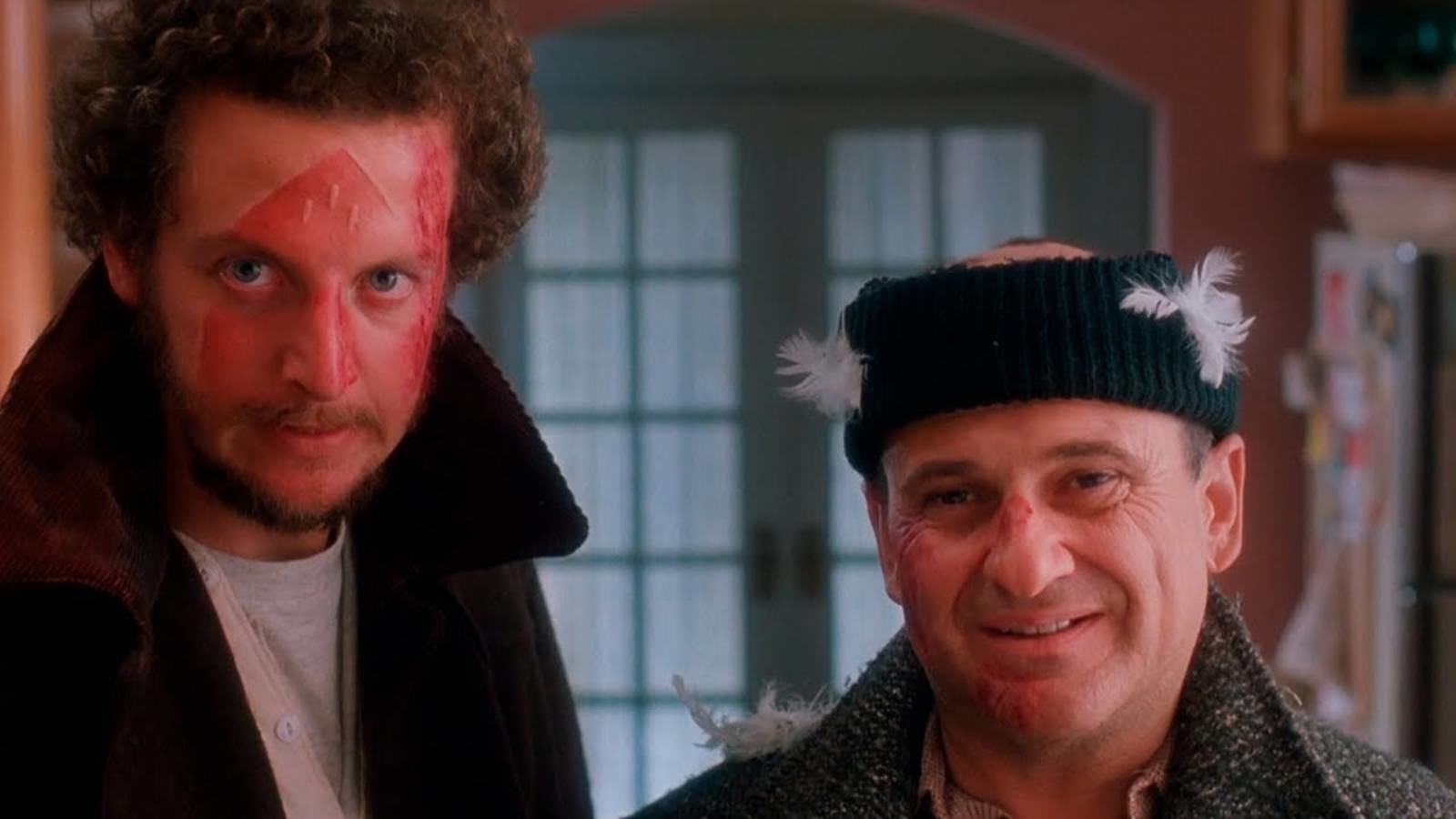
The Wet Bandits: Home Alone (1990)
When director Chris Columbus assembled Home Alone, few anticipated that Harry Lyme and Marv Murchins would become two of the most recognizable comedy foils in cinematic history. Portrayed with brilliant physical precision by Joe Pesci and Daniel Stern, the Wet Bandits balanced genuine menace with slapstick genius. They were predatory enough to make eight-year-old Kevin McCallister fear for his life, yet gullible enough to fall victim to micro-machine traps, blowtorches, and swinging paint cans.
Pesci, hot off his terrifying performance in Martin Scorsese’s Goodfellas, brought grounded temperamental fury to Harry, while Stern infused Marv with lovable, lanky idiocy. Their chemistry transformed a lean holiday comedy premise into an unstoppable global juggernaut. Their enduring appeal proves that high-stakes villainy does not always require high-caliber firearms or dark apocalyptic plots; sometimes, elite physical commitment and masterclass comedic timing are more than enough.
Hannibal Lecter: The Silence of the Lambs (1991)
Sir Anthony Hopkins turned Dr. Hannibal Lecter into an international obsession despite appearing on screen for less than twenty-five minutes. Directed by Jonathan Demme, The Silence of the Lambs swept the top five categories at the Academy Awards, largely driven by Hopkins’ hypnotic, unblinking performance as the cannibalistic forensic psychiatrist. Lecter represented an entirely new strain of horror: refined, exquisitely polite, possessing staggering intellect, and completely devoid of human empathy.
His tense psychological chess matches with Jodie Foster’s Clarice Starling dismantled conventional police procedurals. Rather than an animalistic brute, Lecter was a chillingly intellectual monster who analyzed personal traumas with surgical precision before devouring his captors. Hopkins’ indelible vocal inflection and haunting delivery established a gold standard for psychological thrillers that subsequent filmmakers have spent decades attempting to emulate.
Annie Wilkes: Misery (1990)
Stephen King adaptations often rely on supernatural dread, but Rob Reiner’s adaptation of Misery grounded terror in raw psychological obsession. Kathy Bates captured the Academy Award for Best Actress through her harrowing depiction of Annie Wilkes, the self-proclaimed “number one fan” who rescues author Paul Sheldon from a car crash only to hold him hostage in a remote cabin. Wilkes swung effortlessly from cheerful domesticity to unbridled, explosive rage.
The character remains a prescient critique of parasocial relationships, fan entitlement, and toxic devotion long before the dawn of modern social media. The legendary sledgehammer sequence remains one of the most viscerally distressing moments in movie history, largely because Bates humanized Annie’s loneliness while making her sudden bursts of manic violence utterly believable.
T-1000: Terminator 2: Judgment Day (1991)
James Cameron transformed blockbuster action filmmaking with Terminator 2: Judgment Day, and at the absolute center of that revolution stood Robert Patrick as the T-1000. Made of mimetic polyalloy liquid metal, this shape-shifting assassin was a marvel of cutting-edge computer-generated imagery. Yet what truly chilled audiences was Patrick’s robotic, relentless physical commitment. He sprinted without opening his mouth to breathe, fired weapons without blinking, and tilted his head with insect-like curiosity.
The T-1000 flipped the original film’s dynamic, forcing Arnold Schwarzenegger’s iconic T-800 into the role of a desperate protector against an adversary that simply could not be reasoned with or destroyed by conventional firepower. The character redefined visual effects storytelling and remains the ultimate model of an unstoppable sci-fi antagonist.
Cinematic Impact and Box Office Performance
The financial dominance of films featuring iconic bad guys proved that viewers rewarded daring, morally ambiguous narratives. From groundbreaking box office records to cultural phenomenons, the villains of the decade generated billions in global ticket sales and home video rentals.
| Character Name | Actor / Actress | Film Title | Release Year | Global Gross |
|---|---|---|---|---|
| The Wet Bandits | Joe Pesci & Daniel Stern | Home Alone | 1990 | $476.7 Million |
| Dr. Hannibal Lecter | Anthony Hopkins | The Silence of the Lambs | 1991 | $272.7 Million |
| T-1000 | Robert Patrick | Terminator 2: Judgment Day | 1991 | $520.8 Million |
| Scar | Jeremy Irons (Voice) | The Lion King | 1994 | $968.5 Million |
| John Doe | Kevin Spacey | Seven | 1995 | $327.3 Million |
| Agent Smith | Hugo Weaving | The Matrix | 1999 | $467.2 Million |
As reflected in detailed industry retrospective analyses published by Forbes entertainment business archives, character-driven narratives featuring compelling darkness consistently overperformed financial projections throughout the decade. Audiences repeatedly paid top dollar when the threat felt truly formidable and distinct.
Psychological Dread and Moral Corruption in Nineties Cinema
Beyond action blockbusters, the decade explored deeply personal, domestic, and systemic corruption. In David Fincher’s grim masterpiece Seven, the mysterious killer John Doe turned the seven deadly sins into a macabre thesis on urban moral decay. Unlike traditional cinematic murderers who run from law enforcement, Doe weaponized his voluntary surrender to orchestrate one of cinema’s most devastating psychological victories in the desert climax.
Screenwriters during this era refused to offer tidy resolutions where morality triumphed cleanly. When exploring iconic corrupt authority figures, few matched Gary Oldman’s unhinged performance as Norman Stansfield in Luc Besson’s Léon: The Professional (1994). Pop-eyed, sniffing narcotics, and waxing poetic about Beethoven before executing families in apartment corridors, Stansfield demonstrated that institutional decay could be just as horrifying as supernatural terror, a theme frequently echoed across Bright Celebrity film criticism.
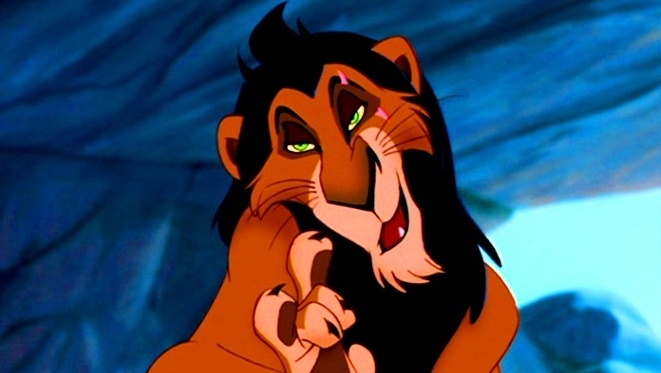
We also witnessed the apex of calculated Shakespearean villainy in animated format. Jeremy Irons delivered a career-defining vocal performance as Scar in 1994’s The Lion King. Channeling historical despots and classic theatrical villains, Scar’s fratricidal ambition and manipulative sarcasm elevated an animated family musical into high-tragedy drama that traumatized and enthralled millions of children worldwide.
Expert Take: The Architecture of Pure Menace
Leading film historians frequently point out that the late nineties reflected growing societal anxieties regarding technological ubiquity and corporate dehumanization. As noted by IMDb production histories and historical film archives, the decade culminated with The Matrix in 1999, introducing Hugo Weaving’s Agent Smith. Smith wasn’t just a sentry defending a simulation; he was a manifestation of existential disgust toward human frailty and chaos.
Weaving’s staccato cadence, rigid posture, and simmering disdain for the human species perfectly encapsulated millennial dread. By examining villains like Agent Smith alongside figures like Patrick Bateman from American Psycho or John Kramer in conceptual roots, scholars observe that antagonists evolved from simple obstacles into living commentaries on the socio-economic conditions of their era.
By The Numbers: The Critical Acclaim Behind The Bad Guys
The critical and cultural footprint left by these characters is measurable across dozens of metrics. During the 1990s, five separate acting Academy Award nominations were directly awarded to performances portraying unrepentant, cold-blooded antagonists. Furthermore, the American Film Institute’s official “100 Years… 100 Heroes & Villains” retrospective selected a remarkable twelve characters originating between 1990 and 1999, representing the highest concentration of modern villains from any single decade.
These accomplishments highlighted a creative paradigm shift: movie studios recognized that audiences possess a deep, psychological fascination with moral transgression. Writing a heroic character requires building empathy, but constructing a memorable bad guy requires daring to explore the darker corners of human capability without safety nets.
The Broader Roster of Unforgettable 90s Foes
Rounding out the comprehensive twenty greatest antagonists of the decade requires acknowledging those who injected terror into specialized subgenres. In the teen horror renaissance sparked by Wes Craven’s Scream (1996), the Ghostface identity—shared by Billy Loomis and Stu Macher—satirized slasher conventions while illustrating suburban teen nihilism fueled by media desensitization.
In historical drama, Ralph Fiennes provided an unflinching, chilling look at real-world evil as Amon Göth in Steven Spielberg’s Schindler’s List (1993). Fiennes portrayed the sadistic Nazi commandant with an unsettling, dispassionate banality that earned him universal acclaim and underscored the historical horrors of totalitarian regimes.
Even the classroom became a setting for terror through Roald Dahl’s adaptation Matilda (1996), where Pam Ferris embodied Miss Trunchbull, an authoritarian headmistress wielding shot puts, pigtail-swinging brutality, and the dreadful “Chokey.” Her larger-than-life cruelty remains a terrifying touchstone for entire generations of children, demonstrating that villainy operates on every scale of storytelling.
From the explosive, manic energy of Tommy DeVito in Goodfellas to the smooth, calculating deception of Keyser Söze in The Usual Suspects, screenwriters proved time and again that moral corruption makes for the most electrifying entertainment. These characters refuse to fade from memory because they demanded incredible vulnerability, terrifying ferocity, and raw dedication from the performers who brought them to life, solidifying their standing on Bright Celebrity pop culture rankings.
People Also Ask
Who is considered the best 90s movie villain of all time?
Dr. Hannibal Lecter, played by Anthony Hopkins in The Silence of the Lambs (1991), is widely ranked by critics and audiences as the greatest villain of the decade. The performance won Hopkins the Academy Award for Best Actor despite just 24 minutes and 52 seconds of screen time.
Why were 90s movie villains so memorable compared to other decades?
The 1990s combined relaxed studio censorship, visionary independent directors entering mainstream Hollywood, and prestigious dramatic actors embracing villainous roles. This perfect storm produced psychologically complex, character-driven antagonists rather than simple caricatures.
Did any actors win Oscars for playing 90s movie villains?
Yes, both Anthony Hopkins (The Silence of the Lambs) and Kathy Bates (Misery) won Academy Awards for their iconic villainous performances. Additionally, Joe Pesci won Best Supporting Actor for Goodfellas, and Ralph Fiennes received a nomination for Schindler’s List.
Who was the highest-grossing movie villain of the 1990s?
Scar from Disney’s 1994 animated masterwork The Lion King, voiced by Jeremy Irons, stands as the highest-grossing antagonist of the decade, with the movie generating over $968 million worldwide during its theatrical runs.
Enduring Legacy of 90s Antagonists
Looking back at the golden era of 90s movie villains, their influence on modern storytelling remains impossible to overstate. Today’s cinematic universes, prestige television dramas, and streaming epics owe a massive debt to the risks taken by filmmakers during this remarkable ten-year window.
By treating antagonists with narrative nuance, emotional complexity, and thematic gravity, nineties cinema taught audiences that understanding evil can be far more fascinating than simply defeating it. These twenty iconic adversaries did not just challenge their respective heroes—they redefined the artistic boundaries of modern film, leaving an indelible mark on cinematic history that will never be replicated.
More Like This
For more updates, check out our latest entertainment and sports news.