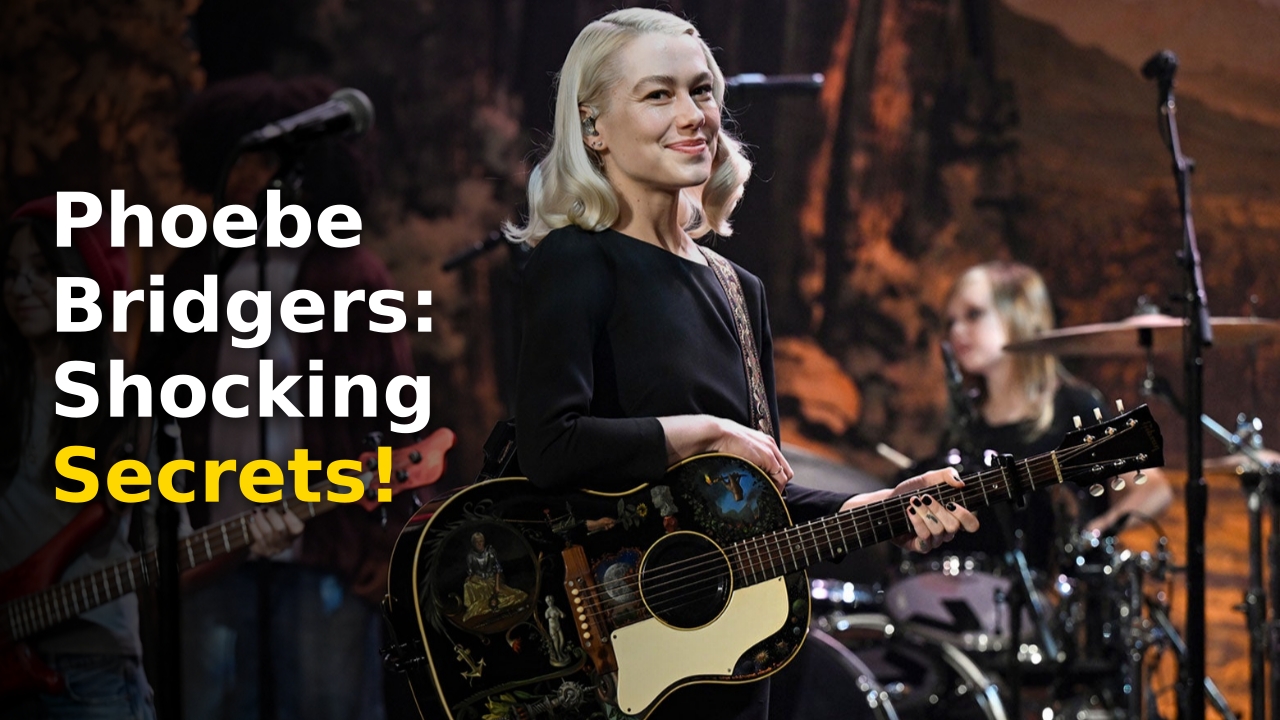
Phoebe Bridgers is arguably the most influential songwriter of her generation, and her return to the spotlight after a long hiatus proves that her creative fire is burning brighter than ever. You have likely spent the last three years wondering if the indie darling would ever shed her ‘sad girl’ persona, but her latest album, Lost Weekend, shatters every expectation you had about her trajectory. By stepping back from the public eye, she has managed to redefine what it means to be a modern pop icon while mourning personal losses that would have broken a lesser artist.
This deep dive explores the transformation of an artist who went from playing dive bars in Pasadena to selling out arenas alongside the industry’s biggest titans. As you navigate the complex sonic landscapes of her new work, you will discover why this transition is not just a career pivot, but a survival strategy for a 32-year-old artist at the top of her game. Welcome to the new era of Phoebe Bridgers.
Phoebe Bridgers: Unpacking Her Evolution
The cultural impact of Phoebe Bridgers is undeniable, yet the weight of her fame became a cage she had to escape. After the massive success of her 2020 album Punisher, she found herself caught in the crosshairs of internet scrutiny and the constant demand for more ‘sad’ content. You might recall the viral moment she smashed her guitar on Saturday Night Live, an act that polarized audiences and cemented her status as a rock star in a world that wanted a quiet poet.
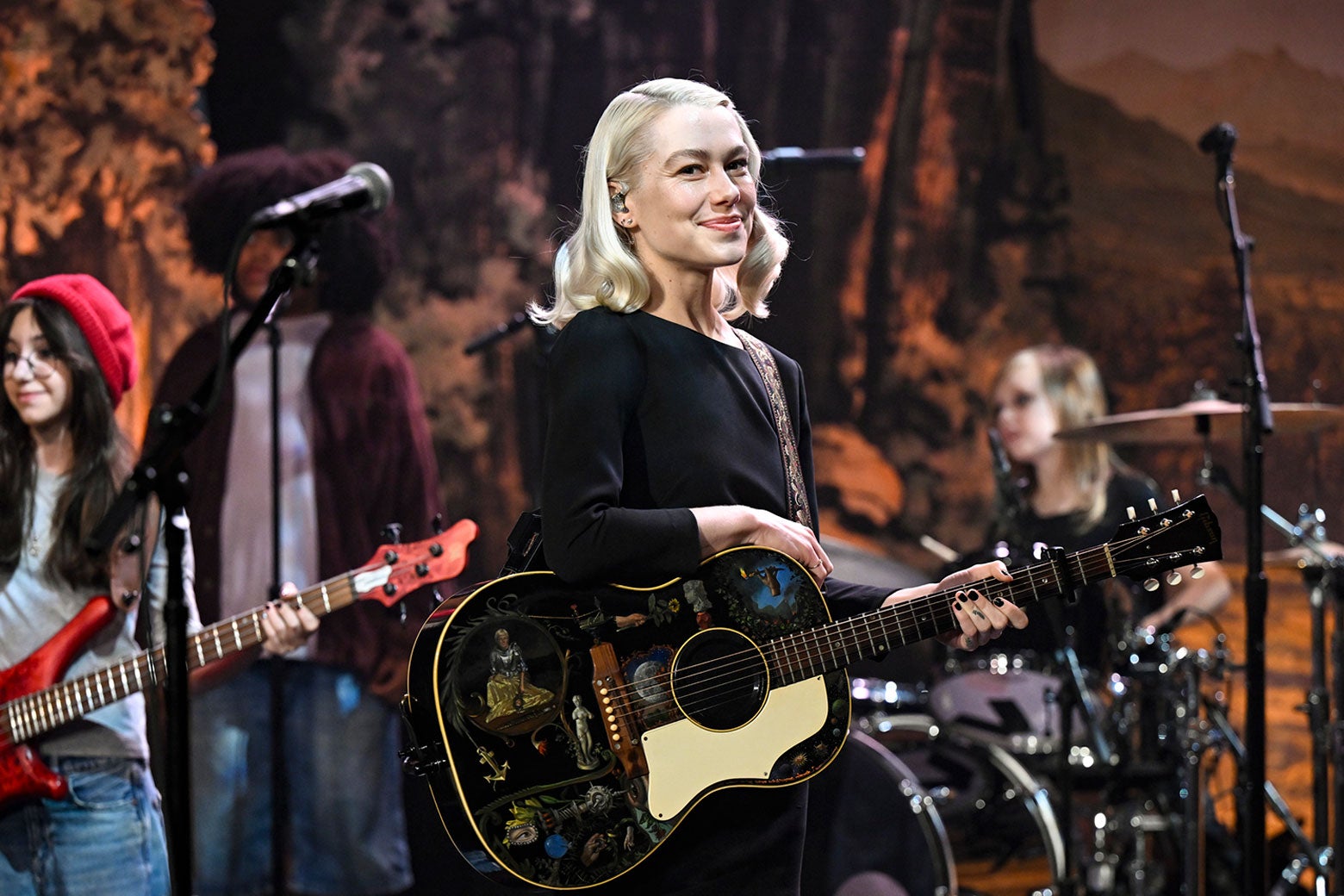
Her decision to take a ‘Lost Weekend’—a three-year sabbatical from the industry spotlight—was a masterstroke in regaining her sanity. During this period, she processed the death of her father in 2022, a central theme that pulses through the heart of her new music. By utilizing a vocoder, she distances her voice from the ‘whispery girl’ stereotype, choosing instead to become her own cybernetic chorus. This technical shift is a bold rebellion against the male gaze that has unfairly defined her sound for years.
You can follow the evolution of her business and artistic ventures by visiting the latest celebrity industry insights to see how stars successfully rebrand. It is fascinating to see how she balances the expectations of her massive, cult-like following with the need for authentic personal growth. Her collaboration with Pulitzer Prize winner Caroline Shaw signals a move toward complex, multi-layered textures that move well beyond the limitations of indie rock. She is no longer just singing for you; she is building an sonic world that stands entirely on its own.
The Emotional Cost of Fame
- The pressure of constant public scrutiny at airports and funeral services.
- Navigating the complex, often toxic, relationship with parasocial fan bases.
- The struggle to maintain identity while becoming the ‘reference’ for artists like Taylor Swift.
- The artistic dead-end risk of repeating the ‘Punisher’ formula.
The Statistical Shift of 2026
You can observe the monumental shift in her career through the sheer scale of her production, reach, and collaborative efforts compared to her early indie days. The following data highlights the growth of her influence since her debut.
| Career Milestone | 2020 Era | 2026 Era |
|---|---|---|
| Venue Size | Club/Theaters | Arenas/Stadiums |
| Production | Bedroom Pop/Indie | Cinematic/Orchestral |
| Collaborators | Indie peers | Pulitzer winners/Icons |
The Romantic Catalyst
Love often changes the trajectory of an artist’s output, and for Phoebe Bridgers, her relationship with Bo Burnham serves as a recurring, transformative motif on Lost Weekend. Unlike the tragic, introspective nature of her earlier tracks, the love songs on this record carry a forward-rushing energy. You hear a person who is actively choosing to find light in the shadows, marking a departure from the ‘I can’t go on’ mentality of her twenties.

Songs like ‘Bobby’ demonstrate a newfound vulnerability that replaces the cynical detachment of Stranger in the Alps. She isn’t just writing about the pain of loss anymore; she is writing about the terrifying, exhilarating prospect of a future built with someone else. This is the ultimate vulnerability for an artist whose entire brand was built on being the one who watches from the ‘outside.’ It is a brave, public declaration that signals her intent to live, not just perform living.
By intentionally bringing in Bo Burnham as a creative partner, she invites the listener into the intimacy of her life, yet she does so with a layer of mystery that keeps the tabloids guessing. This controlled chaos is exactly what she needs to keep her art honest. Even when she mentions killing her friends in a fit of playful hyperbole, you can feel the genuine weight of her affection. It is a masterclass in how to stay human while living in the public eye.
The Final Sonic Verdict
What makes Lost Weekend such a monumental achievement is that it doesn’t care if you ‘get it’ immediately. You are being challenged to sit with the dissonance, the abrupt endings, and the cryptic lyrics that refuse to be decoded by internet sleuths. She has effectively built a firewall around her personal life that ensures her art remains hers, regardless of how many fans want to tear it apart for social media ‘Easter eggs.’
For more deep-dive analyses on the changing landscape of modern music, you might want to check out reports from Reuters on how the industry is handling the saturation of digital celebrity content. Phoebe Bridgers has set a new standard for how a modern pop star can evolve without burning out. She has successfully moved from the ‘whispery girl’ aesthetic to a fully realized, complex, and sometimes abrasive musical force. You are witnessing the maturation of one of the finest songwriters of this century, and it is a beautiful, if occasionally painful, thing to behold.
In the final analysis, Phoebe Bridgers remains the architect of her own fate. She has proven that you can be honest about your grief, your love, and your ambitions, all while maintaining the dignity of your own voice. As she closes the chapter on her twenties and steps fully into her own power, we are lucky to be listening to the result of her hard-won transformation. Her journey teaches us that you don’t have to be a caricature of yourself to be successful; you just have to be willing to do the work to change.
More Like This
For more updates, check out our latest entertainment and sports news.