Key Takeaways
| Paul Finebaum publicly labeled Lincoln Riley a fraud regarding his tenure at USC. |
| The criticism follows a 41-27 loss to Oregon and controversial player behavior. |
| Firing Riley carries a massive $70 million buyout penalty. |
| Riley suspended Desman Stephens II for one game following a late hit. |
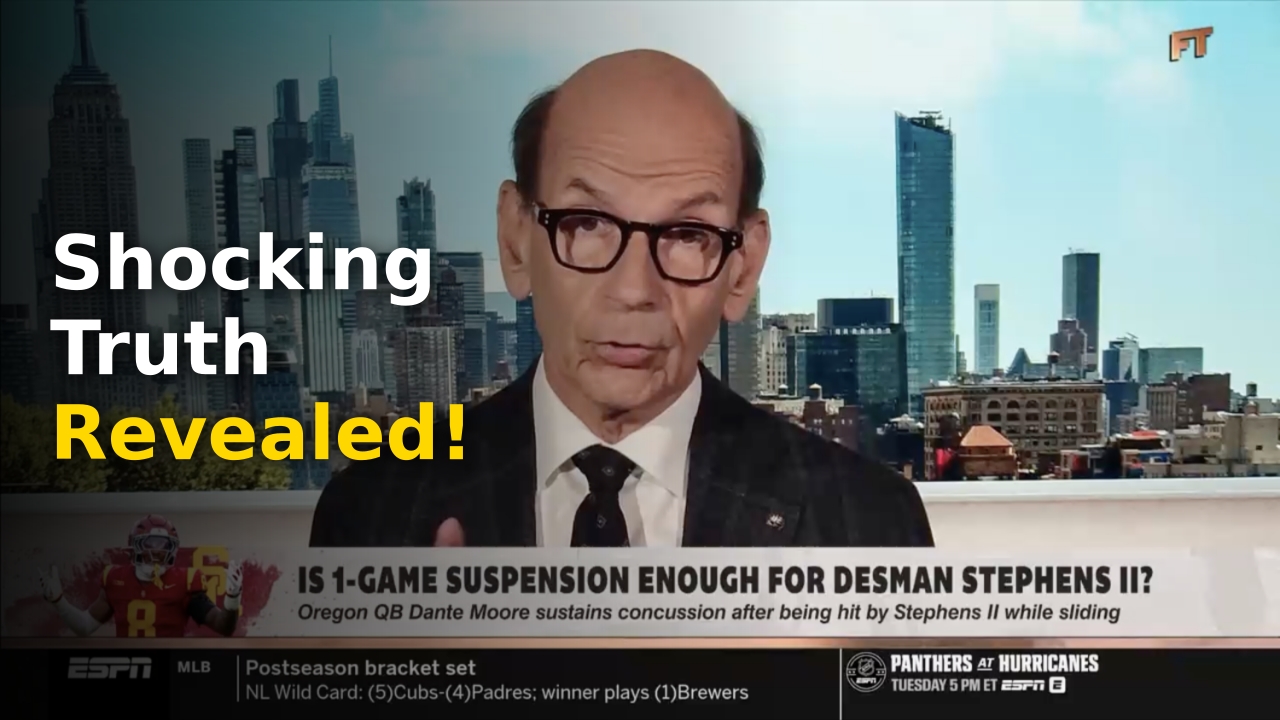
Paul Finebaum urges USC to dump fraud Lincoln Riley as the Trojans head coach faces an unprecedented wave of backlash regarding his leadership and team culture. You are watching the collapse of a once-storied powerhouse in real-time, as the program shifts from national championship contender to a source of viral national embarrassment. The mounting pressure comes after a demoralizing loss where the conduct of the players overshadowed the actual score on the field.
The discourse surrounding Riley’s future has reached a fever pitch following the Trojans’ 41-27 defeat to Oregon. While losing a football game is part of the sport, the way the team handled a dangerous hit on Ducks quarterback Dante Moore triggered a visceral reaction from national media pundits. By waiting until Sunday to discipline linebacker Desman Stephens II, Riley appeared to lose the narrative control that is vital for any elite college football program.
Why Paul Finebaum Urges USC to Dump Fraud Lincoln Riley

The commentary from Paul Finebaum on ESPN’s First Take serves as a bellwether for the broader frustration felt by the USC fanbase. Finebaum explicitly compared the current state of the Trojans to the Clay Helton era, suggesting that while the financial cost of termination is significantly higher, the reputational damage is far worse. This isn’t just about the scoreboard anymore; it is about the perception of a program that has lost its way under a coach once heralded as an offensive genius.
For the average fan, the frustration stems from the disconnect between the high expectations placed upon Riley and the reality of his recent performances. When Riley arrived from Oklahoma, he was supposed to bring a high-octane, disciplined culture to Southern California. Instead, the team has regressed, leaving many to wonder if the Lincoln Riley salary investment is yielding any tangible return on investment for the university administration.
Riley’s handling of the Desman Stephens incident became the flashpoint for this debate. Critics argue that a head coach at a blue-blood institution must maintain order and demonstrate accountability immediately, not after the public outcry forces their hand. When Stephens was shown on camera smiling on the sideline after a hit that effectively ended the opposing quarterback’s night, it painted a picture of a team that lacked the traditional class and grit expected of the USC brand.
As we examine the current trajectory, the comparison to Clay Helton is particularly stinging for the university. Helton was eventually dismissed due to a perceived lack of competitive edge, yet the current coaching staff is facing even louder accusations regarding a lack of control. Finebaum’s assertion that the program is in the gutter reflects the deep-seated concern that the identity of USC football is being eroded by questionable decision-making and a lack of on-field discipline.
The Financial Implications of a Coaching Change
Firing a coach is rarely a simple task, especially when that coach is tethered to a massive, multi-year contract. In the world of modern college athletics, USC football administration is now staring down a $70 million buyout figure if they were to move on from Riley. This staggering amount forces the board to weigh whether the current decline is merely a temporary slump or a fundamental flaw in the head coach’s philosophy.
To put this into perspective, we can look at the historical data regarding coaching buyouts and program resets. The table below illustrates the cost of turnover versus the performance dip often seen in programs that fail to address leadership issues early.
| Metric | Current Status | Projected Impact |
|---|---|---|
| Buyout Cost | $70 Million | Extremely High |
| Winning Percentage | Declining Trend | Negative |
| Recruiting Rank | Top 15 | At Risk |
While the financial barrier is daunting, the long-term impact on the USC athletics department—including season ticket sales, NIL contributions, and national ranking—often outweighs the immediate cost of a buyout. A program that has lost its identity struggles to bring in the top-tier talent required to compete in the new landscape of college football. If the fans stop believing, the revenue streams that support these massive contracts begin to evaporate.

Background and Expert Analysis
Looking back at Riley’s tenure, the rapid transition from the high-scoring days of Caleb Williams to the current struggles highlights how fragile success can be. During his first year, the team rode the success of a Heisman-winning quarterback to a respectable finish. However, the subsequent seasons have shown a lack of defensive development and consistent game management, which are the hallmarks of a championship program.
Expert analysts at ESPN’s college football coverage frequently point out that elite coaching is not just about schematic superiority; it is about establishing a culture of accountability. When a coach takes until Sunday to address a public relations disaster, he signals to his players that their actions are secondary to the team’s media narrative. This is the definition of a cultural failure that many argue is impossible to fix without a change in leadership.
By the numbers, Riley’s record is becoming indistinguishable from his predecessors who were let go. When you pair this lack of progress with the loss of national respect, it creates a toxic environment that usually necessitates a change. Whether the administration has the stomach to pull the plug remains to be seen, but the public chorus calling for his removal is growing louder every single week.
People Also Ask
Why is Paul Finebaum calling Lincoln Riley a fraud?
Finebaum labeled Riley a fraud due to his team’s lack of leadership, poor conduct during the Oregon game, and the program’s overall performance regression compared to his initial hiring expectations.
How much would it cost to fire Lincoln Riley from USC?
It is estimated that terminating Lincoln Riley’s contract would cost USC approximately $70 million in buyout fees, a significant financial hurdle for the university.
What incident triggered the criticism toward Riley?
The criticism was primarily triggered by a late hit by linebacker Desman Stephens II on Oregon QB Dante Moore, followed by Stephens’ unprofessional celebration on the sideline while the injured player was being attended to.
Did Lincoln Riley discipline his player for the hit?
Yes, Riley suspended Desman Stephens II for one game, though the delay in issuing this punishment was cited as a major point of criticism by experts like Paul Finebaum.
Final Thoughts
The situation at USC remains one of the most polarizing narratives in modern college athletics. As Paul Finebaum urges USC to dump fraud Lincoln Riley, the university finds itself at a crossroads between financial prudence and program preservation. If the Trojans continue to fall short on the field and struggle with off-field discipline, the pressure on the athletic department to act will become impossible to ignore. Whether or not a change is imminent, the brand of USC football is currently suffering, and the clock is ticking on Riley’s ability to turn the ship around.
More Like This
For more updates, check out our latest entertainment and sports news.