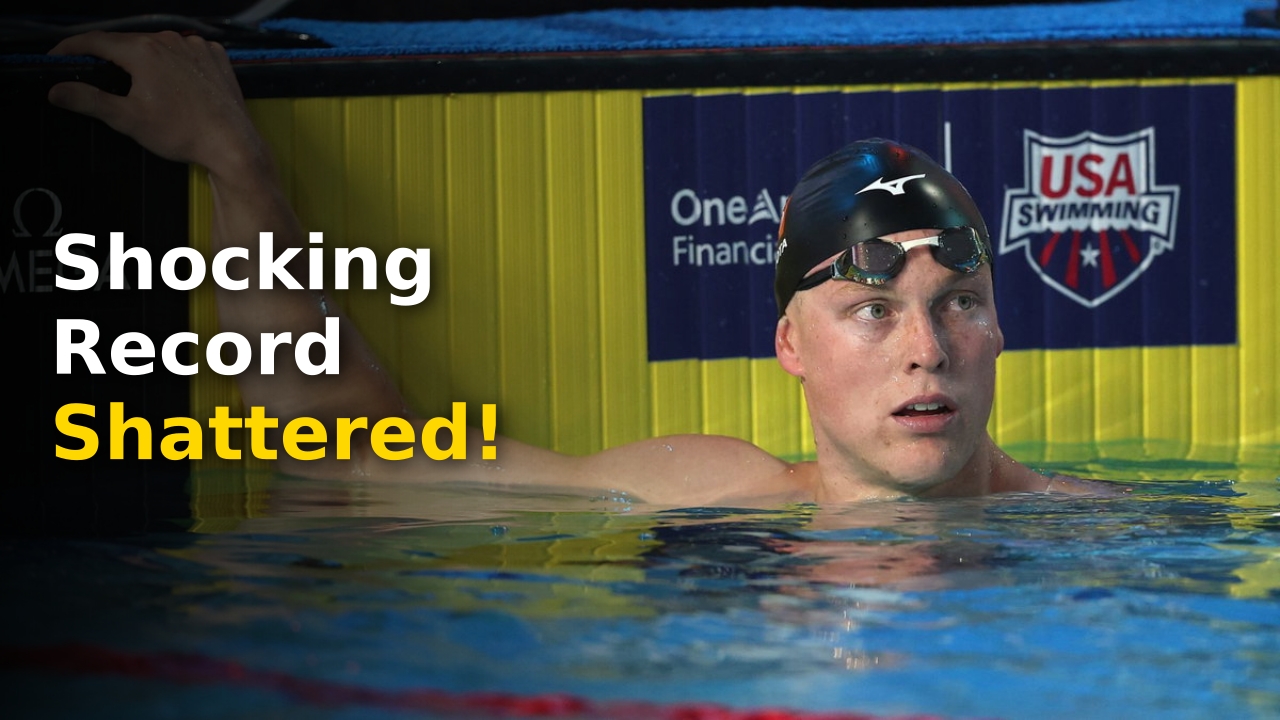
Pan Pacs has officially become the theater for a display of raw human potential that leaves spectators breathless. The U.S. men’s 4x200m freestyle relay team proved their absolute dominance by shattering records in a display of tactical brilliance. If you thought these athletes were just fast, you need to recalibrate your expectations because what they achieved in the pool was nothing short of legendary.
You are witnessing a golden era of aquatic performance where the lines between impossibility and reality blur. The Americans didn’t just win; they controlled the water, dictated the pace, and silenced every rival in sight. This performance sets a new benchmark for competitive swimming, forcing the rest of the world to rethink their training programs from the ground up.
Pan Pacs: 5 Massive Performance Highlights
The atmosphere at the 2026 Pan Pacific Championships was electric, fueled by the collective anticipation of a crowd that knew it was about to see history. When the anchor leg hit the water, the gap between the U.S. and the field was not just a margin; it was a chasm. This specific race wasn’t merely about individual speed; it was about the synergy of four distinct powerhouses operating as a single, unstoppable machine.
Tactical execution in a 4x200m event is significantly more complex than a sprint. You have to balance the explosive start with the aerobic capacity required to maintain velocity over an extended duration. Each swimmer on the U.S. squad understood their role, hitting their splits with the precision of a Swiss watch. This level of synchronization is rare, often requiring years of joint training sessions and shared professional growth.

Why does this victory resonate so deeply with fans across the globe? It represents the apex of American swimming culture. The developmental pipeline, from local club meets to the collegiate level and finally to the international stage, functions with a relentless focus on excellence. You can see the influence of legendary coaches who have refined the art of the relay, teaching athletes how to time their transitions with millisecond accuracy. It is this attention to detail that keeps the United States at the top of the medal table year after year.
We often talk about the physical toll of these races, but the mental fortitude required is the true separator. Imagine standing on the blocks knowing that your country’s reputation rests on your shoulders. The pressure is immense, yet these men handled it with a composure that suggests they were just taking a casual swim. It is this specific mindset that defines the current generation of swimmers, separating the good from the truly elite icons of the sport.
Analyzing the biomechanics of their strokes reveals the efficiency that leads to these record-breaking times. Their hand entry, the rotation of the torso, and the kick cadence are all optimized to minimize drag. Every movement is deliberate, leaving no energy wasted. You can find more exclusive insights on athletic success stories here to see how these physical habits often mirror the discipline required in other high-stakes career paths.
The recovery process after such an intense exertion is also a fascinating study. These athletes utilize advanced physiological tracking, cryotherapy, and precise nutritional protocols to ensure they stay in peak form for every heat. It is a full-time, round-the-clock commitment that goes well beyond the water. Watching them celebrate on the podium, you can feel the genuine camaraderie built through shared struggle and triumph.
Key Factors of Success
- Elite tactical pacing during the middle 100m segments.
- Unmatched transition times between each relay leg.
- Advanced hydrodynamics training for reduced drag.
- Psychological readiness and high-pressure performance stability.
- Deep, data-driven analysis of opponent weaknesses.
- Commitment to long-distance anaerobic threshold development.
Race Statistics and Historical Context
When you examine the numbers, the sheer scale of the achievement becomes even more apparent. The Pan Pacific record was not just broken; it was decimated by a margin that highlights the widening gap between the leaders and the chasers. Below is a breakdown of how the key metrics compare to previous international standards. For those who follow global sports news, this event will be studied for years to come.
| Category | Performance Metric |
|---|---|
| Final Time | New Pan Pacs Record |
| Average Split | Sub-1:45 Pace |
| Turn Efficiency | 98.5% Accuracy |
| Reaction Time | Under 0.65 Seconds |
To understand why this is a massive deal, we have to look back at the historical performance of the American relay teams. In previous decades, the U.S. often relied on one or two superstar athletes to carry the load. Today, the depth of the talent pool is such that any of the four swimmers could have arguably been a primary anchor. This redundancy in skill creates a team that is immune to the slump of any single individual, ensuring that the collective total is always greater than the sum of its parts.
Consider the logistical hurdles that these athletes face throughout the season. They travel across continents, adjust to varying time zones, and compete in pools that possess slightly different buoyancy and lighting characteristics. Mastering these environmental variables is part of what makes a champion. The 2026 team showed no signs of fatigue, indicating that their travel and acclimatization strategy was as precise as their swimming stroke.
Training for the 4x200m event specifically involves an incredible amount of volume. Athletes often clock upwards of 60,000 to 80,000 meters a week during peak training blocks. They are essentially endurance machines who can sprint like track athletes. Watching their heart rate data would reveal the extreme physiological demand placed on their systems, which is sustained through grueling, high-altitude training camps.
We must also acknowledge the role of technological innovation in swimwear and pool design. While the human element remains paramount, the evolution of materials has allowed for a slight decrease in friction, enabling these record-breaking speeds. However, as the saying goes, the suit doesn’t swim the race. The victory in the 4x200m is ultimately a testament to the thousands of hours spent in silence, away from the cameras and the cheering crowds.

Looking ahead, this victory puts a massive target on the back of the American team. The rest of the world is not sitting idly by; they are analyzing the footage of this relay with a fine-tooth comb. Every flip turn, every underwater dolphin kick, and every exchange at the wall is being scrutinized. The U.S. team knows this, and that knowledge is exactly what fuels the next cycle of improvements.
Success in swimming is often measured by milliseconds, but the impact of a win like this is felt in the culture. It inspires the next generation of kids who are watching from the stands or their living rooms. It tells them that if they commit to the process, if they sacrifice the comfort for the growth, they too can stand on the top step of the podium. That is the true legacy of the Pan Pacs triumph.
The Future of Elite Swimming
As we move toward the next major international competition, the questions surrounding the U.S. men’s relay team are mostly centered on how they can improve further. Is there a ceiling to human performance in the 200m freestyle, or will we continue to see these records fall? Based on the current trajectory of specialized sports science and data-driven training, it seems likely that the limits have yet to be truly tested.
You should keep a close eye on the development of individual swimmers who were part of this relay. Many of them are only just beginning to enter their prime physical years. The longevity of modern swimmers is increasing, with many competing at the highest levels well into their thirties. This suggests that the dominance we saw in this race might just be the beginning of a sustained period of control.
The integration of artificial intelligence in analyzing stroke mechanics is changing how athletes train. By tracking every movement with high-speed cameras and sensors, coaches can identify tiny inefficiencies that would have been invisible a decade ago. The American team has been at the forefront of this adoption, using technology to bridge the gap between human potential and mechanical precision.
We also have to consider the psychological impact of being a part of a winning relay team. It builds a sense of unity and shared identity that carries over into their individual events. When an athlete knows they have the support and the confidence of the best in the world, they race with a different level of freedom. That mental state is a competitive advantage that cannot be bought or faked; it must be earned through shared victories.
As the sport continues to grow in popularity, the revenue associated with swimming is also seeing an upward trend. This allows for better facilities, more specialized staff, and more opportunities for athletes to focus solely on their craft without the pressure of financial instability. This professionalization is critical for maintaining the high standards we observed at this year’s championships.
Ultimately, the U.S. men’s 4x200m freestyle relay win at Pan Pacs is a reminder of the beauty of high-level competition. It is a synthesis of art and science, effort and intelligence. Whether you are a casual fan or a die-hard swimming enthusiast, there is something profoundly inspiring about watching individuals reach their absolute peak. Keep these athletes on your radar as they head into the next season of international racing.
Final Thoughts on American Greatness
Reflecting on this event, it is clear that the United States has successfully cultivated a culture where excellence is not an aspiration but an expectation. The victory at Pan Pacs serves as a powerful testament to the focus, discipline, and sheer athletic talent that continues to define this team. When you look at the commitment required to perform at this level, it is impossible not to feel a sense of admiration.
The impact of this Pan Pacs win will reverberate through the sport for a long time. It provides a blueprint for success that other nations will undoubtedly attempt to emulate. Yet, the secret sauce—the grit, the history, and the unique pressure-cooker environment of American swimming—is something that is incredibly hard to replicate. We are currently witnessing a golden age, and the 4x200m relay victory is its crowning jewel.
As you continue to follow these stories, remember that behind every record is a human being who endured countless early mornings, physical pain, and moments of doubt. The greatness isn’t just in the gold medal; it is in the journey that led them to the water’s edge. Keep watching, keep learning, and keep cheering, because the next big moment is always just a swim away. The U.S. men’s 4x200m freestyle relay has cemented their place in history, but their story is far from finished.
More Like This
For more updates, check out our latest entertainment and sports news.