Key Takeaways
| Critical Dilemma: Tampa Bay must balance Nikita Kucherov’s age against his legendary on-ice production. |
| Financial Horizon: Analysts estimate Kucherov’s upcoming market value could range between $12 million and $17 million annually. |
| Historical Precedent: The Lightning previously allowed captain Steven Stamkos to walk, proving they prioritize systemic longevity over nostalgia. |
| Retooling Reality: Tampa Bay plans to remain competitive while navigating a rapidly closing championship window. |
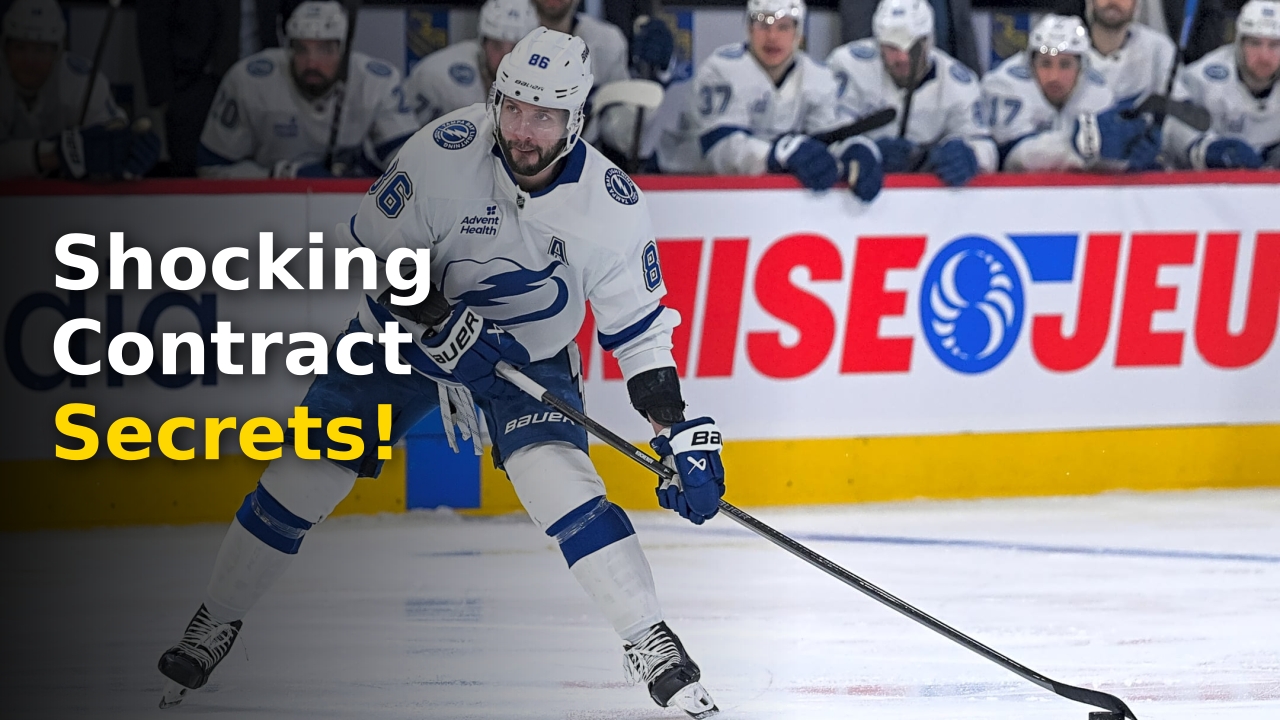
You might find it hard to believe, but the looming resolution of the Nikita Kucherov Contract will completely dictate the future of the Tampa Bay Lightning franchise. As the team stands on the precipice of a new era, general manager Julien BriseBois faces one of the most complex negotiations in modern hockey history. The Russian superstar is in the final season of an eight-year, $76 million bargain contract that paid him a modest $9.5 million annually. After capturing multiple Stanley Cups and a Hart Trophy, the elite winger has outperformed his current deal by a staggering margin.
The central problem is not Kucherov’s current level of play, which remains firmly in the elite tier of the National Hockey League. The true challenge lies in the unforgiving nature of the NHL salary cap and the inevitable march of time. Kucherov will turn 34 years old by the time his next contract begins, presenting a classic timeline conflict for a front office that must transition to a younger core. Fans are desperately wondering whether the team will choose sentimental loyalty or cold, calculating business decisions to stay afloat.
Tampa Bay has spent the last decade operating as an elite powerhouse, sacrificing draft capital and future prospects to maximize their championship windows. Today, their depth has been tested by years of cap casualties, leaving the roster top-heavy and vulnerable. Securing Kucherov to a massive, long-term extension could paralyze their ability to rebuild the supporting cast. Conversely, letting him walk away in free agency would instantly strip the roster of its offensive engine and alienate a passionate fanbase.
For those following exclusive sports coverage, this negotiation represents a crucial turning point for the entire league. Elite superstars rarely reach unrestricted free agency in their prime, and even at 34, Kucherov represents a franchise-altering talent. If negotiations stall, the trade rumors will reach a fever pitch, creating a massive distraction during a vital season. The decisions made over the next few months will reverberate through the Atlantic Division for the next half-decade.
Nikita Kucherov Contract: The 5 Shocking Dilemmas
The first major dilemma centers around the sheer financial scale of Kucherov’s next deal. Given his recent 144-point season, he has a legitimate claim to demand a maximum-value contract that reflects his status as a top-three offensive force. Under current market conditions, players of his caliber routinely command upwards of $12.5 million per season. However, committing that much cap space to an aging winger presents an enormous risk for a franchise trying to retool on the fly.
Julien BriseBois has established a reputation as a ruthless negotiator who rarely allows emotion to dictate his roster construction. This was highly evident when the team parted ways with beloved icon Steven Stamkos, a move that shocked the hockey world. The front office preferred to allocate their financial resources to Jake Guentzel, younger and theoretically more suited to their long-term timeline. Whether Kucherov will receive the same clinical treatment remains the biggest storyline of the NHL season.
The Salary Cap Paradox
The NHL salary cap is projected to rise significantly over the coming years, offering some financial relief to contending teams. However, the Lightning already have massive, long-term financial commitments to Brayden Point, Brandon Hagel, and Jake Guentzel. Adding another high-AAV contract for a player entering his mid-to-late thirties could severely restrict their capability to build a balanced lineup. It forces the coaching staff to rely on league-minimum contracts and unproven prospects to fill out the bottom-six forward group.
The Nostalgia Act vs. Rebuild
Historically, sports franchises often fall into the trap of paying aging superstars for past achievements rather than future performance. Fans love nostalgia, and watching Kucherov retire in a Lightning sweater is a dream scenario for local supporters. Yet, a look at teams that clung too long to their veteran cores reveals a cautionary tale of rapid decline and prolonged rebuilding periods. The front office must decide if they are comfortable running a nostalgia show while slowly slipping out of playoff contention.
Another factor is Kucherov’s highly unique playing style, which does not rely heavily on raw physical speed or bruising physical play. Instead, his dominance stems from elite anticipation, world-class vision, and an unmatched ability to slow down the game’s pace. Playmakers of this archetype often age far more gracefully than speed-dependent wingers, suggesting he could remain highly productive well into his late thirties. This distinct athletic profile might convince the front office that a longer term is a gamble worth taking.

By The Numbers: Visualizing Kucherov’s Market Value
To fully understand the leverage at play, we must analyze the contract landscapes of comparable NHL superstars. Several elite wingers and playmakers have recently signed massive extensions in their early thirties, setting a clear precedent for Kucherov’s representatives. By looking at these benchmark deals, we can project the realistic financial parameters of the upcoming **Nikita Kucherov Contract** negotiations. The numbers illustrate just how much of an anomaly Kucherov is in terms of cost-to-production efficiency.
The following table outlines how Kucherov’s current productivity and age compare to recent high-profile contract signings across the league. This comparative data showcases the delicate balance between term, age, and annual average value (AAV) that front offices must navigate. It highlights the premium placed on elite offensive production, even as players transition past their traditional athletic primes.
| Player Name | Signing Age | Contract Term | Projected/Actual AAV | Stat Line (Prior Season) |
|---|---|---|---|---|
| Nikita Kucherov (Projected) | 34 | 3 Years | $12.5M – $14.0M | 44 Goals, 144 Points |
| Artemi Panarin | 27 | 7 Years | $11.64M | 28 Goals, 87 Points |
| Patrick Kane (Historical) | 26 | 8 Years | $10.5M | 29 Goals, 69 Points |
| Brock Nelson | 33 | 3 Years | $7.5M | 34 Goals, 69 Points |
As the table indicates, elite production commands top-tier compensation regardless of signing age. For a deep look at how modern teams manage these massive commitments under tight constraints, check out ESPN’s comprehensive NHL coverage. The data shows that while Kucherov will undoubtedly receive a raise, the term of the contract remains the critical battleground for BriseBois. If Kucherov insists on a five- or six-year commitment, negotiations could quickly turn combative.
Ultimately, the Lightning would prefer a shorter, higher-AAV deal to protect their long-term flexibility. A three-year contract at $13 million per season would keep Kucherov motivated, highly compensated, and aligned with the remaining competitive years of Victor Hedman and Andrei Vasilevskiy. However, Kucherov’s camp knows that this represents his final opportunity to secure a massive financial guarantee, giving them immense leverage in any negotiation.
Lessons From Pittsburgh and Chicago
When analyzing how to handle aging icons, NHL general managers typically look to the historical blueprints established by the Chicago Blackhawks and the Pittsburgh Penguins. These two franchises dominated the 2010s, winning multiple championships with legendary core groups. However, their approaches to the inevitable decline of those cores could not have been more different. Tampa Bay must carefully evaluate which path offers the best chance of sustained relevance.
The Chicago Blackhawks chose to move on from their iconic duo of Patrick Kane and Jonathan Toews when their expensive contracts expired. While this decision was incredibly painful for the fanbase, it cleared the deck financially and allowed the team to secure high draft picks, eventually landing phenom Connor Bedard. This path prioritizes a complete, scorched-earth rebuild over prolonged mediocrity. It is a strategy that BriseBois has likely studied as he plans the next decade of Lightning hockey.
Conversely, the Pittsburgh Penguins chose the path of ultimate loyalty, committing massive financial resources to keep Sidney Crosby, Evgeni Malkin, and Kris Letang together. While this has kept the Penguins competitive and highly relevant, it has also trapped them in a cycle of mediocrity, struggling to make the playoffs without the depth necessary to contend for a Cup. The front office has had to work overtime, relying on aggressive trades to patch holes in a shallow roster.
Tampa Bay’s management team has consistently shown they lean more toward the cold efficiency of Chicago’s roster management than the nostalgic loyalty of Pittsburgh. They have routinely traded fan favorites and let key contributors walk to maintain cap health. Yet, Kucherov is not just a regular contributor; he is arguably the most talented player to ever wear a Lightning uniform, making his potential departure a much tougher pill to swallow.

Replacement Strategies and the Stamkos Precedent
If the team decide that the asking price for a new **Nikita Kucherov Contract** is simply too high, they have already demonstrated their ability to execute a backup plan. The departure of Steven Stamkos was a masterclass in risk management and strategic pivot. Instead of overpaying an aging captain, the Lightning used that financial flexibility to sign Jake Guentzel, a younger, highly efficient scorer who immediately fit into their top line. It proved that no single player is completely irreplaceable in their system.
To explore how these high-stakes roster moves influence the broader sports landscape, check out pop culture and sports features that analyze the intersection of athlete brand power and team business decisions. The modern elite athlete understands their market value, and Kucherov is no exception. Should he hit the open market, he would immediately become the most coveted prize in free agency, attracting massive offers from rebuilding teams with abundant cap space.
For the latest updates on roster movements and official league transactions, you can consult the NHL’s official news and roster updates. The Lightning’s geographic advantage, featuring no state income tax in Florida, has always been a major recruiting tool. Even if Kucherov departs, Tampa Bay will remain a highly attractive destination for elite free agents. This structural advantage gives BriseBois a safety net that most other general managers can only dream of.
Ultimately, replacing Kucherov’s specific on-ice genius is an almost impossible task. His chemistry with Brayden Point and his legendary power-play vision are elements that cannot simply be bought on the open market. While a committee approach could offset some of the lost production, the Lightning’s status as a true Stanley Cup contender would undoubtedly take a massive hit without number 86 leading the charge.
People Also Ask
What happened with the Nikita Kucherov Contract situation today?
The Nikita Kucherov Contract negotiations remain ongoing, with both sides expressing a strong desire to reach an agreement before the star winger hits unrestricted free agency next July. While no official deal has been signed, analysts expect a short-term, high-AAV extension to be the most likely outcome.
Why is Nikita Kucherov trending right now?
Kucherov is trending due to the impending expiration of his highly lucrative eight-year, $76 million contract, making him one of the most high-profile potential free agents in recent NHL history. His incredible on-ice production has put intense pressure on the Tampa Bay Lightning front office to secure an extension.
How does the Steven Stamkos departure affect Kucherov’s contract talks?
The departure of Steven Stamkos showed that Tampa Bay’s front office is willing to make difficult, unsentimental roster decisions to maintain long-term financial flexibility. This precedent suggests that while the Lightning want to keep Kucherov, they will not overpay or offer excessive term simply out of loyalty.
When is Nikita Kucherov set to become an unrestricted free agent?
Nikita Kucherov is scheduled to become an unrestricted free agent on July 1, 2025, if he does not sign an extension with the Tampa Bay Lightning before that deadline. This timeline has made his contract situation the most critical storyline of the current NHL season.
What the Future Holds for Tampa Bay
As the season progresses, the pressure on both sides to resolve the **Nikita Kucherov Contract** will continue to mount. Every game without an extension will fuel media speculation and serve as a distraction for a team trying to secure another championship run. Julien BriseBois has proven that he is comfortable operating under intense pressure, but this negotiation represents his ultimate test as a front-office leader. The decision will define his legacy and the future of hockey in Tampa Bay.
For fans who want to stay updated on all the breaking news surrounding this negotiation and other sports stories, be sure to visit trending athlete updates for continuous, in-depth coverage. The situation is highly fluid, and a breakthrough could happen at any moment. Until a contract is officially signed, the hockey world will be watching Tampa Bay with bated breath, waiting to see if they can pull off yet another salary-cap miracle.
In the end, the resolution of this contract saga will tell us exactly what kind of franchise the Tampa Bay Lightning want to be. Will they choose to remain a highly competitive, ruthless machine that prioritizes asset management over sentiment? Or will they allow their greatest superstar to play out his golden years in the city he helped put on the hockey map? The answer to that question will define the next era of Lightning hockey, and the hockey world cannot wait to find out.
More Like This
For more updates, check out our latest entertainment and sports news.