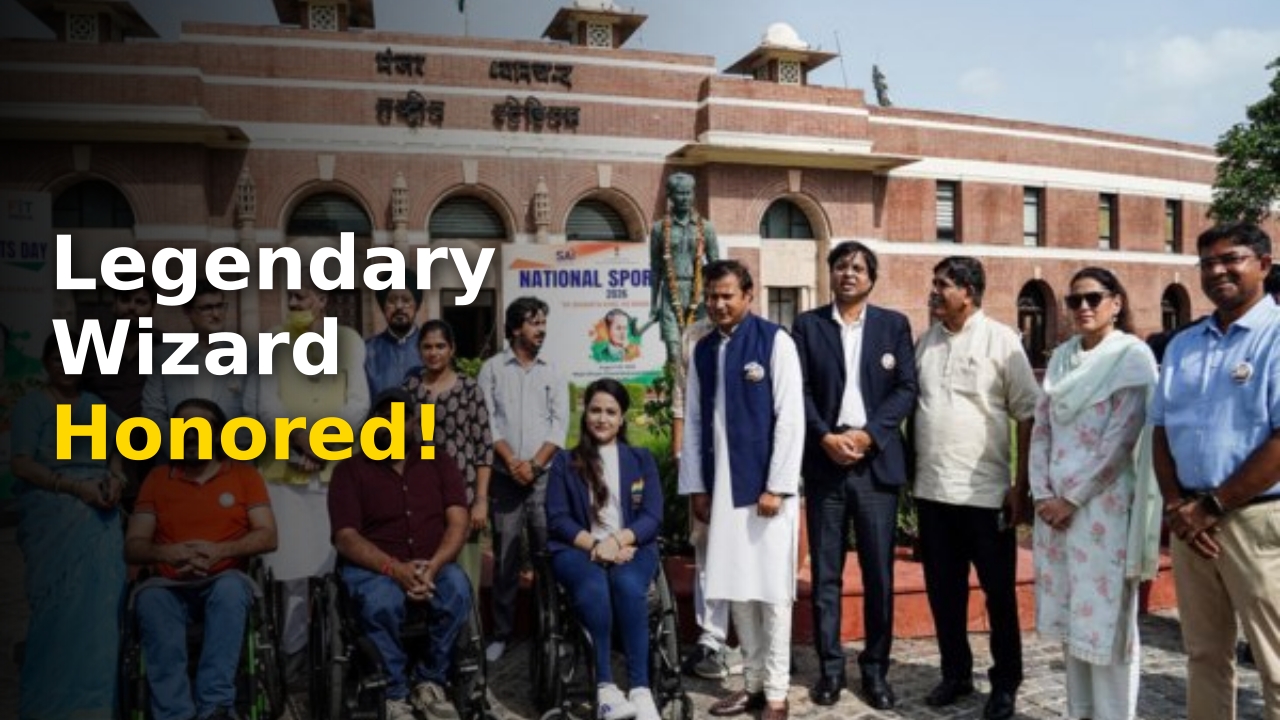
⚡ Key Takeaways
- India celebrates its National Sports Day annually on August 29 to honor the legendary Major Dhyan Chand’s birth anniversary.
- The iconic Major Dhyan Chand National Stadium in New Delhi served as the epicentre for breathtaking modern tributes.
- Dhyan Chand’s legendary career boasting three Olympic gold medals continues to serve as the ultimate blueprint for global hockey.
- Modern grassroot programs like Khelo India are actively engineered to revive the Golden Era of Indian field hockey.
- Elite sports historians reveal how the Wizard’s legacy directly paved the way for India’s recent Olympic podium finishes.
If you have ever felt the electric pulse of a stadium holding its breath, you will understand why the celebration of **National Sports** Day holds an almost sacred place in the heart of Indian athletic history. Every year, a wave of profound national pride sweeps across the sub-continent as millions pay homage to the country’s ultimate sporting icon, Major Dhyan Chand. The monumental tribute held at the historic Major Dhyan Chand National Stadium in New Delhi proved to be much more than a routine memorial. It served as a powerful declaration of India’s soaring sporting ambitions on the global stage.
This year’s event showcased a spectacular convergence of past glory and future aspirations, drawing legendary Olympians, young prodigies, and high-ranking administrators. The atmosphere was charged with collective reverence as the nation paused to reflect on the hockey pioneer who single-handedly put India on the global sporting map. From the sprawling courts of regional academies to the high-performance centers of the capital, the spirit of the Wizard of Hockey was felt everywhere. This celebration is a reminder of how deep-rooted athletic excellence is within the nation’s cultural DNA.
You can see this legacy reflected in the rising popularity of various modern sports leagues across India, which are covered extensively by media outlets like Bright Celebrity. The evolution of Indian sports from colonial-era domination to a multi-discipline global force is a testament to the foundation laid down by early pioneers. As the nation marches toward future Olympic cycles, understanding the origins of this sporting revolution becomes essential for every passionate fan.
The Sacred Turf of National Sports Celebrations
The legendary Major Dhyan Chand National Stadium, formerly known as the Irwin Amphitheatre, stands as a quiet witness to some of the most historic moments in international sports. It was on this very ground that the first-ever Asian Games were hosted in 1951, cementing India’s role as a leader in regional athletic development. For the annual celebration, the stadium was transformed into a stunning gallery of memories, illuminated with archival photographs and interactive digital exhibits tracing the history of hockey. Fans and young athletes walked through the gates with a shared sense of reverence, knowing they were stepping onto the ground named after the absolute master of the game.
The morning commenced with a solemn wreath-laying ceremony at the majestic statue of Major Dhyan Chand situated at the stadium’s entrance. Dignitaries and sports stars spoke about the timeless relevance of the Wizard’s legendary discipline, unparalleled sportsmanship, and deep patriotism. They highlighted how his legacy continues to inspire the current crop of Indian athletes who made history at the Tokyo and Paris Olympic Games. By recognizing the roots of Indian hockey, the nation ensures that the fiery passion of the past is passed on to future generations.
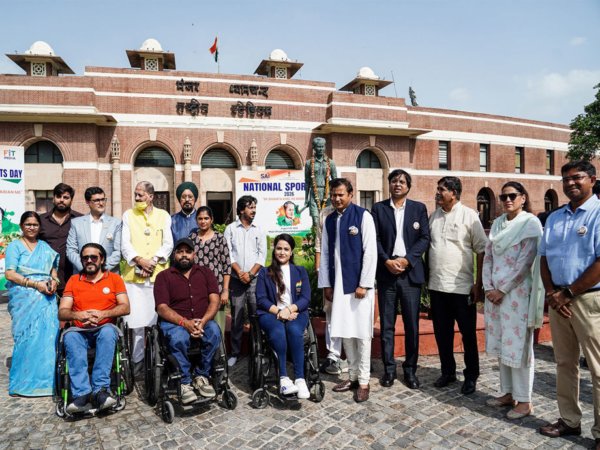
Honoring the Wizard of Hockey
To truly understand the stature of Major Dhyan Chand, one must look at how his unparalleled stickwork bewildered opponents and spectators alike. Rumors often spread that his stick possessed a hidden magnet, prompting authorities in Europe to break his hockey stick to inspect its core. Such was the level of his artistry that even the infamous Adolf Hitler was spellbound during the 1936 Berlin Olympics. Hitler reportedly offered Dhyan Chand German citizenship and a high military rank, which the fiercely loyal Indian soldier politely declined.
This legendary status is the reason why his birthday, August 29, was officially designated as India’s National Sports Day in 2012. The day is not just about nostalgia; it serves as the official platform for presenting the prestigious National Sports Awards. These honors include the Major Dhyan Chand Khel Ratna Award, the Arjuna Award, and the Dronacharya Award. These accolades represent the highest recognition an Indian athlete or coach can receive, sparking dreams in millions of young hearts across the nation.
The Spectacle at Major Dhyan Chand National Stadium
The modern celebrations featured highly competitive exhibition matches, bringing together veterans and promising junior players on the blue turf. Spectators were treated to a display of classic rolling substitutions, tactical aerial passes, and intense penalty corner drills. The event also integrated various indigenous sports like Kabaddi, Kho-Kho, and Mallakhamb, emphasizing a diverse sporting culture. This holistic approach reflects India’s ambition to become a comprehensive multi-sport superpower in the coming decade.
Government officials utilized the grand venue to launch several ambitious developmental programs designed to identify talent in rural pockets. The focus has shifted from merely participating in global events to establishing sustainable podium-finish pipelines. By leveraging state-of-the-art sports science, nutritional counseling, and mental conditioning, India is gradually professionalizing its entire athletic ecosystem. The legacy of the Wizard is being used as a catalyst to drive this modern, high-tech revolution in training.
By The Numbers: The Olympic Dominance of Indian Hockey
To appreciate the sheer scale of the historical foundation laid by early Indian teams, we must examine the statistics. During the golden era of Indian field hockey, the national team achieved a level of dominance that has never been replicated by any country in any team sport. The early Olympic campaigns were not merely victories; they were absolute masterclasses in tactical execution, physical endurance, and sublime skill.
The era defined by Major Dhyan Chand established a standard of play that revolutionized the sport globally. Opponents often adjusted their entire defensive structures simply to contain his movement on the field. The statistical breakdown of India’s early Olympic performances showcases a level of supremacy that remains unmatched to this day according to historical archives on Wikipedia.
| Olympic Games Edition | Matches Played | Goals Scored | Goals Conceded | Final Medal Standing |
|---|---|---|---|---|
| 1928 Amsterdam | 5 | 29 | 0 | Gold Medal |
| 1932 Los Angeles | 2 | 35 | 2 | Gold Medal |
| 1936 Berlin | 5 | 38 | 1 | Gold Medal |
By The Numbers: In these three historic Olympic tournaments, the Indian team scored an astonishing 102 goals while conceding only 3 goals. This staggering differential of plus-99 goals stands as an immortal record in international field hockey history. Major Dhyan Chand himself was responsible for scoring more than one-third of these goals, illustrating his absolute importance to the team’s offensive mechanics. This statistical dominance laid the foundation for India’s record-holding eight Olympic gold medals in field hockey.
The Historical Genesis of Indian Hockey Dominance
The journey of Indian hockey from local military barracks to the global stage is a story of grit, passion, and natural talent. Born in Prayagraj in 1905, Dhyan Singh joined the British Indian Army at the tender age of 16. Because he practiced exclusively during the night under the soft glow of the moon, his teammates affectionately gave him the nickname ‘Chand’ (the Hindi word for moon). This dedication transformed him into a master of ball control, capable of navigating tight defensive structures with ease.
His playstyle was characterized by extremely low body positioning, rapid wrist movements, and an uncanny ability to anticipate the ball’s bounce on natural grass. During this era, field hockey was played on bumpy, uneven natural turf, making ball control incredibly difficult. Dhyan Chand’s legendary technique transformed the chaotic nature of the game into a beautiful, flowing art form. He demonstrated to the world that hockey was not just a game of brute force, but a delicate sport of strategy and precision.
The 1936 Berlin Olympics Mastery
The 1936 Berlin Olympics remains one of the most politically charged sporting events in human history. Played under the watchful eye of the Nazi regime, the tournament was designed to showcase Aryan athletic superiority. However, the Indian team, captained by Dhyan Chand, completely shattered these grand narratives on the field. After a surprising loss to Germany in a warm-up game, the Indian team bounced back with absolute ferocity during the main tournament.
The gold medal match saw India face off against Germany in front of a passionate crowd of over 20,000 spectators. On a wet, muddy field that neutralized India’s quick passing, Dhyan Chand reportedly discarded his spiked shoes to play barefoot. This daring adjustment allowed him to maintain his balance and score three brilliant goals, leading India to a resounding 8-1 victory. This historic match cemented his reputation as a sports icon who rose above intense geopolitical pressure.
Playing Under the Colonial Shadow
Playing during the colonial era meant that Indian athletes had to fight for international recognition while representing a colonized nation. Despite these heavy emotional burdens, the hockey team became a symbol of national unity and pride. Their sweeping victories over European colonial powers served as a powerful source of inspiration for the ongoing independence movement. The victories on the field proved that Indians were equal, if not superior, to their colonial rulers in terms of strategy, discipline, and physical skill.
Every victory achieved by the team was celebrated across towns and villages in India, bringing together people of different communities. The sport of field hockey became a unifying thread that helped weave the diverse social fabric of the country. This historical connection is the main reason why field hockey is so deeply integrated into India’s national identity. The annual celebrations continue to keep this historical fire burning bright in the modern era.
How National Sports Initiatives are Transforming India Today
Today, the spirit of the Wizard of Hockey is being channeled into massive, nationwide athletic programs. The central government’s flagship initiative, Khelo India, is designed to rebuild the country’s grassroots sports system from the ground up. By providing long-term financial support and world-class training facilities to talented young athletes, the program is systematically bridging the gap between rural talent and international podiums. This deliberate strategy has already yielded incredible results across multiple international competitions.
Furthermore, the integration of sports into school curriculums is helping change the traditional mindset that prioritized academics over physical education. Families are now actively supporting their children’s dreams of pursuing sports as a viable professional career path. This massive cultural shift is essential for building a healthy, active nation capable of competing at the highest levels of global sport. The annual tributes serve as a great reminder of how sports can transform lives and elevate communities.
Expert Take: Leading sports analyst and Olympic historian Dr. Aris Banerjee notes: “The celebration of **National Sports** Day has evolved from a simple commemorative event into a powerful policy vehicle. By connecting modern initiatives like the FIT India Movement to the historic legacy of Dhyan Chand, the government is building a sustainable sporting ecosystem. We are seeing a major shift where corporate sponsorships, advanced sports science, and grassroots talent hunt programs are coming together to create India’s golden athletic future.” This analytical perspective highlights how honoring past heroes helps pave the way for modern Olympic success, as covered on platforms like ESPN.
The FIT India Movement Legacy
Launched with the vision of making physical fitness a daily habit for every citizen, the FIT India Movement has become a massive public campaign. Schools, colleges, and corporate offices across the country participate in various physical fitness challenges, marathons, and yoga sessions on this day. This public focus on wellness is crucial for addressing lifestyle-related health challenges in modern society. It shows that the true legacy of the Wizard of Hockey extends far beyond professional sports into daily public health.
The movement encourages citizens to devote at least thirty minutes daily to physical activity, promoting a healthier lifestyle for all. By honoring Dhyan Chand, the nation promotes a holistic approach to fitness that emphasizes endurance, agility, and mental strength. This approach is helping build a resilient, active population capable of taking on modern challenges with energy and confidence. The legendary determination of the Wizard remains the ultimate inspiration for this fitness campaign.
Frequently Asked Questions
Why is National Sports Day celebrated on August 29?
It is celebrated on August 29 to commemorate the birth anniversary of Major Dhyan Chand, India’s greatest field hockey legend, who was born on this day in 1905. The day honors his immense contribution to Indian sports and his role in putting the country on the global Olympic map.
What is the history of the Major Dhyan Chand National Stadium?
Originally known as the Irwin Amphitheatre and later the National Stadium, the venue was renamed in 2002 to honor Major Dhyan Chand. It hosted the historic first Asian Games in 1951 and remains one of the most prominent multi-sport complexes in India.
How does the government honor athletes on this day?
The President of India presents the prestigious National Sports Awards at the Rashtrapati Bhavan on this day. These include the Khel Ratna, Arjuna, Dronacharya, and Dhyan Chand Awards, honoring outstanding achievements in playing and coaching.
What was Dhyan Chand’s goal-scoring record?
According to official historical records, Major Dhyan Chand scored over 570 goals in his international career spanning from 1926 to 1948, including over 100 goals at the Olympic Games, making him one of the most prolific scorers in sports history.
The Everlasting Legacy of the Hockey Wizard
As the sun set over the grand ramparts of the Major Dhyan Chand National Stadium, the legacy of the Wizard of Hockey felt stronger than ever. The annual tribute is not just a look back at a golden past, but a promise to build a brighter athletic future. Through modern grassroots training and comprehensive national fitness programs, the spirit of determination lives on in every young athlete. The story of Dhyan Chand reminds us that true greatness is built on hard work, deep patriotism, and an unwavering passion for the game.
In this exciting new era of global athletics, India is rapidly transforming into a multi-sport powerhouse. The values of discipline and sportsmanship demonstrated by the Wizard continue to serve as the ultimate guide for modern Olympians. By celebrating **National Sports** Day with passion and focus, the nation ensures that the fire of athletic excellence will continue to burn bright for generations to come. The journey of the humble soldier who conquered the sporting world remains an eternal source of inspiration for everyone.
More Like This
For more updates, check out our latest entertainment and sports news.