Key Takeaways
| Madonna allegedly refused a handshake from Montell Jordan at a 1990s Grammy event. |
| The phrase ‘Don’t I own you?’ referred to a complex music publishing dispute involving Maverick Records. |
| Jordan’s hit ‘This Is How We Do It’ ended Madonna’s seven-week streak at the top of the Billboard charts. |
| Montell Jordan describes the interaction as a ‘caste-system’ power play rather than a purely racial remark. |
| The late producer Oji Pierce had sold a portion of his publishing rights to Madonna’s company. |
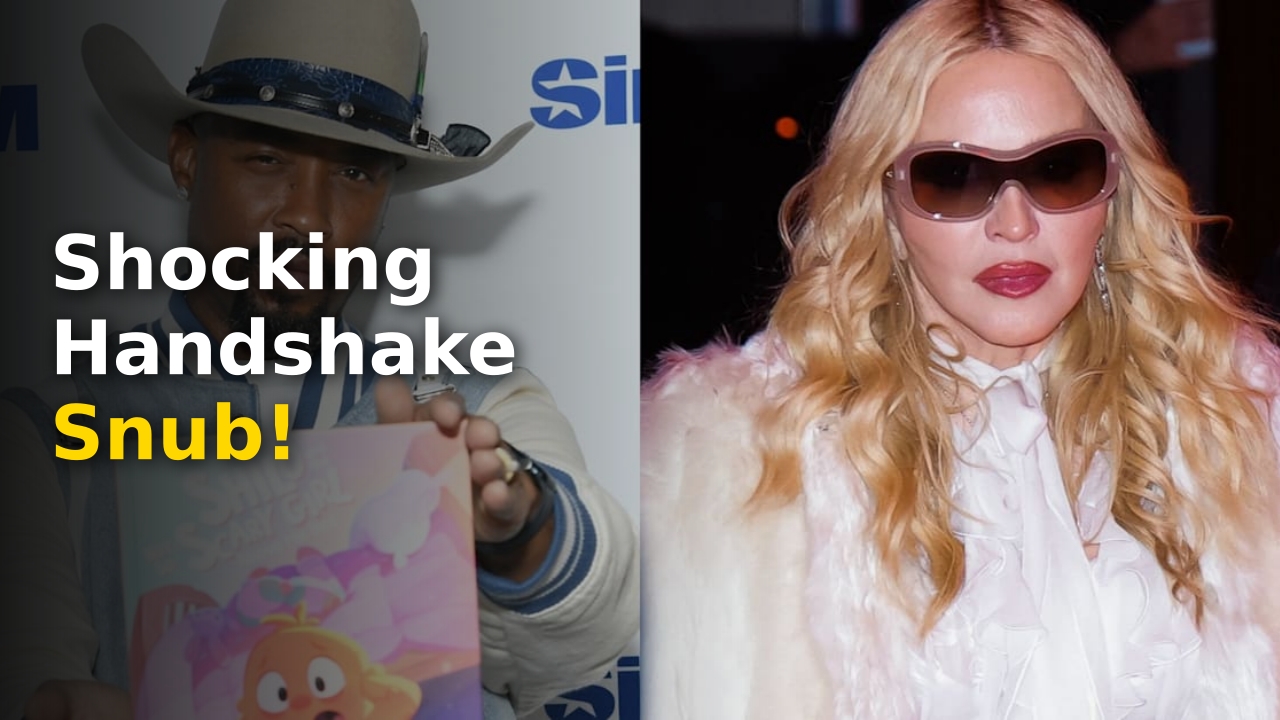
Imagine you are a rising star in the mid-1990s, fresh off a massive global hit, and you finally find yourself in the same room as the Queen of Pop. You reach out for a professional handshake, only to be met with a cold stare and a baffling question: ‘Don’t I own you?’ This Montell Jordan Madonna confrontation has recently resurfaced, shedding new light on the aggressive power dynamics that defined the music industry’s golden era. You might find it hard to believe that a simple greeting could turn into a legendary snub, but in the high-stakes world of 1995 pop culture, every word was a calculated move in a larger game of chess.
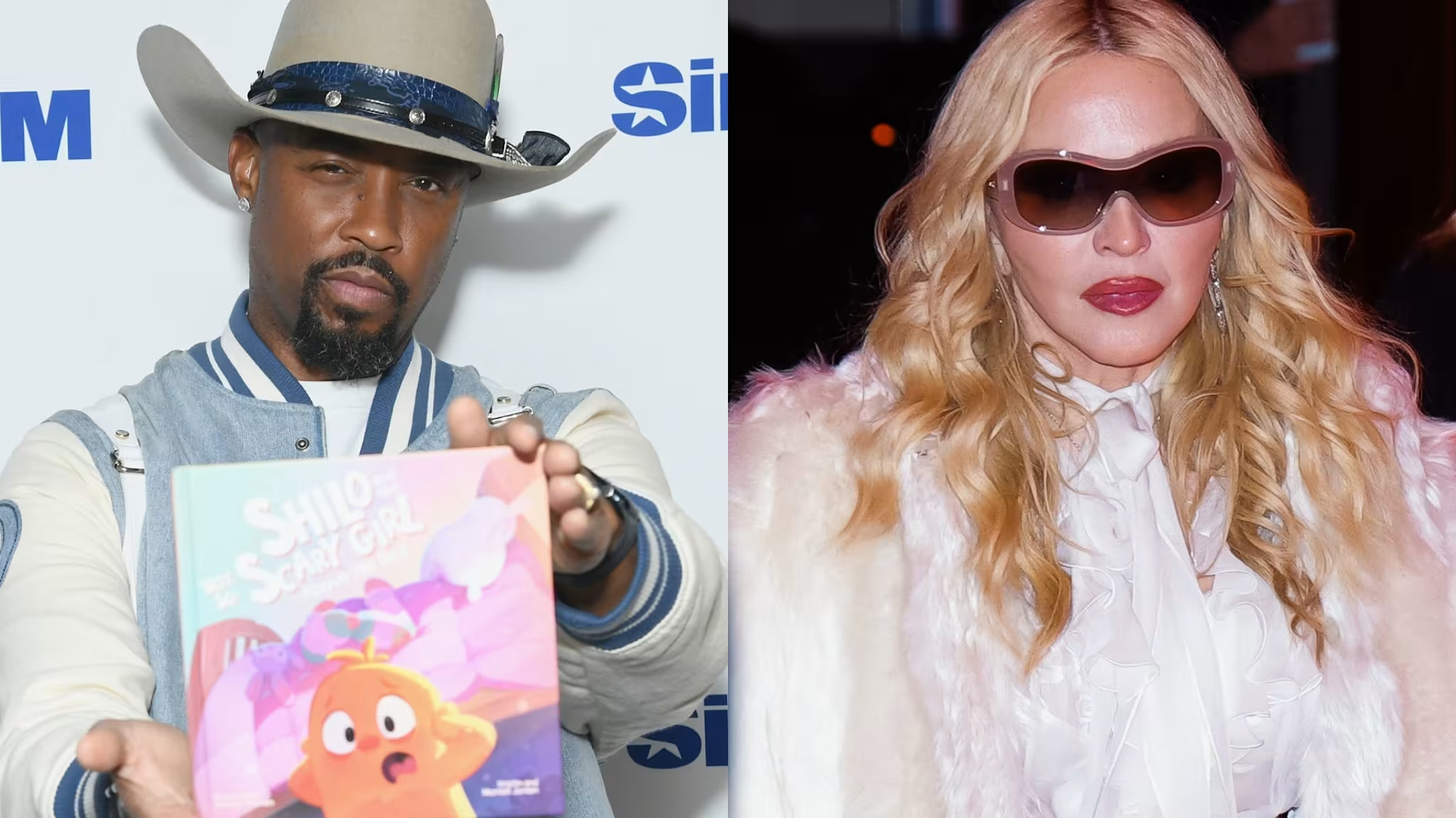
The Montell Jordan Madonna story is not just a tale of two celebrities clashing at a party; it is a window into the financial machinery of Maverick Records and the competitive spirit of the Billboard charts. During a recent interview with Clay Cane on SiriusXM, Jordan revisited the awkward moment, providing a level of detail he had previously omitted. He revealed that after he initially failed to understand her question, Madonna did not soften her stance or offer a polite correction. Instead, she repeated the phrase, reinforcing a hierarchy that left the young R&B singer stunned and questioning his place in the industry hierarchy.
Montell Jordan Madonna: The Untold Power Dynamics Revealed
When we look at the Montell Jordan Madonna exchange today, the optics are undeniably jarring. Jordan was a newcomer, a Black artist from South Central Los Angeles who had just revolutionized the R&B landscape with his debut single. Madonna, meanwhile, was an established titan of the industry, having recently founded Maverick Records as a joint venture with Warner Bros. The power imbalance in that room was palpable, and Jordan admits he was simply excited to be invited into such an elite circle of music heavyweights. He approached her with the respect one gives an icon, but the icon had business on her mind.
According to Jordan, the interaction felt like a ‘caste-system type of thing.’ While many modern observers might immediately point to the racial undertones of a powerful white woman asking a Black man if she ‘owns’ him, Jordan offers a more nuanced perspective. He suggests that the comment was rooted in the elitism of the industry’s upper echelon. It was a ‘sarcastically being funny, but not funny’ moment that signaled Madonna’s awareness of her financial leverage. In the 90s, the music industry was notorious for its rigid social structures, where established legends often tested the mettle of rising stars through psychological posturing.
Jordan’s refusal to engage in the provocation at the time shows a level of maturity that many young artists lack. He walked away from the interaction feeling ‘weird’ and ‘awkward,’ but he didn’t let it derail his career. This Montell Jordan Madonna moment served as an early lesson in the harsh realities of celebrity culture. It highlighted how personal interactions are often filtered through the lens of corporate ownership and contract negotiations. Even at a celebratory event like a Grammy party, the ink on a publishing deal can speak louder than a friendly greeting.
The Psychological Impact of the Snub
For a young performer, being snubbed by an idol can be a crushing blow to their confidence. Jordan, however, attempted to rationalize the behavior as a quirk of Madonna’s personality. He noted that at the time, he figured, ‘That’s Madonna, you know. Maybe she don’t shake hands or whatever.’ This deflection allowed him to maintain his focus on his craft while navigating the shark-infested waters of the mid-90s music scene. It’s a testament to his resilience that he remained a fixture of the charts despite such an intimidating introduction to the A-list.
The Business Behind Maverick Records Publishing
To truly understand the Montell Jordan Madonna dispute, one must look at the legal documents rather than just the social interaction. In 1995, ‘This Is How We Do It’ was the biggest song in the world. As the track climbed the charts, Madonna’s company, Maverick, aggressively sought to secure a publishing agreement that would include Jordan’s share of the record. This was a common tactic for Maverick, which was quickly becoming a powerhouse label by signing acts like Alanis Morissette and Candlebox. They wanted a piece of the hottest R&B record of the year.
While Jordan himself declined the deal, his co-writer and producer, the late Oji Pierce, chose a different path. Pierce made a deal with Maverick, which effectively gave Madonna’s company an interest in the record’s publishing. This is the financial root of the ‘Don’t I own you?’ comment. In Madonna’s mind, the corporate tie meant a literal ownership of the creative output. This distinction is vital for anyone following the latest celebrity news regarding 90s nostalgia and the evolution of artist rights. It shows that behind every ‘diva’ moment is often a complex web of royalty percentages and intellectual property rights.
The era of Maverick Records was defined by this aggressive pursuit of talent and assets. Madonna wasn’t just a performer; she was a CEO. Her remark to Jordan was a reflection of her business mindset. If her company owned a portion of the song that was generating millions in revenue, she viewed the artist as an extension of her portfolio. This commodification of artists is a dark side of the industry that rarely makes it into the headlines, but the Montell Jordan Madonna story brings it front and center. It serves as a warning to modern artists about the importance of retaining their own publishing.
Expert Take: The 1990s saw a massive shift in how labels approached publishing. According to industry analysts, the ‘Maverick model’ was designed to diversify the income of superstars by turning them into venture capitalists. When Madonna approached Jordan, she wasn’t just speaking as a peer; she was speaking as a shareholder in his success. This aggressive business posture helped her build a net worth that consistently topped the charts, much like her music. Understanding the Forbes analysis of Madonna’s business empire provides a clearer picture of why she felt emboldened to make such a claim of ‘ownership’ over a fellow artist.
The Billboard Battle: This Is How We Do It vs Take a Bow
The tension between Montell Jordan Madonna was further fueled by a direct rivalry on the Billboard Hot 100. In early 1995, Madonna was enjoying a massive resurgence with her ballad ‘Take a Bow,’ which spent a staggering seven weeks at the No. 1 spot. It was her longest-running chart-topper and seemed unbeatable. However, the cultural tide was shifting toward a more party-centric R&B sound. When ‘This Is How We Do It’ finally ascended to the top, it ended Madonna’s reign, a fact that surely didn’t go unnoticed by the pop icon.
The following table illustrates the dramatic shift in chart dominance during that pivotal spring of 1995:
| Song Title | Artist | Weeks at No. 1 | Label | Genre |
|---|---|---|---|---|
| Take a Bow | Madonna | 7 | Maverick/Warner | Pop/Ballad |
| This Is How We Do It | Montell Jordan | 7 | Def Jam | R&B/Hip-Hop |
As seen in Billboard’s official chart history, the parity between these two tracks is remarkable. Both spent exactly seven weeks at the summit, representing two different sides of the 1995 musical zeitgeist. For Jordan to replace a legend like Madonna was a monumental achievement for Def Jam Records. It signaled that R&B was no longer a ‘sub-genre’ but the primary engine of popular music. This chart battle likely added a layer of competitive frostiness to the Montell Jordan Madonna interaction, as the Queen of Pop was rarely accustomed to being dethroned by a newcomer.
Analyzing Racial and Class Hierarchies in 90s Music
While Jordan insists that the remark didn’t feel specifically racial at the time, the context of a wealthy white woman using the word ‘own’ in reference to a Black man cannot be ignored in a modern sociopolitical context. The Montell Jordan Madonna story highlights the precarious position of Black creators in an industry that was (and often still is) dominated by white-led corporations. Even if Madonna was referring strictly to a business contract, the choice of language was, at best, incredibly insensitive and, at worst, a display of racial entitlement.
Jordan’s description of a ‘caste-system’ is particularly telling. It suggests that within the music industry, there were ‘untouchables’ and ‘royalty.’ In this hierarchy, Madonna sat on the throne, and Jordan was a subject who had just contributed to her treasury. This perspective helps us understand many iconic music industry moments where veterans have treated newcomers with a lack of basic professional courtesy. It’s a culture of hazing that reinforces the status quo and ensures that the power remains concentrated in the hands of a few.
By the Numbers: In the mid-90s, R&B artists accounted for nearly 30% of all top 10 hits, yet they held significantly fewer executive positions and owned less of their publishing compared to their pop counterparts. The Montell Jordan Madonna interaction is a microcosm of this disparity. While Jordan had the ‘number one’ song, the ‘ownership’ was being disputed by a pop star’s boutique label. This era was the beginning of a long battle for Black artists to reclaim their masters and publishing rights, a movement that continues today with figures like Kanye West and Prince before him.
The Legacy of This Is How We Do It
Despite the awkwardness of the Montell Jordan Madonna encounter, ‘This Is How We Do It’ has remained an evergreen anthem. It is a staple at weddings, sporting events, and parties, transcending the petty disputes of the 90s music scene. Jordan himself has moved on to a completely different phase of his life. After years of chart success, he transitioned into ministry and has become a respected figure in the world of faith-based entertainment. His recent book, Shilo and the Not-So-Scary Girl Above His Bed, marks his entry into children’s literature, a far cry from the aggressive world of Maverick Records.
It is fascinating to see how the two stars have diverged. Madonna continues to push boundaries and remain in the public eye through her social media presence and tours, while Jordan has found peace in a quieter, more service-oriented life. The Montell Jordan Madonna story serves as a reminder that the peak of one’s career is often fraught with hidden tensions and corporate battles that the public never sees. It also shows that success is not just about who ‘owns’ the music, but who survives the industry with their character intact.
For those looking for modern entertainment updates, the resurgence of this story offers a chance to reflect on how much the industry has changed. Today’s artists have more tools than ever to maintain independence and speak out against unfair treatment. The ‘caste system’ that Jordan described is slowly being dismantled by the democratization of music through streaming and social media. The Queen of Pop may still hold her title, but the ‘ownership’ of the next generation of stars is much more likely to remain in their own hands.
People Also Ask
What did Madonna say to Montell Jordan today?
Montell Jordan revealed that Madonna asked him ‘Don\’t I own you?’ during a mid-90s Grammy event after refusing to shake his hand. This was a reference to her company, Maverick Records, holding a stake in his publishing rights.
Why is the Montell Jordan Madonna story trending right now?
The story is trending because Montell Jordan recently gave an interview on SiriusXM where he added new, awkward details about the interaction that he hadn\’t shared publicly before. It highlights 90s music industry power dynamics and the rivalry between their chart-topping hits.
Did Madonna actually own Montell Jordan’s music?
Madonna’s label, Maverick, did not own Montell Jordan himself, but they secured a publishing interest in his hit ‘This Is How We Do It’ through his co-writer, Oji Pierce. Jordan famously declined to sell his own share to her company.
How many weeks was This Is How We Do It at number one?
Montell Jordan’s ‘This Is How We Do It’ spent seven consecutive weeks at number one on the Billboard Hot 100 in 1995. It famously replaced Madonna’s ‘Take a Bow,’ which also spent seven weeks at the top spot.
Final Thoughts on the Industry Hierarchy
The Montell Jordan Madonna saga is a fascinating piece of music history that bridges the gap between creative artistry and corporate ruthlessness. It reminds us that behind the glitz and glamour of the Grammys, there are always underlying tensions fueled by money and status. While the interaction was undoubtedly uncomfortable for Jordan, it didn’t stop him from becoming a legend in his own right. The fact that he can now look back and analyze it as a ‘caste-system’ power play shows a deep understanding of the world he once dominated. As we continue to celebrate the hits of the 90s, we should also remember the complex stories of the artists who made them, including the high-stakes world where Montell Jordan Madonna first crossed paths.
More Like This
For more updates, check out our latest entertainment and sports news.