Key Takeaways
| Original Debut: Created in 1987 by writer Chris Claremont and artist Alan Davis following mutant casualties in mainstream books. |
| Core Foundation: Established early multiversal exploration years before the modern MCU popularized parallel dimensions. |
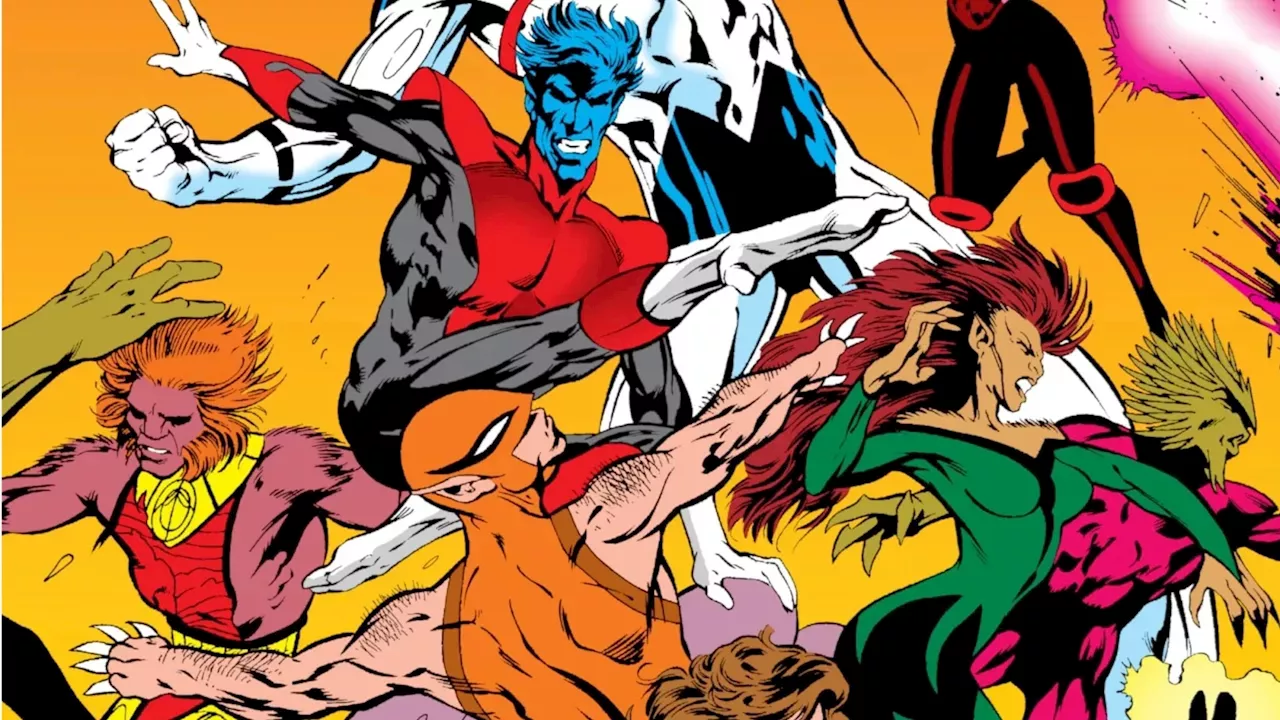
| Signature Roster: United British powerhouses Captain Britain and Meggan with mutant stalwarts Nightcrawler, Shadowcat, and Phoenix II. |
| Narrative Impact: Blended classic British fantasy, Arthurian myth, whimsical sci-fi, and trans-dimensional government espionage. |
Marvel Excalibur stands as the ultimate cross-dimensional mutant force that quietly mapped Marvel’s alternate timelines decades before Hollywood embraced the concept. If you think multiversal storytelling began with recent cinematic phases, you are missing the most inventive chapter in superhero history. The pioneering British-based squad redefined how dimension-hopping operates across major comic storylines.
When legendary comic scribe Chris Claremont joined forces with superstar illustrator Alan Davis in late 1987, they bypassed standard New York team dynamics. Instead, they built an idiosyncratic collective centered in the United Kingdom. Their dynamic narrative combined Arthurian legends, parallel timelines, and mutant lore into a cohesive universe.
Today, readers can re-examine how Marvel Excalibur established fundamental multiverse rules. The creative team bypassed gloomy suburban mutant angst in favor of sprawling cross-time adventures. Their work bridged classic British publication traditions directly into mainstream American continuity.
Marvel Excalibur Origins and Multiversal Foundations
The genesis of this legendary British collective originated during the aftermath of the classic comic storyline known as the Fall of the Mutants. Believing their fellow X-Men perished in Dallas, grief-stricken survivors Nightcrawler (Kurt Wagner) and Kitty Pryde (Shadowcat) relocated across the Atlantic. Together with Rachel Summers (Phoenix II), the duo sought solace in England alongside Brian Braddock, better known worldwide as Captain Britain.
Joined by Braddock’s empathic, shapeshifting partner Meggan, this makeshift family swiftly realized standard street patrols would never define their collective mission. Davis and Claremont took cues from previous UK comic publications curated by Marvel UK. They integrated Captain Britain lore crafted during prior seminal runs by iconic creators including Alan Moore.
The creative team injected the Technet, an alien mercenary squad hired by the interdimensional tyrant Saturnyne, creating an immediate trans-dimensional threat. This eccentric collision propelled the team out of standard mutant skirmishes into deep dimensional exploration. You can discover more deep-dive comic retrospectives across our entertainment analysis hub covering legendary graphic novels.
The Cross-Time Caper Masterclass
The defining storyline for this eccentric British faction remains the acclaimed “Cross-Time Caper,” spanning issues #12 through #24. In this epic odyssey, the heroes boarded a dimension-hopping train powered by the enigmatic widget, tumbling haphazardly through divergent realities.
- Divergent Earths Explored: The team encountered worlds where magic dominated technology, classic fairy tales played out in real-time, and Nazi Germany won World War II.
- Tone Reinvention: Unlike the heavy drama of core X-titles, these jaunts embraced screwball comedy, high-camp fantasy, and mind-bending space-opera mechanics.
- World-Building Blueprint: The extended journey systematically demonstrated that the Marvel Omniverse possessed infinite scope, influencing future cosmic crossover design.
Alan Davis provided unmatched kinetic dynamism, drawing detailed alternate costume designs and alien architectural wonders across every single installment. While some contemporary critics questioned the meandering pacing, modern scholars view the run as a structural masterclass in non-linear multiversal construction.

Core Lineup Breakdown and Character Powers
Analyzing the balance of power within the original ensemble highlights why their squad mechanics proved durable over multiple publication decades. Each team member represented distinct narrative traditions ranging from cosmic cosmic energy manipulation to mythical European folklore.
| Character | Primary Abilities | Multiversal Significance |
|---|---|---|
| Captain Britain (Brian Braddock) | Superhuman strength, flight, dimensional shielding | Key guardian of the Omniverse; anchor of the Captain Britain Corps |
| Meggan Puceanu | Empathic metamorphosis, elemental manipulation | Mystical connection directly tied to the Otherworld matrix |
| Nightcrawler (Kurt Wagner) | Spatial teleportation, prehensile tail, acrobatics | Tactical field commander anchoring the team’s moral conscience |
| Shadowcat (Kitty Pryde) | Phasing, advanced computational hacking | Technological core bridging mundane science with cosmic artifacts |
| Phoenix II (Rachel Summers) | Telepathy, telekinesis, chronoskimming, Phoenix Force | Living paradox carrying future-timeline psychic trauma |
The dynamic between Brian Braddock and Nightcrawler provided a fantastic study in contrasting leadership paradigms. While Brian wrestled with alcoholism, self-doubt, and family pressure tied to the Braddock lineage, Kurt blossomed into an exceptional swashbuckling commander. Kurt’s natural charm, inspired by classic Hollywood hero Errol Flynn, helped maintain high morale.
Shadowcat grew rapidly during this era, ditching her adolescent rookie persona to mature into a self-reliant tactical operative. Her bond with Lockheed remained intact, while her technical skills allowed the team to decode alien mechanisms across disparate dimensions.
Meanwhile, Rachel Summers found emotional sanctuary within the lighthouse headquarters. Haunted by her timeline in the “Days of Future Past” reality, she used her connection to the Phoenix Force to anchor the team against apocalyptic timelines. For additional coverage of classic comics, check out our insights on pop culture history.
British Folklore Meets Trans-Dimensional Espionage
What truly separated this narrative from titles like Uncanny X-Men or X-Factor was its distinctly European setting. Operating from an isolated lighthouse off the coast of England, the team worked on problems far removed from American urban battles.
Claremont and Davis leaned heavily into native mythologies, introducing Arthurian figures, Avalon, and the enigmatic dimension known as Otherworld. Ruled by the wizard Merlyn and his daughter Roma, Otherworld functioned as the cross-dimensional hub that governed reality itself.
The narrative frequently incorporated fictional British intelligence agencies such as F.I.6, W.H.O. (Weird Happenings Organization), and the Black Air intelligence service. These espionage groups added government bureaucracy and tactical realism to strange alien situations. Readers were treated to a collision of classic detective tropes, state intelligence scandals, and interdimensional combat.

Alan Davis Returns: The Solo Maestro Era
When Alan Davis returned as both writer and solo artist for issues #42 through #67, he elevated the title into a unified narrative masterpiece. Davis systematically resolved long-standing plot threads introduced years prior, cementing his place in comic history as noted on Marvel’s official history database.
During this celebrated era, Davis introduced new allies such as Kylun, an alien sword master who matured in an alternate dimension, and the feral warrior Cerise from the Shi’ar Empire. Davis’ run blended visual charm with dark emotional stakes, particularly when exploring Brian Braddock’s twisted reality-warping brother, Jamie Braddock.
Jamie’s ability to manipulate the quantum strings of existence turned the book into a psychological thriller. The stakes escalated into a confrontation with the Necrom entity, an ancient cosmic sorcerer aiming to compress the entire multiverse into a singular power source. Davis proved that British comic traditions could deliver cosmic epics equal to any domestic team book.
The Critical Legacy of Multiverse World-Building
Decades before parallel universes dominated mainstream Hollywood box offices, this run laid the structural blueprints for how interconnected timelines could function. Modern readers can trace current cinematic plot devices straight back to the foundational scripts drafted by Claremont and Davis.
The concept of designated planetary codes—such as Earth-616 representing Marvel’s core universe—gained primary prominence throughout Captain Britain stories and early issues of this title. The omniversal adjudicator Saturnyne and the multi-dimensional Captain Britain Corps proved that every single reality possessed a dedicated guardian.
This multiversal infrastructure eventually formed the bedrock of Jonathan Hickman’s landmark 2015 Secret Wars crossover. Hickman’s collapse of realities borrowed heavily from the lore of the Captain Britain Corps and Otherworld. Without the narrative experiments pioneered in England throughout the late 1980s, Marvel’s entire modern dimensional cosmology would look vastly different today.
Expert Take: By The Numbers and Industry Impact
The market trajectory of this eccentric team offers a compelling case study in late 20th-century comic publishing dynamics. Consider the key metrics that defined the book’s print lifecycle:
- Initial Print Success: The 1987 special debut issue sold over 400,000 direct market copies, outpacing several flagship American titles.
- Extended Longevity: The initial continuous volume ran for an impressive 125 issues, lasting through changing creative regimes until its conclusion in 1998.
- Cross-Media Adoption: Core elements of the series, including the Captain Britain Corps, have been cited as structural inspiration for major animated and live-action multiverse franchises documented by trade outlets like Variety entertainment reports.
Industry analysts point out that the series avoided the extreme creative burnout common during the 1990s comics boom. By maintaining its unique tone and offbeat humor, the title retained a devoted cult following while rival mutant titles suffered through repetitive crossovers. To follow ongoing developments within high-profile franchises, browse our latest reports across the entertainment analysis section.
People Also Ask
What happened with Marvel Excalibur when it first debuted?
Marvel Excalibur launched in late 1987 as a specialized UK-based team following the apparent deaths of the main X-Men. The initial run paired surviving mutants Nightcrawler, Shadowcat, and Phoenix II with Captain Britain and Meggan for high-concept multiversal adventures.
Why is Marvel Excalibur trending right now among comic fans?
The team is trending due to renewed interest in classic multiversal lore and ongoing fan speculation regarding Captain Britain and the Captain Britain Corps appearing in upcoming multiverse films.
How does this team connect to the wider Marvel Multiverse?
The title formalized concepts like Earth-616 and Otherworld, introducing the Captain Britain Corps as cosmic guardians charged with protecting parallel dimensions across the Omniverse.
Who created the original lineup for this British superhero team?
Longtime X-Men writer Chris Claremont and legendary British illustrator Alan Davis co-created the group, drawing inspiration from both classic mutant storylines and British Marvel UK traditions.
Enduring Influence on Modern Superhero Media
Decades after its founding creators stepped away, the DNA of this British comic force continues to thrive. Subsequent revivals during the Krakoan era shifted the narrative toward Arthurian magic and mutant diplomacy, highlighting the flexibility of its original concept.
As contemporary audiences embrace alternate dimensions, variants, and trans-dimensional conflicts, the historic contributions of this UK-based team stand above the rest. Their whimsical charm, complex multiversal mechanics, and memorable character chemistry created a legendary run that continues to entertain readers today.
The creative legacy of Marvel Excalibur serves as proof that stepping outside familiar formulaic territory can produce enduring storytelling. It remains a masterclass in superhero world-building that redefined comic storytelling for generations of readers.
More Like This
For more updates, check out our latest entertainment and sports news.