Key Takeaways
| Historic Speed Mark | Sir Malcolm Campbell became the first person to drive over 300 mph in 1935. |
| American Sovereignty | The signing of the Treaty of Paris in 1783 officially recognized the United States as an independent nation. |
| Global Conflicts | September 3 marks major military milestones, including the outbreak of WWII in 1939 and the Allied invasion of Italy in 1943. |
| Scientific Pioneer | NASA’s Viking 2 lander successfully landed on the Martian surface on this day in 1976. |
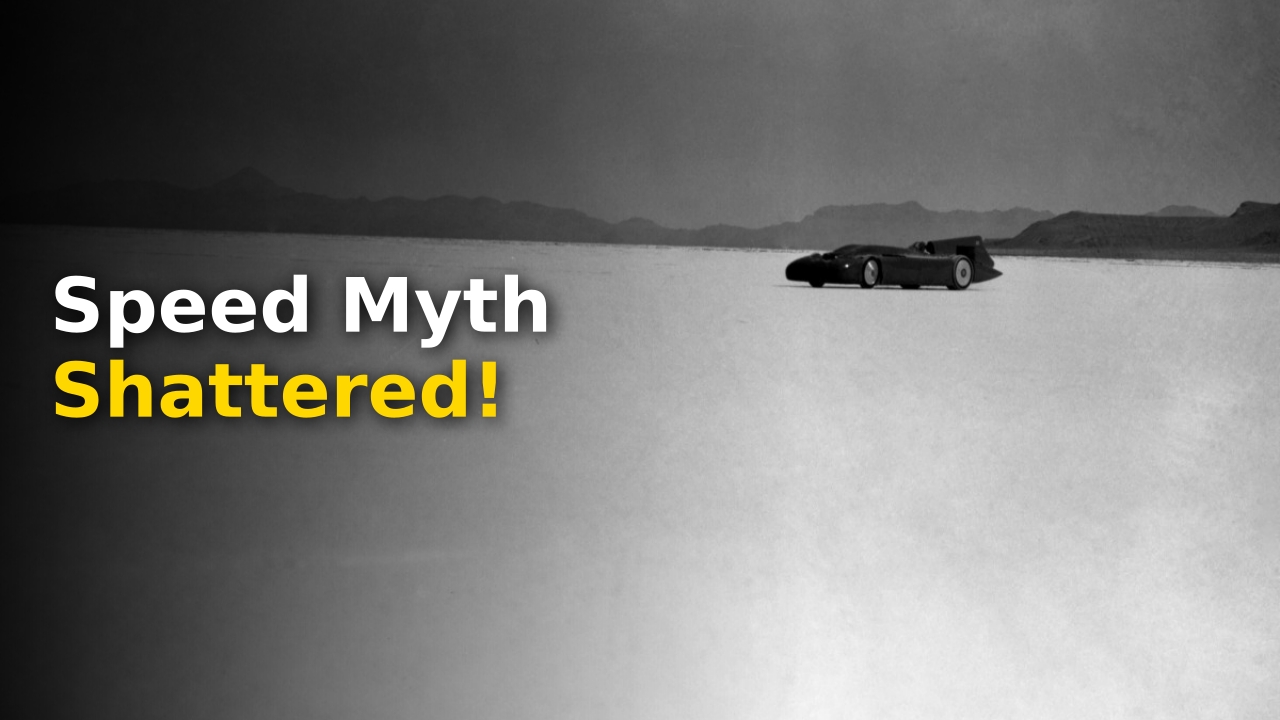
If you think modern supercars are fast, you will be shocked by the terrifying reality of the first land speed record to cross the 300-mile-per-hour barrier. On September 3, 1935, a daring British journalist climbed into a metal beast and defied death on the Utah salt flats. This single moment redefined human potential and launched an era of mechanical madness.
You might wonder how a writer achieved what engineers deemed completely impossible. Sir Malcolm Campbell was not just a reporter; he was a speed-obsessed visionary with ice in his veins. Today, we break down his legendary feat and the other massive historical events that define September 3.
Breaking the Land Speed Record in 1935
To understand the magnitude of this feat, you must visualize the Bonneville Salt Flats in 1935. This blinding white expanse of hard-packed salt offered the only place on Earth flat enough for such madness. Campbell had already set multiple records, but the 300 mph mark remained his ultimate, elusive mountain.
The vehicle of choice was the Campbell-Railton Blue Bird, a machine powered by a massive Rolls-Royce R aero engine. This supercharged V12 beast produced over 2,300 horsepower, a mind-boggling figure for the mid-1930s era. Driving this behemoth required immense physical strength and razor-sharp reflexes to avoid spinning out of control.
During the run, the tires spun furiously on the slick salt surface, threatening to tear themselves apart. Campbell battled blinding salt spray and toxic exhaust fumes leaking directly into the cramped cockpit. Despite these terrifying conditions, he pushed the throttle to the absolute limit and wrote his name into eternity.
When the timing clocks stopped, history had officially been rewritten in the Utah desert. The average speed of his two runs registered at a staggering 301.129 miles per hour. This legendary milestone solidified Campbell’s status as a global icon and cemented the land speed record as the ultimate test of human courage.

Before he became a knighted speed demon, Sir Malcolm Campbell was a dedicated motoring journalist who wrote extensively about automotive engineering. His deep understanding of mechanical systems allowed him to collaborate closely with designers and technicians on the Blue Bird. He used his platform to advocate for safer roads and cutting-edge engine development.
Campbell’s dual life as a writer and a daredevil fascinated the public during the Great Depression. He was able to articulate the visceral sensation of extreme speed to a captivated global audience. His written reports of previous speed runs reads like high-octane thriller novels, blending technical jargon with pure adrenaline.
The pursuit of the ultimate land speed record has always been a dangerous game. In the history of automotive engineering, few milestones compare to a new land speed record. This was not just a local event; the quest for the land speed record captured global attention.
Many critics believed that no pneumatic tire could withstand the heat generated at such speeds. Campbell spent months testing custom-made tires under extreme laboratory simulations before arriving in Utah. His scientific approach to racing proved that a land speed record could unify a nation during difficult economic times.
The Anatomy of the Blue Bird
The physical construction of the Blue Bird was a masterpiece of pre-war British engineering. It featured a streamlined aluminum body designed specifically to minimize aerodynamic drag at extreme velocities. The vehicle measured over 27 feet in length and weighed more than five tons, making it a true land-bound rocket.
Its power plant was originally designed for the Schneider Trophy seaplane races, representing the pinnacle of aviation technology. This massive engine required special fuel mixtures of methanol, benzol, and ethyl to prevent catastrophic detonation. Every single component was custom-built to withstand forces that would shred conventional automobiles.
The physical toll of chasing a land speed record is often underestimated by spectators. As engineers analyzed the telemetry of the land speed record run, they realized how close Campbell had come to a fatal crash. Minutes before the land speed record run was initiated, mechanics made critical adjustments to the fuel lines. This attention to detail is why motorsport journals consider this crew the ultimate authority on land speed record history.
Expert Take: According to motorsport historians, Campbell’s achievement was equivalent to the modern moon landing. The tires, developed secretly by Dunlop, were engineered to spin at over 3,000 revolutions per minute under immense thermal load. Without these specialized rubber compounds, the tires would have literally disintegrated within seconds of acceleration. Learn more about Malcolm Campbell’s legendary racing career and his contributions to mechanical engineering.
September 3 Historical Milestones by the Numbers
While Campbell was tearing up the salt flats, other generations were shaping the geopolitical landscape on this very date. From the birth of nations to global declarations of war, September 3 stands as a pivotal day in human history. We can analyze these momentous occurrences through structured historical data.
Let us examine the chronological milestones that occurred on September 3 across different centuries. These events span across major military conflicts, legal declarations, and pioneering scientific achievements. The sheer diversity of these historical turning points illustrates the profound weight of this calendar day.
| Year | Event Category | Key Details & Historical Impact |
|---|---|---|
| 1783 | Diplomatic Peace | Treaty of Paris signed, ending the Revolutionary War and recognizing U.S. sovereignty. |
| 1861 | Military Conflict | Confederate forces invade neutral Kentucky during the Civil War. |
| 1894 | National Holiday | United States celebrates first federal Labor Day holiday. |
| 1935 | Speed Milestone | Sir Malcolm Campbell sets a new land speed record over 300 mph. |
| 1939 | Global War | Britain, France, Australia, and New Zealand declare war on Germany. |
| 1943 | Military Operations | Allied forces invade Italian mainland; secret armistice signed. |
| 1976 | Space Exploration | Viking 2 lander touches down on Mars and sends first close-up color images. |
| 1999 | Legal Investigation | French judge closes Diana inquiry, dismissing charges against paparazzi. |
| 2019 | Corporate Policy | Walmart stops selling certain handgun ammunition after El Paso shooting. |
| 2025 | Public Safety | Lisbon electric streetcar derails, resulting in 15 deaths and 18 injuries. |
Analyzing this data reveals that September 3 acts as a recurring crossroads for humanity’s most critical moments. The timeline stretches from pre-industrial diplomacy to modern technological breakthroughs. Each entry represents a significant shift in how societies govern, fight, and innovate.
You can see a clear pattern of progress and conflict woven into the fabric of this specific calendar date. It serves as an annual reminder of the fragile balance between human achievement and tragic loss. These milestones continue to influence our modern world long after the 1935 land speed record was established.
Global Turning Points of September Third
Centuries before Campbell chased speed, diplomats were carving out the borders of the modern world on September 3. In 1783, representatives of the United States and Great Britain signed the historic Treaty of Paris. This monumental accord officially ended the American Revolutionary War and forced Britain to recognize American sovereignty.
The diplomatic negotiations in Paris were grueling and stretched over several tense months. American commissioners secured highly favorable terms for the new nation. The treaty established generous territorial boundaries, stretching from the Atlantic Ocean westward to the Mississippi River.
The signing of the Treaty of Paris in 1783 was not merely a diplomatic victory; it was a geopolitical earthquake. By recognizing the United States, Great Britain effectively conceded defeat in a war that had drained its treasury. This momentous event opened the floodgates for democratic movements across the globe, inspiring the French Revolution just a few years later.
The American delegation utilized brilliant diplomatic strategy to isolate British negotiators from their French allies. Benjamin Franklin’s legendary charm and sharp wit played a crucial role in securing these favorable terms. The resulting peace treaty established a foundation of international relations that would shape the Western Hemisphere for centuries.
Less than a century later, the same date witnessed a dramatic escalation in the American Civil War. In 1861, Confederate forces under General Gideon Pillow invaded the critical border state of Kentucky. This aggressive move violated Kentucky’s declared neutrality and pushed the state government directly into the Union camp.
This strategic blunder by the Confederacy altered the entire military landscape of the Western Theater. Union forces quickly secured key positions along the Ohio River, establishing a vital staging ground for future campaigns. The invasion proved that neutrality was an impossible luxury in a nation torn apart by civil conflict.
The First Federal Labor Day in 1894
September 3, 1894, marked another massive milestone as the United States celebrated its first federal Labor Day holiday. This legislation was rushed through Congress by President Grover Cleveland in an attempt to appease angry workers. The move followed the highly controversial Pullman Strike, which had resulted in violent clashes and military intervention.
The establishment of Labor Day was a hard-fought victory for the American labor movement. It honored the social and economic achievements of American workers who built the nation’s industrial powerhouse. Today, the holiday serves as a reminder of the ongoing struggle for fair wages and safe working conditions.
By The Numbers: The Pullman Strike involved over 250,000 workers in 27 states, paralyzing rail traffic across the nation. The federal government deployed 12,000 army troops to break the strike, resulting in dozens of worker deaths. President Cleveland signed the Labor Day bill into law just six days after the strike officially ended.
This legislative action represented a turning point in federal recognition of workers’ rights. It began the long process of establishing labor laws that protect the modern workforce, even though it did not involve a land speed record. You can explore more about these exclusive historical retrospectives and their long-term economic impacts.
World War II and Allied Military Invasions
The date of September 3 is also deeply etched with the dark shadows of global warfare. In 1939, Britain, France, Australia, and New Zealand officially declared war on Nazi Germany. This fateful declaration came exactly two days after Adolf Hitler’s forces launched their brutal invasion of Poland.
In a historic radio address to the British Empire, King George VI spoke to a worried global audience. He delivered a solemn message of determination, stating, ‘With God’s help, we shall prevail.’ This broadcast marked the beginning of a devastating conflict that would reshape global geopolitics for generations.
The declaration of war on September 3, 1939, shattered any remaining hopes of maintaining peace in Europe. Prime Minister Neville Chamberlain’s voice trembled as he announced over the radio that a state of war existed. This historic broadcast forced millions of families to prepare for a conflict of unprecedented scale and brutality.
King George VI’s subsequent radio address served as a powerful rallying cry for the entire British Commonwealth. His slow, deliberate delivery, which he worked tirelessly to master, conveyed a deep sense of moral duty and courage. This speech played a vital role in unifying the public during the terrifying opening days of the global conflict.
Exactly four years later, on September 3, 1943, the Allied forces launched a daring invasion of mainland Italy. British and Canadian troops crossed the Strait of Messina from Sicily to establish a foothold on the European continent. This operation marked the beginning of a grueling Italian campaign that would last until the end of the war.
On that very same day, Italian representatives secretly signed an armistice with the Allied powers. This covert agreement effectively knocked Italy out of the Axis alliance, dealing a massive psychological blow to Nazi Germany. Unlike the military conflicts of the era, the land speed record was a peaceful triumph of technology. The double-edged events of that day illustrated the complex shifting alliances of the Second World War.
Modern Frontiers and Tragedies in Focus
Moving into the late twentieth century, September 3 became a launchpad for scientific triumph. In 1976, America’s Viking 2 lander successfully touched down on the rusty surface of Mars. The robotic explorer immediately began transmitting the first close-up, high-resolution color photographs of the Martian landscape back to Earth.
The successful landing of Viking 2 was a crowning achievement for NASA’s planetary exploration program. The lander analyzed Martian soil samples for signs of organic life and monitored the planet’s extreme weather patterns. Its historic mission expanded our cosmic perspective and paved the way for future Mars exploration initiatives. Read more about NASA’s historic Viking 2 mission and its incredible scientific findings.
The scientific legacy of Viking 2 cannot be overstated. Landing a complex spacecraft on another celestial body in 1976 required flawless computational calculations and immense engineering luck. While space missions look to the stars, the land speed record pushed terrestrial limits. The data gathered by its meteorological sensors provided scientists with their first accurate model of the thin Martian atmosphere.
However, this date has also been marked by intense public grief and high-profile legal battles. In 1999, a French investigative judge officially closed the two-year inquiry into the tragic death of Princess Diana. The court dismissed all criminal charges against nine photographers and a press motorcyclist who had pursued her vehicle.
The judge concluded that the catastrophic car crash in Paris was caused primarily by an inebriated driver, Henri Paul. This ruling did little to quiet the global conspiracy theories surrounding the beloved princess’s death. It highlighted the complex relationship between high-profile celebrities and the aggressive paparazzi who pursue them relentlessly. Understanding these legal outcomes helps shed light on modern celebrity safety standards.
Twenty years later, on September 3, 2019, the corporate giant Walmart made a major policy shift. The company announced it would completely stop selling ammunition for handguns and short-barrel rifles. This decisive corporate action followed a horrific mass shooting at a Walmart store in El Paso, Texas, which claimed 22 innocent lives.
The safety guidelines developed during the 1935 land speed record attempt influenced future motorsports. The retailer also requested that customers no longer openly carry firearms inside its nationwide stores. This move represented a significant moment of corporate activism in the ongoing American gun control debate. It demonstrated how major corporations could influence social policy in the absence of federal legislative consensus.
Even more recently, on September 3, 2025, tragedy struck the picturesque streets of Lisbon, Portugal. A historic electric streetcar, which is a major tourist attraction, derailed and crashed in the capital city. The horrific accident killed 15 people and injured 18 others, sparking intense scrutiny of the city’s aging transit infrastructure.
People Also Ask
What happened with the land speed record on September 3, 1935?
On September 3, 1935, British motoring journalist Sir Malcolm Campbell set a historic land speed record by becoming the first person to drive an automobile over 300 miles per hour. He achieved this milestone on the Bonneville Salt Flats, setting a legendary land speed record.
Why is September 3 significant in United States history?
September 3 is highly significant in American history due to major events like the signing of the Treaty of Paris in 1783, which officially ended the Revolutionary War. Additionally, the nation celebrated its very first federal Labor Day holiday on this date in 1894.
What global military events occurred on September 3?
On September 3, 1939, Britain, France, Australia, and New Zealand declared war on Germany, marking the official entry of the Western Allies into World War II. Exactly four years later, in 1943, Allied forces launched their historic invasion of mainland Italy.
How did the 1999 Princess Diana ruling impact the media?
The 1999 ruling by a French judge closed the two-year inquiry into Princess Diana’s fatal crash, dismissing all criminal charges against the pursuing photographers. The court concluded the crash was caused by an inebriated driver, which sparked immense debate regarding media ethics.
How did the 1935 land speed record impact engineering?
The 1935 land speed record run demonstrated the viability of streamlined aerodynamics and specialized rubber compounds under extreme heat. It forced commercial manufacturers to adopt aerodynamic principles, raising safety and performance standards for production vehicles.
The Legacy of the Land Speed Record
Ultimately, the events of September 3 remind us of the incredible heights and devastating depths of human history. From Sir Malcolm Campbell’s historic land speed record to the signing of peace treaties, this date represents a microcosm of our collective journey. It highlights our endless pursuit of progress, speed, and diplomatic resolution.
Whether exploring the red sands of Mars or honoring the hard work of everyday citizens, these historical moments continue to echo through time. As we look back on these diverse milestones, we gain a deeper appreciation for the individuals who shaped our world. The quest for a new land speed record remains the ultimate test of speed. You can discover more elite historical achievements and unique stories on our platform.
More Like This
For more updates, check out our latest entertainment and sports news.