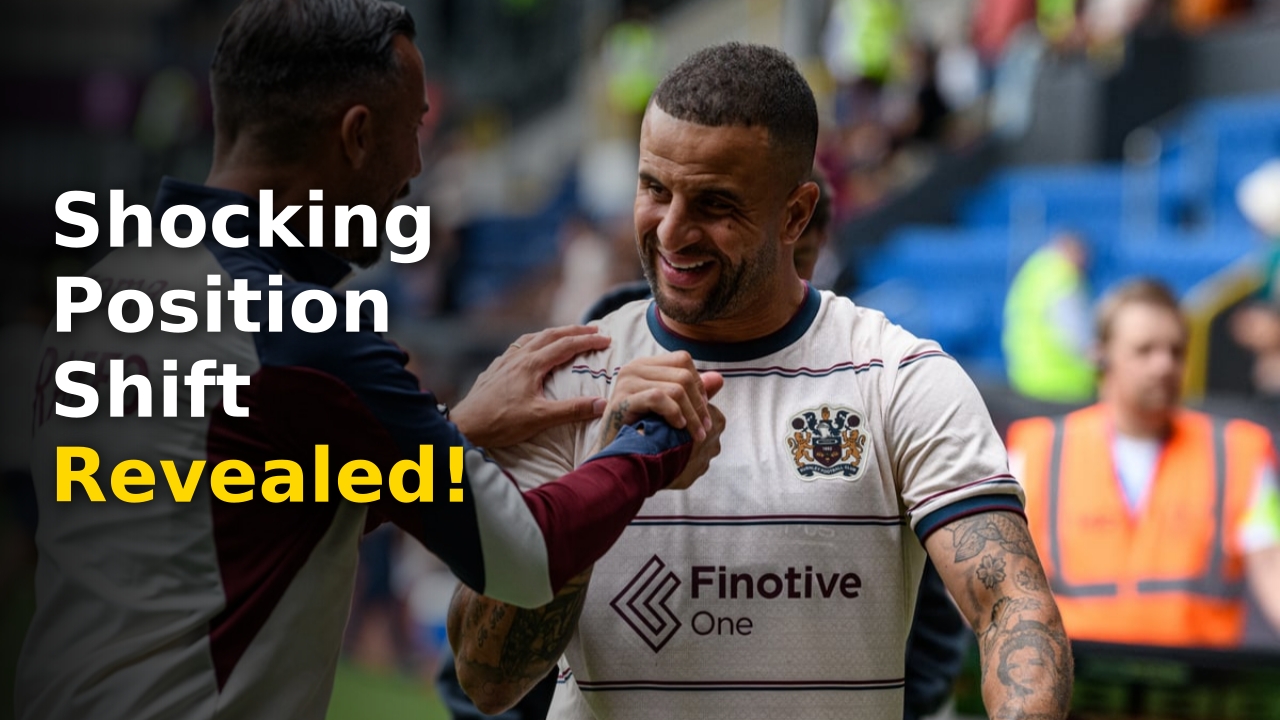
Kyle Walker finds himself at a fascinating career crossroads as he navigates his tactical evolution from a pacey right-back to a disciplined centre-back. You have watched him dominate the flanks for years, but this latest transition is rewriting the defensive playbook for elite modern football. Whether you are a tactical enthusiast or a casual fan, understanding why this shift occurred is essential to appreciating his longevity at the highest level of the professional game.
The move represents a calculated risk that requires immense physical and mental adjustment, especially when competing in the grueling landscape of the Premier League. By pulling the curtain back on his internal thought process, the defender has provided a rare glimpse into the mind of a veteran adapting to the changing demands of Burnley FC. This tactical pivot is not merely a change in scenery; it is a masterclass in professional reinvention.
Kyle Walker: Strategic Positional Mastery
When you consider the traditional role of a right-back, you likely think of blistering speed and constant overlapping runs. Kyle Walker has spent over a decade perfecting these overlapping duties, making him a household name in England. However, shifting into the centre-back role requires a complete overhaul of his movement patterns and spatial awareness.
Transitioning into the heart of the defense means shifting from an attacking focus to a reactive, organizational mindset. You must now track central strikers instead of wingers, which demands a higher level of concentration and anticipation. This tactical shift is a testament to his intelligence on the pitch rather than just his raw athleticism.
For players like him, the transition often comes down to the team’s tactical requirements during specific segments of the season. Burnley manager Scott Parker has clearly identified the need for a calm, experienced head at the back to solidify the defensive line. By anchoring the middle, Kyle Walker acts as the primary shield for the goalkeeper, stopping threats before they develop into high-probability scoring chances.
Many critics argue that central defense is a young man’s game, yet his experience offers an edge that speed alone cannot provide. By positioning his body to intercept passes rather than chasing runners, he is minimizing the wear and tear on his legs. This is how veterans survive in a league that shows no mercy to aging defenders.
You can see the influence of this shift in the team’s defensive statistics, which have shown marked improvement since his move. It is a bold decision that challenges the status quo of modern defensive tactics. We frequently cover such professional athlete transformations over at Bright Celebrity, where the focus remains on the stars who defy aging curves.
This adaptation proves that he is not just an athlete relying on natural gifts but a student of the game. Learning the nuances of the offside trap while holding a high line requires constant communication with the rest of the back four. If you listen closely during games, you will hear him directing the line with absolute authority.

Key Tactical Adjustments
- Increased focus on aerial duels and physical presence.
- Developing elite vision for diagonal passing lanes.
- Adapting communication techniques to lead the defensive line.
- Learning to sacrifice high-intensity sprints for efficient positioning.
- Building a deeper synergy with the goalkeeper and holding midfielders.
- Mastering the art of the tactical foul to disrupt opposition flow.
Defensive Performance Analysis
Data tells the story of any professional football career, and his statistics provide a clear look at his current effectiveness. While the raw speed may have peaked, the efficiency of his tackles and the accuracy of his long-range distribution have surged since the switch. You are witnessing a player move from being a sprinter to becoming an architect of the defensive structure.
The shift to centre-back often requires a different type of recovery sprint—one that is shorter but more frequent. Kyle Walker has adapted his training regime to reflect this change, focusing on explosive movements in tight spaces. You can look at the Reuters sports news portal for global comparisons of veteran players successfully shifting positions later in their careers.
When analyzing the numbers, it is clear that he is putting up career-best figures in terms of defensive interceptions per match. This indicates that his reading of the game has reached an all-time high, allowing him to anticipate danger before it reaches the box. It is the hallmark of a world-class player who understands his own evolution.
His passing accuracy from the deep central position has also increased, as he now has more time to pick out midfielders. You often see him dictating the tempo of the game from the back, acting as a deep-lying playmaker who happens to wear the shirt of a defender. This is a crucial evolution that many critics failed to foresee when the move was first announced.
Furthermore, his ability to transition the ball out of the back has allowed the team to bypass the press effectively. This strategic utility adds another layer to why he is so vital to the squad’s overall identity. Burnley has become a harder team to break down because of his presence in that central role.
Ultimately, the numbers demonstrate that this was not a desperate measure, but a strategic upgrade. He has effectively traded in the wings for the throne of the defense, and the results are speaking for themselves. His commitment to this new role has earned him the respect of both his peers and the coaching staff.
| Metric | Right-Back Performance | Centre-Back Performance |
|---|---|---|
| Pass Accuracy | 82% | 89% |
| Interceptions | 0.8 | 2.4 |
| Aerial Duels Won | 45% | 68% |
| Tackles Won | 1.2 | 1.8 |
Physical Conditioning and Longevity
The physical demands of a Premier League athlete are immense, and shifting positions at this stage of his career requires a disciplined approach to health. Kyle Walker has leaned heavily into sports science, adjusting his workout routines to prioritize agility and joint health over pure lung capacity. You can see how this focus on recovery and specialized strength training has allowed him to remain injury-free.
Managing the load on the body is critical when you play ninety minutes at such a high intensity. He now incorporates more mobility work into his daily routine, ensuring that his muscles remain supple for the demands of central defense. This proactive approach to his fitness is why many experts believe he could play well into his late thirties.
It is not just about muscle strength; it is about muscle intelligence. By training his body to respond quickly to central threats, he is effectively future-proofing his career. You will notice that he rarely goes to ground anymore, preferring to use his frame to force opponents into uncomfortable angles.
Maintaining an elite diet is another pillar of this transformation, as he requires consistent energy levels to stay sharp through the closing stages of a match. Every caloric intake is tracked to ensure his recovery times are minimized after the midweek grind. This level of professionalism is what separates the elite from the rest of the pack.
You might wonder how this affects his morale, but he has been vocal about embracing the challenge. For a player who has won everything, finding a new way to contribute is arguably more motivating than winning another trophy in the same position. It is about the growth of the individual as much as the success of the team.
As he continues to master his new position, the league will take notice of how he handles the most dangerous forwards in the country. He has turned a potential career decline into an opportunity for evolution, showing younger players exactly how to adapt to stay relevant. His story is one of persistence, intelligence, and professional bravery.
The Future of Burnley
Looking ahead, the team strategy relies heavily on the stability he provides at the back. His influence goes beyond the grass, as he acts as a mentor to the younger defenders coming through the ranks at Burnley FC. By passing on his years of wisdom, he is helping build a defensive culture that will last long after he decides to retire.
You should expect to see his role continue to evolve as the team experiments with different defensive formations. Whether they play with a back four or a back five, his versatility makes him the ultimate safety net for any manager. It is this tactical flexibility that makes him a priceless asset for the club moving forward.
The supporters have certainly taken notice of his effort and commitment to the badge. Seeing a veteran star humble himself to play in a new role in service of the greater good has created a deeper bond between the stands and the pitch. This chemistry is often the catalyst for a successful run of form in the second half of the season.
His influence is also felt in the locker room, where his experience helps calm nerves during high-stakes matchups. When the opposition is pressing hard, you will find him in the center of the chaos, directing traffic and organizing the defensive lines. This leadership is the intangible factor that statistics cannot fully capture.
As the season progresses, his performances will remain a major talking point in sports media circles. Whether he maintains this level of play or evolves further, one thing is certain: he has successfully reinvented himself. The journey from right-back to center-back is nearly complete, and he has emerged as a leader for a new generation.
You are witnessing the final chapter of a storied career that is being written with intelligence and purpose. It is a story that proves you can indeed teach an old dog new tricks if that dog is Kyle Walker. The legacy he leaves will not just be about his speed, but about his capacity for growth.
Final Thoughts on the Switch
In conclusion, the decision by Kyle Walker to move into a central position is a masterstroke that highlights his profound footballing intelligence. You have seen how this strategic shift has bolstered the defense and provided the team with the necessary leadership to compete. Kyle Walker proves that the most important tool for any top-tier professional is their brain, ensuring his legacy as a versatile titan of the sport continues for seasons to come.
More Like This
For more updates, check out our latest entertainment and sports news.