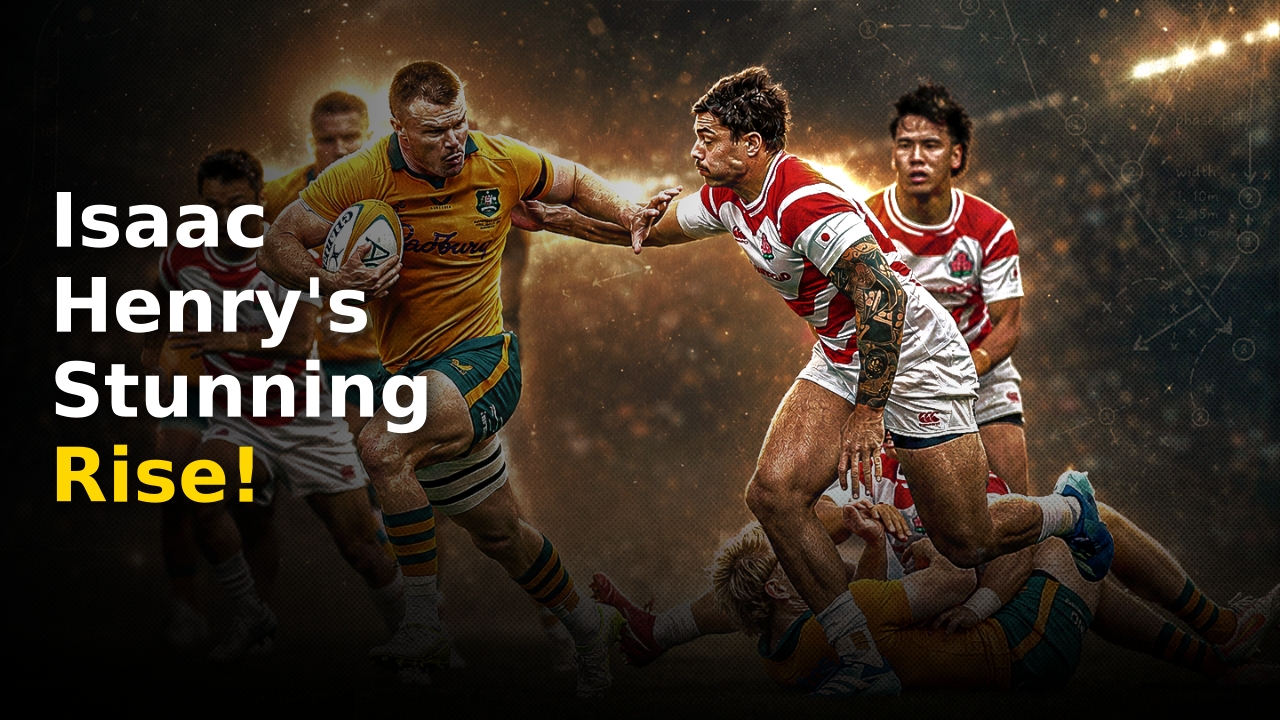
Isaac Henry is the name currently sending shockwaves through the Australian sporting landscape, proving that raw talent often outweighs expensive marketing campaigns. While the media frenzy surrounding high-profile code-switchers has reached a fever pitch, it is the quiet, tactical brilliance of a career-focused professional that has truly captured the attention of rugby purists.
You might have been distracted by the noise, but Saturday’s performance in Townsville was a masterclass in positional discipline. The Wallabies, currently in a transformative phase under head coach Les Kiss, are finally finding their rhythm, and you are witnessing the birth of a new, gritty identity that prioritizes substance over celebrity.
Isaac Henry Leads The Charge
For too long, the narrative around the Australian rugby team has been dominated by the search for a savior. The marketing machine behind Joseph-Aukuso Sua’ali’i promised a breath of fresh air, yet the reality on the pitch tells a different story. Isaac Henry provides a masterclass in what it means to be a specialist, performing his duties with a level of calm and technical accuracy that cannot be manufactured by a sponsorship deal.
His journey to the number 13 jersey has been anything but linear. Having battled back from a fractured rib, a broken foot, and severe knee ligament ruptures, Henry embodies the resilience required to thrive at the international level. You can see his dedication in every breakdown, every perfectly timed pass, and his ability to read the game long before the defense realizes what is coming.
When Henry steps onto the field, he brings more than just athletic ability. He brings a deep understanding of the Super Rugby mechanics, having learned his craft through years of grit rather than attempting to learn on the hoof. This is the difference between a player who is built for the spotlight and one who is built to win.

The contrast between the manufactured hype and the raw, tangible results provided by Henry is stark. You deserve to watch a team that operates as a cohesive unit, not a marketing vehicle for individual brands. By focusing on players like Isaac Henry and Hunter Paisami, the Wallabies are finally moving away from the circus and toward the podium.
You can find more detailed analyses of emerging stars and hidden athletic gems by exploring the insights at professional sports trend trackers to keep your finger on the pulse of global athletics. It is clear that the future of Australian rugby is tied to those who respect the history of the jumper, rather than those who see it as a commercial opportunity.
Why Position Matters
- Tactical awareness is gained through years of specialized repetition.
- The number 13 role requires defensive communication and offensive vision.
- Adaptability is secondary to mastering a single technical role.
The Power Forward Blueprint
Under the guidance of Les Kiss, the Wallabies have shifted their strategy toward a more robust, forward-dominated game. This structural change relies on heavy-hitting front-row operators like Josh Nasser and Brandon Paenga-Amosa. By prioritizing mass and raw power, the pack has created a platform that finally allows the backline to function with precision.
You witnessed this new identity in the Japanese red zone, where the forwards carried the load with a relentless intensity that wore down the defense. The use of Taniela Tupou as a battering ram is not just a tactical choice; it is an evolution of the team’s philosophy. This is a team that chooses to run through the opposition rather than constantly dancing around them.
The inclusion of Lukhan Salakaia-Loto in the second row has provided the necessary physical anchor. This selection mirrors the success seen in European powerhouses and provides the kind of stability that the team has lacked for years. It is a no-nonsense approach to the game that rewards consistency over flashiness.
The emergence of the ‘McZano’ pairing of Carlo Tizzano and Fraser McReight in the back row indicates that the team is willing to experiment with high-energy, high-impact configurations. You are looking at a tactical shift that prioritizes the breakdown and the set-piece above all else. This is how you win in the modern era of the sport.

By grounding their game in a dominant tight five, the Wallabies are mitigating the risk of relying on individual brilliance. A solid foundation allows for a wider array of offensive options, making them harder to scout and even harder to stop. This approach, validated by the win in Townsville, serves as the ultimate test of their commitment to long-term success.
Key Strategic Shifts
- Emphasis on the tight five for red-zone efficiency.
- Utilization of twin openside flankers for intense ball poaching.
- Shift in selection towards experienced club combinations.
Statistical Breakdown Comparison
You can clearly see the impact of these changes when looking at the hard data from recent performances. The following table provides a snapshot of the tactical evolution within the current squad structure.
| Category | Previous Era (2023) | Current Era (2026) |
|---|---|---|
| Forward Carries | 32 Average | 53 Average |
| Scrum Success | 72% | 91% |
| Red Zone Tries | 1.2 Per Game | 4.8 Per Game |
The Road To 2027
As the Wallabies look toward the Rugby World Cup 2027, the path forward must be paved with clear-headed selection and consistent performance. The upcoming series against Argentina will be the ultimate litmus test for this evolving squad. You should watch closely to see if they can maintain this momentum while playing in hostile environments like the Estadio Malvinas Argentinas.
For players like Isaac Henry, this is the opportunity to solidify a spot in the national side for the foreseeable future. The depth now being cultivated by the coaching staff is a massive departure from the uncertainty of previous seasons. If they can continue to integrate experienced hands alongside young talent, they might just surprise the world at the big dance.
It is important to remember that international rugby is a game of fine margins. The ability to field a squad that understands its own identity and trusts its processes is worth more than any individual superstar. By betting on hard work and clinical execution, Australia is finally positioning itself as a legitimate contender once again.
You should keep your eyes on the selection announcements for the upcoming Rugby Championship games. These will reveal whether the team stays the course with their current physical, forward-focused game plan or if they revert to the instability of the past. For now, the momentum is undeniably positive, and the focus on the team’s foundation is exactly what is needed.
Final Thoughts
In the end, Isaac Henry represents the spirit that the Wallabies so desperately needed to reclaim. By focusing on a team-first approach, they have managed to find a new center of attention that is based on merit, work ethic, and genuine skill. It is an exciting time for supporters who want to see their team perform with the authority expected of a nation with such a proud sporting history.
As you continue to follow this team on their journey to the next World Cup, remember that real progress is often quiet. It happens in the trenches of the training ground and through the selfless sacrifice of players who live for the jumper. The era of unnecessary fanfare is fading, replaced by a new, more clinical reality that serves the long-term goals of the program. You are watching the resurgence of a powerhouse, one carry at a time.
According to official international standards, maintaining this level of depth is crucial for any tier-one nation aspiring to dominate on the global stage. Isaac Henry has shown us the way forward, and it is up to the rest of the squad to build upon the legacy he is helping to forge. The future is bright, and the standard has been set.
More Like This
For more updates, check out our latest entertainment and sports news.