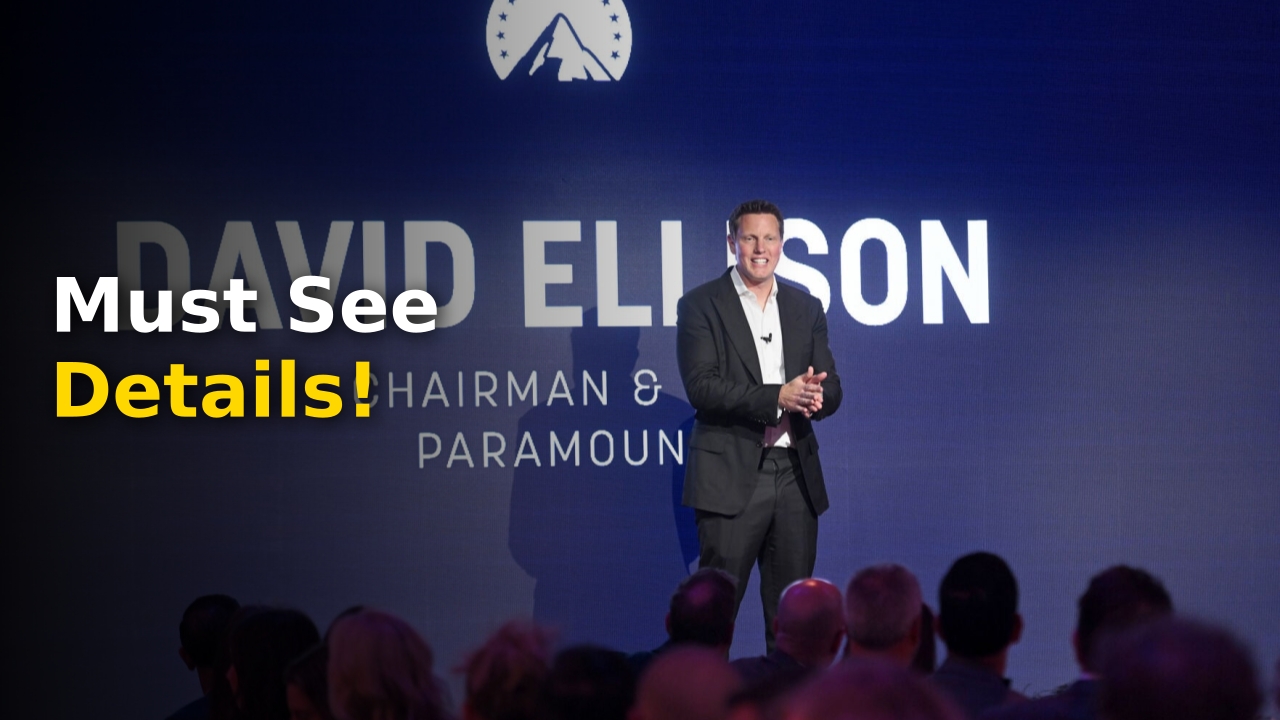
{
“title”: “David Ellison: 7 Shocking Secrets Behind This Massive Event”,
“content”: “
Can a mega-billionaire media mogul really pull Hollywood’s most iconic film studio out of California to win a regulatory war? David Ellison is currently testing that exact boundary as his corporate empire struggles to complete a jaw-dropping $111 billion takeover of Warner Bros. Discovery. What began as a confident victory lap after securing Department of Justice clearance in June has degenerated into a high-stakes legal stalemate that threatens to reshape entertainment history.
As legal fees and penalties mount at an alarming rate of $7 million per day, entertainment industry insiders are bracing for unprecedented fallout. You are witnessing a historic corporate standoff that could permanently rewrite the topography of global media production. If you thought high-stakes corporate drama was confined to scripted television, this real-life showdown proves truth is far stranger and infinitely more expensive.
David Ellison Fights California Regulators
The high-profile conflict erupted when California Attorney General Rob Bonta teamed up with 11 Democratic state attorneys general to file an aggressive antitrust lawsuit against Paramount Skydance. The regulatory coalition officially argues that combining two legacy entertainment giants will eliminate vital market competition, destroy thousands of local union jobs, and ultimately inflate subscription costs for everyday consumers.
David Ellison originally brushed off state-level opposition, assuming federal approval from Washington would clear the runway for a swift autumn closing. However, U.S. District Judge Araceli Martínez-Olguín dealt a catastrophic blow to Paramount by scheduling the formal antitrust trial for March 2, 2026, completely rejecting Paramount’s desperate plea for an expedited November court date.
The delayed trial date drastically shifts operational leverage away from the studio and directly into the hands of state prosecutors. Makan Delrahim, Paramount’s Chief Legal Officer, publicly voiced extreme frustration at a recent policy conference, labeling the prolonged court schedule as devastating for studio workers facing job insecurity. Delrahim confirmed that Paramount offered formal settlement terms on May 19, but state regulators flatly refused to negotiate.
The Legal Crossfire Breakdown
- State regulators view the proposed transaction as an illegal consolidation that severely damages California’s studio economy.
- Paramount relies heavily on fast clearance before exorbitant financial penalties kick in under shareholder contracts.
- Defense attorneys lack leverage after failing to secure a crucial autumn trial date in federal court.
- Public sentiment remains sharply divided between traditional studio preservation and tech-driven corporate consolidation.
Former antitrust prosecutor Abiel Garcia noted that when massive corporate entities lose operational leverage in judicial settings, they inevitably pivot to aggressive public relations and political pressure campaigns. California political leaders find themselves caught directly in the middle of this high-profile corporate skirmish.

Meanwhile, David Ellison has attempted a public relations charm offensive, writing personal essays in major national publications extolling his lifelong passion for cinematic storytelling. Yet critics point out the glaring contradiction between claiming to save cinema while simultaneously threatening to dismantle California’s historic entertainment ecosystem.
Anatomy of a $111 Billion Deal
The financial mechanics behind this historic transaction reveal breathtaking risks that could financially strain even a deeply connected tech scion. Paramount originally agreed to pay Warner Bros. shareholders $31 a share in cash while agreeing to absorb roughly $30 billion in legacy debt leftover from Warner’s previous restructuring in 2022.
To reassure hesitant investors during early negotiations, David Ellison incorporated structural ticking fees amounting to 25 cents per share for every single quarter the transaction remains unclosed past September 30. These penalties were initially designed as a bold guarantee of fast regulatory approval, but they have now morphed into a ruinous financial sinkhole.
Every single day the transaction lingers past the autumn deadline adds approximately $7 million in direct penalty fees to the acquisition cost. Over a full quarter, ticking fees accumulate to a staggering $650 million, rapidly draining liquid capital from Paramount’s financial balance sheet.
Paramount Cash Reserve Realities
Regulatory filings reveal Paramount currently holds $1.6 billion in cash on hand alongside a $3.2 billion revolving credit facility. Delaying the closing process into next spring forces Paramount to secure expensive bridge financing, adding an immediate $190 million in pure financing costs.
| Financial Metric | Valuation / Impact | Strategic Consequence |
|---|---|---|
| Total Enterprise Deal Value | $111 Billion | Includes $81B equity purchase and $30B existing Warner debt. |
| Daily Ticking Fee Penalty | $7 Million / Day | Penalties accrue every 24 hours past the September 30 deadline. |
| Quarterly Penalty Accumulation | $650 Million / Quarter | Projected to hit $2.1 Billion total prior to the March trial. |
| Bridge Loan Financing Costs | $190 Million | Direct surcharge resulting strictly from schedule pushback to spring. |
| Termination Breakup Fee | $7 Billion | Mandatory penalty owed to Warner if deal fails by June 4. |
If the acquisition remains stalled past June 4, Warner’s board holds the explicit contractual right to terminate the agreement entirely and collect a massive $7 billion breakup fee. That nightmare scenario would leave Paramount financially crippled while walking away empty-handed from Hollywood’s biggest deal in decades.
David Ellison Recreates Oracle Blueprint
Desperate times demand radical tactics. In a high-level executive meeting, David Ellison unveiled a shock relocation plan to move Paramount’s headquarters out of Los Angeles entirely. Proposed landing spots include tax-friendly states like Tennessee or Texas as early as this autumn.
This aggressive operational play directly mirrors the corporate playbook of his billionaire father, **Larry Ellison**, co-founder of software powerhouse Oracle. Oracle famously abandoned its long-standing Redwood City headquarters in **2020** for Austin, before making another high-profile shift to Nashville to capitalize on emerging healthcare and AI growth incentives.

Hollywood Studio Estate Liquidation
Moving a multi-billion dollar media powerhouse involves far more than redirecting executive emails. Paramount’s board has already approved preliminary exploration of massive real estate sales across Southern California:
- Selling the historic 65-acre Paramount studio lot located on Melrose Avenue in Hollywood.
- Divesting the expansive Warner Bros. campus in Burbank post-merger to raise liquid funds.
- Reallocating land sale proceeds directly toward paying down mounting merger costs and loans.
- Liquidating non-essential physical infrastructure across the West Coast footprint.
Real Estate and Production Hurdles
Industry analysts question whether relocation threats are practical or merely an elaborate public relations bluff. Unlike tech software companies that operate with remote engineering teams, legacy film studios rely on deeply entrenched networks of directors, writers, actors, and specialized union crews tied to Los Angeles soundstages.
Duplicating century-old production infrastructure overnight presents near-insurmountable logistical nightmares. Senior executives at Paramount are privately expressing deep reluctance to leave Southern California, where their families and professional networks reside.
Media scholar Gabriel Kahn from USC Annenberg highlighted the surreal contrast in Ellison’s messaging strategy. Promising to reinvigorate theatrical filmmaking while simultaneously threatening to uproot historic studios 2,000 miles away creates severe brand friction across the entertainment industry.
Political High Stakes in Sacramento
The high-stakes game of corporate leverage is explicitly designed to force intervention from California political leaders. By threatening thousands of high-paying creative jobs, Paramount hopes to force Governor Gavin Newsom into mediating a quick resolution to the antitrust suit.
Newsom, who harbors prospective national political ambitions, is notoriously sensitive to high-profile corporate departures from California. However, state law strictly isolates gubernatorial authority from independent antitrust enforcement led by Attorney General Rob Bonta.
Gubernatorial Candidates Weigh In
During recent leadership discussions at policy forums in Sacramento, prominent state officials addressed the potential exodus of classic studio brands:
- Attorney General Rob Bonta maintains the merger violates state antitrust protections and refuses to step down.
- Former federal official Xavier Becerra urged both parties to seek room for negotiation outside the courtroom.
- Paramount Chief Legal Officer Makan Delrahim explicitly called on political leaders to protect local jobs.
- Industry observers note a political settlement remains Paramount’s best realistic exit route before trial.
While politicians debate legal jurisdiction, major industry stakeholders are taking sides. Dynamic theatrical distribution chains like AMC Theatres and Regal Cinemas have publicly backed Ellison’s acquisition bid, enticed by firm promises of guaranteed theatrical releases and exclusive theatrical distribution windows post-merger.
For more exclusive insights into high-stakes Hollywood negotiations and celebrity business moves, explore our latest coverage on Bright Celebrity news.
Future Outlook for Paramount Warner
As the countdown toward the March 2, 2026 trial date continues, Paramount finds itself operating on borrowed time and rapidly depleting financial reserves. The math grows more unforgiving with each passing sunrise as daily penalty fees slice into prospective corporate value.
International regulators across 65 foreign jurisdictions, including key authorities in Great Britain and the European Union, have already greenlit the transaction without major structural changes. Yet domestic legal hurdles in California threaten to completely neutralize global regulatory victories.
If David Ellison cannot strike an equitable settlement with state regulators before the winter months conclude, ticking fees will eat away billions in prospective enterprise value. Paramount executives must weigh the real cost of legal victory against total financial ruin.
The media industry stands at an unprecedented crossroads where traditional studio heritage meets cutthroat tech-fueled consolidation. Whether David Ellison secures his legacy as the ultimate savior of classic Hollywood or becomes a cautionary tale of corporate overreach will be decided in the turbulent months ahead.
“,
“parent_category”: “Entertainment”,
“sub_categories”: [
“Hollywood Deals”,
“Business”,
“Media Mergers”
],
“focus_keyword”: “David Ellison”,
“slug”: “david-ellison-warner-bros-merger-fight”,
“tags”: [
“David Ellison Net Worth 2026”,
“Paramount Warner Bros Merger”,
“Rob Bonta Antitrust Lawsuit”,
“Larry Ellison Oracle HQ”,
“Paramount Relocation Nashville Texas”,
“Hollywood Studio Real Estate Sale”,
“Warner Bros Discovery Acquisition”,
“Makan Delrahim Politico”,
“Gavin Newsom California Corporate Flight”,
“AMC Regal Paramount Support”,
“Melrose Avenue Paramount Lot Sale”,
“Burbank Warner Bros Campus”,
“Araceli Martinez-Olguin March Trial”,
“Xavier Becerra California Governor”,
“Department of Justice Media Approvals”
],
“seo_description”: “David Ellison faces a mounting $111 billion Warner Bros merger crisis as legal battles and costly delays threaten Paramount’s future.”,
“thumbnail_text”: “Shocking Merger Secrets Revealed!”,
“body_image_alt_tags”: [
“David Ellison speaking at Paramount event in New York City”,
“Paramount Warner Bros studio merger legal battle diagram”
]
}
More Like This
For more updates, check out our latest entertainment and sports news.