Key Takeaways
| Early Exits: Starting cornerbacks Jamari Sharpe and A.J. Harris both exited the 2026 season opener in the first quarter and did not return. |
| Coach’s Verdict: IU head coach Curt Cignetti confirmed these injuries are “not long-term deals” and expects both players back soon. |
| Next Men Up: Backups Ryland Gandy and Jaylen Bell stepped in, combining for 10 tackles and securing the perimeter. |
| Dominant Win: Despite the secondary scare, the No. 6 Hoosiers rolled to an emphatic 52-16 victory over North Texas in Bloomington. |
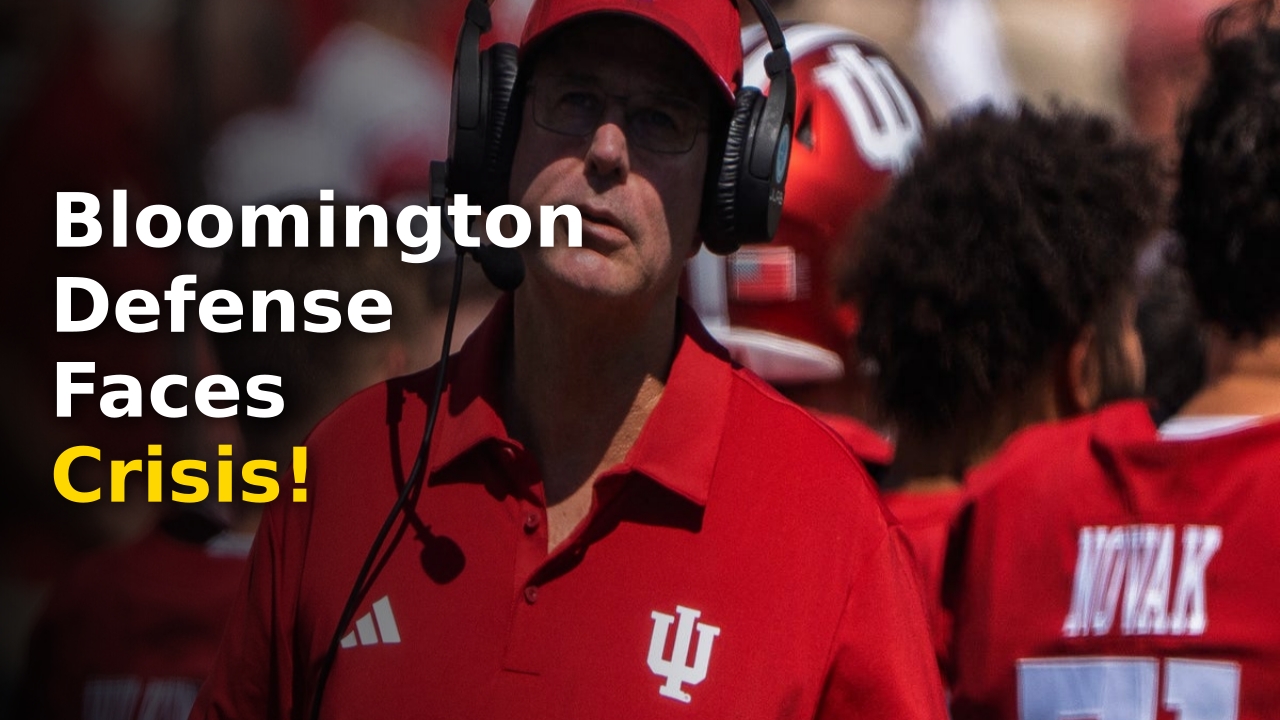
You might think a 52-16 blowout victory over North Texas would guarantee pure celebration in Bloomington, but the reality is much more tense as Indiana football injuries to crucial starting defensive backs have immediately tested the depth of the No. 6 Hoosiers’ secondary. During the highly anticipated 2026 season opener at Memorial Stadium, starting cornerbacks Jamari Sharpe and A.J. Harris both suffered undisclosed injuries in the first quarter and did not return. The sudden departures forced secondary coach Rod Ojong to reshape the defense on the fly, putting the team’s championship aspirations to an early, unexpected test.
Fortunately, head coach Curt Cignetti offered a reassuring update after the game, stating that both players would return soon and that their ailments were not long-term concerns. The swift adjustments made by the coaching staff allowed the team to maintain its dominant defensive posture throughout the afternoon. However, the incident highlights the fragility of a top-tier collegiate roster when key pieces are suddenly sidelined.
Indiana football injuries and the Bloomington secondary impact
The loss of Jamari Sharpe early in the contest came as a major surprise to fans who expected him to anchor the defensive perimeter. Sharpe, who rose to national prominence as one of the defensive heroes in the national title game, had earned glowing praise from the coaching staff throughout the grueling offseason. His unique combination of height, recovery speed, and physical press coverage makes him a foundational piece of the Hoosiers’ defensive scheme. Losing him so early forced the coaching staff to adjust their aggressive blitz packages to protect the deep third of the field.
Equally concerning was the early departure of high-profile transfer A.J. Harris, who joined the Hoosiers after a standout stint at Penn State. Having twice earned All-Big Ten honors, Harris was expected to provide veteran leadership and lock down opposing boundary receivers. His presence in the transfer portal was a major win for Cignetti’s staff, who beat out several southern powerhouse programs for his commitment. His injury, while hopefully minor, highlights the physical toll of modern collegiate athletics even against non-conference opponents.
The Jamari Sharpe recruiting journey
Sharpe was a multi-sport star in high school, known for his track-and-field speed. This speed was on display in the national title game last season, where his deep coverage prevented multiple big plays. His presence on the field changes how safeties can play, allowing them to cheat toward the box to support the run defense. Without his speed, the defensive scheme must become inherently more conservative to prevent big plays.
A.J. Harris’s transfer portal legacy
Harris was a consensus five-star recruit out of high school before signing with Penn State. His decision to transfer to Indiana was one of the most talked-about moves of the offseason. Under Cignetti, Harris worked tirelessly to master the defensive playbook. His sudden exit against North Texas was a devastating blow to a defense designed to showcase his lockdown capabilities on the boundary.
Ryland Gandy’s gritty resilience
With both starters sidelined, former Pittsburgh transfer Ryland Gandy was thrust into the spotlight and delivered an exceptionally gritty performance. Gandy is no stranger to high-pressure situations, having started in place of an injured D’Angelo Ponds against Iowa last season. His preparation during fall camp, where he battled Harris for a starting spot, paid dividends as he recorded six tackles, including three solo stops, against a pass-heavy North Texas offense.
Jaylen Bell’s rapid defensive rise
True freshman Jaylen Bell also seized his opportunity, proving that his recruiting pedigree was well-deserved. A three-star signee out of New Jersey in the 2025 class, Bell spent his freshman year primarily turning heads on special teams. On Saturday, however, he played the majority of the defensive snaps alongside Gandy, displaying exceptional maturity and recording four critical tackles. His performance validated the coaching staff’s belief that their younger recruits are ready for prime-time action in the Big Ten.

Bloomington secondary metrics: Analyzing the North Texas game stats
To understand how the Hoosiers managed to limit the North Texas passing game despite losing their top two cornerbacks, we must examine the defensive statistics. The backup secondary performed admirably under sudden pressure, preventing big explosive plays and maintaining disciplined positioning. Linebacker Isaiah Jones echoed this sentiment after the game, praising the next-man-up mentality that has become a core tenant of Cignetti’s culture.
Let’s look at the defensive back performance metrics from the season opener:
| Player Name | Position | Total Tackles | Solo Tackles | Pass Breakups | Snaps Played |
|---|---|---|---|---|---|
| Jamari Sharpe | CB (Starter) | 1 | 1 | 0 | 8 |
| A.J. Harris | CB (Starter) | 0 | 0 | 0 | 6 |
| Ryland Gandy | CB (Backup) | 6 | 3 | 2 | 52 |
| Jaylen Bell | CB (Backup) | 4 | 3 | 1 | 48 |
The raw data illustrates the massive workload that Gandy and Bell shouldered after the first-quarter departures. Facing a fast-paced North Texas offense that frequently utilizes four-receiver sets, the reserve cornerback duo limited the damage and kept the opposing passing game out of the end zone for most of the game. This unexpected trial by fire could ultimately pay dividends later in the 2026 season when depth becomes a critical factor during the grueling Big Ten conference slate.
Curt Cignetti’s roster overhaul and secondary depth
When head coach Curt Cignetti arrived in Bloomington, he immediately set out to rebuild the roster through an aggressive utilization of the transfer portal. Cignetti understood that competing in the modern Big Ten requires a deep, versatile roster capable of withstanding the physical attrition of a twelve-game regular season. The offseason addition of players like A.J. Harris from Penn State and Ryland Gandy from Pittsburgh was specifically designed to insulate the program against the inevitable impact of Indiana football injuries. By establishing fierce competition throughout spring and fall camp, Cignetti ensured that his backup players were mentally and physically prepared to start at a moment’s notice.
Historically, Indiana has struggled when key starters have been sidelined, often due to a lack of developmental depth. In previous seasons, an injury to a starting corner would force the defensive staff to play safety hybrids out of position or rely on raw, unranked freshmen. Cignetti’s philosophical shift has changed the program’s outlook, creating an environment where backups expect to play and perform at an elite level. This cultural transformation was evident in how smoothly Gandy and Bell transitioned into the lineup, communicating effectively with the safeties and maintaining the integrity of the defensive scheme.
To further analyze the team’s structural depth, we must look at how other defensive units supported the secondary. The defensive line managed to generate consistent pressure, forcing the North Texas quarterback to deliver quick, contested throws. This synergy between the pass rush and the coverage unit relieved pressure on the young cornerbacks, allowing them to play aggressively without fearing constant deep-ball threats. Cignetti’s program is built on these interconnected systems, which are designed to absorb individual personnel losses without suffering a drop in overall defensive efficiency.
As the Hoosiers prepare for their upcoming conference matchups, the coaching staff will likely take a conservative approach with Sharpe and Harris’s recoveries. Having proven that Gandy and Bell can handle significant snaps, the medical staff can afford to give the starting duo ample time to heal. This strategic patience will be critical for maintaining a healthy roster as the team seeks to secure a spot in the expanded College Football Playoff.
Strategic analysis: How the secondary reshuffle impacts the Big Ten race
From a tactical standpoint, the sudden reshuffle in the Indiana secondary provides both challenges and opportunities for defensive coordinator Bryant Haines. In modern college football, elite offensive coordinators ruthlessly exploit any perceived weakness in a team’s defensive backfield. Had North Texas possessed a more explosive receiving corps, the early exit of Sharpe and Harris might have resulted in a much closer contest. However, the game film will serve as an invaluable teaching tool, allowing the coaching staff to correct alignment and technique errors before the competition stiffens.
Let’s analyze the historical context of Indiana’s defensive back performance. Over the last five seasons, the Hoosiers’ secondary has surrendered an average of 240 passing yards per game against conference opponents. In games where at least one starting cornerback was injured, that average spiked to a staggering 285 yards per game, often leading to crucial late-game defensive collapses. The fact that the 2026 defensive unit limited North Texas to minimal passing success without their top two corners suggests a significant upward trend in overall defensive discipline under Cignetti’s leadership.
Furthermore, the performance of these backup cornerbacks highlights the value of the transfer portal as a roster-stabilizing tool. In the past, programs like Indiana could not easily replace elite starters without experiencing a massive drop-off in talent. Today, by attracting experienced transfers who have played in major conferences, the Hoosiers can maintain their defensive standards even when disaster strikes. This roster resilience will be tested repeatedly as the Hoosiers navigate a difficult schedule featuring several of the nation’s most explosive passing offenses.
In the coming weeks, opposing coaching staffs will undoubtedly study the film of Saturday’s game to see how Gandy and Bell handled specific coverages. Specifically, they will look at how the backup cornerbacks defended the boundary and whether they showed any vulnerability to double moves or play-action passes. Haines and his staff must anticipate these adjustments, refining their coverage shells to provide safety help when necessary while continuing to trust their young corners in one-on-one matchups.
People Also Ask
What happened with the Indiana football injuries during the North Texas game?
Starting cornerbacks Jamari Sharpe and A.J. Harris both exited the season opener against North Texas in the first quarter with undisclosed injuries. Neither player returned to the game, but coach Curt Cignetti confirmed that their injuries are not long-term issues.
Why is the status of Jamari Sharpe and A.J. Harris trending right now?
Their status is trending because both players are critical defensive starters for the No. 6 ranked Hoosiers. Their early exits raised immediate concerns about Indiana’s defensive depth and overall secondary health heading into the 2026 season.
How does the cornerback depth affect the Indiana Hoosiers’ season outlook?
The strong performances of backups Ryland Gandy and Jaylen Bell suggest that Indiana’s secondary depth is much improved under coach Curt Cignetti. This defensive resilience is crucial for sustaining a championship run and navigating a demanding Big Ten schedule.
When is the next Indiana football game where these injured players might return?
The Hoosiers will monitor Jamari Sharpe and A.J. Harris daily during practice leading up to their next matchup. While Curt Cignetti indicated they will return quickly, the coaching staff may choose to rest them if their recoveries require more time.
Final thoughts: Navigating the road ahead with Indiana football injuries
Ultimately, the No. 6 Hoosiers proved that they possess the mental toughness and roster depth required to handle sudden adversity on the gridiron. While the Indiana football injuries to Jamari Sharpe and A.J. Harris initially caused concern among the Bloomington faithful, the subsequent performance of the backup secondary demonstrated the strength of Curt Cignetti’s program. By preparing every player on the roster as if they are a starter, the coaching staff has built a resilient team capable of overcoming mid-game setbacks.
As the season progresses, the health of the secondary will remain a critical storyline to monitor. Fans and analysts can follow the team’s journey through exclusive college athlete spotlights and stay updated on the program’s rising sports stars who step up in critical moments. With a deep roster and an experienced coaching staff, Indiana is well-positioned to manage these challenges and maintain their pursuit of a historic conference title. For more detailed analysis of the collegiate landscape, explore our trending gridiron profiles of elite athletes making waves across the nation.
For further national college football updates, visit NCAA official college football updates and check out ESPN’s comprehensive Indiana Hoosiers team hub. You can also dive deeper with IndyStar’s detailed Indiana Hoosiers coverage.
More Like This
For more updates, check out our latest entertainment and sports news.