Key Takeaways
| Birth Name & Origins | Born Miriam Alejandra Bianchi on October 11, 1961, in Villa Devoto, Buenos Aires, Argentina. |
| Double Life in Education | Worked full-time as a certified kindergarten teacher and physical education instructor before pursuing entertainment. |
| The Big Breakthrough | Answered a 1990 newspaper classified ad seeking tropical vocalists, meeting keyboardist and producer Juan Carlos “Toti” Giménez. |
| Iconic Anthem Origins | Wrote her signature track “No me arrepiento de este amor” directly out of personal grief following her marital divorce. |
| Cultural Canonization | Following her tragic death in 1996, her transformation from working-class mother into folk saint “Santa Gilda” captivated Latin America. |
You probably know her as the shimmering queen of Argentine tropical pop whose songs still ignite stadiums, but the Gilda singer early life began far away from neon spotlights and screaming arena crowds. Long before she adopted the stage name inspired by Rita Hayworth, she walked the streets of Buenos Aires as Miriam Alejandra Bianchi, an ordinary young mother fighting daily economic hardship. She survived family heartbreak, worked double shifts in crowded preschool classrooms, and sang into homemade wooden broomsticks while dreaming of a grander artistic destiny.
Understanding the woman behind Latin America’s ultimate cumbia phenomenon requires looking past the platinum records, glittering miniskirts, and tragic highway shrines. When you trace her formative years, you uncover a relentless story of resilience, female self-determination, and sacrifice. The journey of Gilda singer early life was defined by personal duty long before it culminated in massive Latin pop dominance, proving that true stardom is forged in life’s quietest trials.
Her meteoric rise in the early 1990s disrupted an overwhelmingly male-dominated musical industry in South America. Yet, Miriam never saw herself as an untouchable celebrity. As explored across deep profiles at BrightCelebrity entertainment features, the artists who leave indelible cultural imprints are often those whose everyday realities mirror the working-class audiences who embrace them.
Gilda Singer Early Life in Villa Devoto
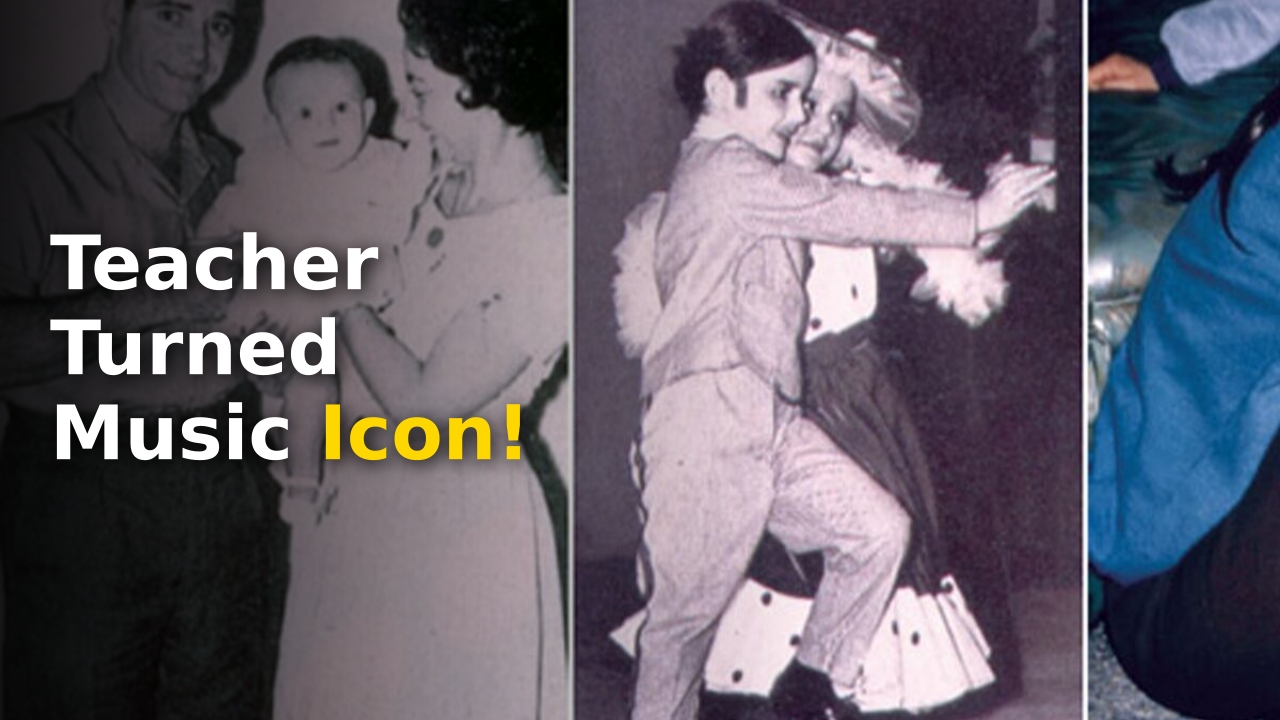
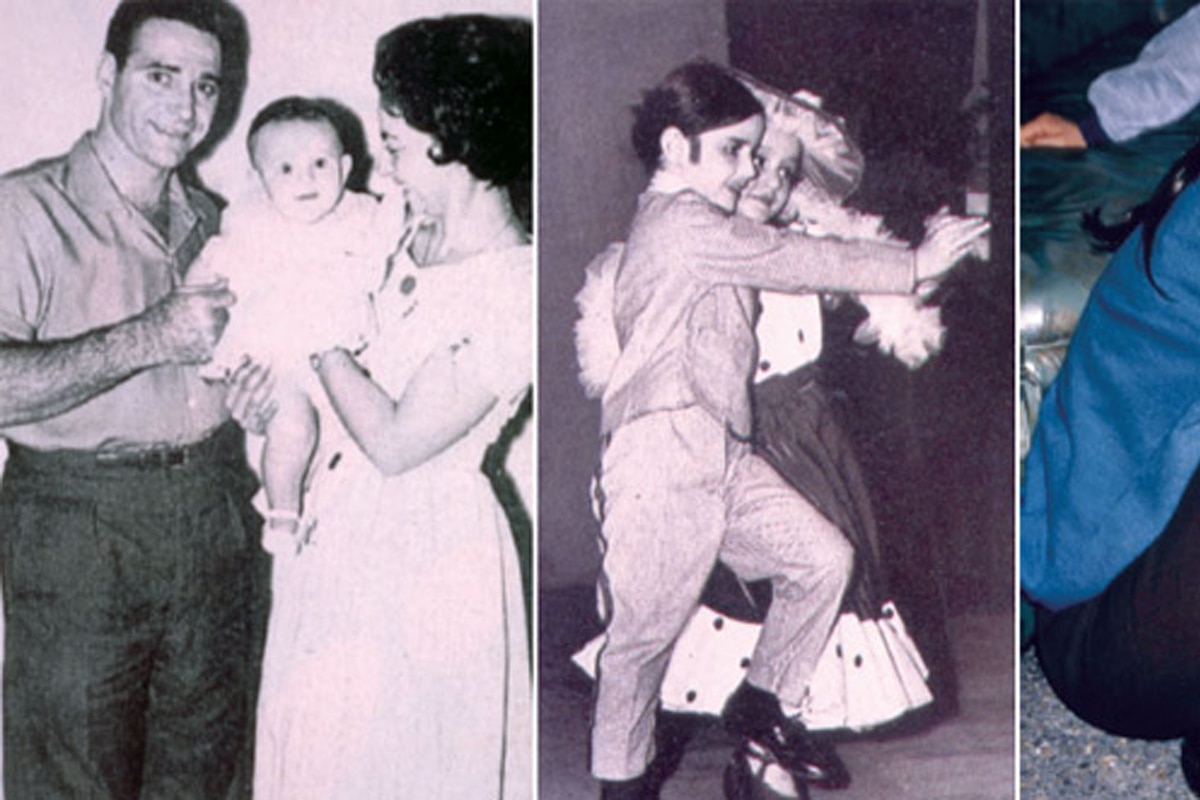
Miriam Alejandra Bianchi entered the world on October 11, 1961, in the quiet, residential neighborhood of Villa Devoto in Buenos Aires. Her father, Omar Eduardo Bianchi, was a dedicated civil servant, while her mother, Isabel Scioli, worked tirelessly as a private piano instructor. Alongside her younger brother Omar, Miriam spent her formative childhood inside her grandmother’s traditional casa chorizo, a quintessential Argentine home built around a cavernous communal courtyard.
That sunlit courtyard served as Miriam’s very first concert hall and dramatic stage. Blessed with an expansive imagination, she raided discarded clothing trunks belonging to her mother and grandmother, dressing up in vintage lace and oversized heels to perform private matinees. Her father nurtured her creative instincts with humble generosity. He crafted a toy microphone out of an ordinary wooden broom handle, carefully painting the top with bright gold paint so his daughter could emulate the glamorous vocalists she idolized on television.
Artistic sensitivity pulsed through her daily environment from a young age. She studied both classical ballet and traditional Spanish folk dance, demonstrating natural rhythmic coordination and pitch accuracy. Interestingly, future rock royalty rehearsed right next door. Tito Alberti, the celebrated jazz bandleader and father of Soda Stereo drummer Charly Alberti, frequently led orchestra rehearsals in an adjacent house. Young Miriam would run to the fence clutching a tambourine, merrily playing along with the brass section.

Childhood Dreams and Gold Microphones
Despite her obvious performance gifts, professional show business remained completely off-limits for a respectable middle-class Argentine family of that era. Her parents regarded her talent as a charming hobby rather than a viable career. Schooling took immediate priority, and Miriam excelled within strict academic environments. She attended an all-girls Catholic school run by nuns until the sixth grade, proving so intellectually gifted that teachers skipped her ahead through multiple grade levels.
This religious upbringing left a complex psychological imprint on the impressionable girl. Rigid doctrinal teachings centered heavily on eternal damnation, mortal sin, and terrifying depictions of purgatory. Miriam later recalled staring at the dark, menacing angels painted across the parish sanctuary ceiling, recoiling from the terrifying imagery in her catechism booklets. She decided early on that she wanted neither the frightening sky nor the fiery underworld she was taught to fear, developing an intimate, independent faith in Jesus Christ while rejecting institutional dogmatism.
Surviving Crisis and Father’s Illness
Her family’s fragile stability fractured abruptly when her father sustained two catastrophic strokes during her early adolescence. The medical emergencies left Omar Bianchi severely paralyzed with hemiplegia at a tragically young age, ending his civil service employment overnight. The financial burden shattered the household, forcing the family to relocate to the working-class district of Villa Lugano, where Miriam enrolled in a coeducational public school alongside older peers.
The illness stripped away the comforts of Miriam’s youth almost overnight. With both her father and aging grandmother battling severe chronic illnesses, economic survival became the only priority that mattered. Miriam watched her mother stretch every penny, instilling in the teenager an ironclad work ethic. She realized that finishing her higher education and earning dependable income was not a distant personal milestone, but an urgent collective necessity for her family’s basic survival.
During this difficult era, her musical palette reflected contemporary international tastes rather than tropical genres. She fell in love with folk-rock harmonies from Sui Generis, the conscious reggae grooves of Bob Marley, American rhythm and blues, and traditional Argentine acoustic folklore played around acoustic campfires. Tropical cumbia music held virtually no presence in her everyday world, as the commercial tropical music circuit remained confined to marginalized urban dance halls known as bailantas.
From Classroom Teacher to Tropical Music Star
At age 18, Miriam fell deeply in love with businessman Raúl Cagnin and married him, eager to build a warm domestic haven of her own. Motherhood arrived swiftly with the births of her two cherished children, Mariel and Fabricio. Balancing family obligations with fierce professional ambitions, she enrolled in post-secondary teacher training institutes, completing grueling dual certifications as a preschool teacher and a specialized physical education instructor.
Her entrepreneurial drive quickly led her to partner with her mother to open a private community kindergarten directly inside their family residence. For nearly a decade, Miriam’s world revolved around morning drop-offs, developmental lesson plans, parent-teacher conferences, and organizing playground games. Yet, teaching never extinguished her latent theatrical flair; it actually provided her first genuine public stage.
Whenever school festivals, national holidays, or year-end galas approached, Miriam transformed the school auditorium into an ambitious theater. She wrote original musical scripts, sewed costumes, directed the children, and stepped up to the microphone herself to sing. Parents and fellow faculty members were mesmerized by the sweet timbre, crystalline pitch, and emotional resonance of her voice. Through the laughter and applause of neighborhood families, she slowly rediscovered the girl with the gold-painted wooden microphone.
By 1990, Miriam Bianchi found herself approaching age 29, wrestling with the suffocating realization that her life’s true passion remained completely unfulfilled. Her marriage was deteriorating under mutual strain, and the predictability of her suburban routine felt increasingly constricting. You can read more about courageous mid-career transformations across our celebrity biography archives, where artistic reckonings often strike when conventional paths seem most settled.
The 1990 Classified Ad That Changed Everything
The turning point arrived with astonishing simplicity through the classified ads of a Buenos Aires daily newspaper. A local music agency placed an unassuming notice looking for dynamic female vocalists to front an emerging tropical project. Deciding on a whim to test the limits of her courage, Miriam answered the call. On September 20, 1990, she walked into a humble rehearsal studio to audition before keyboardist, composer, and musical director Juan Carlos “Toti” Giménez.
Giménez was instantly captivated. In an urban music scene dominated by brassy, exaggerated showgirls, Miriam presented a startling contrast. She possessed impeccable vocal pitch, refined stage grace, and a disarming blend of warmth and vulnerability that felt entirely genuine. Giménez recognized instantly that her natural, crystalline voice could revolutionize tropical music, which was then transitioning into the mainstream airwaves.
He immediately integrated her into high-profile production sessions, securing her a spot singing background vocals on the seventh studio album of the hit pop novelty group Las Primas in 1991. The experience gave Miriam a crucial crash course in commercial studio recording, vocal layering, and professional performance pressure. The stage was finally set for Miriam Bianchi to reinvent herself completely.
Adopting the Gilda Moniker
Choosing a professional stage name became the final step in shedding her suburban anonymity. She chose “Gilda,” directly honoring the 1946 Hollywood film noir starring Rita Hayworth, whose magnetic sensuality and fierce independence had long inspired her. In 1992, at age 30, she made the agonizing choice to resign from her stable teaching career, step out of her crumbling marriage, and commit her entire future to the uncertainties of the tropical music circuit.
Her debut studio album, De corazón a corazón, was released in 1992 under the Magenta record label. The road to recognition was brutal. Venue owners routinely doubted that a former kindergarten teacher could survive the rough-and-tumble midnight circuit of metropolitan bailantas. Yet every time she stepped onto the bandstand, her charisma dissolved all skepticism. She followed with La única in 1993 and Pasito a pasito con… Gilda in 1994, steadily cultivating a passionate grassroots fanbase that spanned across Argentina, Bolivia, and Peru.
Gilda Discography and Career Milestone Data
To fully grasp the rapid velocity of her artistic evolution, one must examine the concise discography she produced before her life was cut short. Within five short years, she released four landmark studio albums that fundamentally altered the sound and lyrical themes of South American tropical music. The following data highlights her key career milestones and commercial achievements.
| Year | Album Title | Record Label | Standout Hit Tracks | Commercial Certifications |
|---|---|---|---|---|
| 1992 | De corazón a corazón | Magenta | “La golondrina”, “Heredera de tu amor” | Regional Airplay Breakthrough |
| 1993 | La única | Clan Music | “Corazón herido”, “Baila esta cumbia” | Gold Status (Argentina) |
| 1994 | Pasito a pasito con… Gilda | Leader Music | “No me arrepiento de este amor”, “Noches vacías” | Platinum Status (Argentina) |
| 1995 | Corazón valiente | Leader Music | “Fuiste”, “Se me ha perdido un corazón” | Double Platinum (Argentina) |
Her songwriting represented a seismic departure from standard commercial tropical songwriting of the era. Rather than relying on borrowed foreign rhythms or recycled party slogans, Gilda wrote her own melodies and poetry, infusing them with raw autobiographical honesty. When you listen to her catalog today, the emotional transparency cuts straight through the high-tempo synthesizer lines.
By late 1995, Corazón valiente had cemented her as an international sensation. Her tour dates spanned packed concert halls throughout Latin America, while her television appearances earned record ratings. Yet, despite her dazzling stage presence, industry executives noted that she refused to adopt elite diva mannerisms. She insisted on signing autographs for hours, hugging fans, and offering counseling to working-class women who saw their own struggles mirrored in her lyrics.
By The Numbers: The Commercial Explosion
Between 1994 and her untimely passing in September 1996, Gilda maintained a staggering touring pace, frequently performing at four to six different dance halls across Greater Buenos Aires in a single night. Corazón valiente earned certified double-platinum status in Argentina, moving over 120,000 physical units in its initial print run—an extraordinary number for a cumbia album at the time. Posthumously, her total physical record sales exceeded two million copies throughout the Americas, propelled by enduring radio play and global licensing deals documented by mainstream music outlets like Billboard Latin music coverage.
How Miriam Bianchi Redefined Argentine Cumbia
Prior to Gilda’s arrival, the Argentine tropical music industry was notoriously exclusionary. The genre was treated by mainstream media as lower-class party entertainment, while female artists were often reduced to decorative dancers or compelled to project hyper-sexualized caricatures. Miriam Bianchi flatly refused to participate in those tropes. She introduced an entirely new aesthetic: soft pastel dresses, handmade floral wreaths in her hair, gentle conversational banter, and melodies driven by bittersweet longing.
Her personal background as an educator shaped her performance philosophy. Onstage, she treated the audience not as rowdy spectators, but as a community deserving of comfort and empathy. She looked directly into people’s eyes, listened attentively to their problems between sets, and sang about heartbreaks with profound dignity. As chronicled in our ongoing cultural essays at BrightCelebrity music retrospectives, historical icons achieve immortality when their personal struggles reflect the unspoken pains of their generation.
Breaking the Machismo Barrier in Bailantas
Breaking through that chauvinistic barrier required extraordinary mental fortitude. Promoters regularly told Toti Giménez that a thin, soft-spoken mother in her thirties could never sell tickets to working-class youth who preferred aggressive cumbia santafesina or cuarteto acts. Gilda responded by writing lyrics that spoke directly to female agency. Her protagonists were never passive victims of heartbreak; they were courageous women taking ownership of their emotional choices.
Tracks like “Fuiste” flipped the traditional heartbreak narrative completely upside down. Instead of lamenting abandonment, the singer firmly bid farewell to an unfaithful partner who failed to appreciate her worth. The female demographic responded enthusiastically. For the first time, women in the bailantas saw an artist who validated their real romantic frustrations and daily domestic dignities without condescension.
The Emotional Catharsis of No Me Arrepiento
The single that immortalized her career, 1994’s “No me arrepiento de este amor” (“I Don’t Regret This Love”), was born directly from the wreckage of her marriage to Raúl Cagnin. Composed during painful late-night writing sessions, the song captured the complexity of walking away from a foundational relationship while treasuring the beauty of the shared memories. Rather than wallowing in bitterness, the song exploded into an exhilarating anthem of liberation.
Over the decades, that single transformed into an indelible cultural monument across Latin America. Rock bands like Attaque 77 covered it as a blistering punk-rock anthem, while international pop artists and soccer stadium crowds adopted its soaring chorus as a universal chant of loyalty. The song proved that Miriam Bianchi had successfully bridged the deep gap between vernacular street music and universal pop poetry.
Expert Take: The Socio-Cultural Elevation of Gilda
Sociologists and musicologists widely analyze Miriam Bianchi’s career as a critical turning point in late-20th-century Argentine popular culture. By synthesizing Argentine urban pop sensibilities with traditional Andean cumbia rhythms, she democratized tropical music, pulling it into middle-class living rooms and national television networks. Her dual identity as both Miriam—the devoted, hard-working mother—and Gilda—the ethereal, empathetic stage priestess—created a rare emotional connection that laid the groundwork for her eventual cultural sanctification following the tragic bus crash on National Route 12 on September 7, 1996.
People Also Ask
What was Gilda’s real name before she became famous?
Gilda was born Miriam Alejandra Bianchi on October 11, 1961, in the neighborhood of Villa Devoto in Buenos Aires, Argentina. She only adopted the stage name Gilda in 1992 after auditioning for tropical music projects at age 29.
What job did Gilda have before starting her music career?
Before entering professional music, she worked full-time as a certified preschool kindergarten teacher and physical education instructor. She even established and ran a private kindergarten with her mother inside their family home for several years.
How was Gilda discovered by the music industry?
She responded to a September 1990 newspaper classified ad seeking female vocalists for an upcoming music group. Keyboardist and music producer Juan Carlos “Toti” Giménez auditioned her, recognized her rare vocal talent, and brought her on board as a professional singer.
Why did Miriam Bianchi choose the stage name Gilda?
She selected the name Gilda in homage to Rita Hayworth’s famous title role in the 1946 Hollywood classic film Gilda. The character represented female strength, independence, and charisma, qualities Miriam sought to embody onstage.
What inspired Gilda to write No Me Arrepiento de Este Amor?
Gilda composed the iconic 1994 hit song as an emotional reflection on her painful divorce from her first husband, Raúl Cagnin. The lyrics channeled her bittersweet feelings of heartbreak and personal liberation into an uplifting cumbia anthem.
The Enduring Legacy of Miriam Bianchi
Looking back at the extraordinary arc of the Gilda singer early life, it becomes crystal clear that her artistic brilliance was never an accidental overnight phenomenon. It was the hard-earned triumph of a working-class woman who endured heavy family responsibilities, raised two children, worked demanding hours in education, and dared to reinvent herself when society told her it was far too late to chase an artistic dream.
When Miriam Bianchi stepped onto a concert stage, she never abandoned the girl from Villa Devoto with the gold-painted toy microphone, nor did she forget the teacher who comforted weeping preschoolers. She carried every chapter of her lived experience into every lyric she sang. Her capacity to transmute private grief, economic hardship, and romantic disillusionment into joyous, communal dance music remains one of the most powerful artistic achievements in modern Latin American history.
Decades after her untimely passing, flowers and handwritten notes continue to cover her memorial site in Entre Ríos, where devoted fans revere her as a guardian folk saint. Yet her truest miracle remains entirely earthly. By choosing courage over comfort, Miriam Bianchi broke through entrenched industry ceilings, gifted the world timeless musical treasures, and demonstrated that an ordinary woman’s heart can truly conquer an entire continent.
More Like This
For more updates, check out our latest entertainment and sports news.