Key Takeaways
| Re-election Status | Gianni Infantino confirmed his intent to run for a final term in 2027. |
| Legal Escalation | UEFA is preparing a criminal complaint in Swiss courts over financial mismanagement. |
| Failed Commercial Plan | The controversial multi-billion dollar World Cup profit sell-off has been abandoned. |
| Political Backlash | The English FA and British PM Andy Burnham have formally withdrawn support. |
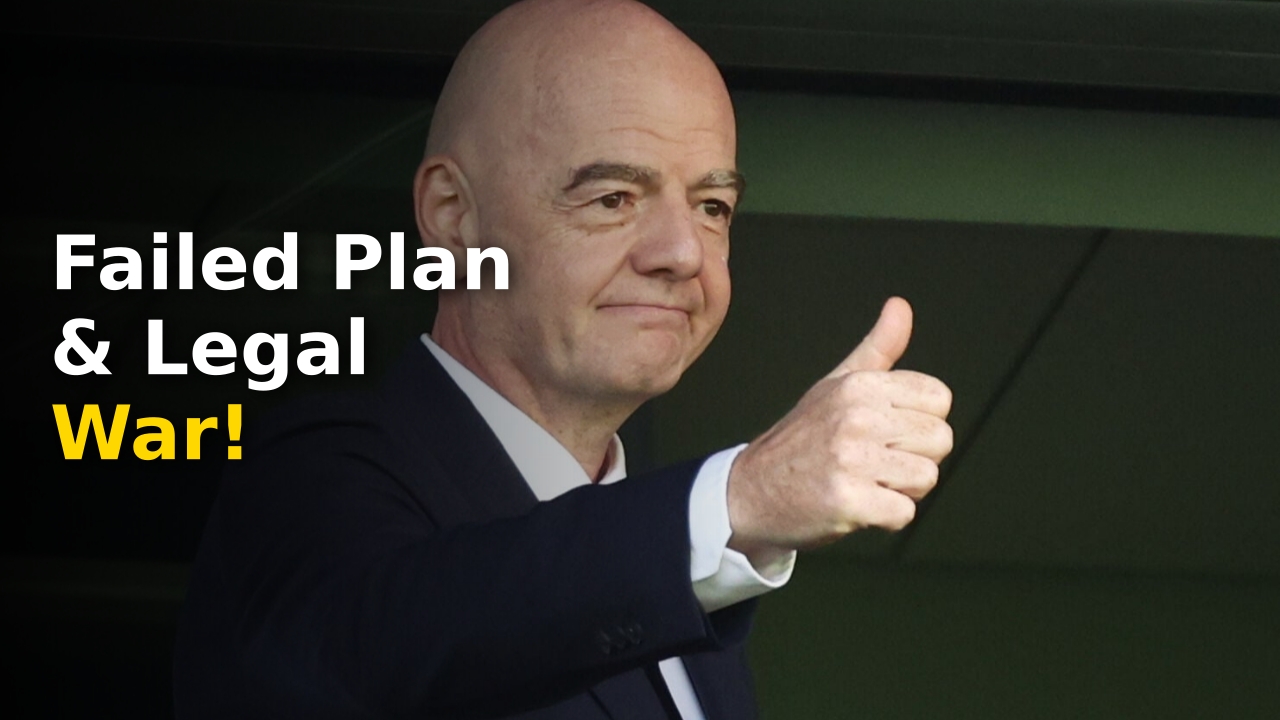
You might think that a global sports leader facing a criminal complaint and a full-scale mutiny from Europe’s biggest footballing powers would consider a quiet exit, but the Gianni Infantino FIFA 2027 re-election campaign is officially moving forward despite the wreckage of a failed commercial revolution. The world soccer governing body confirmed on Sunday that the incumbent president will seek a final term that would extend his iron-clad grip on the sport until 2031.
This decision comes at a time of unprecedented turbulence within the halls of Zurich, as the fallout from a botched plan to sell stakes in the World Cup to private investors continues to alienate long-term allies. While the FIFA spokesperson insists that “nothing has changed” regarding the April announcement, the landscape of international football politics has shifted dramatically under the weight of legal threats and plummeting confidence.
Gianni Infantino FIFA 2027 Re-election Bid
The confirmation of the Gianni Infantino FIFA 2027 candidacy marks a definitive line in the sand for world football governance. By choosing to stand for re-election, Infantino is signaling that he believes the support of the majority of FIFA’s 211 member associations remains intact, even as the wealthiest and most influential confederation, UEFA, moves toward open warfare. The 2027 vote will be the defining moment for a leader who has spent his tenure centralizing power and aggressively expanding the commercial footprint of the World Cup.
Internal documents suggest that the deadline for candidates to enter the next presidential contest is November 18, setting a strict four-month countdown for any potential challenger to emerge. However, the path for an opposition candidate is fraught with difficulty, as the current administration has spent years cultivating loyalty among associations in Africa, Asia, and the Caribbean. This geopolitical split within the sport has created a scenario where Infantino can lose the support of the English FA and still secure a mathematical landslide.

Critics argue that the current leadership has prioritised revenue generation over the traditional values of the game. The English FA and several other European nations have already hinted at a potential boycott of FIFA tournaments, a move that would be catastrophic for the commercial viability of the 2030 World Cup. Despite these warnings, the Infantino camp remains steadfast, relying on the “one nation, one vote” policy that historically favors the incumbent over European interests.
The 2031 Term Limit Goal
If successful, this upcoming election would keep Infantino in the presidency through 2031, effectively exhausting his eligibility under the current statutes. This long-term horizon is viewed by many as an attempt to oversee the most lucrative era in FIFA history, including the transition to a 48-team World Cup format. The stability of the administration is being marketed as a necessity for the multi-billion dollar infrastructure projects already in motion.
The Failed World Cup Sell-off Plan
The primary catalyst for the current hostility is the high-stakes gamble involving a commercial subsidiary designed to sell future World Cup profits to private equity firms. This “sell-off” plan was intended to inject immediate liquidity into FIFA’s coffers, but it was met with a furious backlash from fans and member nations who viewed it as a surrender of the sport’s crown jewels. The plan has since been abandoned, but the damage to Infantino’s reputation as a financial steward remains profound.
FIFA has issued a public apology for the “errors made” during this process, promising to ensure they do not happen again. However, the apology has done little to satisfy legal experts and rival administrators who believe the initial proposal was a breach of fiduciary duty. The controversy highlights the growing influence of private equity in sports, a trend that continues to spark debate among the wealthiest sports figures and global investors alike.
| Financial Metric | Original Projection | Actual Outcome |
|---|---|---|
| Private Equity Investment | $25 Billion | $0 (Abandoned) |
| Member Association Dividend | $50 Million Growth | Stagnated |
| Commercial Rights Stake | 49% External | 100% Retained by FIFA |
By attempting to monetize the future to pay for current projects, the administration was accused of mortgaging the game’s future. The ESPN analysis of FIFA’s governance notes that this specific financial maneuver is what finally broke the uneasy peace between Infantino and the UEFA executive committee. The failure of the plan is not just a financial setback; it is a symbolic defeat for the “Infantino-nomics” that has defined his second term.
Legal Pressures and UEFA Opposition
In a move that mirrors the darkest days of the Sepp Blatter era, UEFA is now preparing a criminal complaint against Infantino in Swiss courts. The allegations center on “possible financial mismanagement” and the lack of transparency regarding the private equity negotiations. This is no longer just a political disagreement; it is a legal offensive that could result in Infantino being barred from the Gianni Infantino FIFA 2027 ballot altogether if formal charges are brought forward.
UEFA President Aleksander Čeferin has been vocal about the loss of confidence in the FIFA executive. The tension between the two leaders has paralyzed several joint initiatives, including the proposed reform of the international match calendar. The British Prime Minister, Andy Burnham, has also joined the fray, stating publicly that the current leadership is no longer fit for purpose. This level of state-level intervention in soccer governance is rare and indicates the severity of the institutional crisis.
Experts in Swiss law suggest that the case against Infantino will hinge on whether he exceeded his authority in negotiating the sell-off without the full approval of the FIFA Congress. Under Swiss law, mismanagement of an association can lead to significant civil and criminal penalties. This legal shadow will follow the president as he travels to various continental congresses to drum up support for his 2027 bid, creating a cloud of uncertainty over the organization’s future.
Expert Take: The Sovereignty of Soccer
Governance expert Dr. Julian Thorne notes: “What we are seeing is a clash between two models of sports leadership. Infantino operates like a CEO of a global corporation, while UEFA views FIFA as a cooperative of national associations. The move toward private equity was seen as a violation of the ‘sovereignty of soccer,’ where the fans and the associations, not anonymous investors, should own the game’s future. The Swiss court case will be the ultimate test of where that power truly lies.”
History of FIFA Presidential Tenures
To understand the current obsession with a final term in 2031, one must look at the history of FIFA’s leadership. For decades, the presidency was treated as a lifetime appointment. Sepp Blatter served from 1998 until his forced resignation in 2015, and his predecessor, João Havelange, reigned for 24 years. When Infantino took over in 2016, he promised a new era of transparency and limited terms. However, the interpretation of those limits has become a point of major contention.
By the Numbers: Since 1904, FIFA has only had nine presidents. The average tenure for a FIFA president is roughly 13 years, meaning Infantino’s goal of staying until 2031 would align him with the longest-serving leaders in the organization’s history. This historical precedent provides context for why the incumbent feels entitled to a final four-year cycle, despite the significant sports scandals currently dominating the headlines.
The financial growth of the organization under Infantino is undeniable. FIFA reported record revenues of $7.5 billion for the 2019-2022 cycle, a figure that is projected to rise to $11 billion by the end of 2026. This massive wealth has been distributed to smaller associations worldwide, creating a voting bloc that is almost impossible to break. For a small association in the Pacific or Africa, the political drama in Europe is often secondary to the development grants provided by Zurich.
People Also Ask
What happened with the Gianni Infantino FIFA 2027 re-election today?
FIFA officially confirmed that President Gianni Infantino will stand for re-election in 2027 for a final term ending in 2031. This announcement comes despite a failed multi-billion dollar World Cup sell-off plan and threats of a criminal complaint from UEFA.
Why is Gianni Infantino trending right now?
Infantino is trending due to the abandoned plan to sell World Cup commercial rights to private investors and the subsequent legal action being prepared by UEFA. His refusal to step down amidst these controversies has sparked global debate about soccer governance.
How does the failed sell-off affect the 2026 World Cup?
While the sell-off was abandoned, the fallout has damaged relationships between FIFA and major sponsors. It has also led to calls for greater financial transparency as the organization prepares for the first 48-team tournament in 2026.
When is the next FIFA presidential election?
The next FIFA presidential election is scheduled for 2027, with the candidate entry deadline set for November 18, four months prior to the vote. Gianni Infantino is currently the only confirmed candidate.
Future of Global Soccer Governance
As we look toward the horizon of Gianni Infantino FIFA 2027, the central question remains whether the sport can survive this level of internal division. The threat of a UEFA boycott is no longer an empty one; it is a strategic lever being pulled to force a change at the top. If the European nations and South America’s CONMEBOL were to form a rival governing body, the very concept of a “World” Cup would be rendered obsolete.
However, Infantino’s resilience is his most notable trait. From his humble beginnings as a lawyer at UEFA to the peak of the global sports leadership trends, he has navigated numerous crises with a combination of political savvy and a relentless focus on the bottom line. He maintains that his administration has “cleaned up” FIFA, citing the lack of arrests compared to the 2015 FBI raid that ended the previous regime.
Ultimately, the Gianni Infantino FIFA 2027 campaign will be a referendum on the soul of the game. Will football continue its path toward being a pure commercial product, optimized for private equity and global expansion, or will it return to its roots as a member-driven association? For now, the man at the center of the storm is staying exactly where he is, waiting for the right time and the right place to answer his critics once and for all.
More Like This
For more updates, check out our latest entertainment and sports news.