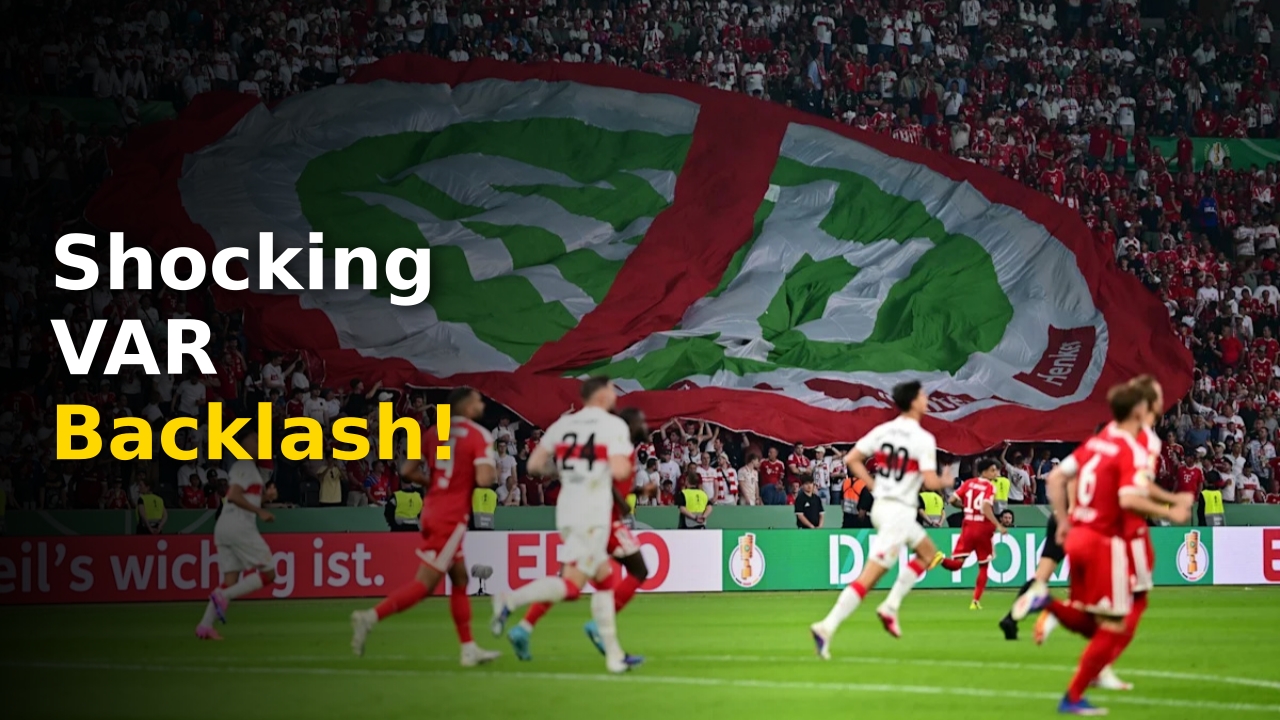
German fans are currently spearheading a massive, nationwide movement to dismantle the Video Assistant Referee (VAR) system as they gear up for this weekend’s highly anticipated men’s Cup first round matches. Have you ever wondered why the very soul of the beautiful game seems to be slipping away under the weight of endless screen reviews and technological bureaucracy? You are not alone in this sentiment, as thousands of supporters across the country are ready to voice their absolute disdain for the current state of football officiating.
The passion displayed by the German ultras is legendary, and their latest campaign is not merely a complaint; it is a full-blown cultural crusade to reclaim the authenticity of the sport. By choosing the Cup first round—a rare sanctuary where the professional VAR infrastructure is absent—these fan groups aim to show the world exactly what a pure, unadulterated football match looks like. You are witnessing a pivotal moment where the voice of the fan might finally outweigh the cold, calculated logic of the video monitor.
German fans vs VAR tech
The core of this protest lies in a simple yet profound desire for the game to remain an organic, rhythm-based experience. Supporters argue that the moment a referee stops the action for minutes on end to verify a marginal offside or a subtle foul, the heartbeat of the stadium dies. This isn’t just about bad calls; it is about the loss of momentum that historically defined the sport for over a century.
You see, the German Cup provides a unique testing ground because lower-league clubs are granted home-field advantage by default. These smaller stadiums often lack the multi-million dollar camera arrays required for VAR, creating a temporary bubble of ‘authentic’ football. Fan organizations are leveraging this technical limitation to contrast the fast-paced, fluid nature of traditional football with the stuttering, stop-start reality of the modern era.
The movement has gained significant traction through leaked letters and grassroots coordination that highlight a deep-seated fatigue with the system. After nine years of tinkering with the technology, fans feel the character of the game has been fundamentally altered for the worse. They argue that the intensity of a live match—that visceral connection between the pitch and the terrace—simply cannot coexist with the clinical coldness of the video booth.
If you look at the evolution of European football, you will notice that the pressure is mounting from multiple directions to simplify the rules. While authorities claim that technology ensures fairness, the fans believe that fairness is not worth the price of the sport’s identity. This conflict represents a clash between two worlds: the digital transformation of professional sports and the traditionalist culture of European club football.

Supporters are not suggesting that they want a return to total anarchy, but rather a system that respects the pace of the game. They demand a reduction in intervention, arguing that if an error isn’t clear and obvious to the naked eye at normal speed, it shouldn’t be ‘corrected’ at all. This perspective aligns with many global sports journalists who have debated the impact of technology on athletic integrity for decades.
This protest is not happening in a vacuum; it is part of a larger conversation about the corporatization of football. As clubs become global brands, the needs of the match-going fans who provide the atmosphere are often sidelined. By taking a stand, these supporters are effectively trying to put the genie back in the bottle, forcing administrators to acknowledge that without the fans’ emotional investment, the game loses its commercial value.
The primary arguments against VAR
- Interruptions destroy the natural flow and rhythm of the game.
- Referees lose authority, appearing as mere puppets of the video booth.
- The long wait times for decisions kill the emotional intensity in the stadium.
- Technology cannot measure the nuance of physical, high-intensity play.
- The subjective nature of football fouls is often magnified rather than solved.
Data and impact analysis
To understand the depth of this struggle, one must analyze how the VAR system has been implemented across the German football pyramid. While the Bundesliga and second division are deeply integrated into the digital officiating network, the expansion into the earlier rounds of the German Cup creates a friction point that authorities are clearly struggling to manage. You can follow more updates on the latest sports industry trends here to see how these controversies impact player values and team rankings.
| Category | Status | Fan Sentiment |
|---|---|---|
| Bundesliga | Full VAR | Extremely Negative |
| 2. Bundesliga | Full VAR | Highly Skeptical |
| German Cup (Early) | No VAR | Supportive |
| International Cups | Full VAR | Growing Frustration |
As you analyze these numbers, it becomes clear that the frustration isn’t just a fleeting trend. The expansion of VAR to cover red card reviews and mistaken identity cases only serves to complicate a system that many feel is already beyond salvation. The refereeing subsidiary, Schiri GmbH, has stated they aim to strengthen the referee, yet the fans view every intervention as a direct undermining of that authority.
You might be surprised to learn that even those who initially supported the concept of technological intervention have turned their backs after observing the persistent flaws in real-time. Nine years of data has shown that while errors might decrease in number, the nature of those errors has become a lightning rod for conspiracy and outrage. Every stoppage is now seen as a moment of potential manipulation by the system itself.
For those of you tracking the finances behind these decisions, the cost of implementing VAR in every stadium across the lower leagues would be astronomical. This financial barrier is the only thing keeping the traditional, authentic spirit of the sport alive in the early rounds of the competition. Once the infrastructure is fully installed, the argument against its usage might lose its practical footing.
Furthermore, the contrast between the German approach and the upcoming World Cup model shows that there is no consensus on how much technology is actually too much. If different federations cannot agree on basic rules like corner reviews or offside checks, then the claim that VAR brings ‘universal fairness’ remains highly questionable. You are witnessing a sport at a crossroads, forced to choose between the precision of a machine and the passion of the crowd.

Ultimately, the protests this weekend serve as a snapshot of a much larger global divide. Football is no longer just a game played by 22 people on a grass pitch; it is a multi-billion dollar entertainment industry fighting to maintain the illusion of unpredictability. Whether or not these protests change the mind of the governing bodies remains to be seen, but one thing is certain: the conversation is far from over.
The future of football
As we look ahead, the tension between the digital officiating age and the traditionalist fanbase will only intensify. If you follow the trajectory of other professional sports, you will see a similar cycle: early adoption, widespread backlash, and eventual acceptance. However, football, with its deep-rooted history and massive, vocal supporter bases, may prove to be the exception to the rule.
The demand for the abolition of the system is the most radical stance the fans have taken thus far. It signals that they are no longer interested in ‘fixing’ the technology but rather in removing the barrier that they believe is ruining their Saturday afternoons. You should expect more coordinated actions in the coming months, especially as the second round of the Cup approaches.
Every time a referee jogs over to the sideline screen, a portion of the crowd loses their faith in the integrity of the result. This erosion of trust is perhaps the most damaging effect of the technology. When the final whistle blows, the game should be remembered for the brilliance of the players, not the competence of the video assistant.
If football authorities want to win back the hearts and minds of the fans, they must reconsider their obsession with absolute accuracy at the expense of flow. The game is supposed to be about moments of magic, not frames of video footage. You can be sure that this debate will continue to rage until a middle ground is found that respects the spirit of the sport.
In the end, the protest by German fans is a testament to the fact that you, the viewer, still hold the power to demand change. Without the fans, there is no game. If the governing bodies continue to ignore the overwhelming sentiment of the stands, they risk losing the very thing that made football the most popular sport on the planet.
More Like This
For more updates, check out our latest entertainment and sports news.