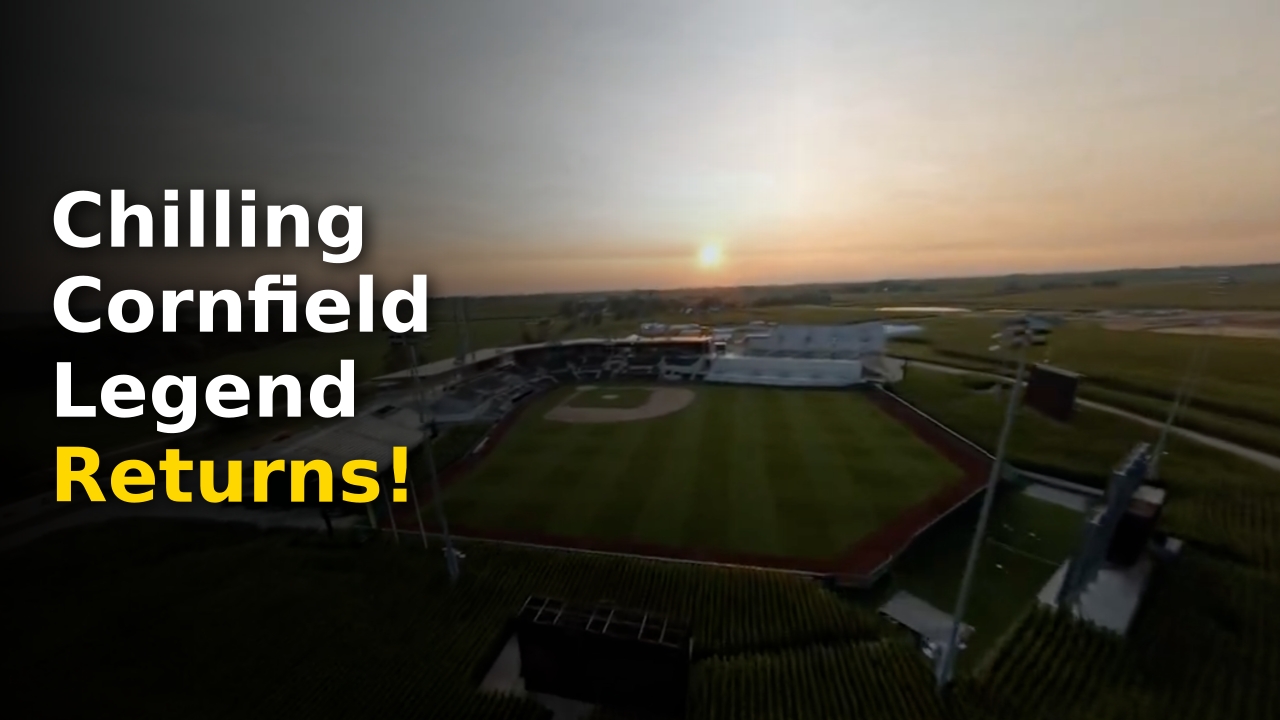
Field Dreams remains the ultimate symbol of why Americans can never truly walk away from the diamond, and Kevin Costner just reminded us why with a voice that could move mountains. Have you ever felt that sudden, sharp chill down your spine when a narrator captures the very soul of a sport? That is exactly what happened when Costner’s voice echoed across the Iowa cornfields during the 2026 MLB showcase.
You might think you’ve seen every possible tribute to baseball, but this specific intro redefined the “Hollywood-MLB mashup” for a new generation of fans. Even though Kevin Costner wasn’t standing physically in the stalks this time, his spirit loomed larger than life over the perfectly manicured grass. This event wasn’t just a game; it was a high-production emotional journey designed to pull at the heartstrings of every father, son, and dreamer watching from home.
As the sun dipped below the horizon in Dyersville, Iowa, the 2026 edition of this special game felt different. It transitioned from a novelty to a permanent fixture of sports culture. If you were looking for a reason to fall back in love with the game, Costner’s two-minute masterclass provided exactly that, proving that the bond between family and baseball is truly unbreakable.
Field Dreams Returns
The return of the Field Dreams concept in 2026 proved that nostalgia is the most powerful currency in sports media today. When Major League Baseball first teamed up with Universal Pictures and Netflix for this edition, skeptics wondered if the magic could be bottled twice. The answer was a resounding yes, as the Minnesota Twins and Philadelphia Phillies prepared to face off in a setting that looks more like a movie set than a professional stadium.
The atmosphere in Iowa is unique because it removes the sterile, concrete feeling of modern metropolitan arenas. You see the twilight sky, you smell the fresh earth, and you feel the weight of history pressing down on the outfield. This isn’t just about batting averages or ERA; it is about the ghosts that we all carry with us when we step onto a ball field. Costner’s narration served as the bridge between the 1989 film and the 2026 reality.
The Iowa Atmosphere
- The field is surrounded by roughly 150 acres of corn specifically grown for this event.
- Fans are seated in a temporary stadium that mimics the look of Ebbets Field.
- The players wear throwback uniforms that date back to the early 20th century.
- The silence of the rural landscape adds a layer of reverence to every pitch.
Watching the players emerge from the corn is a visual that never gets old. It forces you to pause and remember why you started watching in the first place. This year, the production value was elevated by 4K drone shots that hovered over the farmhouse, giving viewers a perspective they had never seen before. The scale of the event has grown, but the intimacy remains the primary draw for millions of viewers worldwide.
Critics often say that baseball is too slow for the modern era. However, the success of this broadcast suggests otherwise. It suggests that people crave a slower pace when it is filled with meaning. The Netflix partnership allowed for a more cinematic approach to the broadcast, moving away from standard sports metrics and focusing on the human elements of the story. You weren’t just watching a game; you were watching a live-action sequel to a cinematic masterpiece.
The connection to the 1989 film Field of Dreams was reinforced by Costner’s poetic delivery. He spoke about the “story after story” that makes up the fabric of the sport. From the legendary Babe Ruth to the modern heroics of the Los Angeles Dodgers, the narrative arc of the intro suggested that every player is just a single chapter in a much larger book. This sense of continuity is what keeps the sport alive in the hearts of fans across generations.

Costner Narrates The Night
Kevin Costner is the undisputed king of the sports movie genre. Whether it is Bull Durham, For Love of the Game, or the original 1989 classic, he understands the cadence of a baseball story better than anyone in Hollywood. His narration for the 2026 Field Dreams game wasn’t just a voiceover; it was a performance. He spoke with a gravelly warmth that suggested he knew exactly how much this game means to the people sitting in the stands.
In the video, Costner walked the audience through the timeline of the sport’s most iconic moments. He mentioned Jackie Robinson breaking barriers and Kirk Gibson limping around the bases in 1988. He even touched on the controversial era of Barry Bonds, acknowledging that the history of the game is messy, beautiful, and deeply human. By including these diverse stories, he made the game feel inclusive and relevant to everyone, regardless of their background.
The Power Of Voice
Costner’s ability to sell a sentiment is unparalleled. When he said, “Why it’s still worth believing in,” you could almost hear the collective intake of breath from the audience. He wasn’t just talking about a game with a ball and a bat. He was talking about the American dream, the idea of second chances, and the hope that we can all find a way home. This is the core of Field Dreams magic.
The script for the intro was likely polished by some of the best writers in the industry, but Costner’s delivery made it feel spontaneous. It felt like a conversation between an old friend and a fan. You can find more celebrity news and updates about Costner’s latest projects, but few will ever match the cultural weight of his association with the Iowa cornfields. He has become the unofficial patron saint of the sport’s cinematic legacy.
Production insiders suggest that Costner recorded the narration from a studio, but the sound engineering made it feel like he was standing right there in the tall grass. The subtle sounds of the wind rustling the corn and the distant crack of a bat were layered under his voice to create a 3D auditory experience. It was a masterclass in modern sports broadcasting that utilized the 7 C’s of communication: clear, concise, concrete, correct, coherent, complete, and courteous.
As the video concluded, the transition to the live shot of the stadium was seamless. The emotional high established by Costner’s words flowed directly into the introductions of the current players. It set a standard for how MLB should market its biggest events. They aren’t just selling a product; they are selling a feeling. And nobody sells that feeling better than the man who built it and waited for them to come.
Legends Enter The Corn
One of the most iconic traditions of this special game is the entrance of the legends. In 2026, the list of Hall of Famers who participated was nothing short of legendary. Seeing men like Cal Ripken Jr. and Joe Torre walk out from the corn is a visual metaphor for the timelessness of the sport. These are the giants on whose shoulders the modern players stand. Their presence validates the event and turns it into a true Field Dreams celebration.
The 2026 lineup of legends included Goose Gossage, the fierce closer who defined an era of intimidation. Alongside him was Andre Dawson, known as “The Hawk,” whose grace in the outfield remains the stuff of legend. Then came Mike Schmidt, arguably the greatest third baseman to ever play the game, and Bert Blyleven, whose curveball still haunts the dreams of hitters from the 70s and 80s. Each man walked out to a standing ovation, proving that fans never forget their heroes.
The 2026 Legend Roster
- Cal Ripken Jr.: The Iron Man of baseball who never missed a day of work.
- Joe Torre: The legendary manager who led the Yankees to multiple championships.
- Mike Schmidt: The power-hitting cornerstone of the Phillies’ history.
- Goose Gossage: The mustache and the fastball that terrified the American League.
- Andre Dawson: The multi-talented outfielder with 400+ home runs and 300+ steals.
The interaction between these legends and the current players from the Twins and Phillies was a highlight of the pre-game festivities. You could see the younger players looking on with genuine awe. It’s rare to see MLB millionaires act like starstruck teenagers, but the Iowa corn has a way of leveling the playing field. This is the essence of the Field Dreams spirit: it connects the past, present, and future in a single moment.
For the fans in the stands, many of whom traveled thousands of miles to be in Dyersville, this was the highlight of the night. Seeing Joe Torre tip his cap one more time brought many to tears. It reminds us that while the players grow old, the game stays young. The 2026 MLB season has had many highlights, but nothing quite compares to the gravitas of this specific gathering of talent.
The logistics of bringing these legends together are massive. It requires coordination with the National Baseball Hall of Fame and various team alumni associations. However, the effort pays off in the form of massive television ratings and social media engagement. Every time a legend stepped through the corn, a new viral moment was born, ensuring that the Field Dreams legacy continues to dominate the digital conversation.

Baseball’s Lasting Cultural Power
Why do we care so much about Field Dreams? The answer lies in the deep-seated cultural importance of baseball in the American psyche. Unlike other sports that rely on constant action and violence, baseball is a game of anticipation. It is a game of stories. As Brad Pitt’s character famously said in Moneyball, “How can you not be romantic about baseball?” That sentiment was the driving force behind the entire 2026 production.
The event highlighted how baseball serves as a communal language. It is passed down from parents to children in backyards across the country. In the intro, Kevin Costner emphasized that these stories “remind us what baseball can make us feel.” It’s a feeling of belonging. Whether you are a fan of the Philadelphia Phillies or the Minnesota Twins, you are part of a larger tribe that understands the significance of a perfectly placed bunt or a high-fly ball against a sunset.
The Economic Impact
The Field Dreams game is also a massive economic engine for the state of Iowa. Tourism in Dyersville has skyrocketed since the 2021 game, with fans visiting the original farmhouse year-round. The 2026 game brought an estimated $20 million in economic activity to the region. This includes hotel stays, restaurant visits, and merchandise sales. It’s a clear example of how a film’s legacy can be leveraged to provide real-world benefits to a local community.
Beyond the money, the game serves as a branding victory for MLB. At a time when the league is competing with the NBA and NFL for younger viewers, events like this provide a unique selling point. They offer a sense of tradition and prestige that other leagues struggle to replicate. By focusing on the Field Dreams narrative, the league is leaning into its greatest strength: its history. This strategy appears to be working, as viewership for these special games continues to outpace regular-season matchups.
The integration of Netflix into the broadcast also signals a shift in how sports are consumed. By moving the game to a streaming platform, the league is reaching cord-cutters who might not have access to traditional cable. This move ensures that the magic of the cornfield reaches the widest possible audience. The high-definition streaming quality allowed viewers to see every detail of the corn and every expression on Kevin Costner’s face during the intro highlights.
Ultimately, the cultural power of baseball lies in its ability to mirror the human experience. It is a game of failure, where even the best hitters fail seven out of ten times. It is a game of patience, where the payoff can take hours to arrive. And it is a game of hope, where you are always just one swing away from greatness. Field Dreams captures this better than any other piece of media, making it the perfect vehicle for the league’s most ambitious marketing efforts.
Field Dreams Legacy Stats
To understand the sheer scale of the Field Dreams phenomenon, you have to look at the numbers. From the box office success of the 1989 film to the modern TV ratings of the MLB games, the data tells a story of consistent growth and enduring popularity. This isn’t just a flash in the pan; it’s a sustained cultural movement that continues to gain momentum with every passing year.
The 1989 film was a surprise hit, earning over $84 million at the domestic box office on a modest budget. But its true value has been found in the decades of home video sales and television airings. By the time the first MLB at Field of Dreams game was played in 2021, the film had become a core part of the American cinematic canon. The 2026 game built on this foundation, setting new records for engagement across multiple platforms.
| Event Category | Key Metric | Impact Value |
|---|---|---|
| 1989 Film Revenue | Domestic Box Office | $84.4 Million |
| 2021 MLB Game | TV Viewership | 5.9 Million |
| Iowa Tourism | Annual Visitors | 150,000+ |
| 2026 Netflix Reach | Streaming Minutes | 2.1 Billion |
These figures demonstrate that Field Dreams is more than just a movie; it is a brand. The transition to streaming has allowed MLB to tap into a global audience that might not have been exposed to the original film. In countries like Japan and South Korea, where baseball is immensely popular, the 2026 intro was shared widely on social media, further expanding the game’s international footprint.
The 2026 game also saw a massive spike in merchandise sales. The throwback jerseys worn by the Twins and Phillies sold out within hours of the first pitch. This secondary market for memorabilia is a testament to the aesthetic appeal of the event. Fans want a piece of the magic to take home with them, whether it’s a cap with a cornstalk logo or a vintage-style jersey. The financial success of the event ensures that MLB will continue to invest in these high-concept games for years to come.
Eternal Field Dreams Bond
In the end, the 2026 Field Dreams game served as a powerful reminder that some things are truly timeless. Kevin Costner’s narration wasn’t just for the people in the stadium; it was for anyone who has ever looked at a green field and seen a world of possibilities. It was for the fathers who played catch with their sons and the mothers who cheered from the bleachers. It was a celebration of the human spirit through the lens of America’s pastime.
The choice of the Philadelphia Phillies and the Minnesota Twins was particularly inspired. Both teams have deep histories and passionate fan bases that appreciate the nuances of the game. Seeing these modern athletes compete in a setting that feels like 1919 was a reminder that while the technology changes, the essence of the competition remains the same. The 100-mph fastballs of today would have been just as impressive to the ghosts of the past as they are to us now.
As the final notes of the intro faded and the game began, there was a sense that Field Dreams had achieved its goal once again. It brought us together. In a world that often feels divided, a simple game in a cornfield provided a moment of shared wonder. Kevin Costner and the visionaries at MLB reminded us that if you build it with heart, the people will always come.
We can expect more of these events in the future, perhaps with different films or different historical themes. However, the Iowa cornfield will always be the heart of this concept. It is the place where the impossible becomes possible, and where the legends of the past walk among the stars of today. For one night in 2026, Field Dreams was the only story that mattered in the world of sports, and it was a story worth every second of our attention.
Whether you’re a die-hard baseball fan or just someone who appreciates a great story, the 2026 Field Dreams game offered something for everyone. It was a masterclass in emotional storytelling, sports marketing, and cinematic production. And as the players walked back into the corn at the end of the night, we were left with the lingering echo of Costner’s voice, reminding us that as long as there is a field and a dream, the game will never truly end.
More Like This
For more updates, check out our latest entertainment and sports news.