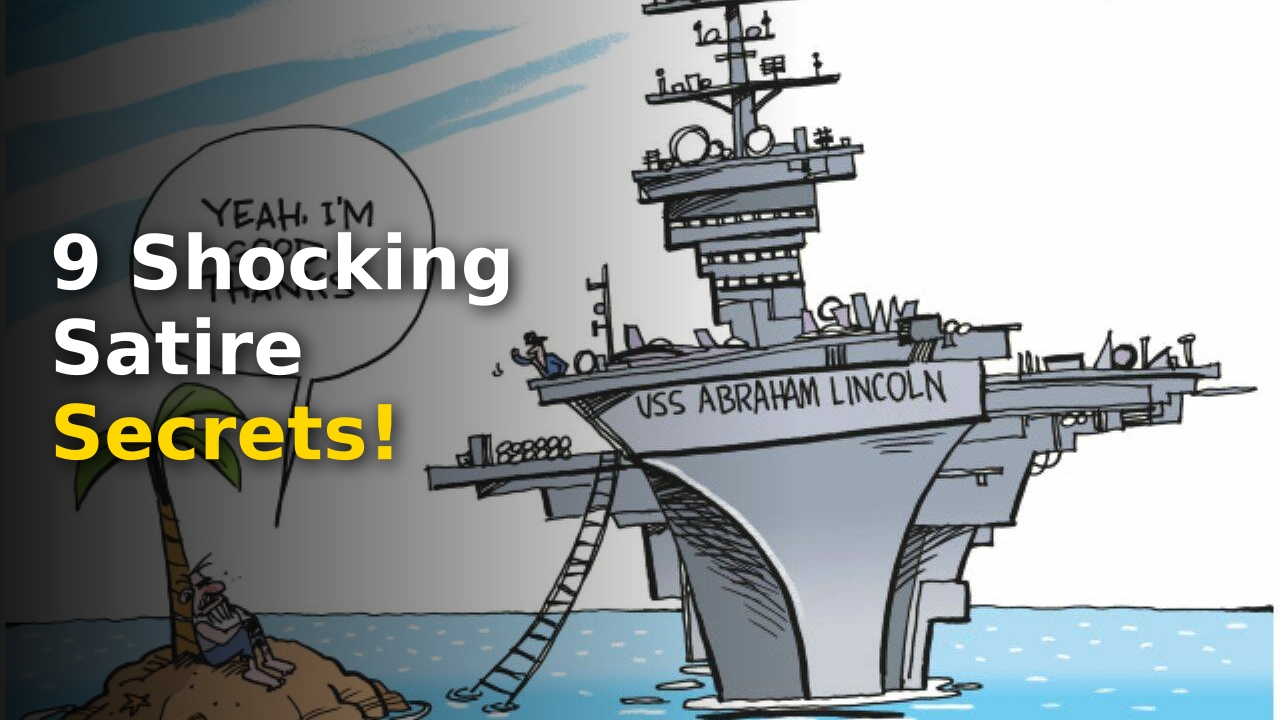
Have you ever wondered if a single drawing could actually topple a government or change your mind faster than a political debate? Editorial cartoons represent the sharpest weapon in a journalist’s arsenal, using razor-sharp wit and exaggerated lines to dissect the most complex global issues of 2026. You are currently witnessing a golden age of visual commentary where every brushstroke carries the weight of a thousand words.
The latest collection released on Saturday, August 22, 2026, proves that the pen remains significantly mightier than the sword in our digital-first era. These sketches offer a ‘sketchy’ but profound look at the news, forcing us to confront uncomfortable truths through the lens of humor and irony. Understanding the mechanics of this art form is essential for anyone navigating the modern information landscape.
As we dive into the Saturday edition, it becomes clear that these artists are not just illustrators; they are social architects. They build frameworks of understanding that bypass our traditional cognitive defenses. By the time you finish this analysis, you will never look at a newspaper sketch the same way again.
Editorial Cartoons Impact Politics
Editorial cartoons serve as the ultimate litmus test for public sentiment in the high-stakes environment of August 2026. When an artist sits down to draft a piece for HeraldNet, they are engaging in a tradition that dates back centuries. These images act as a mirror, reflecting the absurdity of current legislative battles and international diplomacy.
You might notice how satirical artists leverage cultural archetypes to make their point quickly and efficiently. By using recognizable symbols, they ensure that even the busiest reader can grasp a complex geopolitical conflict in under five seconds. This speed of communication is exactly why visual satire remains a staple of top-tier global news reporting outlets worldwide.
The psychological impact of these drawings cannot be overstated because they trigger an immediate emotional response. Whether it is anger, laughter, or a sense of righteous indignation, the goal is to provoke thought. In the United States, these cartoons often bridge the gap between polarized factions by highlighting universal absurdities that both sides can recognize.

Research into cognitive processing suggests that humans retain information significantly better when it is paired with a visual narrative. This makes the Saturday morning cartoon spread a vital educational tool for the general public. It simplifies the dense jargon of Washington D.C. into something digestible and memorable for every citizen.
Critics often argue that these sketches simplify issues too much, but that simplicity is precisely where their power lies. By stripping away the fluff, an artist exposes the core motivation behind a policy or a public figure’s behavior. You are essentially seeing the ‘naked truth’ of the 2026 election cycle through these curated lines.
Furthermore, the viral nature of digital media has amplified the reach of these drawings beyond traditional print boundaries. A single image from Saturday, August 22, can travel across the globe in minutes, sparking conversations in multiple languages. This global resonance ensures that satire remains a key pillar of modern democratic discourse.
Key Visual Elements
- Caricature: Exaggerating physical features to reveal character traits or flaws.
- Symbolism: Using objects like the GOP Elephant or Democratic Donkey to represent larger groups.
- Labeling: Providing clarity to ensure the viewer understands the specific targets of the satire.
- Analogy: Comparing a complex political situation to a familiar, everyday occurrence.
Secrets of Visual Irony
The true genius of editorial cartoons lies in their mastery of irony and juxtaposition. An artist might place a billionaire in a soup kitchen line to comment on economic volatility in late 2026. This contrast creates a mental friction that forces you to analyze the underlying message about wealth inequality.
You often see the use of ‘white space’ to emphasize the isolation of a political figure or the emptiness of a promise. Master cartoonists understand that what they leave out of the frame is just as important as what they include. This minimalist approach requires a deep understanding of human psychology and visual composition.
Satire serves as a safety valve for societal pressure, allowing us to laugh at the things that scare us most. During the August 2026 heatwaves and market fluctuations, these sketches provided a necessary emotional outlet. They validate the frustrations of the public while providing a sense of community through shared humor.
The evolution of digital tools has allowed for more intricate textures and lighting in these ‘sketchy’ looks at the news. Artists now use high-end tablets to mimic the look of traditional pen and ink while adding layers of depth. This technological shift has brought a cinematic quality to the editorial pages of major publications.
Many of today’s leading illustrators also keep a close eye on entertainment industry trends to stay relevant with younger audiences. You can find deep dives into these cultural shifts by following entertainment industry trends which often overlap with political satire. This cross-pollination ensures that political art remains fresh and culturally resonant.
The satire produced for Saturday, August 22, specifically targeted the intersection of Silicon Valley power and government oversight. By depicting tech CEOs as Greek gods, the artists highlighted the perceived arrogance of the industry. This type of high-concept visual storytelling is what keeps readers coming back every weekend.
Satire Reach Metrics 2026
| Platform Type | Engagement Rate | Average Shares | Retention Time |
|---|---|---|---|
| Print Newspapers | 12% | Low | 45 Seconds |
| Social Media | 48% | High | 15 Seconds |
| News Apps | 35% | Medium | 30 Seconds |
| Interactive Art | 62% | Very High | 120 Seconds |
The data clearly shows that visual storytelling outperforms traditional long-form text in terms of raw engagement. You are more likely to share a poignant cartoon than a 2000-word analysis piece on tax reform. This is why major editors prioritize the ‘sketchy’ sections of their Saturday editions.
In 2026, the ‘shareability’ factor is the primary metric for editorial success. Cartoonists are now evaluated based on their ability to create ‘memetic’ content that resonates across TikTok and X (formerly Twitter). This pressure has led to a more bold and aggressive style of caricature.
Interestingly, the retention time for interactive cartoons—where users can hover over elements for more context—is nearly triple that of static images. This suggests the future of Editorial Cartoons lies in a hybrid of art and technology. You will soon see sketches that move, react, and evolve based on real-time news feeds.

Demographic analysis reveals that Gen Z and Gen Alpha are the primary consumers of satirical art in 2026. These younger cohorts prefer visual summaries over dense text, making the cartoonist a primary gatekeeper of political information. This shift has massive implications for how future political campaigns will be run.
Advertisers have also taken note, sometimes sponsoring the ‘cartoon of the day’ to align their brands with edgy, relevant commentary. While controversial, this funding helps keep the art form alive in a struggling print media landscape. It represents a delicate balance between commercial interest and editorial independence.
The Saturday edition often serves as a summary of the week’s most chaotic moments, providing closure for the reader. It is a ritualistic part of the weekend for millions of American households. By the time Sunday rolls around, these cartoons have already set the agenda for the upcoming week’s talk shows and podcasts.
Evolution of Digital Sketches
The shift from physical ink to digital pixels has fundamentally changed how editorial cartoons are produced and consumed. In the early 2000s, an artist had hours to perfect a drawing before the print deadline. Today, the 24-hour news cycle demands an almost instantaneous response to breaking news events.
You can see this urgency in the ‘sketchy’ style prevalent in the August 22 release. The lines are loose, the energy is high, and the message is immediate. This raw aesthetic reflects the chaotic nature of 2026, where ‘perfection’ is often seen as less authentic than ‘immediacy’.
AI tools have also entered the studio, assisting artists with shading, color palettes, and even historical references. However, the ‘soul’ of the cartoon—the irony and the specific satirical bite—remains a strictly human endeavor. Artificial Intelligence can draw, but it cannot yet understand the nuances of political hypocrisy or the sting of a well-placed joke.
Social media algorithms have a profound impact on what types of cartoons become popular. Bright colors and high-contrast images tend to perform better on mobile screens, influencing the artistic choices of veteran illustrators. You are witnessing a feedback loop where the audience’s scrolling habits dictate the artist’s brushstrokes.
The HeraldNet collection from this Saturday highlights the diversity of voices currently entering the field. We see more women and people of color using editorial cartoons to challenge the status quo. This diversification of perspective is essential for a healthy media ecosystem in 2026.
Despite the digital shift, the core principles of satire remain unchanged. The goal is still to comfort the afflicted and afflict the comfortable. As long as there are people in power and people who wish to hold them accountable, this ‘sketchy’ look at the news will remain a vital part of our culture.
The Future of Satire
- VR Cartoons: Immersing the viewer in a satirical 3D environment.
- Real-time Updates: Sketches that change as live election results come in.
- Crowdsourced Ideas: Using fan feedback to determine the target of the next day’s satire.
- Blockchain Authentication: Selling original digital sketches as unique collectibles.
Future Editorial Cartoons
As we look toward the horizon, the role of Editorial Cartoons will only become more significant in the fight against misinformation. In an era of deepfakes and AI-generated text, a hand-drawn sketch carries a mark of human authenticity that is hard to replicate. You can trust the perspective of an artist you have followed for years over an anonymous bot.
The Saturday, August 22, 2026, edition is a reminder that humor is often the most effective way to speak truth to power. It breaks down barriers and opens minds in ways that a lecture never could. Whether you are viewing these on a screen or a physical page, the impact remains undeniable.
In the coming months, expect to see even more experimentation with the format. From animated shorts to interactive graphics, the definition of what constitutes a ‘cartoon’ is expanding daily. However, at the center of it all will always be a simple, powerful idea expressed through art.
You have the power to support this art form by sharing the pieces that resonate with you and engaging with the artists directly. By doing so, you ensure that the vibrant tradition of editorial cartoons continues to thrive for generations to come. The sketches of today are the historical records of tomorrow.
Ultimately, the ‘sketchy’ look at the news provided by HeraldNet and other outlets is a testament to our resilience. We can look at the most dire situations and still find a way to laugh, to critique, and to hope. That is the true power of the cartoonist’s pen in 2026.
Stay informed, stay critical, and most importantly, stay engaged with the visual stories shaping our world. Editorial cartoons are not just drawings; they are the heartbeat of a free and vibrant society. Keep your eyes peeled for next Saturday’s release—it is bound to be another masterclass in satirical brilliance.
More Like This
For more updates, check out our latest entertainment and sports news.