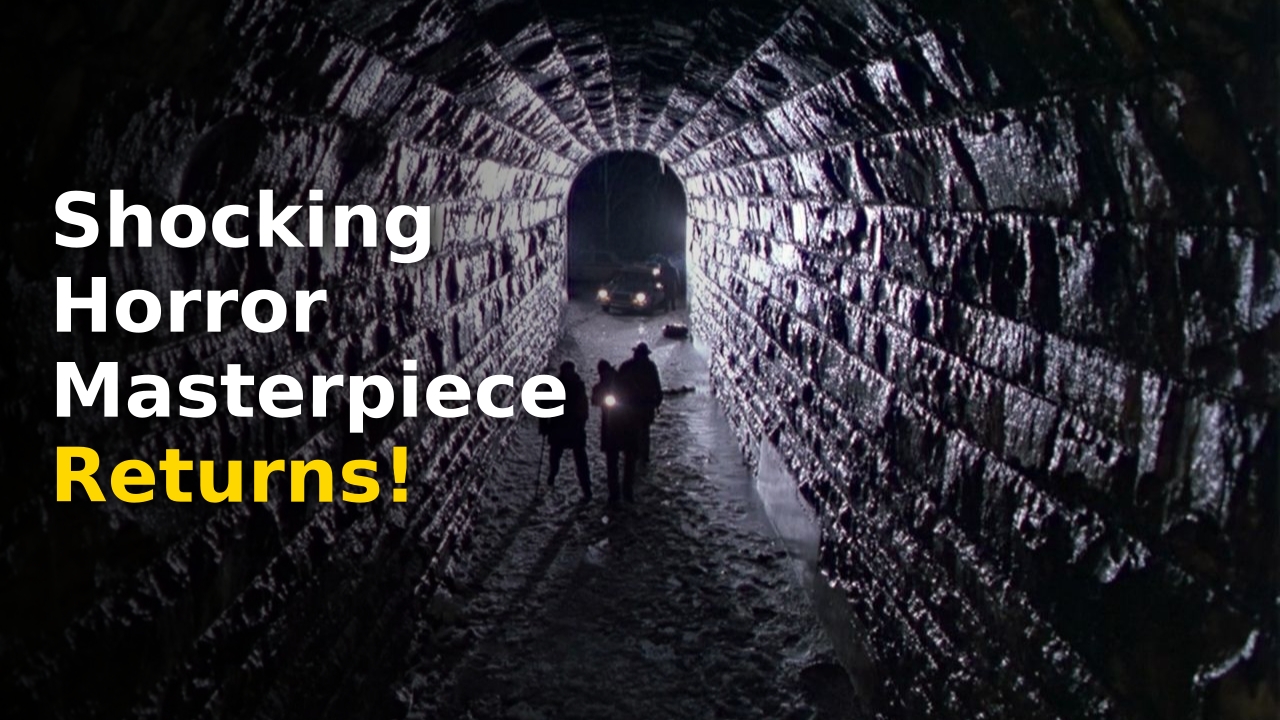
Dead Zone has officially returned to free streaming, offering you a rare chance to witness one of the most underrated cinematic adaptations in history. If you think you know the full scope of Stephen King’s genius, this 103-minute sci-fi masterclass will challenge every single one of your assumptions about destiny and moral decay.
You are about to dive into a world where a simple touch acts as a curse rather than a gift. This isn’t your typical jump-scare horror flick; it is a deep, psychological examination of a man caught between the past he lost and a future he is terrified to reveal.
Understanding The Dead Zone
When you sit down to watch this 1983 classic, you are not just watching a movie; you are engaging with a masterclass in tension. Directed by the legendary David Cronenberg, the film stars Christopher Walken in a role that stripped away his typical eccentricities to reveal a raw, grieving soul.
The story follows Johnny Smith, a mild-mannered teacher from Castle Rock who suffers a catastrophic car accident. After five years in a coma, he wakes up to a world that has discarded him. His fiancée, Sarah, has moved on, and his physical health is shattered.
The supernatural twist arrives with a cruel precision. When Johnny touches someone, he sees their future—or their dark past. This power is not a hero’s journey; it is a heavy, unrelenting burden. Unlike the monsters in King’s other works, the antagonist here is human ambition.
Cronenberg famously pivoted from his usual visceral body horror to focus on the agony of the mind. By emphasizing Johnny’s loss of autonomy, the director creates a connection that is deeply personal to every viewer. You feel his isolation in every frame.
This film serves as a precursor to the modern moral thrillers that dominate our screens today. It poses a question that still haunts us: if you knew a leader would cause global destruction, would you kill them to save the world? The dilemma remains as sharp and dangerous today as it was in 1983.
For those who track the evolution of horror cinema, pop culture insights confirm that this film remains a gold standard for adaptation. It manages to balance the supernatural with a gritty, grounded reality that makes the psychic visions feel genuinely invasive.

Key Elements of the Narrative
- The burden of psychic premonitions.
- The moral decline of political ambition.
- The haunting setting of Castle Rock.
- The emotional resonance of lost love.
The Legacy Of Stephen King
Stephen King has spent over five decades redefining how we perceive fear. While he is famous for Pennywise or Jack Torrance, his most profound work often stems from the tragedy of the human condition. The Dead Zone is the definitive example of this artistic shift.
Most horror writers rely on external threats to drive their plots. King, however, uses the environment to reflect the internal rot of his characters. In this film, the town of Castle Rock becomes a character in itself, grounding the psychic madness in everyday Maine reality.
When Johnny encounters Greg Stillson, played by a chilling Martin Sheen, the movie shifts gears. The supernatural becomes a secondary concern. The primary focus is the inevitable clash between a broken man and a power-hungry politician.
You might wonder why this movie is considered a masterpiece. It isn’t because of special effects or high-budget explosions. It is because of the restraint shown by both the screenwriter and the lead actors. Everything is stripped to the bone.
The pacing of this 103-minute runtime is perfect. There is no wasted motion, no unnecessary filler scenes, and no attempt to distract you from the crushing weight of Johnny’s decisions. It is a tight, disciplined exercise in storytelling.
This adaptation proves that horror is most effective when it focuses on the things we cannot change. Knowing the future is the ultimate prison because it robs us of our agency. You are forced to confront the same impossible choice that Johnny faces, and you may find that you don’t have an answer either.
The Cinematic Evolution
David Cronenberg was known for his love of the grotesque before taking on this project. From Scanners to The Fly, he explored how the body fails us. Here, he explores how the soul fails us when it is burdened by too much information.
The lighting and cinematography deserve their own analysis. The use of shadows and cold, blue color palettes perfectly captures the feeling of living in a coma-like state. Johnny is a man who is technically awake but remains trapped in a psychological dead zone.
We have curated a list of essential films for fans of this genre to ensure you don’t miss out on cinematic brilliance. By comparing this work to modern thriller standards, you can see how far ahead of its time the 1983 production really was. It is a film that demands multiple viewings to catch all the nuances.
When you watch the interaction between Johnny and his world, note the lack of traditional heroism. He is scared, he is tired, and he is deeply human. That is why we still talk about this film four decades later.
The script maintains the integrity of King’s novel while allowing for the specific visual language of film. It is a rare case where the movie captures the exact tone of the book. Even die-hard fans of the source material rarely find reason to complain about this version.
As you watch, keep an eye on the background details. Small, seemingly irrelevant items in the frame often hint at future developments. It is a testament to the meticulous planning that went into this production, ensuring that even a second viewing offers new rewards.
The Moral Data Comparison
Understanding the weight of choices in the film requires looking at the stakes involved. The table below outlines the key psychological pressures faced by the characters throughout the duration of the film.
| Character | Primary Burden | Outcome |
|---|---|---|
| Johnny Smith | Psychic Vision Burden | Existential Isolation |
| Greg Stillson | Political Ambition | Total Moral Collapse |
| Sarah Bracknell | Living with Grief | Life Moving Forward |
The stakes are astronomical when you consider that a single act of violence could change the course of human history. This is the central friction of the plot. Unlike movies where a hero defeats a villain, here, the ‘hero’ must destroy his own soul to perform a necessary act.
We look at the history of these characters to understand how King constructs his nightmares. It isn’t about blood or gore; it is about the quiet realization that the path of least resistance is often the path of most evil. This observation is at the heart of the film’s legacy.
You will find that the movie doesn’t sugarcoat the aftermath of Johnny’s choices. Everything carries a cost. Whether it is his health, his reputation, or his relationship with the people he loves, nothing comes free for Johnny Smith.
This is the mark of true storytelling: the refusal to offer a ‘happy’ ending that ignores the reality of the situation. Johnny is a martyr in the truest sense of the word. He gives everything for a future he will never live to see.
As you explore this narrative, consider how our own societal structures mirror the ones presented in the film. Do we have our own Stillson figures lurking in the shadows of modern politics? The movie is surprisingly relevant to the discourse of 2026 and beyond.
Every time you rewatch it, the ending hits just as hard as the first time. It is a rare experience to watch a film that respects your intelligence enough to leave the most difficult questions unanswered. It is, by all accounts, an essential piece of American horror.

Final Thoughts On The Masterpiece
Returning to Tubi for free streaming, this film remains a must-watch for anyone who appreciates deep psychological narratives. It transcends the limitations of the horror genre to become something truly significant. It is a story about the burden of knowledge and the courage to act when everyone else is blind.
If you haven’t seen The Dead Zone, clear your schedule for 103 minutes of pure intensity. You will walk away questioning not just the film, but your own place in the flow of time. It is a rare gem that rewards your time and emotional investment ten times over.
The return of this classic to free streaming is a gift to fans of quality cinema. Don’t let it pass you by while it’s still available. Grab your snacks, dim the lights, and prepare to see Stephen King’s work through a completely different lens. The journey is worth every second of your time.
More Like This
For more updates, check out our latest entertainment and sports news.