⚡ Key Takeaways
- The project budget has been strategically slashed by $10 million, bringing the total construction cost to $65 million.
- A specialized 2.75% Hotel/Motel Occupancy Tax will provide a permanent funding backstop for operations and debt.
- The center will feature a cutting-edge electronic variable acoustic system, allowing the hall to adapt to any performance type.
- Economic forecasts predict an annual $5 million boost to downtown businesses and the creation of over 100 new jobs.
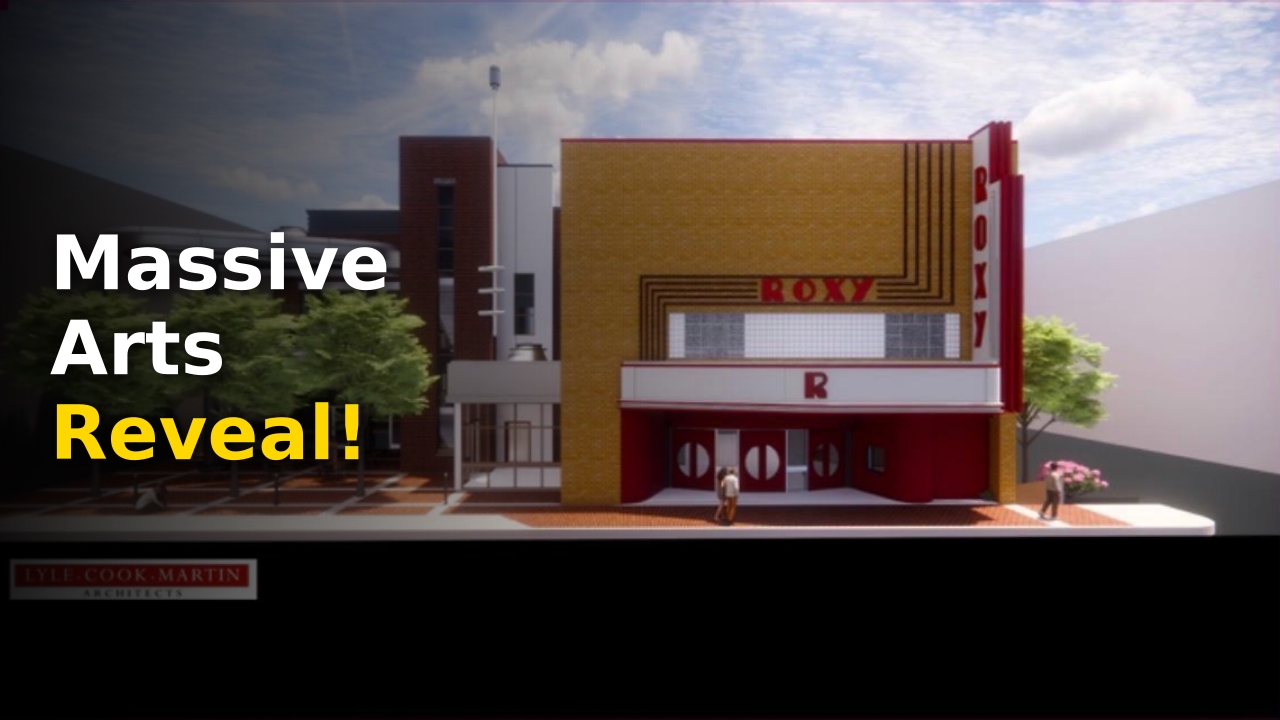
- Architects are preserving the iconic yellow brick facade and the historic Roxy marquee to maintain Clarksville’s identity.
Clarksville Arts and culture is entering a brave new era as the city unveils the definitive blueprint for its long-awaited Performing Arts Center. You are witnessing a historic pivot for Downtown Clarksville, where a $65 million investment is set to transform the corner of First and Franklin Streets into a regional powerhouse of creativity and commerce.
The Clarksville Arts, Culture, and Tourism (ACT) Authority has finally pulled back the curtain on a project that has been years in the making. This ambitious undertaking represents more than just a new building; it is a sophisticated public-private partnership designed to ensure long-term financial health without burdening local taxpayers indefinitely. By merging municipal support with non-profit agility, the city is positioning itself to compete with major cultural hubs across the Southeast.
As the city council prepares to review final bond issuances, the level of detail released regarding the center’s technical capabilities and funding structure is unprecedented. From the restoration of the iconic Roxy marquee to the implementation of world-class acoustic technology, every inch of this 500-seat facility has been meticulously planned. This development marks a significant milestone in Tennessee’s broader strategy to leverage the arts as a primary driver for urban revitalization and tourism growth.
Clarksville Arts: 7 Massive Transformation Details
The transformation of Clarksville Arts begins with a fundamental shift in the project’s scale and fiscal management. Initially projected to cost upwards of $75 million, the new designs have successfully optimized the facility’s footprint to a more manageable $65 million. This $10 million reduction was achieved through smart architectural revisions that maintain high-end performance standards while streamlining the construction process for the 500-seat hall.
Executive Director Cameron O’Hanlon emphasizes that this reduction is not a sign of diminished ambition but rather a commitment to fiscal responsibility. The ACT Authority, established as an independent non-profit in 2024, operates as the strategic brain behind this venture. By acting as an instrumentality of the city, it gains the legal and financial backing of the government while retaining the flexibility to pursue private donations and entrepreneurial revenue streams.
A critical component of this transformation is the dual-funding model. The project is supported by a specific 2.75 percent Hotel/Motel Occupancy Tax, which acts as a dedicated revenue pipeline. This tax does not just fund the construction; it actively supports the center’s resident companies, including the Clarksville Arts & Heritage Council and the beloved Roxy Regional Theatre. This ensures that while the building is new, the legacy organizations that built the local scene are fully integrated into its future.

The third major detail involves the sophisticated “Capital Campaign” currently underway. This isn’t your standard bake sale; it is a three-pronged financial strategy designed to eliminate the need for future city bailouts. The campaign funds are split between direct construction relief, a traditional long-term endowment, and a unique “spend-down quasi-endowment” that will cover initial debt payments as the center scales up its operations.
Inside the venue, the fourth secret lies in the “electronic variable acoustic system.” This state-of-the-art technology allows the 500-seat hall to change its sound profile at the touch of a button. Whether the venue is hosting a whisper-quiet dramatic play or a high-decibel rock concert, the acoustics can be digitally tuned to provide a perfect auditory experience for every seat in the house. This versatility is a massive draw for touring acts who require specific technical environments.
Fifth, the architectural vision provided by Brad A. Martin III of Lyle Cook Martin Architects focuses on “street-level interaction.” Unlike traditional theaters that can feel like closed-off fortresses, this center features a “Pocket Park,” a retail area, and a second-level Grand Balcony. These features ensure that the building is an active part of the downtown ecosystem 24 hours a day, not just during showtimes. It serves as a public hub for interaction and community energy.
The Technical Edge of the New Hall
The lighting and rigging systems are being installed with a capacity that exceeds standard regional theaters. This means the Clarksville Arts center can handle complex Broadway-style tours that previously had to bypass the city due to technical limitations. The specialized design team includes some of the country’s leading theater consultants, ensuring that the “back of house” is just as impressive as the lobby.
Furthermore, the inclusion of a fully-equipped rehearsal studio and multiple reception spaces means the center can function as a multi-use facility. It will host educational workshops, corporate events, and private galas simultaneously, maximizing the revenue potential of the square footage. This multi-stream income model is what Cameron O’Hanlon points to as the key to long-term sustainability.
Economic Impact and Data Forecasts
When analyzing the future of Clarksville Arts, the numbers paint a picture of significant regional growth. An independent economic impact study by Randall Gross, Development Economics, suggests that the project will be a massive engine for the local economy. The ripple effect of a major downtown performing arts center often extends far beyond ticket sales, influencing property values and attracting new retail investments to the surrounding blocks.
The direct tax revenue alone is expected to be a game-changer for local government coffers. The study estimates that the City of Clarksville will see an additional $150,000 in direct tax revenue annually, while Montgomery County will reap approximately $380,000. These funds can be reinvested into public infrastructure, further enhancing the appeal of the downtown district. For more on how celebrities and cultural figures drive local economies, check out Bright Celebrity for deep dives into entertainment business trends.
Beyond the direct taxes, the secondary spending impact is even more substantial. Visitors coming for a show are likely to dine at local restaurants, shop at nearby boutiques, and potentially stay overnight in area hotels—which, in turn, feeds back into the occupancy tax that funds the center. This “virtuous cycle” of spending is projected to exceed $5 million per year in new sales for Clarksville businesses.
| Economic Metric | Projected Impact (Annual) |
|---|---|
| Direct City Tax Revenue | $150,000 |
| Direct County Tax Revenue | $380,000 |
| Local Business Spending | $5,000,000+ |
| Job Creation | 100+ Positions |
| Total Annual Earnings (Jobs) | $1,500,000 |
The job market in Clarksville will also see a significant boost. The creation of over 100 jobs—ranging from facility management and technical stagehands to retail and hospitality roles—will add roughly $1.5 million in annual earnings to the local community. This is a vital statistic for those tracking the Net Worth 2026 of the city’s economic landscape. By providing stable employment in the creative sector, Clarksville is retaining talent that might otherwise migrate to larger markets like Nashville.
Expert Take: The Strategic Moat
According to economic development experts at Americans for the Arts, every dollar invested in a nonprofit arts organization typically generates $6.00 in total local economic activity. Clarksville’s move to create a “quasi-endowment” spend-down fund is a particularly sophisticated financial maneuver. It provides a “strategic moat” that protects the organization during its first three to five years of operation—the period where most cultural venues are most vulnerable to cash flow issues.
Architecture and the Roxy Heritage
One of the most poignant aspects of the Clarksville Arts expansion is the deep commitment to preserving the history of Franklin Street. The Roxy Regional Theatre has been a cornerstone of the community for decades, and its physical presence is inextricably linked to Clarksville’s identity. Architect Brad A. Martin III, a Clarksville native, has made it a personal mission to ensure the new center honors its predecessor.
The plans explicitly include the restoration and reinstallation of the historic Roxy marquee sign and canopy detail. This isn’t just about nostalgia; it’s about maintaining the “facade of Franklin Street.” The iconic glazed yellow brick facade will be meticulously replicated, ensuring that the new 65,000-square-foot facility feels like a natural evolution of the block rather than a disruptive modern intrusion. This balance between heritage and high-tech is rare in modern urban development.

Inside, the design utilizes an “indoor-outdoor” philosophy. The Grand Balcony on the second level offers views of the historic district, while the street-level retail and park areas invite pedestrians to engage with the building even if they aren’t attending a performance. This makes the center a “once-in-a-generation reimagining” of the urban core, creating a sense of place that is uniquely Clarksville.
By The Numbers: The Architecture
The facility is designed to maximize every square foot of its footprint. Beyond the 500-seat main hall, the building includes a state-of-the-art art gallery and several flexible reception spaces. These areas allow the center to host multiple events simultaneously, such as a gallery opening in one wing and a theatrical performance in the other. This multi-use capability is essential for meeting the $5 million annual spending goal projected by the Randall Gross study.
The technical rigging and lighting systems are also a point of pride. The design team worked with some of the best theater experts in the country to ensure that the “load-in” process for touring shows is as efficient as possible. This efficiency reduces labor costs for traveling productions, making Clarksville a more attractive destination for national tours looking for mid-sized venues between larger stops like Memphis and Nashville.
The Capital Campaign Strategy
Sustainability is the keyword for the Clarksville Arts project. To ensure the center doesn’t become a drain on city resources, the ACT Authority is embarking on an aggressive Capital Campaign. This campaign is structured to provide both immediate relief for construction costs and long-term security through a traditional endowment. An endowment essentially acts as a permanent savings account where only the interest is spent, providing a perpetual source of funding for maintenance and programming.
What sets this campaign apart is the “short-term spend-down quasi-endowment.” This is a pool of money specifically designated to be used over the first few years of the center’s life. It acts as a financial bridge, covering debt service and operating costs while the venue builds up its annual revenue from ticket sales, rentals, and concessions. This proactive approach minimizes the risk to the City of Clarksville, which is “backstopping” the bond measure.
Executive Director Cameron O’Hanlon has been vocal about his goal to instill confidence in the City Council. The plan is designed so that the ACT Authority will not need to return to the council for additional operating funds once the doors open. By leveraging the Hotel/Motel tax and the Capital Campaign, the organization is creating a self-sustaining ecosystem. This model is being watched closely by other mid-sized cities as a potential blueprint for cultural development.
Expert Take: The Public-Private Synergy
The beauty of this private/public partnership lies in its ability to access different types of capital. As a government instrumentality, the ACT Authority can access low-interest municipal bonds. As a non-profit, it can accept tax-deductible donations from wealthy philanthropists and corporate sponsors. This “best of both worlds” approach is what Cameron O’Hanlon believes will guarantee the center’s long-term viability in a competitive entertainment market.
Frequently Asked Questions
When will the new Clarksville Performing Arts Center open?
The project is currently in the final planning and bond issuance phase. While a specific opening date depends on the construction timeline following City Council approval, the project is moving forward with an expected completion date in the 2026-2027 window. The ACT Authority is finalizing designs to ensure construction can begin as soon as the financial backing is secured.
How is the Performing Arts Center being funded without raising property taxes?
The funding comes from three primary sources: a 2.75% Hotel/Motel Occupancy Tax, municipal bonds backstopped by the city, and a private Capital Campaign. The occupancy tax ensures that visitors to the city contribute to the cultural infrastructure, while the Capital Campaign targets private donations and endowments, shielding local residents from direct property tax increases for the project.
What will happen to the Roxy Regional Theatre?
The Roxy Regional Theatre will serve as one of the two resident companies in the new Performing Arts Center. The historic Roxy marquee and yellow brick facade are being preserved and integrated into the new design, ensuring the legacy of the theatre continues in a state-of-the-art facility. The Roxy’s existing artistic community will have access to the new 500-seat hall and rehearsal studios.
What kind of shows will the new venue host?
Thanks to its electronic variable acoustic system and high-capacity rigging, the venue is designed to be a multi-use hub. It will host everything from musical theatre and dance to orchestral performances, rock concerts, and corporate events. The 500-seat capacity is specifically chosen to attract high-quality regional tours and local productions that require an intimate yet professional setting.
Future of Clarksville Arts
The future of Clarksville Arts is bright, anchored by a facility that balances modern technology with deep historical roots. As the City Council reviews the final construction plans and bond issuances, the community stands on the verge of a cultural renaissance. This project is not merely an investment in a building; it is an investment in the social and economic fabric of Middle Tennessee. By creating a world-class venue, Clarksville is ensuring it remains a destination for artists and audiences alike for generations to come.
Ultimately, the success of the Performing Arts Center will be measured by its ability to foster community and drive growth. With a robust financial model, a dedicated architectural team, and the backing of the ACT Authority, the project is well-positioned to meet its ambitious goals. Whether you are a fan of the theatre, a local business owner, or a visitor to the city, the new center promises to offer something transformative for everyone. The Clarksville Arts scene is no longer just a local secret—it is becoming a regional landmark.
More Like This
For more updates, check out our latest entertainment and sports news.