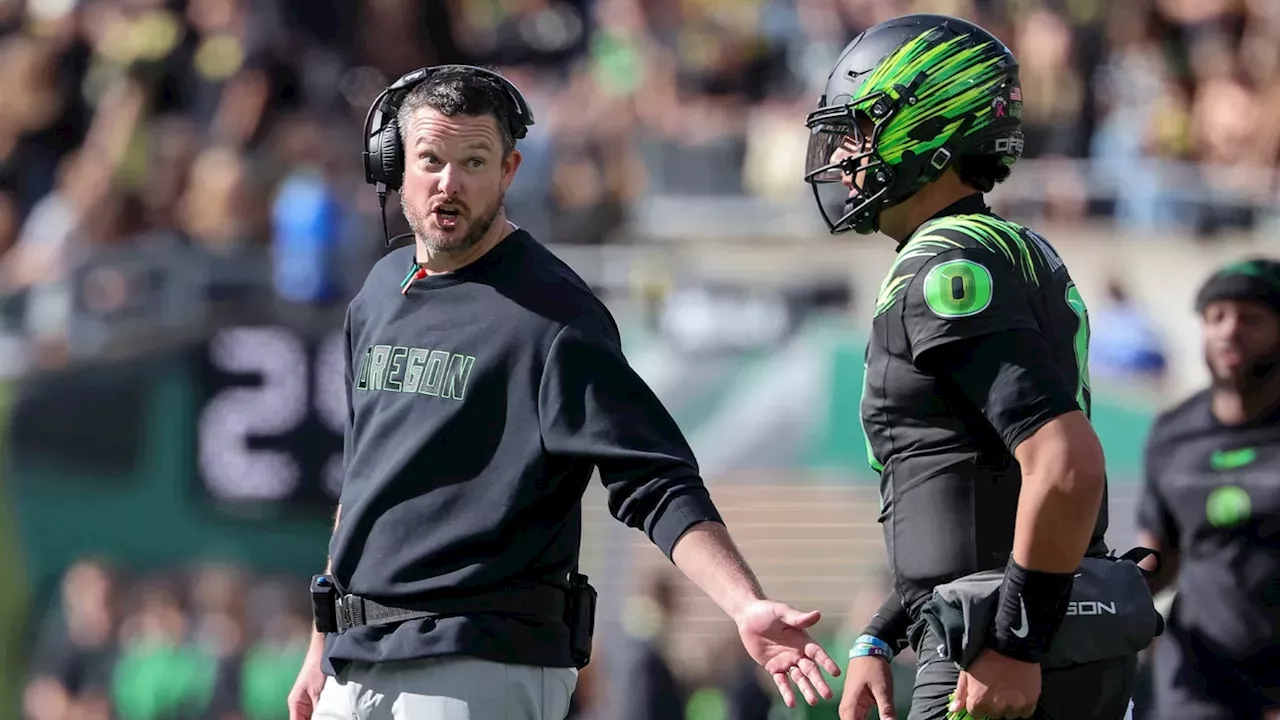
Key Takeaways
| Conference Admission: Big Ten officials incorrectly spotted the ball during Oregon’s critical 2-point try. |
| Rule Interpretation: The ball should have been placed at the half-yard line, not the 1.5-yard line. |
| Game Impact: This officiating error contributed to the Ducks’ 17-15 loss against UCLA. |
| Season Fallout: Oregon dropped out of the AP Top 25 rankings following seven total turnovers. |
The Big Ten officiating error 2026 controversy has sent shockwaves through the college football landscape after a critical mistake during the Oregon Ducks versus UCLA Bruins matchup. If you were watching the final minutes of Saturday’s game, you witnessed a officiating lapse that fundamentally altered the scoring potential of a decisive 2-point conversion attempt.
Officials failed to properly place the ball after a UCLA facemask penalty, spotting it at the 1.5-yard line instead of the mandated half-yard mark. This specific misapplication of the rules essentially thwarted Oregon’s ability to tie the game late in the fourth quarter. As the conference acknowledges its mistake, questions regarding protocol and game management have reached a fever pitch among fans and analysts alike.
Understanding the Big Ten Officiating Error 2026
When the Big Ten officiating error 2026 occurred, it wasn’t just a simple case of a missed spot; it was a fundamental misreading of the rulebook. Per conference bylaws, when a defensive penalty occurs during a 2-point try, the succeeding spot must move half the distance to the goal line from the end of the run. By placing the ball at the 1.5-yard line, officials forced the Oregon offense into a significantly more difficult scenario than the rules intended.
This error did not occur in a vacuum. The game was characterized by an uncharacteristic number of mistakes by the Oregon squad, including seven total turnovers. The Ducks, who have been staples of national conversation, found themselves on the wrong side of a 17-15 score, leading to their immediate exit from the AP Top 25. You can find more detailed analysis of recent officiating controversies on our portal.

The Role of Procedural Accuracy
Officiating in the modern era requires extreme precision, especially as conference titles hinge on singular plays. The Big Ten conference office confirmed that they have been in contact with the officiating crew to ensure future consistency. While acknowledging the mistake is a step toward transparency, it provides little solace for a team that saw its momentum—and ranking—shattered in the final two minutes of play.
For those tracking ESPN’s detailed breakdown of the rulebook implications, this case serves as a prime example of how even minor mechanical errors can have massive, season-defining repercussions. The intensity of the Big Ten schedule means there is rarely time for teams to recover from a single botched call, especially when coupled with multiple turnovers.
Statistical Impact and Game Dynamics
The 17-15 loss highlights how razor-thin the margins are in elite collegiate sports. Oregon’s inability to capitalize on the 2-point conversion try came after an impressive 44-yard scoring strike from Brock Thomas to Evan Stewart, which brought the Ducks within striking distance. The data below outlines the crucial moments that led to this outcome.
| Event Metric | Game Impact |
|---|---|
| Oregon Turnovers | 7 Total |
| Final Score | UCLA 17 – Oregon 15 |
| 2-Point Spotting Error | 1.0 Yard Displacement |
| Ranking Status | Oregon Dropped from AP Top 25 |

Expert Take: Examining the Officiating Fallout
From an analytical standpoint, the Big Ten officiating error 2026 situation highlights the growing reliance on high-speed officiating, which occasionally fails to keep pace with the game’s complexities. Experts note that while human error is inevitable, the lack of immediate replay intervention for a ball-spotting error during such a critical sequence is a point of contention. The failure to correct the distance before the snap allowed UCLA’s defense to effectively smother Jordon Davison, rendering the conversion attempt futile.
Furthermore, the culture of accountability within the Big Ten must now evolve to prevent similar lapses. By analyzing these errors, the league seeks to maintain its integrity, but for programs like Oregon, the focus must shift immediately to ball security. Our exclusive look at NCAA championship odds illustrates that every game matters in the expanded playoff format.
Background and Conference Context
The broader context for this game involves the heightened scrutiny on the Big Ten after a series of controversial incidents, including the Nico Iamaleava situation and concerns regarding player conduct. Oregon’s season has been a rollercoaster, marked by high expectations and the occasional benching of their starting signal caller, Dylan Raiola. Such volatility creates an environment where officiating mistakes are magnified ten-fold by the media and the fanbase.
The Big Ten’s statement regarding the incident indicates a commitment to “consistent application of the playing rules,” but such statements often feel hollow to teams whose postseason dreams are actively harmed. With a review of standard conference disciplinary procedures in full swing, expect tighter oversight of sideline and officiating crews moving forward. The parity in the conference means that any team can be upset on any given Saturday, as proven by the Bruins’ disciplined defensive effort.
People Also Ask
What exactly was the Big Ten officiating error regarding the 2-point conversion?
Officials incorrectly spotted the ball at the 1.5-yard line instead of the half-yard line following a defensive facemask penalty on Oregon’s conversion attempt.
Why is the Oregon vs. UCLA 2026 game trending right now?
How does this error impact Oregon’s standing?
The loss, compounded by the officiating error and seven turnovers, led to Oregon being removed from the AP Top 25 rankings.
When will the Big Ten address officiating training?
The conference has already initiated contact with the officiating crew and stated they will continue to emphasize rule application protocols moving forward.
Final Thoughts on the Officiating Controversy
The impact of the Big Ten officiating error 2026 is a reminder that sports are rarely just about the athletes on the field. While Oregon must contend with its own turnover issues, the institutional failure to apply the rules correctly on a critical play leaves a lingering bitterness. As the season progresses, the Big Ten faces the challenge of restoring confidence in its officiating corps to ensure that the outcome of games is determined solely by the performance of the players.
More Like This
For more updates, check out our latest entertainment and sports news.