Key Takeaways
| The 14th Amendment is framed as the primary workhorse of American democracy and humanist rights. |
| Ava DuVernay explores the amendment’s systemic erosion during the modern Trump era. |
| Expert voices like Sherrilyn Ifill and Bryan Stevenson provide deep constitutional context for the film. |
| Visual storytelling links post-Civil War Black flourishing to contemporary civil rights struggles. |
The Ava DuVernay 14th review reveals a harrowing yet essential follow-up to her acclaimed documentary 13th, grounding its thesis in the fragility of American constitutional law. If you believe the fight for equality ended with past legislation, this film serves as a brutal awakening to the reality of the 14th Amendment’s current state. DuVernay manages to turn complex legal statutes into a visual and emotional journey that forces the audience to confront the persistent specter of white supremacy.
As you watch, it becomes clear that the director has moved beyond simple history to document a democracy in distress. The film functions as a mirror, reflecting our present political volatility against the backdrop of the post-Civil War era. Through expert testimony and visceral imagery, DuVernay argues that the 14th Amendment is not just paper—it is the very architecture of our survival as a multi-racial, multi-faith society.
The Core of Ava DuVernay 14th Review
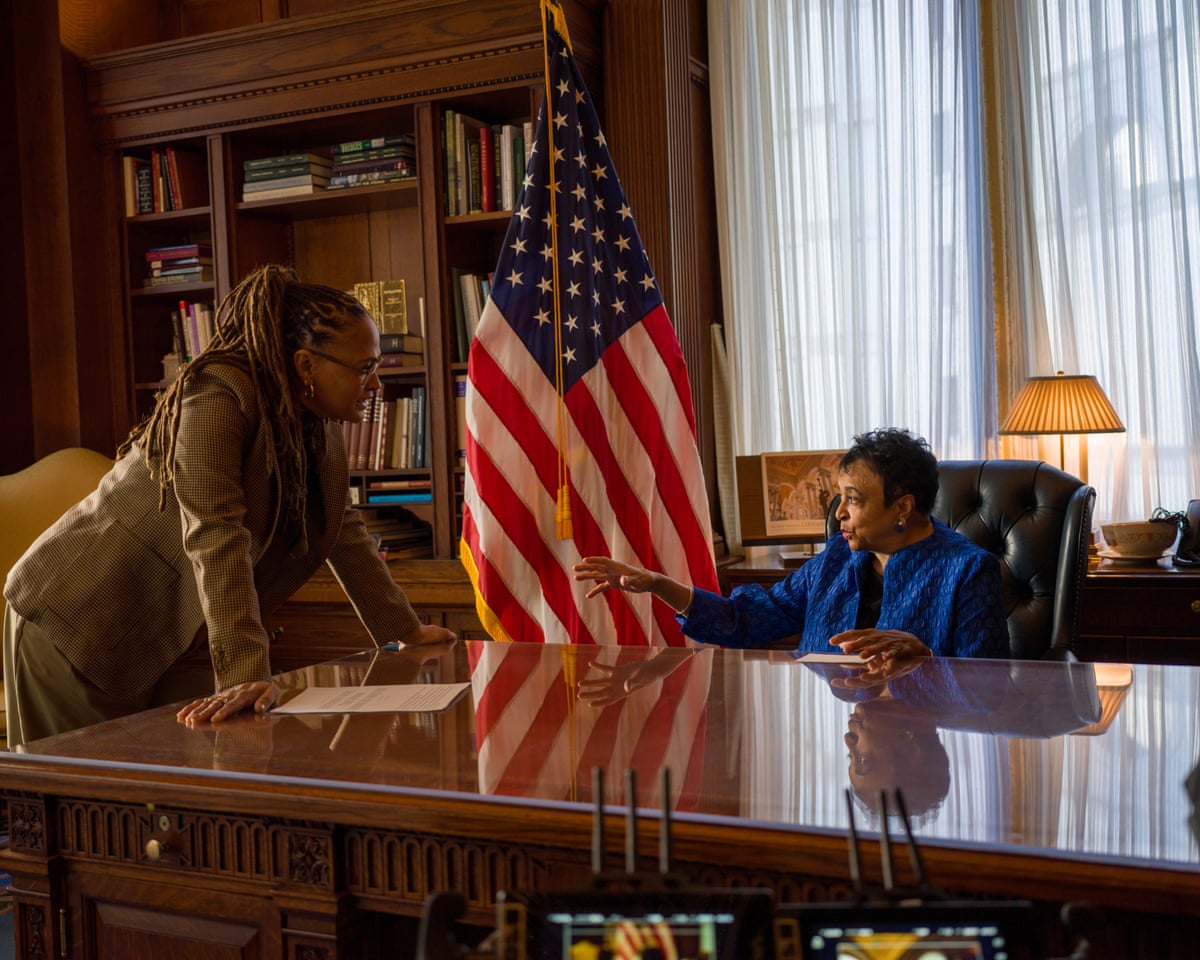
In this 110-minute examination, DuVernay elevates the 14th Amendment from a schoolbook clause to the “magnum opus of American democracy.” The documentary leans heavily on scholars such as Sherrilyn Ifill, who articulates the amendment’s role in protecting everything from birthright citizenship to the basic human right of marriage. By staging her subjects in stately, marble-clad environments, DuVernay reinforces the weight and authority these legal principles hold.
The film does not shy away from controversy, inviting voices from across the political spectrum to test the strength of the constitutional arguments provided. While some figures like Stacey Abrams and Alexandria Ocasio-Cortez champion the amendment, the inclusion of figures like Jeff Flake highlights the ideological divide regarding the document’s interpretation. This balanced approach ensures that the audience understands why this specific piece of the Constitution is currently the epicenter of American legal battles.
The Legacy of the Lost Cause
DuVernay spends considerable time dismantling the “Lost Cause” mythology, which she labels as the most successful propaganda campaign in US history. This section of the documentary is particularly biting, as it draws a straight, dark line from Confederate vigilante violence to modern-day political movements. The narrative suggests that the assault on the 14th Amendment is an intentional effort to rewrite the American story in favor of a exclusionary past.
Constitutional Protection and Violations
The film highlights how the Trump administration attempted to bypass or ignore the insurrection clauses and due process rights embedded in the 14th Amendment. Through chilling montages and archival footage, the audience is shown the direct consequences of administrative overreach. It is a damning, evidence-based critique that leaves little room for ambiguity regarding the stakes of the current political cycle.
Impact Metrics by the Numbers
| Historical Metric | Figure/Quantity |
|---|---|
| Documented lynchings (Post-Civil War) | 4,400+ |
| Confederate monuments erected | 2,629 |
| Film runtime (Minutes) | 110 |

Background and Expert Perspectives
The intellectual weight of the film is carried by experts who have spent decades analyzing the legal scaffolding of American justice. Bryan Stevenson, founder of the Equal Justice Initiative, provides critical insights into how the amendment’s promises have been systemically undermined. By connecting the dots between Reconstruction and modern systemic inequality, the documentary provides a masterclass in historical continuity.
You might wonder why such a dense legal topic feels so urgent. It is because DuVernay treats the Constitution as a living, breathing entity that is currently under siege. The work of Ava DuVernay continues to push the boundaries of the documentary form by blending high-art visual tableaux with hard-hitting journalism. The inclusion of contractors like Devon Henry, who personally removed Confederate symbols, grounds the abstract legal theories in the physical reality of our changing landscape.
People Also Ask
What is the main focus of Ava DuVernay’s 14th documentary?
The documentary examines the 14th Amendment’s role as the foundation of American civil rights and how it has been systematically challenged in the modern political era.
Why is the film considered a companion piece to 13th?
Much like 13th, the film uses historical analysis and expert testimony to expose how American laws have been manipulated to maintain patterns of systemic injustice.
When can I watch 14th on Netflix?
The film is scheduled for a theatrical release on November 27, followed by a wide release on Netflix starting December 4, 2026.
Who are some of the key experts featured in the film?
The film features legal experts and politicians including Sherrilyn Ifill, Bryan Stevenson, Stacey Abrams, and Alexandria Ocasio-Cortez.
Final Thoughts
As you conclude your viewing of 14th, the message remains clear: our democracy is a fragile inheritance. Ava DuVernay has crafted a piece of work that does not just inform but also demands a response from its audience. It is an undeniable achievement that cements her status as a leading chronicler of the American experience, ensuring the Ava DuVernay 14th review will be a subject of intense academic and public discussion for years to come. Do not ignore these lessons, as the price of silence is far too high.
More Like This
For more updates, check out our latest entertainment and sports news.