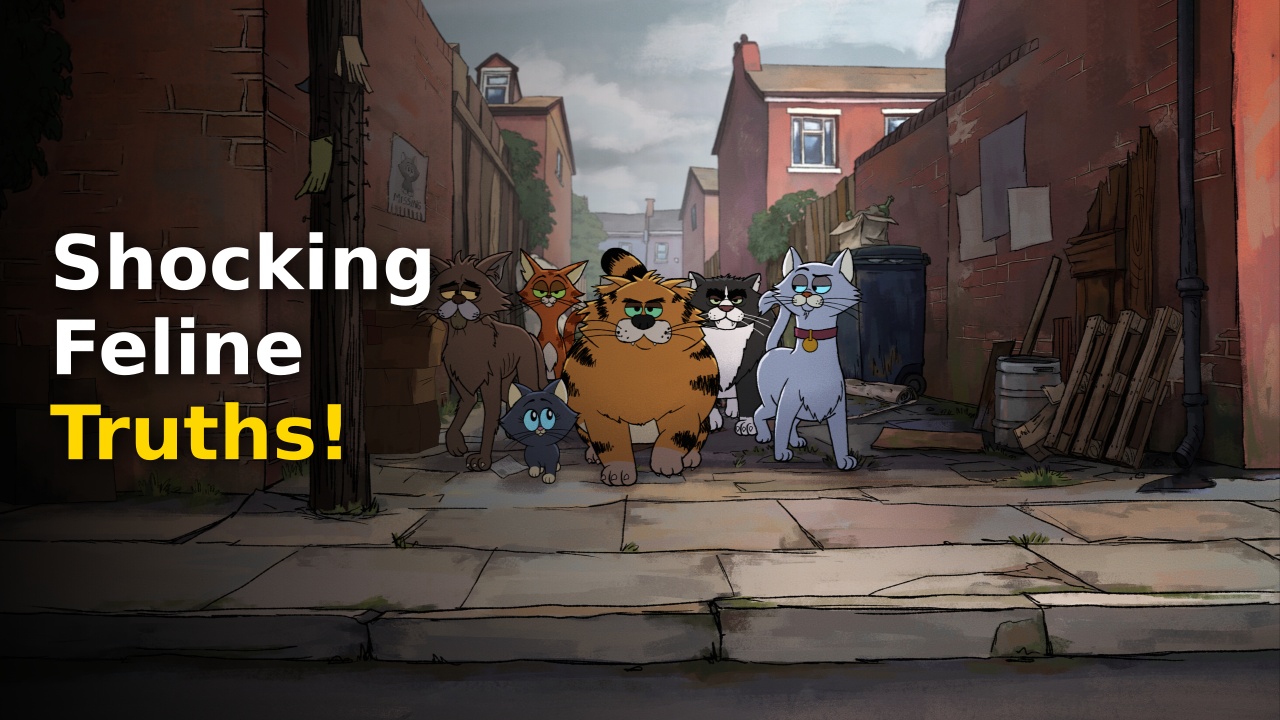
Alley Cats is the latest animated venture from the mind of Ricky Gervais, and it is already sparking a firestorm of debate among critics and fans alike. Have you ever wondered if your household pets are secretly debating the crushing weight of mortality while you are at work? This new Netflix original attempts to answer that question with a mixture of vulgarity and unexpected tenderness.
You might expect a typical cartoon from the creator of The Office, but this show takes a sharp turn into existential dread. It follows a group of stray felines who navigate the harsh realities of life on the streets while maintaining a surprisingly cynical outlook on the world. The series challenges your perceptions of what adult animation can achieve in the modern streaming era.
As you dive into the six-episode first season, you will notice a jarring shift between crude humor and heartbreaking sentimentality. This duality is the hallmark of the show, making it one of the most polarizing releases on the platform this year. Whether you find it brilliant or unmemorable, the series refuses to stay in a single lane for long.
Alley Cats Divides Netflix Viewers
The core premise of Alley Cats centers on Gus, a chunky orange tabby voiced by Ricky Gervais, who leads a ragtag gang of strays. These animals live in an abandoned hovel, spending their mornings watching random television programs on a miraculously functional TV. The show captures a specific unhurried rhythm that mimics the actual behavior of real-life cats.

You will see the characters oscillate between casually vicious insults and moments of deep emotional vulnerability. The animation, handled by the talented team at Blink Industries, provides a clean and crisp aesthetic that contrasts with the often-filthy subject matter. This visual polish makes the grit of their daily lives even more apparent to the viewer.
However, many viewers feel the creative depth often fails to match the ambition of the tone. The comedy of existential angst is a difficult balance to strike, and some critics argue it misses the mark. You might find the aimless chatter either charmingly realistic or frustratingly mindless depending on your tolerance for Gervais’ specific brand of humor.
The Crude Humor Factor
- Constant riffing about sexual exploits and graphic descriptions.
- Elaborate insults traded between the core gang members.
- A reliance on “edgy” dialogue that aims for a younger, unrestricted audience.
- Extended debates over fake historical quotes and pop culture trivia.
The dialogue is heavily influenced by the chemistry of the cast, who recorded their lines in group sessions. This technique allows for a natural, shaggy vibe that sounds like friends bickering over beers. You can feel the authenticity in their performances, even when the script wanders into undifferentiated drones of sniping.
Characters like Puke, voiced by David Earl, push the boundaries of what is acceptable for polite society. His stories are often revolting, designed to elicit a visceral reaction from both the other characters and you, the audience. This shock value is a staple of the creator’s historical comedic portfolio.
Alley Cats Voice Cast Breakdown
The ensemble brought together for this project includes some of the most recognizable voices in British comedy today. Diane Morgan, known for her brilliant portrayal of Philomena Cunk, voices Olive, an orange cat with a singular focus on breeding. Her deadpan delivery adds a unique layer of absurdity to the group dynamic.
Andrew Brooke voices Fang, a tuxedo cat who is perpetually looking for a physical confrontation. He serves as the muscle of the group, though his bravado often masks a deeper sense of insecurity. You will find his interactions with the more intellectual Ponce particularly revealing about the group hierarchy.
Ponce, played by Tom Basden, is the only character who seems fit for a domestic home. He is frequently mocked for his lack of “balls” and his refined vocabulary. This dynamic creates a constant source of friction that drives many of the show’s smaller, character-focused subplots.

The introduction of a lost kitten, voiced by Jo Hartley, serves as the primary catalyst for the season’s plot. This tiny grey newcomer forces the hardened strays to confront their own nurturing instincts. You will see Gus take on a paternal role that seems at odds with his usual cynical exterior.
Their mission to return the kitten home takes them on various side quests through the city. These adventures are often waylaid by random feline interests, such as hunting for food or arguing about the dangers of bees. It captures the short attention span of animals in a way that is both clever and occasionally tedious.
The vocal performances are undeniably the strongest element of the series. The cast’s ability to pivot from crude insults to existential despair is a testament to their skill as performers. You might find yourself more invested in the voices than the actual animation on screen.
Meet the Strays
- Gus: The orange leader who balances cynicism with a hidden heart.
- Olive: A space cadet with a one-track mind for reproduction.
- Puke: A mangy beast with a history of eating disgusting things.
- Fang: The aggressive tuxedo cat always ready for a scrap.
Alley Cats Production Data Facts
Understanding the scope of this production requires a look at the technical and financial details behind the scenes. Netflix has continued to invest heavily in adult animation, seeing it as a key demographic for subscriber retention. This project represents a significant part of their partnership with UK-based talent.
| Category | Detail |
|---|---|
| Lead Creator | Ricky Gervais |
| Animation Studio | Blink Industries |
| Episode Count | 6 Episodes |
| Platform | Netflix |
| Average Runtime | 18-20 Minutes |
The production utilized group recording sessions to enhance the naturalistic flow of the dialogue. This is a departure from the industry standard where actors record their parts in isolation. You can hear the difference in the overlapping speech and spontaneous reactions within each scene.
The financial backing for such projects is often substantial, reflecting the high costs of high-quality 2D animation. While specific budgets are rarely disclosed, the involvement of major UK production houses suggests a premium investment. You are seeing the results of years of development and character design.

Critics have noted that the show’s short runtime helps it avoid becoming overly tiresome. At under twenty minutes per episode, the season is a quick binge for anyone curious about the project. However, the brevity can also make the more sentimental moments feel somewhat rushed.
Ricky Gervais Comic Evolution
To understand the tone of this new series, you must look at the career trajectory of its creator. Ricky Gervais has moved from the mockumentary realism of the early 2000s to a more overtly philosophical and emotional style. His recent work has focused heavily on grief, mortality, and the human condition.
This animation feels like a continuation of the themes explored in his live-action series, After Life. It blends high-level cynicism with a desperate need for connection. You will notice that Gus often speaks with the same voice as Gervais’ more controversial public personas, challenging societal norms with every sentence.
The transition to animation allows for a different kind of freedom. Characters can survive physical trauma or engage in absurd scenarios that would be impossible in a live-action setting. Yet, the show stays grounded in the gritty reality of stray life, avoiding the more fantastical elements of typical cartoons.
Fans of his earlier work might find the sentimentality of the show surprising. There is a deep-seated softness beneath the layers of crude jokes and insults. This “ooey-gooey” center is what separates the series from other adult animated comedies on the market.
The industry often watches Gervais closely because of his massive global reach. You can stay updated on Hollywood’s most successful comedy icons and their latest projects at Bright Celebrity, where the business of humor is always a hot topic. His ability to maintain a deal with a giant like Netflix speaks to his enduring popularity.
Ultimately, the creator’s atheism also plays a role in the show’s narrative. There is a specific scene where Gus attempts to bargain with a God he doesn’t believe in. This moment provides a window into the existential fears that drive the characters’ actions throughout the season.
Exploring the Dark Feline Philosophy
One of the most striking aspects of the series is its obsession with death and vulnerability. The cats are acutely aware that they are all just “future roadkill,” a grim realization that permeates their conversations. You will see them process the loss of friends to cars and human indifference.
The lost kitten serves as a mirror for these anxieties, asking wide-eyed questions about the permanence of death. These inquiries force the older cats to articulate their own fears and coping mechanisms. It is a level of philosophical depth you might not expect from a show that features a character named Puke.
The cruelty of the human world is a recurring theme. Characters are abandoned by owners they once loved or left to wither in dirty corners. This sense of preemptive grief is something many pet owners will find uncomfortably relatable as they watch the strays struggle.
Despite the dark themes, there are moments of genuine joy and protectiveness. Gus singing to the kitten or cuddling her through a cold night provides the emotional anchor of the series. You are meant to feel the weight of their situation even as they mock one another mercilessly.
The show posits that life is inherently painful and existence is a series of uncertainties. The strays find meaning in their small clique, proving that connection is the only defense against a cold world. This message is delivered with a heavy hand, but it remains the show’s most consistent theme.
Whether this philosophy resonates with you likely depends on your own views on life and pets. The series doesn’t offer easy answers, often ending scenes with a shrug and a swat to the face. It is a reflection of the arbitrary nature of feline behavior and life itself.
Philosophical Themes Explored
- The inevitability of death and the concept of “future roadkill.”
- The search for meaning in a world of human indifference.
- The dichotomy of atheism and the human (or feline) impulse to pray.
- The protective instincts that arise in the face of extreme vulnerability.
Final Alley Cats Critical Review
In the final analysis, Alley Cats is a series that defies simple categorization. It is half-crass, half-sappy, and frequently unmemorable, yet it manages to capture something unique about the feline spirit. You might find yourself laughing at a crude joke one minute and feeling a lump in your throat the next.
The lack of creative depth in some areas prevents it from reaching the heights of other adult animated masterpieces. The aimless chatter can occasionally feel like a chore to sit through. However, the relaxed chemistry of the cast and the crisp animation provide enough incentive to finish the short season.
For fans of Ricky Gervais, this is an essential watch to see his continued evolution as a storyteller. It contains all the hallmarks of his style: the insults, the existential dread, and the surprising moments of kindness. You will walk away with a different perspective on the strays in your own neighborhood.
The show serves as a reminder that even the most stubborn and self-interested creatures have complex inner lives. Whether they are debating Gandhi quotes or looking for their next meal, these cats are remarkably human in their flaws. You might not love them all, but you will certainly find them fascinating.
As the credits roll on the final episode, the show leaves you with a sense of the fragility of existence. It is not a satisfying conclusion in the traditional sense, but as Gus says, it is just what cats do. This honest, if brutal, take on life ensures that Alley Cats will be talked about for some time to come.
More Like This
For more updates, check out our latest entertainment and sports news.