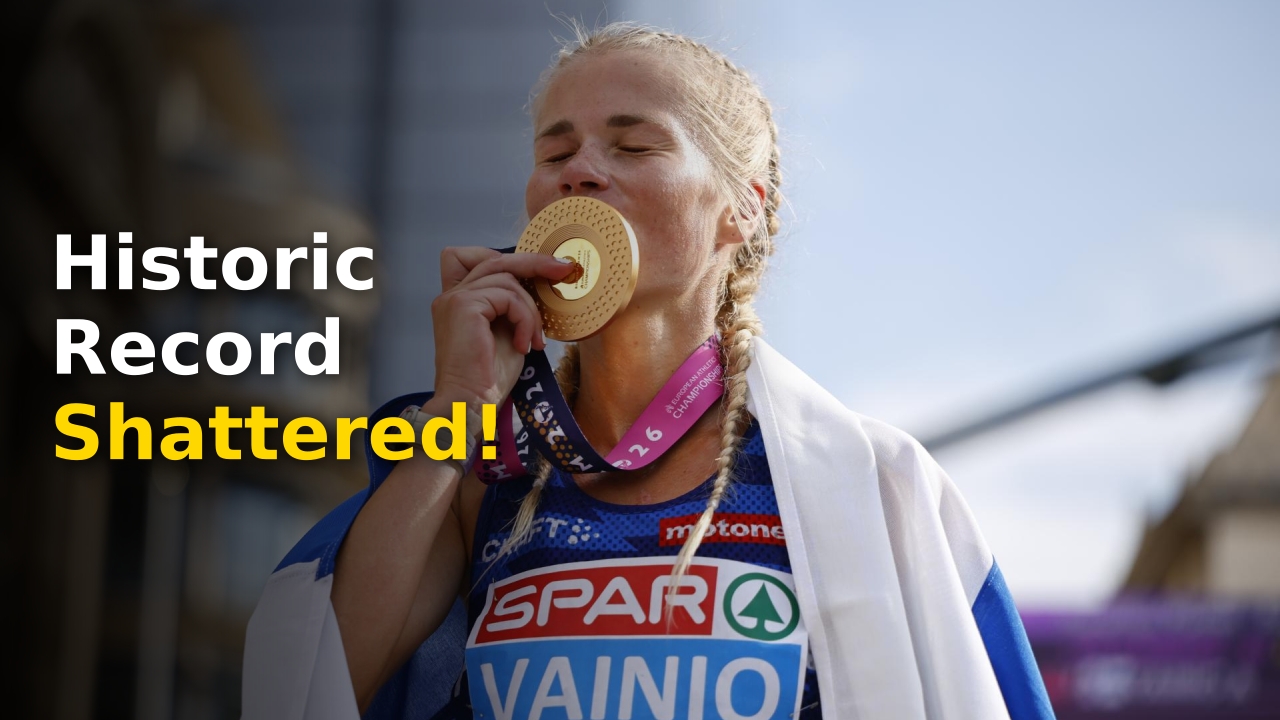
Alisa Vainio shocked the running world on August 16 with a jaw-dropping marathon performance in Birmingham that will be talked about for decades.
Have you ever witnessed someone redefine the limits of human endurance right before your eyes? That is exactly what happened as the athletic community watched a masterclass in pacing, grit, and pure determination unfold on the streets of the United Kingdom.
This victory was not just a win; it was an absolute statement of dominance that left competitors struggling in the dust from the very first mile.
The Rise Of Alisa Vainio
To understand this historic achievement, you must look at the journey of the incredible Alisa Vainio. Born with an innate passion for long-distance running, her rise to the top of European athletics has been nothing short of spectacular.
Her dedication to training is legendary among her peers, often clocking hundreds of miles every single week in the harsh Finnish climate. This relentless preparation built the physical and mental stamina required to conquer one of the most grueling courses in modern championship history.
Her coaching staff designed a highly specialized program focusing on lactate threshold training. You can achieve amazing things when you combine cutting-edge science with raw athletic talent. Her weekly mileage during peak training phases reached up to 130 miles, a staggering volume that requires perfect recovery protocols.
Early Career Highlights
- Represented Finland in multiple junior championships with outstanding distance results.
- Transitioned early to the marathon, showing rare natural aptitude for the 26.2-mile distance.
- Gained a reputation for aggressive front-running tactics that pressure opponents early on.
The Birmingham Qualification Journey
Securing a spot on the continental stage required meeting incredibly strict standards set by the athletic federation. You cannot simply show up to an event of this caliber without proving your elite status in international trials.
Our champion did more than just qualify; she dominated the European trial circuits, establishing herself as a gold medal favorite months before the starting gun fired. Her team focused heavily on altitude training and metabolic efficiency to prepare for the damp British climate.
Through precise physiological testing and strategic race selections, her coaching staff optimized every aspect of her performance. The results of this scientific approach to running speak for themselves as she arrived in the UK in peak physical condition.
Nutrition played a vital role in her preparation. She followed a strict high-carbohydrate diet designed to maximize glycogen storage in her muscles. Every meal was meticulously weighed and analyzed to ensure she had the perfect ratio of macro and micronutrients.
Mental resilience is just as critical as physical conditioning in marathon running. She worked extensively with sports psychologists to develop visualization techniques that helped her manage pain during the deepest stages of the race. This mental fortitude was on full display as the inspiration drawn from the journey of Alisa Vainio was felt across the stadium.

The Historic Birmingham Route
The marathon course in Birmingham presented a unique set of challenges that tested the adaptability of every single competitor. Starting and ending in the majestic Victoria Square, the route blended architectural beauty with brutal physical demands.
Athletes had to navigate an initial one-kilometer stretch before embarking on an intense five-kilometer loop. This loop had to be completed exactly eight times, requiring extreme mental focus to handle the repetitive terrain.
You might think a looping course is easier, but the psychological toll of passing the same landmarks can break even the strongest minds. Constant turns and varying pavement surfaces required runners to adjust their stride frequency continuously to avoid muscle fatigue.
The weather on race day was surprisingly humid, which added another layer of difficulty for the competitors. Humidity prevents sweat from evaporating efficiently, making it harder for the body to cool itself down during intense exertion. Many runners struggled to manage their core temperature, leading to slower times in the latter half of the event.
Victoria Square Challenges
The stone-paved sections around the central square offered less traction than standard asphalt, increasing the risk of slips. Elite runners had to choose their footwear with extreme precision to balance cushioning with grip.
Spectators lined these historic streets, creating a deafening wall of sound that boosted adrenaline but threatened to disrupt pacing strategies. Managing that surge of excitement is often the difference between a podium finish and hitting the wall early.
Our gold medalist handled the crowd energy with veteran composure, keeping her heart rate perfectly stabilized throughout the opening miles. This calm approach allowed her to conserve vital glycogen reserves for the brutal final stages of the race.
The historical significance of Victoria Square added a sense of grandeur to the entire competition. Originally opened in the late 19th century, the square is surrounded by stunning classical architecture that provided a beautiful backdrop for television broadcasts. Millions of viewers tuned in worldwide to watch this historic athletic display.
Organizing an eight-loop course through a bustling city center requires months of planning and coordination. Hundreds of volunteers worked tirelessly to secure the course, manage fluid stations, and ensure the safety of both athletes and spectators. The flawless execution of the event allowed the athletes to focus entirely on their performance.
The Ultimate Race Strategy
From the moment the starter pistol fired, the 28-year-old superstar took control of the pace. Alisa Vainio quickly established a lead that immediately put pressure on the rest of the elite field.
Her opening miles were clocked at a blistering pace that many analysts deemed too risky for a championship marathon. However, this aggressive strategy was a calculated move designed to break the spirits of her closest rivals early in the competition.
As the laps ticked down, the chasing pack began to splinter under the relentless pressure of her steady splits. You could see the fatigue setting in on the faces of the pursuit group as the gap widened with every passing kilometer.
As the race progressed, the tactical decisions made by the chasing pack became a fascinating study in athletic psychology. Some coaches urged their runners to stay patient, believing that she would eventually fatigue and fall back. This conservative approach ultimately backfired as the lead runner maintained her blistering pace all the way to the finish line.
The Breaking Point
By the fifth lap of the circuit, the lead had grown to a massive margin, leaving no doubt about who would claim the ultimate prize. The chasing runners had to abandon their gold medal ambitions and focus entirely on fighting for the remaining podium spots.
This masterclass in front-running draws comparisons to legendary marathoners of the past who dared to challenge traditional pacing strategies. By refusing to run a conservative race, she forced the entire field to play her game, a high-stakes gamble that paid off spectacularly.
Her stride remained incredibly fluid even as the midday heat began to rise over the British landscape. Proper hydration testing prior to the race allowed her support team to deliver perfect nutrition at every single fluid station along the course.
Lilli Anna Vindics-Toth showcased incredible wisdom by not chasing the leader too early. She recognized that trying to match the brutal opening pace could lead to a catastrophic physical breakdown later in the race. Her decision to run her own race paid off with a brilliant silver medal and a new personal best, proving that the tactics employed by Alisa Vainio during this crucial phase forced everyone to adjust their game plan.
The physical toll of maintaining a 5:26 mile pace over 26.2 miles is almost unimaginable to the average runner. Your heart rate remains elevated near its maximum capacity, and lactic acid constantly threatens to flood the muscles. Only elite athletes with years of specialized training can endure such prolonged physiological stress.

Birmingham Marathon Race Results
When she crossed the finish line in front of the cheering crowds at Victoria Square, history had been rewritten. The clock stopped at a stunning 2h22:26, establishing a brand-new championship record that will stand for years to come.
The battle for the remaining medals was equally thrilling, featuring personal bests and incredible gritty performances from Europe’s finest. Let us take a detailed look at how the top competitors finished on this historic day in the United Kingdom.
| Rank | Athlete | Country | Time | Medal / Position |
|---|---|---|---|---|
| 1st | Alisa Vainio | Finland | 2h22:26 | Gold (Championship Record) |
| 2nd | Lilli Anna Vindics-Toth | Hungary | 2h27:21 | Silver (Personal Best) |
| 3rd | Abbie Donnelly | United Kingdom | 2h27:33 | Bronze |
| 8th | Carolina Robles | Spain | 2h28:07 | Top 10 Finish |
The silver medal went to Hungary’s outstanding Lilli Anna Vindics-Toth, who delivered a career-best performance of 2h27:21. Her silver medal win represents a massive milestone for Hungarian distance running on the global stage.
Rounding out the podium was local favorite Abbie Donnelly, who secured a bronze medal for Great Britain with a stellar time of 2h27:33. The home crowd played a massive role in pushing her through the final difficult kilometers of the race.
Spain also celebrated a remarkable performance as Carolina Robles completed her debut championship marathon in an impressive eighth place. Her time of 2h28:07 marks her as a rising force to watch in future international athletics competitions.
A deeper analysis of the final standings reveals the sheer scale of the winner’s dominance on the course. Her winning margin of nearly five minutes is one of the largest gaps in modern European championship history. This margin highlights the gap in preparation and performance between her and the rest of the elite field.
The British contingent celebrated a highly successful day with multiple runners finishing in the top ten. Their strategic preparation on home soil paid massive dividends as they utilized their familiarity with the local climate to secure crucial points. The atmosphere in Victoria Square was electric as the home crowd cheered their athletes across the finish line.
For the Spanish athletic federation, Carolina Robles’ performance represents a highly promising step forward for their marathon program. Transitioning from shorter track events to the grueling marathon distance is a complex process that often takes years to master. Her top-ten finish on her debut continental appearance is an incredibly positive sign for the future.
The Legacy Of Alisa Vainio
The stunning victory achieved by Alisa Vainio has sent shockwaves through the global athletic community, prompting experts to re-evaluate what is possible. You can expect this record-breaking performance to inspire a new generation of European distance runners to push their limits.
With the world championships and future Olympic games on the horizon, the competition in women’s marathon running is fiercer than ever before. This incredible performance establishes a new benchmark of excellence that will force rival training camps to adapt their methods.
To read more about legendary athletic achievements and follow the lives of your favorite sports stars, check out Olympic sports history on Wikipedia for comprehensive coverage. The evolution of distance running continues to captivate millions of sports fans across the globe.
As we look forward to the next athletic season, all eyes will undoubtedly remain on this phenomenal Finnish champion. Her journey from a young talent to a record-breaking European champion is a testament to the power of hard work and belief.
The marathon community will eagerly await her next appearance on the world stage, wondering if she can lower her personal records even further. For now, Alisa Vainio reigns supreme as the undisputed queen of the European marathon circuit.
The landscape of women’s marathon running is currently experiencing a golden age of rapid improvement and high-profile competition. Technological advancements in running shoes, combined with modern scientific training methods, have enabled athletes to shatter records that were once thought untouchable.
Fans can look forward to seeing our champion compete against the best runners from Africa and Asia in the upcoming global championships. These highly anticipated matchups will test her ability to perform under different environmental conditions and against varied tactical styles.
The commercial appeal of women’s sports continues to grow, attracting major sponsors and increased media coverage worldwide. This financial support is crucial for providing elite athletes with the resources they need to train full-time and reach their absolute peak potential. The future of the sport has never looked brighter or more competitive.
More Like This
For more updates, check out our latest entertainment and sports news.