Key Takeaways
| Historical Record Set | Sunday’s Fever vs. Aces Game 1 averaged 2.1 million viewers, making it the most-watched WNBA playoff game in ABC network history. |
| Year-Over-Year Surge | Viewership more than doubled compared to last year’s comparable ABC playoff broadcast, which generated 951,000 viewers. |
| NFL Demographics Hold | The broadcast successfully competed against a massive NFL Sunday window, which featured a record-breaking Cowboys-Ravens matchup. |
| Regular Season Highs | While historic for the postseason, the game fell short of the regular-season record of 3.31 million viewers set during the Fever vs. Sky matchup. |
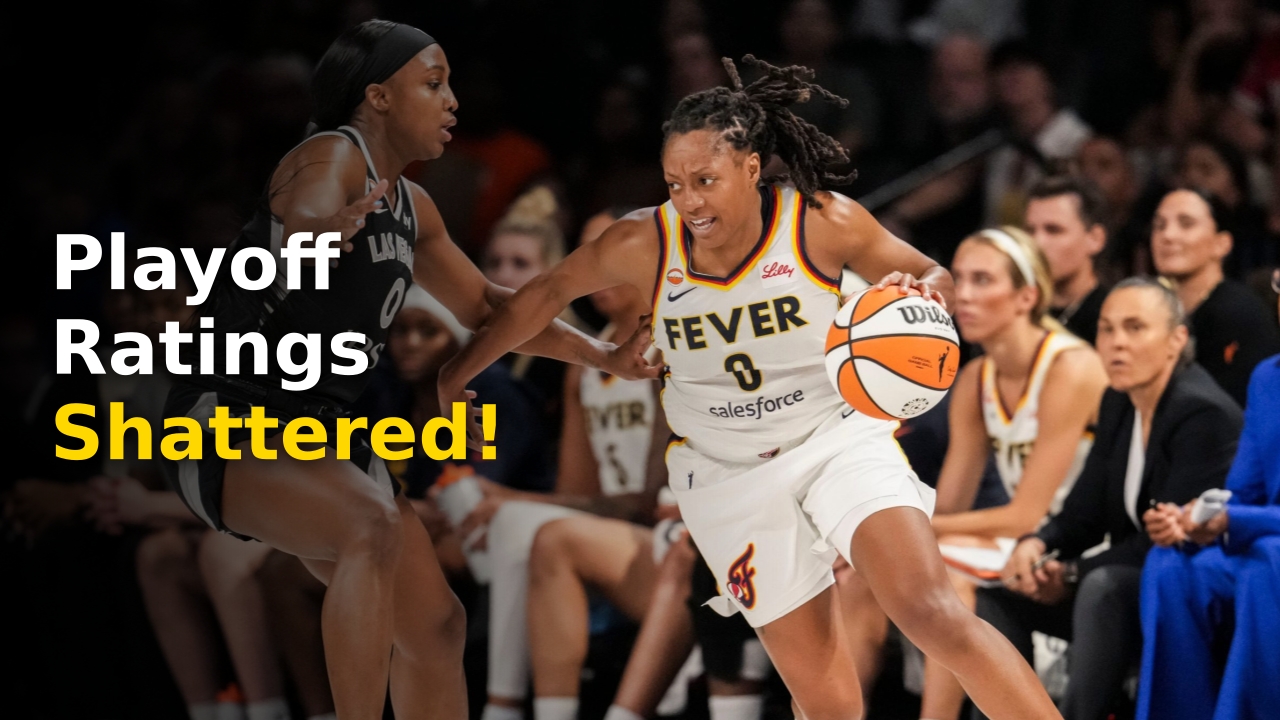
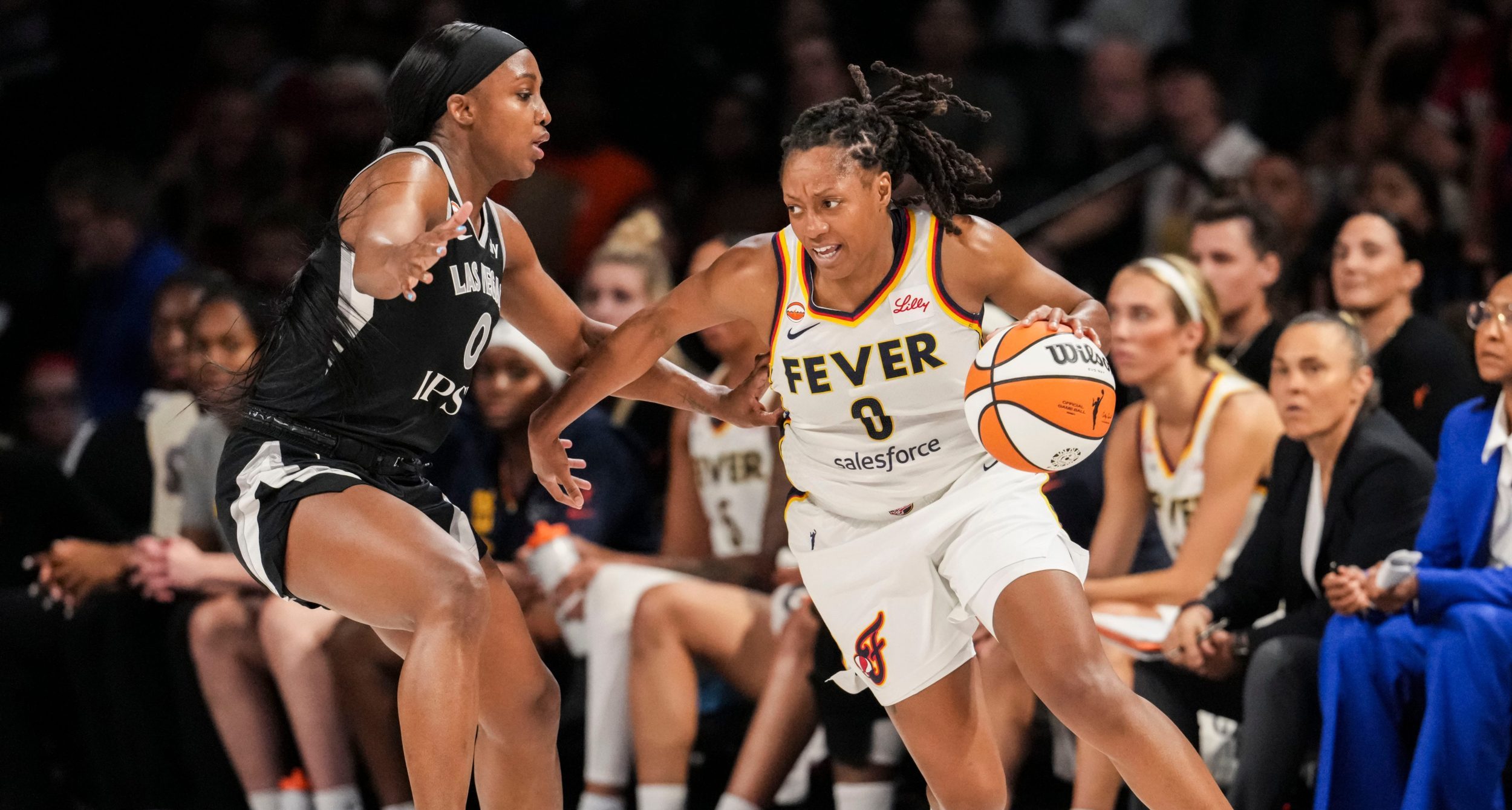
Establishing a new peak for professional women’s basketball, the latest WNBA viewership record was shattered during Sunday’s opening-round playoff matchup between the Indiana Fever and the Las Vegas Aces. You are witnessing a profound structural shift in how national networks value, schedule, and monetize women’s professional sports. This historic broadcast proved that the unprecedented commercial momentum generated during the regular season has carried directly into the high-stakes postseason arena.
The telecast on ABC averaged a staggering 2.1 million viewers and peaked at 2.6 million viewers, securing its place as the most-watched WNBA playoff game ever broadcast on the network. This landmark achievement reflects the explosive interest surrounding rookie sensation Caitlin Clark and her matchup against the back-to-back defending champion Aces. In an era of extreme media fragmentation, these numbers demonstrate that women’s basketball can draw massive, dedicated audiences on broadcast television.
To understand the sheer scale of this growth, one only needs to look at the historical year-over-year comparison. The 2023 opening-round game in the comparable ABC time slot featured the Atlanta Dream facing an Indiana Fever lineup that did not yet include Clark. That game registered an average audience of just 951,000 viewers, meaning this year’s iteration more than doubled the previous network benchmark.
WNBA viewership record history and milestones
To fully comprehend the magnitude of this new WNBA viewership record, it is essential to examine the league’s television trajectory over its nearly three-decade history. For many years, women’s professional basketball was relegated to secondary cable networks or unfavorable afternoon slots. The structural undervaluation of these media assets created a cycle where low promotion led to modest viewership, which in turn justified minimal investment from broadcasting conglomerates.
This paradigm began to dissolve as digital streaming options expanded and grassroots advocacy forced networks to prioritize accessibility. The arrival of generational college talent has completely rewrite the media playbook. By positioning marquee matchups on flagship broadcast channels like ABC, NBC, and CBS, networks have unlocked a massive reservoir of casual sports fans who were previously underserved. As media executives realize the massive financial returns available, the landscape of women’s professional sports trends has transformed from a niche interest into a highly competitive television battleground.
Furthermore, the long-term investment by ESPN and its parent company, Disney, has played a foundational role in this audience expansion. The network’s decision to place high-profile postseason games on Sunday afternoon broadcast windows has validated the thesis that direct accessibility is the single most important factor in driving sports viewership. The modern sports fan is highly receptive to competitive storytelling, and the WNBA has delivered unmatched narrative depth over the course of the 2024 season.
The Caitlin Clark factor and structural audience shifts
The cultural phenomenon surrounding Indiana Fever rookie guard Caitlin Clark has acted as a massive accelerant for the league’s overall commercial expansion. From her record-breaking collegiate run at Iowa to her transition into the professional ranks, Clark has consistently drawn historic television audiences. Her presence has altered typical viewing patterns, converting casual social media followers into highly engaged live television viewers who tune in for entire three-hour broadcast windows.
This growth is not limited to a single player, however. The rising tide has lifted the entire league, creating a competitive ecosystem where rival franchises like the Las Vegas Aces, led by superstar A’ja Wilson, have also experienced record-setting local and national ratings. The intersection of these distinct fan bases has created a perfect storm for network programmers who are eager to capture young, highly engaged demographics that are increasingly difficult to reach through traditional linear television.
Analyzing the Fever vs Aces Game 1 ratings
The precise breakdown of the Game 1 metrics reveals a highly encouraging narrative for league executives and advertisers alike. Reaching an average of 2.1 million viewers on a Sunday afternoon is a difficult task for any non-NFL sporting event in the United States. The peak of 2.6 million viewers occurred during the fourth quarter, indicating that audience retention was exceptionally strong as the defending champion Las Vegas Aces pulled away to secure their victory.
According to comprehensive data compiled by Sports Media Watch audience analysis, this game represents a watershed moment for WNBA postseason history. Historically, playoff ratings have struggled to match regular-season highs due to the intensely competitive fall sports calendar. The fact that ABC managed to sustain a two-million-plus audience throughout the entire game confirms that the fan base is highly committed to the postseason narrative arc, regardless of the competing entertainment options on other channels.
By the numbers: Playoff audience retention and growth
Analyzing the historical data shows that the league’s audience is not merely growing; it is undergoing a fundamental structural evolution. In previous decades, a WNBA playoff game drawing over one million viewers was considered a monumental success. Today, a 2.1 million average is established as the baseline for high-profile playoff series, setting a new standard for future television rights negotiations.
This dramatic expansion is particularly clear when examining the demographic data. The broadcast captured a significant share of younger female viewers and co-viewing households, two sectors that are highly prized by major corporate sponsors. As brands look to align themselves with progressive, fast-growing sports properties, the financial footprint of individual athletes has also expanded, as seen in the rising interest surrounding the Caitlin Clark salary breakdown and her historic shoe deals.
Comparative analysis of 2024 WNBA broadcast metrics
While the playoff numbers on ABC represent a historic milestone for postseason coverage, they actually sit below several regular-season benchmarks established earlier in the 2024 campaign. This disparity highlights the unique challenges and opportunities presented by different seasonal broadcasting windows. During the summer months, the WNBA faced minimal competition from major professional sports leagues, allowing regular-season games to achieve unprecedented reach.
For example, the Fever’s regular-season matchup against the Chicago Sky in August averaged an astonishing 3.31 million viewers on NBC, benefiting from a clean summer sports window and intense interest in the rookie rivalry between Clark and Angel Reese. Similarly, a July matchup between the Fever and the Aces on CBS pulled 2.64 million viewers, while an ESPN broadcast of the Fever against the Atlanta Dream earned 2.60 million viewers. The latter marked the single most-watched WNBA game in cable television history.
| Matchup | Network | Date / Window | Average Viewers |
|---|---|---|---|
| Fever vs. Sky | NBC | August 2024 | 3.31 Million |
| Fever vs. Aces | CBS | July 2024 | 2.64 Million |
| Fever vs. Dream | ESPN | September 2024 | 2.60 Million |
| Fever vs. Aces (Game 1) | ABC | September 2024 (Postseason) | 2.10 Million |
Navigating the NFL Sunday competition barrier
The most impressive aspect of the newly minted WNBA viewership record is that it was achieved in the face of direct competition from the undisputed titan of American sports media: the National Football League. Sunday afternoon television in September is traditionally dominated by local and national NFL broadcasts, which capture tens of millions of viewers and leave very little oxygen for competing sports properties.
Specifically, the ABC broadcast of the Fever and Aces went head-to-head with a highly dramatic CBS matchup between the Baltimore Ravens and the Dallas Cowboys. That game ultimately concluded as the most-watched international window in NFL history, pulling a massive audience that normally decimates the ratings of competing events. Additionally, NBC was simultaneously airing the final day of the prestigious Presidents Cup golf tournament, further fragmenting the sports-viewing public.

Media distribution strategies and fragmentation challenges
As the WNBA looks toward the future, its media distribution strategy is poised to become much more complex. The league is currently preparing to transition into a new multi-platform broadcast agreement that will introduce several new streaming and cable partners. While this expansion will drastically increase the total rights fees paid to the league, it also presents significant risks regarding fan confusion and audience fragmentation.
Starting next season, fans will need to navigate a landscape that includes Prime Video, Peacock, and the USA Network, alongside existing partners like ESPN, ABC, and CBS. When sports properties fragment their broadcast rights across too many platforms, casual viewers often struggle to find games, leading to temporary ratings declines. However, the resilient performance of ABC’s Sunday broadcast suggest that the core audience is highly motivated to seek out postseason content, regardless of the broader media environment. This structural stability will be critical as the league proceeds with major initiatives, including the integration of new teams, which you can track through our WNBA franchise expansion updates.
Expert Take: Sunday’s rating is a massive statement of validation for the league’s value proposition. To draw 2.1 million viewers while competing directly against a premier Cowboys-Ravens NFL window on CBS is something very few non-football properties can achieve. It proves that the audience for women’s basketball is not just a passing summer fad; it is a highly resilient, year-round media force that can withstand the headwind of the NFL calendar. Broadcast television remains the gold standard for reach, and Disney’s decision to utilize its flagship ABC network has paid off handsomely.
As networks prepare for the next round of multi-billion-dollar sports rights negotiations, the commercial viability of women’s sports is no longer a matter of debate. The continuous growth of live sport broadcasts, detailed on ESPN’s official WNBA coverage hub, has forced traditional sports media brands to reevaluate their programming priorities. The networks that invest heavily in production quality and premium time slots are the ones reaping the greatest rewards.
People Also Ask
What happened with the WNBA viewership record today?
ABC officially set a network record for its most-watched WNBA playoff game ever during Game 1 between the Indiana Fever and Las Vegas Aces. The game averaged 2.1 million viewers and peaked at 2.6 million viewers on Sunday afternoon.
Why is the Fever vs Aces Game 1 trending right now?
The game is trending because its audience more than doubled the viewership of last year’s comparable playoff game on ABC. It achieved this historic ratings surge despite competing directly against a major NFL Sunday broadcast window.
How does this viewership compare to regular season games?
While the game set an ABC playoff record, it was smaller than several regular-season games. The Fever-Sky matchup on NBC in August remains the high-water mark of the season, drawing 3.31 million viewers.
How will future streaming partnerships affect WNBA TV ratings?
The addition of partners like Prime Video, Peacock, and USA Network will increase the league’s financial revenue but could create short-term viewership volatility due to fan confusion over broadcast locations.
Future outlook for WNBA viewership record growth
As the postseason continues to unfold, media analysts are keeping a close eye on whether subsequent rounds can maintain this impressive ratings trajectory. The continuous evolution of the league’s economic structure, player branding, and media distribution has set the stage for sustained long-term growth. The era of treating women’s professional basketball as a secondary media asset is officially over, replaced by a highly competitive marketplace where major networks vie for broadcasting rights.
Ultimately, the latest WNBA viewership record established by ABC is a testament to the power of accessibility, narrative, and generational talent. When given a premier broadcast slot and promoted with the same intensity as men’s professional leagues, the WNBA has proven that it can deliver massive, highly engaged audiences. As the league prepares to transition into its new multi-platform media rights agreement, the commercial foundation of women’s sports has never been stronger.
More Like This
For more updates, check out our latest entertainment and sports news.