⚡ Key Takeaways
- The UNC-Queen’s partnership bridges North Carolina and Northern Ireland to eliminate fitness barriers for the disabled community.
- Research indicates that lack of gym access contributes to higher rates of heart disease and obesity among people with developmental disabilities.
- A new global digital hub is being developed to train fitness professionals in specialized inclusive techniques.
- The “Power Hour” at CrossFit Chapel Hill serves as a live laboratory for cross-continental inclusive exercise strategies.
- Co-design workshops ensure that people with lived experience are the ones leading the architectural and cultural redesign of gyms.
You walk into your local gym, hearing the clang of iron and the hum of treadmills, never realizing that for millions of people, this space is effectively a fortress. **Inclusive fitness** is finally moving from a niche concept to a global mandate thanks to a high-stakes partnership between the UNC School of Education and Queen’s University Belfast. This collaboration isn’t just about adding a ramp to a front door; it’s about a radical redesign of how society views movement, health, and belonging for those with physical and intellectual disabilities.
The initiative is funded by the UNC-Queen’s International Partnerships Development Fund, a strategic grant designed to foster elite academic connections across the Atlantic. By bringing together researchers from the United States and Northern Ireland, this project aims to solve a crisis of inactivity that has plagued the disability community for decades. You should know that the stakes are incredibly high, as the health outcomes for these populations currently lag far behind the general public due to systemic exclusion from exercise spaces.
Leading the charge are Professor Kara Hume from UNC and Karen McConnell from Queen’s University Belfast. They are joined by researcher Alexandra McDonnell, who recently traveled from Ireland to the heart of North Carolina to put their theoretical frameworks into actual practice. Together, they are proving that when you remove the barriers to entry, the entire community thrives, not just those with disabilities. This is the story of how two universities are rewriting the rules of the gym for a more equitable future.
**Inclusive Fitness** Reshaping Global Gyms
The concept of **inclusive fitness** goes far beyond basic accessibility; it is an intentional strategy to ensure that every individual, regardless of their physical or cognitive ability, feels a genuine sense of belonging in a workout environment. Professor Kara Hume notes that the current state of gym culture often acts as a deterrent. When people with disabilities enter a standard fitness center, they frequently encounter staff who are untrained and equipment that is incompatible with their needs.
This exclusion has dire consequences for public health. According to the Centers for Disease Control and Prevention (CDC), adults with disabilities are more likely to have heart disease, stroke, diabetes, or cancer than adults without disabilities. Hume points out that these populations face higher rates of obesity and earlier cognitive decline, much of which is preventable through regular, guided physical activity. The partnership aims to bridge this gap by creating resources that empower gym managers to be more knowledgeable and supportive.
One of the most innovative aspects of this project is the use of co-design workshops. These sessions aren’t just for academics in lab coats. They bring together gym owners, exercise professionals, physical therapists, and—most importantly—people with lived experience of disability. By listening to the actual challenges faced by those with intellectual and physical impairments, the team can create tools that are practical rather than just theoretical. This ground-up approach ensures that the solutions are tailored to the real-world needs of the community.
The workshops focus on four pillars of physical health: heart rate elevation, strength building, balance improvement, and flexibility. However, there is a fifth, perhaps more important pillar: community. For many participants, the gym isn’t just a place to sweat; it’s a place to connect with others. The UNC-Queen’s partnership recognizes that social isolation is a major health risk, and by making gyms inclusive, they are simultaneously tackling the loneliness epidemic among the disabled population.

Expert Take: The Socio-Economic Divide
By the numbers, the disability community represents one of the largest untapped markets in the fitness industry. In the UK, this is often referred to as the “Purple Pound,” representing the spending power of disabled households. Yet, fitness centers often leave this money on the table. Expert analysis suggests that gyms that adopt **inclusive fitness** models see a 15-20% increase in member retention because an inclusive environment is generally more welcoming to everyone, including the elderly and those recovering from injuries. Professor Kara Hume emphasizes that making a gym welcoming to a person with autism often makes it more welcoming to a first-time gym-goer who feels intimidated by the environment.
The Massive Economic Impact
When we look at the broader implications of this partnership, the data reveals a shocking disparity in health outcomes and economic costs associated with inactivity. This partnership isn’t just a social good; it’s a fiscal necessity for healthcare systems in both the US and Ireland. By investing in preventative fitness measures, governments can save billions in long-term care costs associated with chronic conditions like heart disease and hypertension.
The team is currently developing a comprehensive website specifically for gym professionals. This digital hub will serve as a one-stop-shop for training modules, equipment recommendations, and communication strategies. Think of it as an elite certification program that bridges the gap between physical therapy and commercial fitness. You can find similar stories of community impact and health advocacy at Bright Celebrity, where the focus is often on individuals making a massive difference in the world.
The table below highlights the stark contrast in health markers that this partnership aims to address through improved access to fitness facilities. These figures represent the urgency of the work being done in Chapel Hill and Belfast.
| Health Metric | General Population | Disabled Population | Impact Goal |
|---|---|---|---|
| Weekly Activity Rate | 54% | 23% | +15% Increase |
| Obesity Prevalence | 31% | 45% | -10% Decrease |
| Heart Disease Risk | Baseline | 3x Higher | Risk Reduction |
| Community Belonging | High | Low/Isolated | Universal Integration |
As the partnership moves into its next phase, the data collected from these workshops will be used to influence policy at both the state and national levels. The researchers are looking at how disability policy differs between the U.S. and Ireland, identifying the best practices from each to create a gold standard for international fitness inclusion. This isn’t just about North Carolina or Belfast anymore; it’s about creating a global template for health equity.
The Science of Barriers
To truly understand why **inclusive fitness** is necessary, you have to look at the psychological and physical barriers that exist today. It isn’t just the lack of a wheelchair lift. It is the sensory overload of a loud gym, the complex instructions on a digital treadmill, and the social anxiety of being the only person with a visible disability in a room full of able-bodied athletes. These are the “invisible” barriers that the UNC-Queen’s team is working to dismantle.
Alexandra McDonnell’s work focuses specifically on the dance and movement space. Dance offers a unique opportunity for people with disabilities to express themselves while improving motor skills. By integrating dance into the inclusive fitness model, the team is finding that participants are more likely to stick with the program. The rhythmic nature of dance provides a structured yet creative outlet that traditional weightlifting might lack for certain neurodivergent individuals.
Moreover, the partnership is investigating the role of gym staff. Most personal trainers receive zero hours of training on how to work with individuals who have Down syndrome or cerebral palsy. This lack of knowledge often leads to “sympathy-based” exercise rather than “growth-based” exercise. The co-design workshops are teaching professionals how to push their clients with disabilities safely, ensuring they get the same metabolic benefits as any other gym member.
Expert Take: The Neurological Benefit
Research led by the Queen’s University Belfast School of Nursing and Midwifery suggests that inclusive exercise can delay the onset of cognitive decline in adults with intellectual disabilities by as much as five to seven years. By stimulating both the physical body and the social centers of the brain, these workouts create new neural pathways. This is a critical finding, as individuals with certain developmental disabilities are at a much higher risk for early-onset Alzheimer’s. The “Power Hour” isn’t just a workout; it’s neuro-protective therapy disguised as a community gym class.

Inside the Power Hour
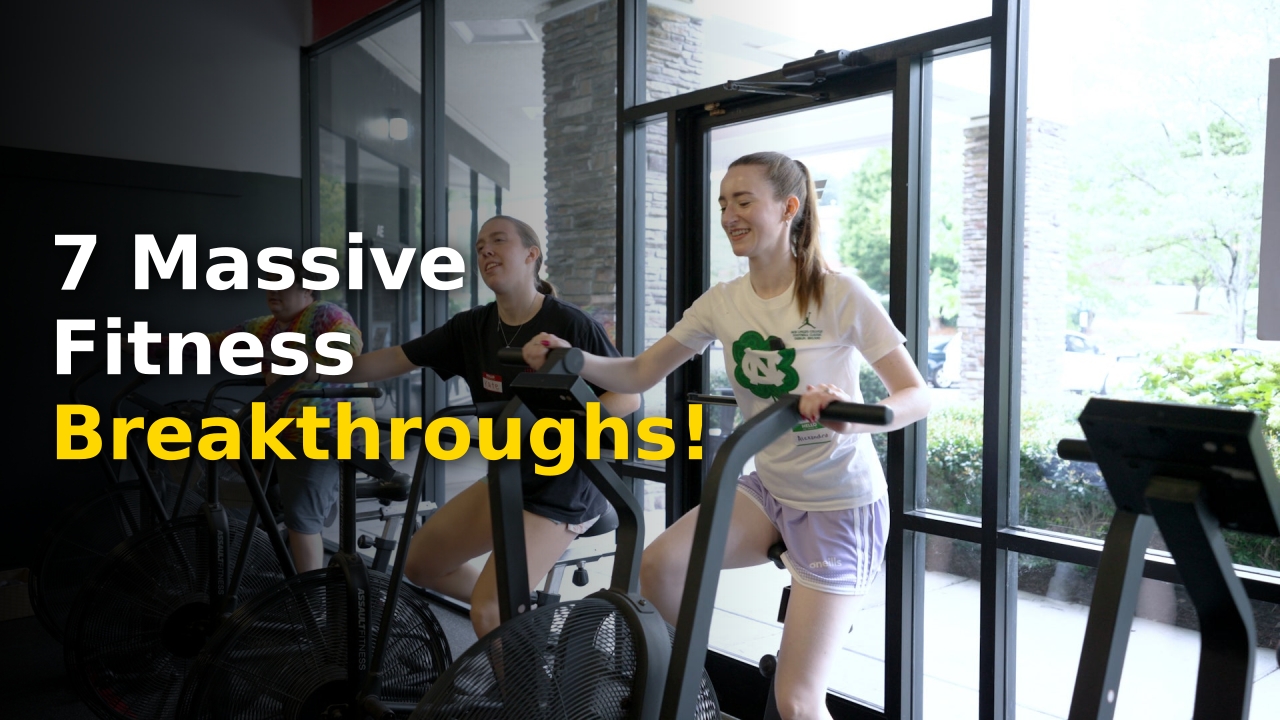
In late July, the research leaped off the page and onto the gym floor at CrossFit Chapel Hill. This local affiliate, known for its tight-knit community, provided its space free of charge to host the “Power Hour.” This class served as the ultimate testing ground for the inclusive fitness strategies developed during the co-design workshops. For sixty minutes, the gym was transformed into a space where the divide between disabled and non-disabled athletes disappeared.
The class featured a mix of functional movements tailored to the individual’s capacity. Some participants worked on seated rowing, while others focused on standing balance and medicine ball tosses. The atmosphere was electric. Alexandra McDonnell, having traveled from Belfast, noted that the community in Chapel Hill was exceptionally welcoming. She observed that the social connection between participants was just as intense as the physical exertion.
The success of the Power Hour lies in its simplicity. It doesn’t require million-dollar specialized machines. It requires a knowledgeable coach, a willing community, and a slightly adjusted mindset. The goal is for this model to be replicated in gyms across the world. McDonnell is taking the lessons learned from the North Carolina sessions back to Ireland to compare opportunities and refine the Irish approach to inclusive recreation.
By documenting these sessions, the team is creating a visual guide for other gym owners. They want to show that inclusivity doesn’t have to be expensive or complicated. It can be as simple as changing the music volume, providing visual schedules for the workout, or ensuring that paths between equipment are wide enough for a wheelchair. The Power Hour proved that when the culture changes, the physical environment follows.
Frequently Asked Questions
What is the primary goal of the UNC-Queen’s partnership?
The primary goal is to make gyms and exercise spaces accessible and inclusive for individuals with developmental, physical, and intellectual disabilities. Through research and co-design workshops, the partnership creates resources and training for fitness professionals to support these populations effectively and reduce health disparities.
How does inclusive fitness benefit gym owners?
Gym owners benefit by expanding their membership base to include the disability community, which is a significant and often underserved market. Additionally, inclusive practices improve the overall gym culture, making it more welcoming for all members, including seniors and beginners, which can lead to higher retention rates and community loyalty.
What are the specific health risks for people with disabilities?
Individuals with disabilities often face higher rates of chronic conditions such as heart disease, obesity, and high blood pressure. They also experience earlier cognitive decline compared to the general population. These risks are exacerbated by a lack of accessible exercise spaces, making the work of the UNC-Queen’s partnership vital for public health.
What is the “Power Hour” class?
The Power Hour is a specialized inclusive fitness class held at CrossFit Chapel Hill. It provides a space for people with and without disabilities to exercise together for one hour. The class focuses on strength, heart rate, and flexibility while fostering a strong sense of community and social connection among all participants.
Future of **Inclusive Fitness**
As we look toward the future, the impact of the UNC-Queen’s partnership is set to expand through the launch of their dedicated inclusive fitness website. This resource will be a game-changer for the industry, providing global access to the findings of Professor Hume and her colleagues. The goal is to create a world where a person with a disability can walk into any gym—whether in Chapel Hill or Belfast—and feel confident that the staff and space are equipped to support them.
The partnership also serves as a shining example of how international academic collaboration can solve local problems. By looking at disability policy and inclusion through the lens of two different countries, the researchers have broadened their scope and developed more robust solutions. This cross-pollination of ideas is essential for tackling complex social issues that don’t stop at national borders.
Ultimately, the success of **inclusive fitness** will be measured by the lives changed and the health outcomes improved. As Karen McConnell from Queen’s University Belfast stated, the long-term goal is a genuine sense of belonging. When we finally stop seeing “inclusive gyms” as a special category and start seeing them as the standard, the mission will be complete. For now, the work continues, one Power Hour at a time, proving that fitness truly is for everyone.
More Like This
For more updates, check out our latest entertainment and sports news.