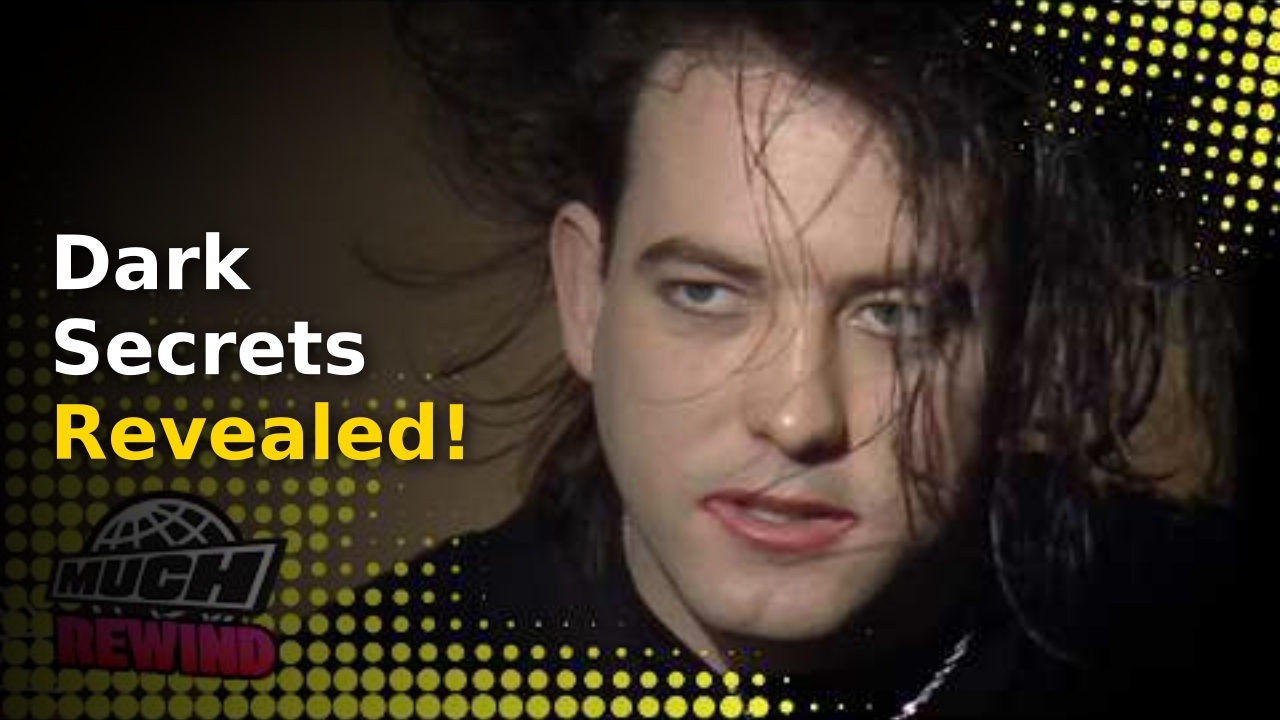
Did you know that turning 30 almost destroyed the biggest goth rock band on the planet when frontman Robert Smith faced an existential crisis? You might think of goth rock as a theatrical style, but in **1989**, the despair was completely real. You are about to discover how a dark period of isolation, self-doubt, and drug-fueled panic led to the creation of *Disintegration*, a masterpiece that defined a generation.
The frontman of **The Cure** was paralyzed by the thought of aging and felt his artistic window was slamming shut. He wanted to create an album that would stand as a monument of pure, unadulterated art before he crossed the threshold into his thirties. This personal obsession almost tore his band apart, yet it resulted in their most successful and beloved record.
Let us journey back to the gloomy studios of **Hook End Manor** to uncover the secrets of this musical triumph.
Robert Smith Meltdown
In **May 1989**, the pressure inside the band was reaching a boiling point. The iconic singer was rapidly approaching his milestone birthday on **April 21, 1989**, and felt he had accomplished nothing of lasting value. This crippling self-doubt drove him to consume large amounts of psychedelics and isolate himself from the rest of the band.
During this time, Robert Smith retreated into absolute silence, refusing to speak to his bandmates for weeks. He lived in a dreary flat in **London**, wrapping his windows in thick black velvet to block out the natural sunlight. This self-imposed sensory deprivation chamber became the perfect breeding ground for his darkest musical ideas.
The legendary songwriter Robert Smith wanted to make a deliberate, cinematic statement that would stand the test of time. He looked at icons like **Jimi Hendrix** and **Syd Barrett**, fearing he would become a hollow caricature of himself. This terror pushed him to write songs that were longer, slower, and far more depressing than anything they had released before.
The bandmates were left completely in the dark, wondering if their leader was losing his mind. The atmosphere in the studio was thick with tension, as they recorded long, sprawling instrumental passages. Yet, this exact tension created the haunting space and depth that makes the album so legendary.
You can hear the agony of this period in every single guitar line and heavy bass groove. The band was moving away from the quirky pop of “Why Can’t I Be You?” and sinking into a deep, beautiful abyss. It was a risky gamble that threatened to ruin their massive mainstream success.
Despite the bleak environment, these recording sessions produced some of the most enduring music of the era. The singer’s personal crisis became a collective artistic triumph that resonated with millions of listeners worldwide. It showed that embracing your darkest fears can sometimes be the only way to find your true voice.

The Dark Masterpiece
The recording sessions for the new album were famously quiet and intensely focused. With Robert Smith leading the charge, they recorded long into the night under dim, flickering candlelight. He instituted a strict rule: nobody was allowed to speak to anyone else unless it was about the music.
Many critics and industry insiders predicted the album would be a massive commercial disaster. The record label executives at **Elektra Records** were horrified when they first heard the finished tracks. They famously accused the band of being “willfully obscure” and trying to destroy their own career.
The label was terrified that the bleak vision of Robert Smith would alienate the massive fan base they had built. They practically begged the group to remix the tracks to make them more suitable for commercial radio. He flatly refused, maintaining that the album must be experienced as a cohesive, uncompromising piece of art.
His stubbornness ultimately paid off when the album became a massive global phenomenon. Fans did not want cheerful pop songs; they wanted something that matched their own inner turmoil. The record proved that dark, cinematic music could dominate the mainstream charts without losing its artistic soul.
This era cemented the iconic aesthetic that fans still passionately imitate today. The smeared red lipstick, teased black hair, and oversized black sweaters became a global uniform for outsiders. You can find more retro music inspiration and fashion guides at Bright Celebrity style archives as we look back at legendary rock aesthetics.
The immense success of this gothic masterpiece proved that compromising your artistic integrity is never the path to true greatness. By staying true to his bleak vision, he created an album that continues to top lists of the greatest records of all time. It remains a guiding light for alternative artists who refuse to conform to pop standards.
Iconic Track Breakdowns
The Lovesong Origins
He wrote the legendary track “Lovesong” as a very specific wedding present for his longtime partner, **Mary Poole**. He wanted to give her an honest, enduring assurance of his love despite his frequent absences on world tours. This beautiful juxtaposition showed a softer, deeply romantic side of Robert Smith that balanced the album’s overarching dread.
- Written for **Mary Poole** before their wedding in **1988** to prove his devotion.
- Designed to assure her of his love while he was traveling across global music markets.
- Became the band’s biggest US hit, reaching **Number 2** on the Billboard Hot 100.
- Features a surprisingly simple chord progression compared to other tracks on the album.
The Title Track Power
The title track “Disintegration” is an eight-minute epic of pure sonic intensity and lyrical desperation. It features cascading keyboard layers, driving basslines, and some of his most emotional vocal performances ever recorded. The song represents the literal breaking apart of his mind, his relationships, and his youthful illusions.
- An eight-minute masterpiece recorded at **Hook End Manor** under intense emotional strain.
- Features the actual sound of glass shattering mixed directly into the drum tracks.
- Explores the painful theme of emotional decay and the disintegration of personal trust.
- Remains a powerful staple of their live performances decades after its initial release.
Pictures Of You Nostalgia
This legendary track was inspired by a tragic house fire that destroyed many of his personal belongings. While searching through the ashes of his home, he discovered a wallet containing photographs of his wife. This heartbreaking moment of nostalgia inspired one of the most beautiful and melancholy songs of the decade.
- Inspired by a devastating house fire that destroyed the couple’s early memories.
- The lyrics reflect deeply on the pain of holding onto the past through fragile images.
- Released as a single in **1990**, accompanied by a memorable, snowy music video.
- Critically acclaimed as one of the greatest sad songs in the history of alternative rock.
Chart History Breakdown
To truly understand the massive scale of this gothic triumph, you must look at the official commercial figures. Despite the initial fears of record executives, the album performed exceptionally well across global markets. Let us examine the chart positions and sales records that proved the doubters wrong.
The album outperformed all commercial expectations and solidified the band’s status as global stadium-fillers. It proved that goth rock could achieve massive success without sacrificing its raw emotional depth. The subsequent tour, known as the **Prayer Tour**, saw them playing to massive, sold-out arenas across **Europe** and **North America**.
The relentless touring schedule took a massive psychological toll on the band members. The frontman frequently told journalists that this would be the final time they would ever tour. He felt that the massive stadium shows were pulling the band away from their intimate, artistic roots.
Fortunately, the band survived this grueling period and continued to create music. The legacy of their 1989 release continues to grow, with new generations of fans discovering its haunting beauty. It remains a masterclass in how to turn personal pain into universal art.
Let us take a closer look at the actual statistics from this historic release in the table below.
| Country | Peak Chart Position | Certification Status | Estimated Sales |
|---|---|---|---|
| United States | Number 12 | Double Platinum | 2,000,000+ |
| United Kingdom | Number 3 | Gold Status | 100,000+ |
| Germany | Number 2 | Gold Status | 250,000+ |
| Australia | Number 9 | Platinum Status | 70,000+ |
Legacy of Robert Smith
Decades later, the legacy of Robert Smith and his goth masterpiece remains completely untouched by time. He proved that wallowing in your deepest fears can lead to incredible artistic breakthroughs. You can still hear the direct influence of this record in modern indie, post-punk, and alternative bands today.
His willingness to show extreme vulnerability paved the way for generations of emotional lyricists. He broke down the rigid, masculine rock star stereotypes of the **1980s** by embracing his sensitive and melancholic side. His unique vocal style, transitioning from gentle whispers to agonized screams, remains absolutely unmatched.
The Cure was eventually inducted into the prestigious Rock and Roll Hall of Fame in **2019**. This historic induction celebrated their massive contribution to global music culture and history. It was a fitting tribute to a group that always did things entirely on their own terms.
Indeed, the legacy of Robert Smith will always be linked to his willingness to challenge industry standards. Instead of focusing on quick, viral singles, he created a cohesive, immersive sonic world. It is an artistic experience that demands to be listened to in its entirety, with the lights turned down low.
As the legendary frontman continues to perform worldwide, his dedication to his core audience has never wavered. He famously fought ticket giants to keep concert prices affordable for real music fans. This act of modern defiance showed that he remains a true punk rebel at heart, refusing to exploit his legacy.
Ultimately, the dark masterwork created by Robert Smith stands as a monument to artistic integrity. When you listen to those sweeping synthesizers and crying guitars, you are listening to a man conquering his own mind. His timeless art will continue to haunt, comfort, and inspire us for many decades to come.
More Like This
For more updates, check out our latest entertainment and sports news.