Have you ever wondered what devastating moment Pixar decided was too emotional for the big screen when creating a deleted scene for their flagship animated franchise? Pixar Animation Studios has built a legendary reputation on making adult audiences weep openly in movie theaters worldwide. Yet, during early story development, their creative team crafted a sequence that proved almost too heartbreaking to keep in the final cut.
The emotional core of Toy Story 5 already strikes a tender nerve with moviegoers across generations. In this latest installment, the iconic gang of playthings faces an existential crisis as young Bonnie trades physical toys for a sleek digital tablet. But behind the scenes, an abandoned narrative thread revealed a quiet trauma belonging to one of the series’ most beloved silent characters.
When fans access the home release on Aug. 18, 2026, they will finally witness a rare glimpse into a story that almost redefined the entire movie. This cut narrative sequence permanently alters how fans view the loyal horse who has stood alongside Woody and Jessie for over two decades.
Deleted Scene Uncovers Bullseye Origin
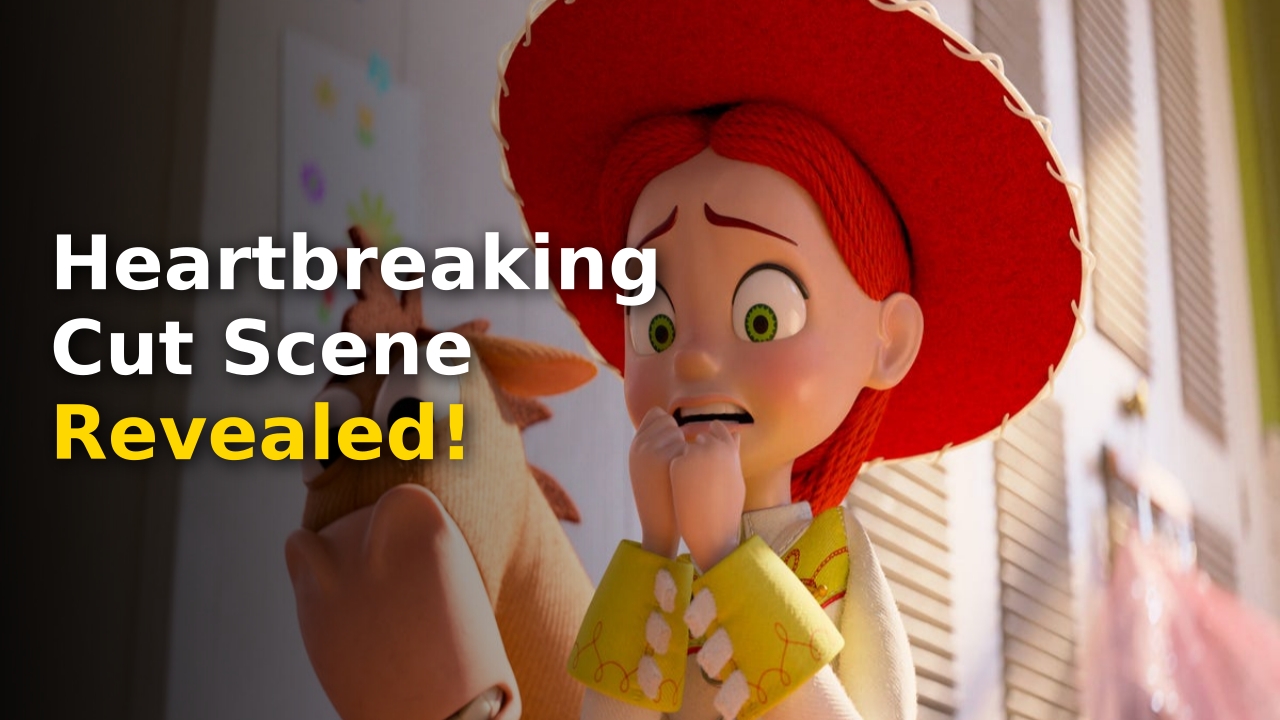
For twenty-seven years, audiences assumed Bullseye was simply the faithful, goofy equine companion introduced alongside Jessie and Stinky Pete in Toy Story 2. The standard theatrical version of Toy Story 5 focuses heavily on Jessie, voiced brilliantly by veteran actress Joan Cusack. When Bonnie becomes completely consumed by her new tablet, Jessie and Bullseye get separated from their owner, triggering deep-seated feelings of abandonment in the energetic cowgirl toy.
Their frantic journey takes them back to the quiet rural farm that Jessie once called home with her original owner, Emily. However, the newly unveiled alternate sequence takes the duo down a vastly different road. Rather than focusing solely on Jessie, the toys take a detour to an old residential address that belonged to a little boy named Charlie.
In this exclusive cut segment, Bullseye experiences a sudden surge of joyful nostalgia rather than grief. He excitedly trots through the familiar landscape, eagerly showing Jessie in his expressive, non-verbal equine manner all the secret spots he used to love. The tone rapidly shifts from adventurous curiosity to overwhelming sadness once Bullseye steps through the dusty doorway of his former bedroom.
Inside the abandoned child’s room, Bullseye approaches a faded wall covered in childhood memories. He halts in front of a hand-drawn crayon picture depicting a small boy standing beside his favorite brown horse, clearly captioned “Charlie and Bullseye.” Moving forward with delicate tenderness, the wooden horse gently presses his dusty hoof onto the wall right beside the drawing, leaving a permanent print.
Observing this quiet act of devotion, Jessie realizes the profound truth about her companion’s motives. “You weren’t running away from Bonnie. You just wanted to say goodbye to Charlie,” she whispers softly before breaking down into tears and wrapping her arms around her equine friend. She adds a heartbreaking admission: “I wish I could say goodbye but I just can’t. If I say it, then they’ll really be gone and I’ll be all alone.”
This emotional interaction adds unprecedented depth to a character who has historically served as comic relief and steadfast support. It completely reframes Bullseye‘s silence not as a lack of complexity, but as a quiet reservoir of deep loyalty and unspoken grief.
Key Narrative Beats Discovered
- The Charlie Revelation: Bullseye belonged to a boy named Charlie before ending up in Al’s Toy Barn collection.
- The Hoof Print Gesture: Bullseye leaves a physical mark next to a childhood crayon drawing as his final farewell.
- Jessie’s Confession: The tragic revelation that Jessie avoids saying goodbye because it makes her fear of solitude real.
- The Alternate Route: The cut journey altered the physical destination of the toys during the second act of the film.
Andrew Stanton Explains Cut Choice
Director Andrew Stanton, the visionary filmmaker behind beloved Pixar classics like Finding Nemo and WALL-E, spoke openly about why this poignant sequence was ultimately removed. According to Andrew Stanton, early drafts of the screenplay featured a dramatic third-act reunion where Jessie actually encounters a fully grown-up Emily in the modern day. Stopping at Bullseye‘s childhood home was meant to be a stepping stone along that broader road trip narrative.
Andrew Stanton explained that the emotional impact of the horse reaching his old home produced a stunning reaction that surprised the production team. Seeing the horse react with gentle acceptance rather than bitter sorrow created an extraordinarily beautiful moment. The creative crew was captivated by how the scene contrasted Bullseye‘s mature acceptance of loss against Jessie‘s intense trauma.
However, feature-length animated filmmaking requires brutal efficiency during the editing process. As story reels evolved at Pixar Animation Studios in Emeryville, California, the editorial team realized the feature was suffering from a divided focus. Splitting the emotional emotional weight across two separate human backstories diluted the core tension of the main conflict.
“Ultimately the movie had to change and had to be much more about Jessie,” Andrew Stanton admitted during a recent press panel. The creative team determined that every narrative beat had to directly serve Jessie‘s personal struggle with modern digital replacement. Consequently, the team salvaged the underlying dynamic of the scene, transforming those feelings of reluctant farewell so they poured directly through Jessie‘s primary storyline instead.
Trimming the sequence also streamlined the runtime, keeping the narrative momentum high for younger audiences while preserving thematic integrity. Removing Bullseye‘s backstory was a painful decision for the story team, but necessary for structural cohesion. You can find more entertainment news updates on BrightCelebrity covering late-breaking animation announcements and director commentary.

Modern Tech Conflicts With Childhood
The central dilemma of Toy Story 5 hits terrifyingly close to home for modern parents and nostalgic adults alike. Since 1995, the Pixar franchise has examined how toys cope with physical growing up, moving away, and physical destruction. In this **2026** release, the antagonist isn’t a bully like **Sid** or a collector like **Al**, but an omnipresent glass rectangle.
When Bonnie receives her first digital tablet, traditional playtime grinds to a halt. The physical toys find themselves staring at the back of a glowing screen that completely captures their child’s attention. This modern reality mirrors millions of households across the globe, making the stakes feel painfully grounded and contemporary.
The thematic power of a cut deleted scene highlights how physical objects carry emotional memories that digital spaces cannot replicate. Bullseye pressing his physical hoof against a tangible wall drawing underscores the physical connection between children and real-world playthings. In contrast, tablet apps leave no physical trace behind, altering how childhood memories are constructed and stored.
By placing Jessie and Bullseye in an abandoned physical room, Pixar emphasized the tragic mortality of physical play in a digital era. The abandoned house serves as a physical tomb for mid-century childhood, complete with dust, paper drawings, and forgotten wooden furniture. This visual contrast makes Bonnie‘s shift toward high-tech entertainment feel even more existential for the displaced toys.
Pixar Box Office Masterpieces Breakdown
To understand the immense cultural weight of Toy Story 5, one must look at how the studio’s emotional storytelling has consistently translated into record-breaking global success. Pixar has refined the art of combining high-concept animation with profound psychological themes over three decades. For complete historical background on the film series, consult the official Toy Story franchise history archive online.
The following detailed statistical analysis showcases how each core installment in the flagship franchise performed financially and the primary emotional driver that resonated with global audiences upon release:
| Film Title | Release Year | Primary Emotional Focus | Worldwide Box Office |
|---|---|---|---|
| Toy Story | 1995 | Replacement Fear & Jealousy | $373.6 Million |
| Toy Story 2 | 1999 | Abandonment & Mortality | $497.4 Million |
| Toy Story 3 | 2010 | Growing Up & Letting Go | $1.067 Billion |
| Toy Story 4 | 2019 | Identity & New Purpose | $1.073 Billion |
| Toy Story 5 | 2026 | Digital Disruption & Closure | Pending Digital Release |
These staggering numbers illustrate why Pixar carefully evaluates every scene before approving a final theatrical print. A single misplaced sequence can completely alter audience perception and impact long-term home video performance across global markets.
The Emotional Legacy Of Cut Moments
Uncovering secrets left on the cutting room floor gives movie lovers a fascinating look into the complex storytelling machinery at Pixar. While Bullseye‘s reunion with Charlie‘s memory was cut from theaters, its home video inclusion ensures that fans can experience the horse’s complete character story. It grants long-time enthusiasts a nuanced look at a character who previously had no explicit background.
As audiences prepare for the digital purchase availability on Aug. 18, 2026, discussion surrounding this abandoned narrative path continues to spark debate across online fan communities. Many fans argue that seeing Bullseye leave his physical hoof print next to Charlie‘s picture represents one of the most artistic moments Pixar animators ever drafted.
Ultimately, the inclusion of this bonus footage enriches the overarching lore of the series. Even though the primary theatrical narrative focused sharply on Jessie‘s internal growth, knowing that Bullseye found his peace adds a bittersweet layer of closure to the beloved duo. The tragic deleted scene stands as a powerful testament to the creative depth, mature themes, and emotional courage that continue to define Pixar’s historic legacy in global animation.
More Like This
For more updates, check out our latest entertainment and sports news.