Key Takeaways
| Site Transformation: The former Qualcomm Stadium property is evolving into a mixed-use educational, residential, and scientific hub. |
| Green Space Rebirth: A 34-acre public park replaced asphalt lots, logging over 400,000 community visits in 2025. |
| Economic Growth: The university master plan forecasts up to $3 billion in annual regional economic activity at full buildout. |
| Civic Housing: The blueprint features 4,600 total homes, reserving a minimum of 10% for dedicated affordable housing. |
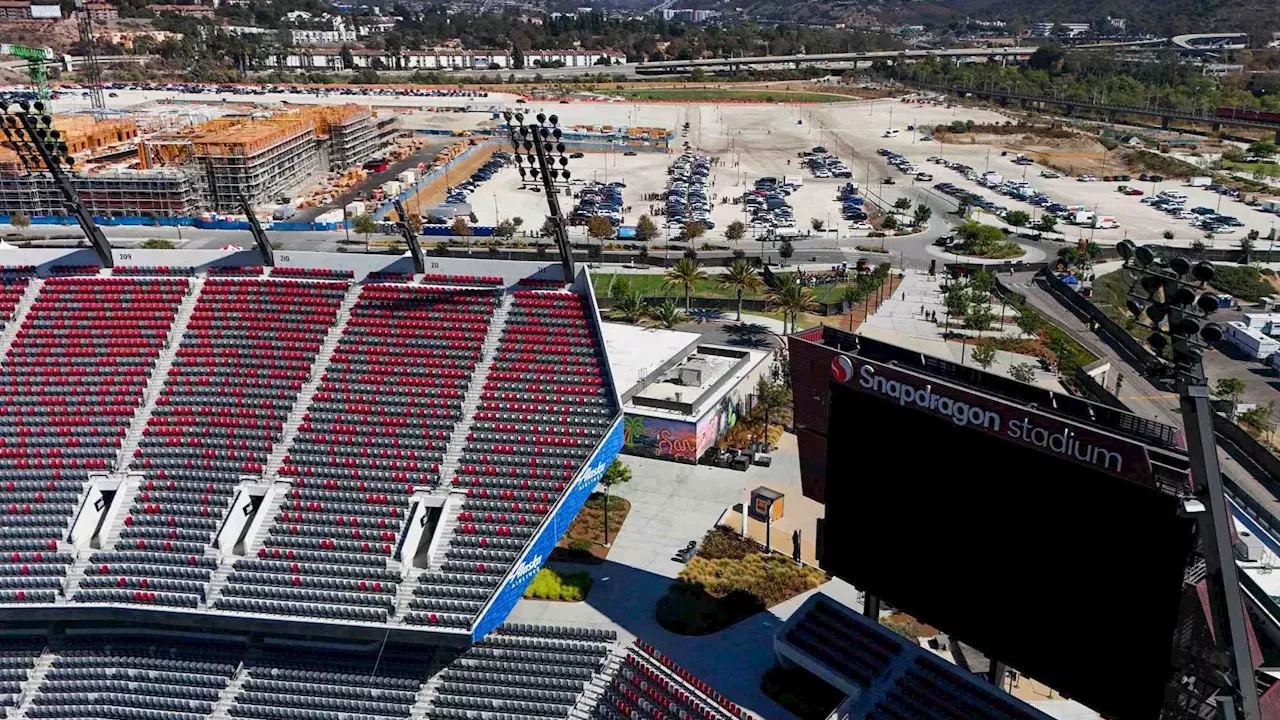
You might remember the deafening roar of 70,000 football fans filling acres of cracked asphalt, but SDSU Mission Valley has radically replaced that stadium era with an ambitious urban community. Nearly a decade after the Chargers abruptly packed up for Los Angeles, the 135-acre site formerly known as Qualcomm Stadium is completely unrecognizable. Where tailgaters once grilled under automotive smog, university researchers, native parklands, and modern apartment homes now dominate the skyline.
Instead of relying on eight Sunday football kickoffs to drive local commerce, San Diego chose a permanent civic investment. The master project balances ecological restoration along the historic San Diego River with cutting-edge academic infrastructure. You can explore regional growth patterns through our comprehensive analysis of sports entertainment business trends that continue to redefine major metropolitan landscapes.
The physical transformation proves that losing a legacy sports franchise does not condemn a city to economic stagnation. By reclaiming valuable public land, San Diego turned an environmental hazard into a self-sustaining innovation hub. The progress seen across the valley sets a new standard for post-stadium municipal redevelopment nationwide.
SDSU Mission Valley Redevelopment Blueprint
The core vision of SDSU Mission Valley centers on a fully integrated community rather than a single-use sports destination. When the Chargers decamped north in 2017, city leaders faced an existential choice between private commercial development and higher education expansion. The resulting public vote favored San Diego State University, unlocking a multi-decade development plan supported by long-term ground leases.
Today, multi-story residential buildings rise alongside the modern 35,000-seat Snapdragon Stadium. The residential district moved past design drawings when crews broke ground on Avalon Mission Valley, introducing 621 market-rate apartments alongside 30,000 square feet of retail. Neighborhood amenities include pedestrian paths and a full-scale grocery store designed to reduce vehicle reliance.
Simultaneously, developers launched the Addison residential community, an essential 126-unit affordable housing phase partnered with Chelsea Investment Corp. Under binding university agreements, these units will remain income-restricted for at least 55 years. Specific apartments are also reserved for residents with developmental disabilities alongside prioritized options for university staff.

Public Infrastructure and River Preservation
Infrastructure expansion serves as the structural foundation connecting the modern neighborhood to adjacent urban centers. Crews started construction on the Fenton Parkway Bridge, a critical high-water crossing scheduled to open in late 2027. This modern bridge will link motorists, cyclists, and pedestrians across transit corridors while withstanding seasonal river swells.
- Reconstruction of Jacaranda Street to restore vital municipal grid connectivity.
- Direct regional access via the pre-existing San Diego MTS Green Line trolley station.
- Construction of specialized bioswales and landscaped natural basins for stormwater filtration.
- Integration of two-mile continuous recreational loops for local cyclists and runners.
For more insights into modern development strategies, discover how celebrity urban lifestyle trends parallel this shift toward sustainable living. The integration of public transit eliminates the traffic gridlock that once crippled the stadium district every weekend.
Master Plan Milestones and Economic Data
The overall fiscal and geographic metrics behind the former stadium site demonstrate the immense scale of this municipal initiative. Backers project significant long-term returns compared to the intermittent earnings of professional football games.
| Development Component | Total Target Capacity | Current Status | Primary Civic Objective |
|---|---|---|---|
| Snapdragon Stadium | 35,000 Seats | Completed & Operational | Multi-use Athletics & Entertainment |
| River Park | 34 Dedicated Acres | Open to Public | Recreation & Ecological Filtration |
| Residential Housing | Up to 4,600 Units | Multiple Phases Active | Transit-Oriented & Affordable Homes |
| Innovation District | 1.6M Square Feet | Phase 1 Underway | Tech, Defense & Biotech Incubation |
| Projected Economic Output | $3 Billion Annually | Long-term Target | Regional Economic Diversity |
Independent analysis shows that stadium neighborhoods without diverse commercial spaces consistently underperform over multi-decade cycles. For historical reference on franchise relocations, check out ESPN’s coverage of professional football movements to understand why modern municipalities hesitate to subsidize single-tenant stadiums.
From Tailgates to the Innovation District
Beyond recreational parks and multi-family apartments, the master site includes a massive 1.6 million square foot Innovation District. This zone links university researchers directly with major regional defense contractors, biotechnology enterprises, and cybersecurity agencies. The university partnered with Lincoln Property Co. to build the first 315,000 square feet across three specialized commercial structures.
Education authorities also coordinated with the San Diego Community College District to create clear pipelines for non-traditional students entering STEM professions. A cornerstone of this expansion is the National Security Hub, which administrators project will generate over 200 high-paying defense technology jobs on-site. Research teams will work directly alongside commercial partners to test next-generation systems.
Complementing defense research is the advanced One Water Laboratory, an experimental facility established directly within the watershed corridor. Students and faculty use real-time stormwater flows filtered through the park system to investigate urban hydrology and purification methods. Where motor oil once washed across asphalt directly into the river, academic researchers now pioneer municipal sustainability models.

Expert Take: The True Economics of Stadium Exodus
Mainstream discourse often frames the loss of an NFL team as an insurmountable civic disaster. However, prominent sports economists like Andrew Zimbalist have continuously documented that football franchises create surprisingly little net macroeconomic lift for metropolitan areas. Because teams host only eight or nine regular-season games per year, vast parking reserves sit dormant for over 300 days annually.
By contrast, the intensive capital directed into this project builds everyday density. While Inglewood experienced a concentrated construction wave around SoFi Stadium, San Diego selected an educational and environmental model that permanently recirculates regional capital. You can review Forbes reporting on modern sports franchise values to see how private venue models compare with multi-use civic developments.
The fiscal engine of this new neighborhood relies on day-to-day community life rather than seasonal athletic calendars. Small businesses, research laboratories, and local eateries enjoy stable foot traffic throughout all twelve months. This balanced growth shields the surrounding community from sudden financial shifts caused by sports franchise owners.
The Environmental Recovery of Mission Valley
Environmental preservation forms the emotional center of this entire master buildout. For over half a century, the San Diego River remained sequestered behind chain-link fences and parking barriers. Stormwater runoff consistently transported harmful automotive deposits into the watershed, threatening native marine ecosystems and degrading regional wetlands.
The completion of the 34-acre River Park reversed decades of environmental neglect. Modern native vegetation buffers the waterways, allowing natural wildlife corridors to flourish once again in central San Diego. More than 400,000 people explored the park throughout 2025 alone, illustrating an immense public desire for open green space.
Civic leaders like Rob Hutsel of the San Diego River Park Foundation emphasize that preserving public river access remains paramount as regional density expands. Modern engineered wetlands now treat millions of gallons of runoff during seasonal storms, preventing severe urban flooding downstream. To learn more about changing public communities, explore our features on modern cultural real estate initiatives shaping top metro areas.
People Also Ask
What happened to the old Chargers stadium in San Diego?
Qualcomm Stadium was completely demolished after voters approved the SDSU West initiative. The 135-acre property is now the site of Snapdragon Stadium, a 34-acre river park, and an expanding residential and innovation district.
How much housing is planned for the former stadium site?
The approved master plan allows for up to 4,600 residential homes at full buildout. The agreement legally mandates that at least 10% of those residences remain reserved for designated affordable housing.
Who owns the land at SDSU Mission Valley?
San Diego State University officially purchased the 135-acre parcel from the City of San Diego at fair market value in 2020. Developers build housing and commercial space through long-term ground leases that generate perpetual revenue for the school.
What sports teams play at Snapdragon Stadium today?
Snapdragon Stadium hosts the SDSU Aztecs college football team, the San Diego Wave FC of the NWSL, Major League Soccer’s San Diego FC, and major international rugby and entertainment events throughout the calendar year.
The Future of Mission Valley Development
As construction advances toward the 2030s, the evolution of SDSU Mission Valley serves as a definitive case study in modern urban reinvention. San Diego proved that moving past the departure of an NFL franchise can open doors for sustainable, community-first urban planning. Instead of financing an expensive stadium exclusively for a billionaire sports owner, the public prioritized classrooms, open parks, and accessible homes.
The ongoing buildout will test how effectively university-led developments navigate evolving economic conditions and rising construction costs. Yet the foundation already set in the valley confirms that civic cooperation can transform barren parking lots into thriving neighborhoods. The concrete desert of the past has officially yielded to an enduring public sanctuary that will serve generations of Californians.
More Like This
For more updates, check out our latest entertainment and sports news.