Key Takeaways
| $22 Million Rotation Gamble: Zac Gallen logged a career-worst 6.07 ERA across 105.1 innings after accepting a qualifying offer equivalent. |
| First Base Collapse: Arizona rotated six distinct players to produce a league-worst .636 OPS from first basemen in 2026. |
| Rehab Setback Crisis: Relying on injured aces Corbin Burnes and A.J. Puk backfired when neither produced sustainable quality frames. |
| 2027 Strategic Pivot: Front office blueprints demand true positional spending and aggressive pitching depth rather than banking on health miracles. |
You watched the Arizona Diamondbacks claw to the brink of postseason baseball in 2026, only to witness self-inflicted roster mistakes torpedo their October aspirations. The defining 2026 D-backs mistakes stemmed not from a lack of raw effort, but from calculated front-office gambles that backfired across 162 grueling contests. Missing the playoffs by a razor-thin margin stings intensely for a franchise that captured National League pennant glory in 2023.
Arizona fielded competitive stretches and sustained electric moments throughout the summer, yet critical holes eroded their floor. When championship contention hangs on fine margins, roster construction blunders compound rapidly. By dissecting what went wrong in Phoenix, you can clearly trace how passive decisions paved the road to early offseason tee times.
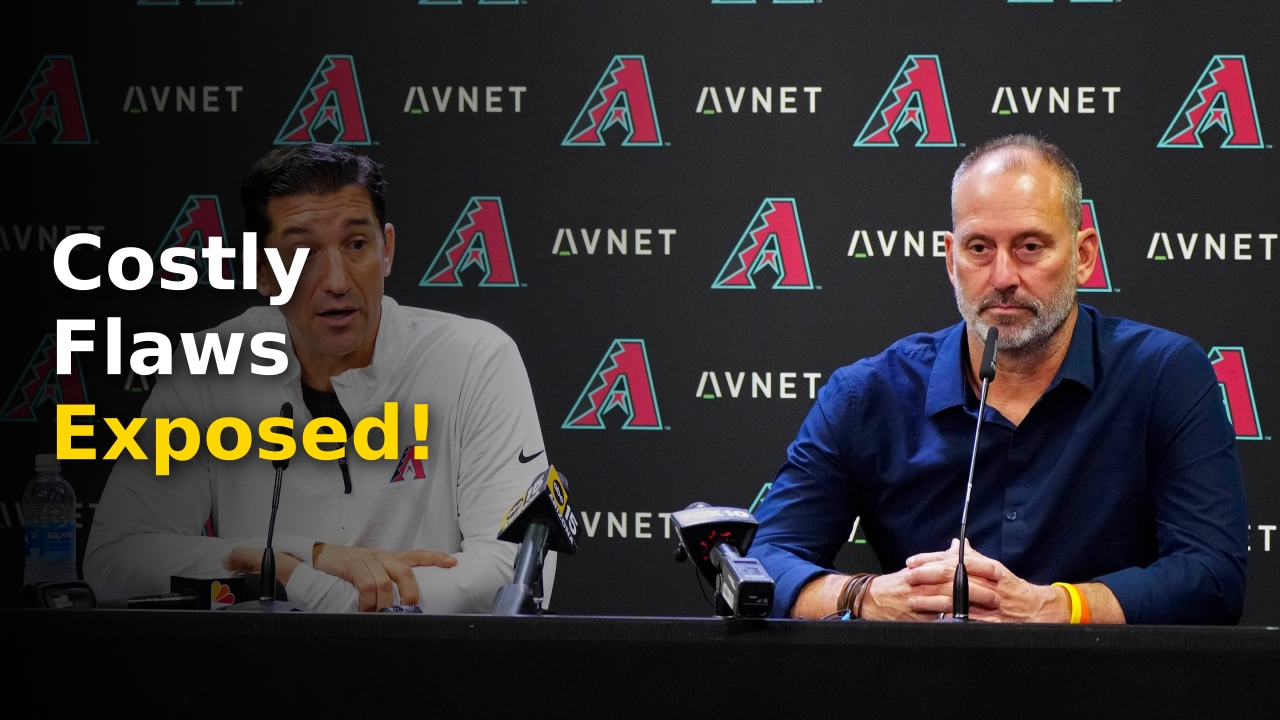
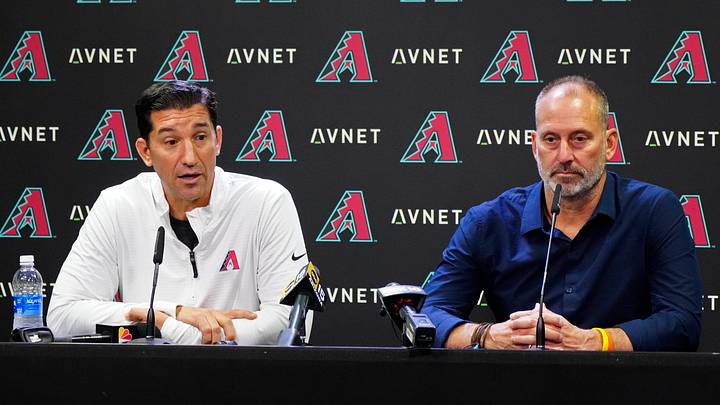
The path forward demands accountability and calculated aggression from general manager Mike Hazen and the executive suite. To avoid repeating history next season, the organization must overhaul its philosophy regarding declining veterans, offensive black holes, and injured pitching assets. Let us examine the three pivotal missteps that sealed Arizona’s fate.
The Costly Zac Gallen Contract Gamble
The decision to commit more than $22 million to veteran right-hander Zac Gallen stands as the most visible of the 2026 D-backs mistakes. Gallen entered the previous winter fresh off a dreadful 2025 campaign that saw his ERA hover just under 5.00. Consequently, his expected multi-year free agent market never materialized, leaving Arizona to welcome him back on a high-value, one-year pact aligned with the qualifying offer threshold.
Rather than rebounding to top-tier form, Gallen endured a catastrophic regression throughout 2026. Across 105.1 turbulent innings, the former rotation anchor was battered for a disastrous 6.07 ERA while losing velocity and command. Repeated stints on the injured list with persistent elbow discomfort stripped him of sharpness, leaving manager Torey Lovullo with an ineffective starter eating valuable payroll.
Sentimental loyalty frequently ruins modern baseball franchises attempting to maintain competitive championship windows. Gallen will forever occupy a sacred place in desert baseball folklore after guiding Arizona to the 2023 Fall Classic against the Texas Rangers. However, productive front offices evaluate upcoming value over past milestones, as chronicled by ESPN’s MLB performance coverage during the regular season.
The strategy to avoid this misstep in 2027 requires complete decisiveness: do not re-sign Gallen under any circumstances. Arizona cannot afford to pour millions into nostalgia when younger arms need runway and premium free-agent capital demands real swing-and-miss stuff. Breaking ties cleanly allows the franchise to respect his historical contributions while protecting its financial flexibility.
The Underlying Numbers Behind Gallen’s Drop
A granular look at Gallen’s pitch tracking metrics reveals why continuing this partnership represents a losing proposition. Batters recorded career-high hard-hit rates against his signature cutter and curveball, completely negating his strikeout upside. When an arm loses both horizontal break and arm-side life following elbow inflammation, recovery back to Cy Young caliber form remains exceptionally rare.
- Earned run average spiked from 4.92 in 2025 to an unacceptable 6.07 in 2026.
- Workload collapsed to just 105.1 innings due to recurring arm and elbow soreness.
- Financial burden exceeded $22 million against competitive balance tax thresholds.
- First-pitch strike percentage plummeted below 58 percent, putting him in constant hitter-friendly counts.
Disastrous First Base Infield Production
Replacing high-caliber corner production requires deliberate investment, yet Arizona treated first base as an afterthought heading into 2026. The front office attempted to navigate the demanding position using a low-cost platoon featuring Pavin Smith and veteran switch-hitter Carlos Santana. That patchwork plan collapsed almost immediately when both sluggers succumbed to early-season injuries and struggled to generate productive bat speed.
Deprived of baseline consistency, the Diamondbacks initiated a revolving door at first base that ruined lineup continuity. Bench utility man Ildemaro Vargas, prospect Tim Tawa, waiver claim Jose Fernandez, and slugger Luken Baker were shuttled in and out of the starting lineup. The end result was an offensive wasteland, with Arizona first basemen generating an MLB-worst .636 OPS.
In modern baseball, first base is a premium power spot where teams expect middle-of-the-order run creation. For a club that hovered within three games of a wild-card berth, yielding empty frames from their corner infielders cost them precious victories in tight late-inning contests. Fans can follow deep offensive metrics and player movements through exclusive sports analysis to understand how lineup balance dictates pennant races.
Rectifying this vulnerability for 2027 requires front-office financial commitment rather than bargain-bin hope. Arizona must target legitimate run producers such as veteran icon Paul Goldschmidt, dependable contact hitter Ty France, or an aggressive trade candidate. Committing resources to an everyday first baseman provides protection for young outfielders and solidifies overall run differential.
| Player Roster Option | Primary Role in 2026 | Statistical Output | Roster Impact |
|---|---|---|---|
| Carlos Santana | Platoon Veteran / DH | .208 AVG, 7 HR | Limited by nagging soft-tissue injuries |
| Pavin Smith | Strong-Side Platoon | .221 AVG, .670 OPS | Failed to provide slugging punch |
| Luken Baker / Jose Fernandez | Depth Fill-Ins | Combined .194 AVG | Negative defensive runs saved |
| Ildemaro Vargas / Tim Tawa | Emergency Utility | Under .300 OBP | Exposed lack of organizational depth |

Phantom Pitching Reinforcements Hurt Depth
Perhaps the most emotionally draining element of Arizona’s season was the front office’s reliance on rehabbing pitchers. Throughout spring training and early summer, club officials publicly preached that help was naturally on the horizon. The organization banked on electric left-hander A.J. Puk returning from elbow surgery alongside flamethrower Justin Martinez and marquee ace Corbin Burnes recovering from Tommy John procedures.
Counting on injured arms to serve as trade deadline surrogates is among the classic 2026 D-backs mistakes that contenders make every decade. The reality of surgical rehab struck hard across midsummer. While Martinez managed to contribute 13.1 effective, high-leverage bullpen frames, his counterparts experienced crippling setbacks that shattered the team’s depth chart.
Puk suffered additional complications during his minor league progression and never tossed a single pitch in the majors all season. Meanwhile, Burnes rushed back into competitive action only to yield a brutal 7.84 ERA over three disastrous, truncated starts before shutting down again. Instead of providing fresh October-caliber electricity, these disabled assets drained bullpen resources and forced Lovullo into damaging matchups.
A deep examination of championship rosters documented by Baseball Reference historical databases proves that pitching depth must exist on active dirt, not orthopedic charts. To prevent similar disasters in 2027, the Diamondbacks front office must embrace aggressive redundancy. If a bullpen feels crowded, sign another capable setup arm anyway; you never enter September with too much pitching.
Expert Take: The High Risk of Pitching Rehab Timelines
Medical analytics demonstrate that pitchers returning from major elbow reconstruction rarely recapture pinpoint control within their initial 50 innings of major league work. Expecting Corbin Burnes or A.J. Puk to step into a fiery pennant race without mechanical hiccups was mathematically flawed. Championship contenders treat returning injured stars as unexpected bonuses rather than foundational cornerstones.
Evaluating Arizona Front Office Strategies
Evaluating how Arizona constructed this roster requires examining their budgetary discipline against escalating divisional competition. The Los Angeles Dodgers and San Diego Padres continue to invest aggressively in high-end superstar payrolls, forcing Arizona to maximize every penny. You can browse more sports business breakdowns and financial insights across pro athletics to see how mid-market payrolls navigate rising luxury taxes.
Arizona has drafted remarkably well, cultivating young core superstars such as Corbin Carroll and Geraldo Perdomo. However, relying on home-grown rookie contracts to carry positions neglected in free agency creates devastating roster imbalances. When veteran bridge contracts fail to produce baseline WAR, organizational depth collapses under the weight of ordinary attrition.
The franchise operates within a window where their young outfield core is in its athletic prime. Burning through cost-controlled seasons of elite talents because the club failed to secure a proven first baseman or stable pitching depth is indefensible. The 2026 season should serve as an unmistakable wake-up call for Arizona ownership.
Building a perennial winner in the National League West demands proactive roster building. The Diamondbacks cannot approach the upcoming winter with conservative fingers crossed. They must deploy trade assets, exploit market inefficiencies, and solidify problem areas before pitchers and catchers report to Salt River Fields.
Building the 2027 Diamondbacks Contender
Correcting these missteps begins with an aggressive overhaul during the upcoming winter meetings. First and foremost, allocating capital away from Zac Gallen allows Arizona to target high-strikeout rotation alternatives with modern arm paths. Securing a durable veteran starter who guarantees 170 innings with a league-average floor instantly stabilizes a volatile staff.
At first base, the front office should explore both free-agent acquisitions and trade targets across rebuilding American League franchises. Bringing in an accomplished veteran like Paul Goldschmidt would not only revitalize middle-of-the-order run production but also inject championship maturity into a relatively young clubhouse. If you follow roster moves and trending news, you know how leadership moves alter team chemistry.
Additionally, bullpen construction must emphasize reliable multi-inning relievers over fragile high-octane arms with lengthy medical files. Rather than hoping sidelined arms magically heal in time for a wild-card chase, Arizona must acquire veteran bullpen depth on minor-league invite deals with major-league performance escalators. Protecting young arms requires insulation from everyday high-stress outings.
The talent foundation in the desert remains undeniably bright, backed by top-tier outfield defense, baserunning speed, and exceptional tactical coaching. Avoiding catastrophic contract extensions and stabilizing corner positions will return Arizona to elite status across the National League landscape.
People Also Ask
What were the biggest 2026 D-backs mistakes?
The three biggest mistakes were handing struggling starter Zac Gallen a $22 million contract, relying on a cheap platoon at first base that yielded a .636 OPS, and counting on injured pitchers like Corbin Burnes and A.J. Puk to save the staff.
How did Zac Gallen perform during the 2026 season?
Zac Gallen endured the worst season of his career, recording a 6.07 ERA across just 105.1 innings. Persistent elbow injuries and diminished pitch effectiveness caused him to spend significant time on the injured list.
Why was first base such a problem for Arizona in 2026?
Arizona used a carousel of six different players, including Pavin Smith and Carlos Santana, after injuries hit their planned platoon. The collective group managed an MLB-worst .636 OPS from the position.
Did Corbin Burnes or A.J. Puk help the Diamondbacks bullpen in 2026?
No, neither pitcher provided meaningful production down the stretch. A.J. Puk suffered setbacks and did not throw an inning, while Corbin Burnes struggled through three short starts with a 7.84 ERA.
Final Verdict on Arizona’s Postseason Hopes
The lessons from the recent campaign must guide every transaction Arizona executes entering 2027. Correcting the 2026 D-backs mistakes is not an insurmountable task, but it requires clear vision and decisive roster management from ownership. By cutting ties with declining veterans, spending real capital at first base, and building overwhelming pitching depth, the Diamondbacks can rejoin October’s elite.
More Like This
For more updates, check out our latest entertainment and sports news.