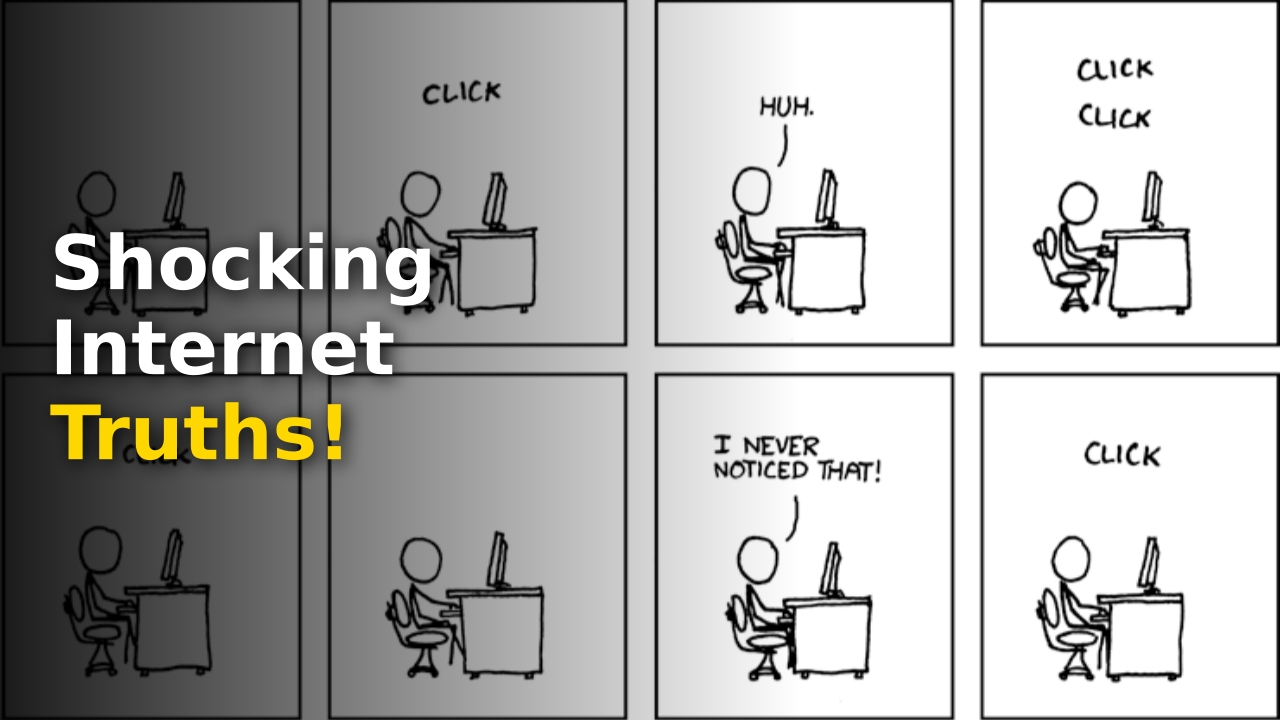
XKCD Wisdom is the only thing standing between you and a sleepless night spent arguing with a faceless stranger in a digital comment section. Have you ever wondered why a single stick-figure drawing from 2006 still dictates how millions of people navigate the treacherous waters of social media? It sounds wild, but Randall Munroe managed to capture the absolute essence of the digital age before smartphones even took over our lives.
You probably know the feeling of seeing a take so bad, so objectively incorrect, that your blood begins to boil. You feel a moral obligation to set the record straight, even if it means sacrificing your sanity and your sleep. This universal experience was immortalized in the strip titled ‘Duty Calls,’ and 18 years later, it remains the ultimate diagnostic tool for our collective online obsession. This piece of XKCD Wisdom has transcended its webcomic roots to become a psychological anchor for anyone who has ever felt the pull of the keyboard.
The longevity of this specific quote is not just a fluke of the internet; it is a testament to the sharp, observational power of its creator. When you dive into the archives of this series, you realize that it is not just about math and science jokes. It is a mirror held up to our most absurd human behaviors. By understanding the roots of this specific strip, you can finally learn how to close the laptop, put down the phone, and reclaim your peace of mind.
The Eternal XKCD Wisdom
The comic strip ‘Duty Calls’ features a minimalist stick figure hunched over a computer while a partner calls out from the other room. When asked why they are not coming to bed, the figure responds with the now-legendary line: ‘Someone is wrong on the internet.’ It is a simple premise that masks a profound truth about the human ego and our need for validation. This specific XKCD Wisdom highlights the invisible ‘duty’ we feel to correct misinformation, no matter how insignificant the source might be.
You have likely experienced this ‘duty’ yourself while scrolling through Twitter or Reddit in the middle of the night. It is a psychological trap where the brain perceives a factual error as a personal affront that must be neutralized immediately. Randall Munroe perfectly captured the isolation of this moment, showing how the digital world can pull us away from our actual, physical relationships. The stick figure is alone with their glowing screen, fighting a battle that has no end and no real-world reward.
Over the last 18 years, this comic has been shared millions of times because it acts as a reality check. When you find yourself typing a 500-word rebuttal to a bot or a troll, remembering this quote serves as a circuit breaker. It allows you to laugh at the absurdity of your own behavior. This is the core of XKCD Wisdom: the ability to take a deep, frustrating impulse and view it through a lens of total absurdity. It turns a moment of rage into a moment of self-reflection.
The cultural impact of ‘Duty Calls’ cannot be overstated in the realm of popular entertainment stories on trending digital culture platforms. It has become a shorthand for the futility of online debate. When someone is getting too heated in a forum, someone else will inevitably drop a link to this comic. It is a gentle way of saying, ‘You are doing that thing again.’ It is the digital equivalent of a friend putting a hand on your shoulder and telling you to take a breath.
What makes this comic particularly poignant for professionals is how it blurs the line between work and obsession. For journalists, fact-checkers, and tech experts, being ‘wrong’ is not just a nuisance; it is a professional hazard. They often feel they must engage because it is literally their job to ensure accuracy. This adds a layer of tragic irony to the comic, as the ‘duty’ mentioned in the title might actually feel real to the person sitting at the keyboard at 2 AM.
Ultimately, the reason this XKCD Wisdom lives rent-free in our heads is that the problem has only gotten worse since 2006. In the era of deepfakes, AI-generated nonsense, and industrial-scale misinformation, someone is now wrong on the internet every single microsecond. The comic reminds us that we cannot be the guardians of the entire digital frontier. Sometimes, the most heroic thing you can do for your mental health is to let someone stay wrong while you go to sleep.

Randall Munroe NASA History
To understand why these comics are so sharp, you have to look at the man behind the pen. Randall Munroe is not your typical artist; he is a former NASA roboticist who worked at the Langley Research Center. His background in hard science and engineering gives his work a level of precision that you rarely find in the funny pages. This technical foundation is exactly why XKCD Wisdom feels so authoritative, even when it is delivered via stick figures.
Munroe started the webcomic in 2005 as a way to archive his old school notebook sketches. He soon realized there was a massive audience of nerds, engineers, and scientists who were starving for humor that actually understood their world. By applying the scientific method to everyday frustrations, he created a new genre of intellectual comedy. His transition from NASA to full-time cartooning is one of the most successful pivots in modern creative history.
The official Wikipedia page for XKCD confirms that the comic has been used in academic research and even cited by NASA itself. This level of credibility is why fans take the messages in the strips so seriously. When Munroe talks about the scale of the universe or the physics of a hypothetical scenario, people listen. He has built a reputation for being ‘the guy who gets it right,’ which makes his comic about the ‘duty’ to correct others even more hilarious.
The creative process for these comics involves a deep dive into data and logic. Munroe often spends hours researching a single joke to ensure the math checks out. This dedication to accuracy has led to the spin-off series ‘What If?’, where he answers ridiculous hypothetical questions with serious scientific answers. This blend of silliness and rigor is what makes his perspective so unique. You aren’t just getting a joke; you are getting a verified insight into how the world works.
The Stick Figure Choice
- Minimalist design allows for universal relatability across different cultures.
- The lack of facial features forces the reader to focus on the dialogue and pacing.
- Simple art style makes it easy for the comic to be shared and remixed online.
- It proves that high-level concepts do not need complex visuals to land.
By using stick figures, Randall Munroe removes the distractions of character design and fashion. This makes the XKCD Wisdom feel timeless. A drawing from 2006 looks exactly like a drawing from 2024, which helps the message remain fresh. You don’t get distracted by dated hairstyles or clothing; you only see the human condition staring back at you from the screen.
The success of the brand has also led to massive financial success, with Munroe’s net worth growing significantly through book deals and merchandise. However, he has remained grounded, continuing to release three comics a week for nearly two decades. His work ethic and commitment to his niche have made him a pillar of the internet. He has managed to turn ‘geek culture’ into a universal language that anyone with a curious mind can speak fluently.
Decoding The Internet Duty
The concept of ‘Duty’ in the ‘Duty Calls’ comic is perhaps the most psychological part of the entire series. It taps into the Hero Complex that many people feel when they are behind a screen. You feel like a lone warrior for truth in a sea of ignorance. This XKCD Wisdom suggests that we often mistake our own stubbornness for a noble cause. The truth is, most internet arguments do not change minds; they only solidify existing biases.
In the comic, the character says, ‘I can’t come to bed. This is important.’ The use of the word ‘important’ is the punchline. In the grand scheme of a human life, a digital disagreement is almost never important. However, in the heat of the moment, the brain’s amygdala takes over, treating a factual error as a survival threat. Munroe’s genius was identifying this specific glitch in the human hardware decades before ‘doomscrolling’ was a word.
Think about the last time you felt that surge of adrenaline because someone posted a bad take. Your heart rate increases, your breathing becomes shallow, and you can’t think about anything else. You are experiencing the very thing Randall Munroe warned us about. This XKCD Wisdom is a reminder that you are not the internet’s police officer. You do not have to issue a citation for every incorrect opinion you encounter during your evening scroll.
The dynamic in the comic—a partner trying to pull the other away—is also a commentary on how digital life erodes our real-world connections. The internet is a bottomless pit of ‘wrongness’ that can swallow up all your free time if you let it. By framing it as a ‘duty,’ Munroe mocks the self-importance we feel when we are online. He shows us that while we think we are being productive, we are actually just being obsessive and neglecting the person in the other room.
There is also a hidden layer of XKCD Wisdom regarding the nature of truth in the digital age. In 2006, being ‘wrong’ usually meant a simple factual error. Today, ‘wrong’ often refers to entirely different realities and conspiracy theories. This makes the impulse to correct others even stronger, yet even more futile. If you can’t agree on the basic facts of reality, a comment section argument isn’t going to fix anything; it’s just going to keep you awake longer.
We must learn to accept that the internet will always be a place where people are wrong. There is no finish line where every fact is verified and every opinion is corrected. Once you accept this, the ‘duty’ evaporates. You can finally close the tab and realize that the world will keep spinning even if someone on a forum thinks a movie is a masterpiece when you know it’s garbage. That realization is the ultimate form of digital freedom.

Universal Webcomic Success Data
While ‘Duty Calls’ is the most quoted, many other strips have defined the tech and science landscape. Some explain the complexities of programming, while others tackle the absurdities of corporate standards. The reason this XKCD Wisdom resonates so broadly is that it targets specific pain points that people in high-stress technical fields feel every single day. It provides a shared language for frustrations that are otherwise hard to articulate.
For instance, the ‘Standards’ comic is a staple in engineering offices. It shows how the attempt to create one ‘universal’ standard usually just results in 15 competing standards. It is a cynical but accurate look at how technology evolves. This is why you see XKCD strips pinned to office cubicles and shared in Slack channels. It’s a way for professionals to say, ‘I see the absurdity of my job, and I’m laughing so I don’t cry.’
Another heavy hitter is ‘Tasks,’ which explains why it takes five minutes to write a program that checks if a photo is of a bird, but used to take a research team five years. This perfectly illustrated the ‘black box’ of Artificial Intelligence before ChatGPT was a household name. Munroe has a way of predicting technical hurdles years before they become mainstream news. This foresight is what keeps the XKCD Wisdom relevant through multiple cycles of the tech industry.
Legendary XKCD Impact Stats
| Comic Title | Release Year | Primary Theme | Viral Status |
|---|---|---|---|
| Duty Calls | 2006 | Internet Arguments | God-Tier Meme |
| Standards | 2011 | Tech Fragmentation | Engineering Classic |
| Ten Thousand | 2012 | Positive Learning | Educational Favorite |
| Click and Drag | 2012 | Interactive Art | Tech Milestone |
As you can see from the data, the peak era of XKCD coincides with the rise of the modern social web. Between 2006 and 2012, Munroe hit a vein of cultural commentary that defined how we talk about digital life. These comics are not just jokes; they are historical markers of our evolution as a connected species. They capture the optimism, the frustration, and the pure absurdity of living life through a keyboard.
The ‘Ten Thousand’ comic is particularly notable for its wholesome take on knowledge. Instead of mocking someone for not knowing a common fact, it celebrates the opportunity to teach them. This is the ‘light side’ of XKCD Wisdom. It reminds us that while someone might be ‘wrong’ or ‘ignorant’ on the internet, we have a choice in how we respond. We can be the ‘Duty Calls’ person who is angry and tired, or the ‘Ten Thousand’ person who is excited to share knowledge.
Psychology Of Online Arguments
Why is it so hard to just walk away? The psychology behind ‘Someone is wrong on the internet’ is rooted in Cognitive Dissonance. When you see a post that contradicts your worldview or your knowledge, it creates a physical discomfort. Your brain wants to resolve that tension as quickly as possible. The easiest way to do that is to ‘fix’ the person who is causing the dissonance by arguing with them.
However, the Backfire Effect suggests that when you challenge someone’s deep-seated beliefs with facts, they often dig in their heels even further. This means your ‘duty’ to correct them is actually achieving the opposite of its intended goal. Randall Munroe seemed to instinctively understand this. The character in the comic isn’t winning the argument; they are just stuck in it. They are a prisoner of their own need to be right.
In today’s algorithmic world, this problem is amplified. Platforms like Facebook and X are designed to show you things that make you angry because anger drives engagement. They want you to feel that ‘duty’ to respond. This is why XKCD Wisdom is more relevant now than ever. It helps you recognize that your anger is being monetized. Every time you stay up late to argue, you are feeding the machine at the expense of your own health.
Consider the gender dynamics often mentioned in relation to this strip. While the comic is gender-neutral, many readers see themselves or their partners in it. It highlights how the ‘technical’ brain often prioritizes logic over emotional well-being. A partner saying ‘come to bed’ is offering a path to happiness, while the computer is offering a path to endless frustration. Choosing the computer is a classic symptom of the digital age’s warped priorities.
The ‘Someone is wrong’ phenomenon also ties into our need for status. In many online communities, being the person who ‘destroys’ another person with facts is a way to gain social standing. We aren’t just arguing for the sake of truth; we are arguing for the sake of our own reputation. But as the comic shows, that reputation is being built in an empty room at 3 AM where nobody—not even the person you are arguing with—actually cares.
To break the cycle, you have to embrace the philosophy of ‘not my problem.’ The next time you see a ‘wrong’ post, ask yourself: ‘Will my response change anything in the real world?’ If the answer is no, then the XKCD Wisdom dictates that you should probably just close the laptop. Letting someone be wrong on the internet is a superpower. It is the ultimate act of self-control in an age designed to strip it away from you.
Final XKCD Wisdom Lessons
The beauty of Randall Munroe and his work is that he gives us permission to be human. He shows us our flaws with a sense of humor and a deep understanding of science. Whether he is talking about NASA missions or internet trolls, his goal is always to find the logic in the chaos. This is the ultimate gift of XKCD Wisdom: it simplifies a complex, loud world into a few panels of stick figures and sharp dialogue.
As the author of the original Polygon article noted, sometimes you just have to quote the comic to your partner to acknowledge the absurdity of your own stress. It becomes a shared joke that diffuses tension. Instead of getting mad at the internet, you get to laugh at yourself for caring so much. This shift in perspective is the key to surviving the modern digital landscape without losing your mind or your relationships.
Looking ahead to 2026 and beyond, the challenges of digital misinformation will only grow. We will likely see more AI-driven chaos and more polarized debates. In that world, the 18-year-old ‘Duty Calls’ strip will continue to be a lighthouse. It will remind us that our time is precious and that the internet is a bottomless pit of disagreement that we are under no obligation to fill. You can’t fix the whole world, but you can fix your own sleep schedule.
We should also remember the ‘Standards’ comic as a metaphor for our own lives. We often try to create ‘perfect’ systems for our productivity and our social interactions, only to end up with more mess. Sometimes, the ‘good enough’ approach is better. This applies to arguments too. A ‘good enough’ level of truth on the internet is usually all we can hope for. Don’t let the search for the ‘perfect’ correction ruin your night.
In conclusion, the legacy of Randall Munroe is safe because he focuses on the things that don’t change. Technology changes, but human nature—our ego, our curiosity, and our stubbornness—remains the same. The stick figure at the computer is all of us. And the partner calling from the other room is our conscience, reminding us that life is happening somewhere else while we are busy typing into the void.
So, the next time you feel that familiar itch to correct a stranger, remember the XKCD Wisdom. Take a deep breath, step away from the monitor, and realize that it’s okay if someone is wrong on the internet. The internet is a big place; it can handle a few more incorrect facts while you get some well-deserved rest. Your ‘duty’ isn’t to the digital world; it’s to your own happiness and the people who actually want you to come to bed.
More Like This
For more updates, check out our latest entertainment and sports news.