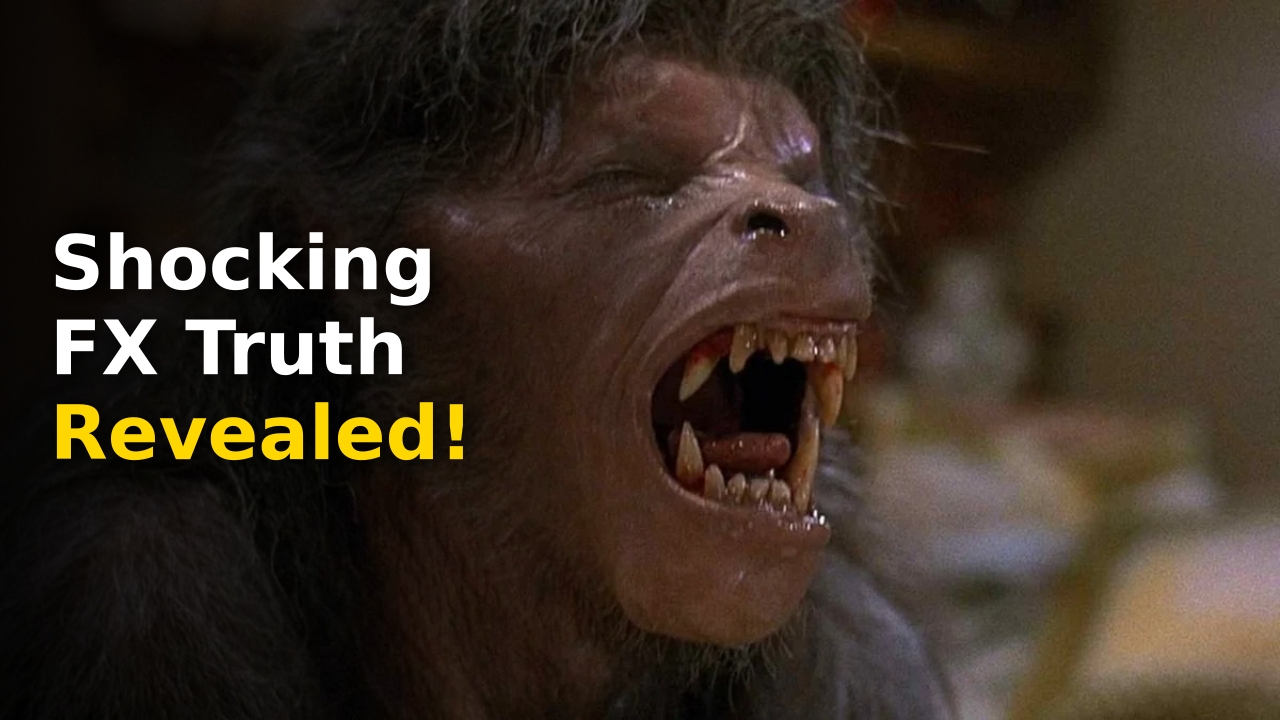
The Werewolf Transformation sequence in director John Landis‘s 1981 horror classic An American Werewolf in London remains the ultimate benchmark for creature makeup effects. Even after more than four decades, no computer-generated imagery has captured the raw, bone-snapping terror of that brightly lit London flat. You can feel every agonizing pop of bone and tear of sinew as actor David Naughton morphs into a monstrous predator.
When the film debuted in theaters in August 1981, audiences had never witnessed a creature effect handled with such clinical, brightly lit detail. Special makeup effects artist Rick Baker took an impossible script concept and forged cinema history through ingenuity and relentless practical craft. Film historians and fans exploring exclusive Hollywood retrospectives continually point to this specific moment as the turning point for practical visual artistry.
The groundbreaking sequence did far more than terrify moviegoers across the globe. It fundamentally reshaped the motion picture industry, directly forcing the Academy of Motion Picture Arts and Sciences to establish an entirely new competitive category for artistic achievement.
The Iconic Werewolf Transformation Explained
Director John Landis wrote the initial screenplay draft back in 1969 while working as a production assistant in Yugoslavia. He envisioned a metamorphosis that took place not in shadowy silhouettes, but in plain, agonizing sight under bright incandescent lighting.
Landis approached Rick Baker over a decade before the cameras finally rolled in London. Baker spent years formulating mechanical rigs, elastomeric compounds, and pneumatic bladders to execute a transformation that looked biologically authentic.
When production secured its $10 million budget from PolyGram Pictures, Baker finally had the resources to bring his terrifying vision to life. The team set up a specialized effects workshop in London, working around the clock to build duplicate limb rigs and animatronic facial mechanisms.
Unlike traditional lycanthrope films from Universal Pictures that relied on lap-dissolves, this sequence showed David Kessler’s physical body stretching and distorting in real time. The camera never cut away from the agonizing mechanics of the metamorphosis.
The auditory experience elevated the horror even further. Sound designer Kevin O’Connell recorded the sound of dried dog food and celery crunching inside rubber gloves to replicate the gruesome acoustic profile of expanding skeletal bone structures.
Audiences were treated to a jarring juxtaposition when the romantic strains of Sam Cooke singing “Blue Moon” played against the horrific agony unfolding on screen. That tonal friction became the movie’s signature stylistic triumph.

Crafting Practical Horror Magic
Achieving this level of practical realism required grueling physical commitment from lead actor David Naughton. The young performer spent countless hours submerged in cut-out floor cavities beneath the studio set to accommodate mechanical puppetry rigs.
Technicians operated intricate cable controls beneath the floorboards while Naughton acted from the neck up. The illusion required perfect synchronization between the actor’s facial screams and the mechanical stretch of the prosthetic limbs.
Baker’s crew developed an innovative technique known as “change-o heads” to capture the progressive snout elongation. These mechanical busts utilized internal cable-pull mechanisms that pushed foam latex skin outward in smooth, organic movements.
Every hair on the prosthetic wolf head was punched individually by hand using modified sewing needles. The crew spent hundreds of hours inserting individual strands of wild boar hair and synthetic fibers to achieve authentic animal fur texture.
Liquid latex appliances had to be reapplied daily with toxic spirit gum and medical adhesives. Naughton endured severe skin irritation throughout the multi-week shoot inside the freezing cold soundstages of Twickenham Studios.
The famous back-stretching shot utilized a hollow polyurethane torso fitted with hidden air bladders. As Baker and his assistants pumped compressed air through concealed vinyl tubes, the spine appeared to swell and mutate right before your eyes.
Revolutionary Special Effects Breakthroughs
- Pneumatic Air Bladders: Thin rubber membranes placed beneath latex skin allowed organic pulsing and vein expansion beneath the lighting grid.
- Change-O Cable Mechanisms: Mechanical armatures controlled by off-camera puppeteers stretched facial snouts and hand bones without visible stop-motion artifacts.
- Custom Acrylic Contact Lenses: Oversized, hand-painted scleral lenses transformed human pupils into glowing, predatory beast eyes during final metamorphosis stages.
- Direct Slit Lighting Technique: Cinematographer Robert Paynter illuminated the transformation under full, unsparing household light to prove practical effects could withstand direct scrutiny.
Breakthrough Practical Effects Innovations
Prior to Baker’s work, the werewolf subgenre had stagnated under the weight of outdated techniques. Most productions still copied the 1941 classic The Wolf Man starring Lon Chaney Jr., which relied on step-by-step crossfades and heavy yak hair glued to actor skin.
Baker threw out decades of industry shortcuts. He insisted on engineering dynamic mechanical puppets that moved independently of human skeletal limitations.
The hand-elongation scene stands as a masterclass in visual misdirection. Naughton placed his real hand inside a disguised false bottom table, while an identical mechanical prosthetic hand grew several inches forward using concealed cable levers.
The sequence also pioneered flexible polyurethane compounds that could stretch without tearing under intense studio hot lights. Previous latex formulas would crack or disintegrate under repeated mechanical stress.
Baker worked closely with assistant makeup artist Steve Johnson and mechanical designer Tom Hester. Together, they spent five grueling months fabricating distinct physical stages of David’s transition.
The resulting on-screen metamorphosis took less than three minutes of screen time, yet it completely redefined how Hollywood approached biological creature transformations.
How The Academy Created History
The impact of Baker’s practical work reverberated far beyond box office receipts and critic praise. In 1981, the motion picture industry realized that special makeup artists lacked a formal category at the Academy Awards.
Outrage had previously erupted when Christopher Tucker‘s groundbreaking prosthetic makeup on John Hurt in The Elephant Man (1980) went unrewarded by the Academy. The industry recognized that makeup artistry had evolved into an essential filmmaking discipline.
The Board of Governors officially established the Academy Award for Best Makeup in response to Baker’s unprecedented triumph. At the 54th Academy Awards held in March 1982, Baker took home the inaugural statuette for his work on the film.
This landmark Academy Award victory launched Baker into legendary status, paving the way for his record-breaking career comprising seven competitive Oscar wins.
The critical and cultural validation proved that horror cinema could produce legitimate technical masterpieces. The industry began funding practical effects workshops across Hollywood throughout the golden era of 1980s creature features.
Baker’s triumph inspired an entire generation of master artists, including Rob Bottin, Greg Nicotero, and Stan Winston, who pushed the boundaries of physical horror effects for decades to follow.
Analyzing Landmark Horror Milestones
The year 1981 is remembered as the greatest year in werewolf cinema history. Multiple studios released competing lycanthrope films, setting off an unprecedented practical effects arms race.
Director Joe Dante released The Howling just months before Landis’s film hit theaters, showcasing outstanding bladder effects designed by Baker’s former protégé, Rob Bottin. While Bottin’s work was magnificent, Baker’s daylight execution earned superior critical praise.
The legacy of practical creature design can be measured through its enduring performance against modern digital counterparts:
| Film Title | Release Year | Lead Effects Artist | Primary Technique | Oscar Recognition |
|---|---|---|---|---|
| The Wolf Man | 1941 | Jack Pierce | Lap-Dissolve & Yak Hair | No Category Existed |
| The Howling | 1981 | Rob Bottin | Pneumatic Air Bladders | Nomination Snub |
| An American Werewolf in London | 1981 | Rick Baker | Mechanical Cable Rigs | Won Best Makeup |
| The Wolfman | 2010 | Rick Baker & Dave Elsey | Hybrid Practical & CGI | Won Best Makeup |
Why CGI Never Matched It
Modern digital creature transformations frequently suffer from a complete lack of physical weight and tactile presence. When digital pixels morph across an actor’s body, your brain immediately detects the lack of organic resistance and authentic lighting bounce.
Baker’s practical creature effects succeed because real studio photons reflected directly off real foam latex, fake sweat, and hand-punched hairs. The physical imperfection of rubber stretching against metal creates an unsettling, visceral realism that digital rendering engines still struggle to emulate.
When you watch Naughton writhing in pain on that living room floor, the physical proximity between actor and puppetry produces raw authenticity. Naughton was genuinely reacting to real objects pushing, pulling, and pressing against his body throughout the take.
Modern blockbuster cinema has largely traded this tactile grit for post-production convenience. Yet audiences consistently express fatigue with weightless digital creatures that lack physical danger and grounded visual weight.
The enduring popularity of the Werewolf Transformation proves that tangible craft possesses a timeless quality that transcends changing technology. Four and a half decades later, Baker’s masterpiece remains the undisputed peak of cinematic creature horror.
More Like This
For more updates, check out our latest entertainment and sports news.