Key Takeaways
| Extreme Heat Indexes: Mid-afternoon temperatures reached a heat index of 106 degrees Fahrenheit, making it the most physically punishing race of the season. |
| Cockpit Limits Enforced: The FIA strictly monitors cockpit temperatures via automated sensors, enforcing mandatory stop-and-repair penalties for teams exceeding safety limits. |
| Cooling System Skepticism: High-profile drivers like Sébastien Buemi compared the active in-car air conditioning to a ‘hairdryer’ that fails to provide relief. |
| The Biometric Debate: Prominent sports science experts advocate for real-time biometric driver monitoring, which is currently prohibited under official FIA regulations. |
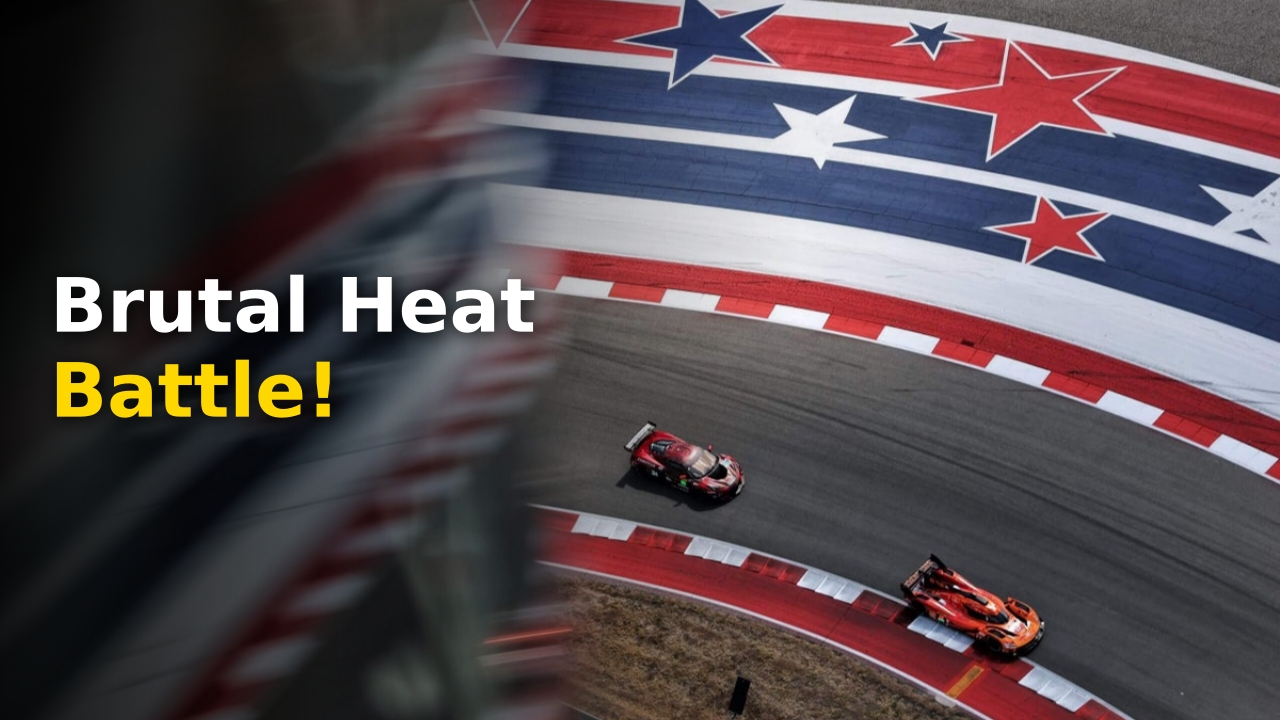
You might think driving a multi-million dollar hypercar is pure luxury, but the reality inside the cockpit at the **WEC Austin 2026** race was a terrifying battle for survival. The annual Lone Star Le Mans endurance race at the world-renowned Wikipedia’s Circuit of the Americas entry became a six-hour pressure cooker where humans and machines were pushed to their absolute thermal limits. With outdoor temperatures peaking at 93 degrees and the humidity driving the trackside heat index to a punishing 106 degrees, drivers faced cockpit conditions that felt less like a sport and more like a survival mission.
To survive these conditions, teams relied on complex cooling systems and strict FIA safety regulations to prevent drivers from suffering from cognitive impairment and heat stroke. The official regulatory threshold mandates that cockpits must not exceed 13 degrees above ambient temperature when the weather surpasses 77 degrees, a standard continuously monitored by trackside officials. By looking at how these athletes push their bodies, we can understand the immense physical toll of modern sports car racing under extreme weather conditions.
While fans cheered from shaded grandstands, the athletes inside the closed cockpits were fighting a silent war against dehydration, muscle cramping, and extreme exhaustion. The physical and mental strain of managing a high-performance racing machine under these conditions requires specialized preparation that rivals the training of astronauts. This deep-dive investigation reveals what happens when elite human performance collides with extreme environmental physics on the paved asphalt of Texas.
WEC Austin 2026 Cockpit Regulations
The regulatory framework governing the **WEC Austin 2026** event is designed to protect drivers from reaching life-threatening core body temperatures. Inside the paddock, a dedicated team led by the Federation Internationale de l’Automobile official site electronics manager Elliott Martin monitors live temperature data streamed directly from every car on the grid. A highly sensitive electronic sensor is positioned just behind and to the left of the driver’s helmet, ensuring constant surveillance of the ambient cabin environment.
Under the current FIA guidelines, the temperature restrictions are enforced through a strict mathematical formula that leaves absolutely zero room for team discretion. When the outside temperature is 77 degrees Fahrenheit or cooler, the maximum allowable cockpit temperature is locked at 89.6 degrees Fahrenheit. However, once the ambient temperature climbs past that 77-degree threshold, the team must keep the cockpit within 13 degrees of the outdoor temperature. If a car violates this rule, officials immediately wave a black-and-orange flag, forcing an instant, non-negotiable stop-and-repair pit visit.

The Enforcement Reality in the Paddock
Forcing teams to comply with temperature limits is a difficult task when fractions of a second determine the starting grid positions. Some technical staff have reportedly attempted to delay penalties by claiming they are activating their air conditioning systems when telemetry warnings flag an issue. However, FIA circuit sport technical manager Fabrice Van Ertvelde maintains that trying to game the sensor location with targeted air ducts is completely impossible to hide. The electronic monitoring systems are simply too advanced for teams to bypass, and the regulatory penalties are too severe to risk cheating.
Despite these strict limits, drivers are still subjected to extreme thermal environments that compromise their cognitive processing and physical control. A single mistake caused by heat exhaustion at speeds approaching 200 miles per hour can result in catastrophic accidents. Because of this high-stakes environment, the battle between raw vehicle performance and basic human safety remains a primary point of contention in the paddock.
The Battle of WEC Austin 2026
The physical demands placed on drivers during the six hours of the Lone Star Le Mans are incredibly intense and require remarkable physical stamina. When a driver enters a modern Hypercar, they are not merely steering; they are fighting immense physical forces that test their physical endurance. Every single steering input requires approximately 25 pounds of physical force, while decelerating the heavy machine demands between 75 and 150 pounds of pressure on the brake pedal.
This continuous physical labor generates massive amounts of internal metabolic heat, which is then compounded by the extreme heat radiating from the vehicle itself. The engine, drivetrain, high-performance exhaust systems, and burning tires all radiate immense thermal energy directly into the chassis. Without active cooling and natural airflow, technical managers estimate that a closed cockpit would easily surpass a life-threatening 160 degrees Fahrenheit within minutes of hard driving.
By The Numbers: The Thermal Equation
To understand the immense challenge of the Texas heat, we must look at the specific physical and physiological metrics that define this brutal endurance test:
- Steering Effort: 25 pounds of continuous force required for every high-speed cornering maneuver.
- Brake Pedal Pressure: 75 to 150 pounds of force required to decelerate from speeds over 180 mph.
- Metabolic Burn Rate: Drivers burn between 600 and 800 calories per hour while operating the vehicle.
- Total Stint Expenditure: A single driver can burn up to 2,000 calories during a standard multi-hour stint.
- Sweat and Fluid Loss: Drivers can lose up to three kilograms of body weight in water sweat during a single afternoon session.
The protective gear worn by these athletes further complicates the body’s natural thermodynamic cooling processes. To protect against cockpit fires, drivers must wear multi-layered, fire-resistant suits made of specialized Nomex materials. While these suits are highly effective at preventing severe burns, they also act as heavy insulation that traps metabolic heat directly against the skin. This insulation completely prevents the evaporative cooling process that occurs when sweat meets moving air, creating a dangerous microclimate inside the suit.
When the human body is unable to shed this heat, core temperatures quickly rise toward levels associated with clinical hyperthermia. As core temperatures climb, the brain begins to prioritize vital organ survival over complex motor coordination and cognitive processing. This physiological shift causes slower reaction times, impaired muscle contractions, and a dramatic drop in spatial awareness on the track.
Comparing Driver Cooling System Performance
To combat these dangerous thermal conditions, manufacturers have developed several distinct technologies designed to keep drivers cool. Teams have access to basic nose ducts that channel ambient air, helmet blowers, ventilated seats, and advanced active air-conditioning systems. However, the actual effectiveness of this equipment varies wildly, and drivers often express serious skepticism about the real-world relief these systems provide.
The primary issue with basic air-con systems is that they are highly dependent on the temperature of the air entering the vehicle. Veteran racing driver Sébastien Buemi, who has competed at the highest levels of motorsport, has openly criticized the performance of standard cockpit ventilation systems in extreme environments. When the ambient air temperature exceeds 95 degrees, the air entering the cockpit feels like a hairdryer blowing directly into the driver’s face, offering virtually no actual cooling relief.
| Cooling System Type | Lab Performance Rank | Estimated Weight Penalty | Primary Operational Failure Risk |
|---|---|---|---|
| Cold Air Suit Blower | Rank 1 (Best) | Minimal (Under 0.5 kg) | Electrical fan failure or duct blockage |
| Cold Air Helmet Blower | Rank 2 | Minimal | Condensation buildup inside the visor |
| Active A/C Chiller Unit | Rank 3 | Moderate (1.5 kg to 3 kg) | Engine power drain and mechanical belt failure |
| Liquid-Cooling Shirt | Rank 4 (Unrecommended) | High (System fluid weight) | Limp mode causing hot water circulation (20% failure rate) |
The liquid-cooled shirts, which circulate cold water through a network of small tubes worn close to the skin, have faced the heaviest criticism from sports scientists. Research conducted by Dr. David Ferguson at the Spartan Motorsport Performance Lab indicates that these systems fail roughly 20 percent of the time. When the system overheats or develops internal air bubbles, the pump enters a safety mode that stops chilling the liquid while continuing to circulate it. This malfunction means the system actually pumps hot water directly across the driver’s chest, drastically accelerating the risk of dangerous heat exhaustion.
Furthermore, team engineers are notoriously hesitant to install these optional cooling systems due to the performance sacrifices they require. In the highly competitive world of sports car racing, adding even half a kilogram of weight can negatively impact lap times and vehicle balance. Consequently, teams often prioritize mechanical efficiency over driver comfort, choosing to run minimal cooling setups unless extreme conditions force their hand.
The Biometric Monitoring Safety Debate
As track temperatures continue to rise globally, a fierce debate has emerged regarding the tracking of driver vital signs during active sessions. Prominent sports medicine experts argue that monitoring heart rates, core temperatures, and sweat rates is essential for preventing severe heat-related medical emergencies. By analyzing live physiological telemetry, teams could make proactive decisions to pull an overheating driver out of the car before a major medical crisis occurs.
However, the FIA currently prohibits the recording and transmission of live biometric data during official World Endurance Championship sessions. The primary justification for this ban involves driver safety in the event of a high-speed accident and vehicle fire. Any electronic sensors or wires attached directly to a driver’s skin must be completely fire-safe and must not pose a secondary risk of electrical burns or skin irritation during an impact. This strict safety standard has made the integration of real-time biometric sensors incredibly difficult to implement under the current technical regulations.

Expert Take: The Academic Perspective
According to Dr. David Ferguson, a leading authority on motorsport physiology, the current approach to driver heat safety is lagging behind other major global sports. While sports like soccer and American football generate hundreds of scientific research papers on heat stress annually, motorsport has produced fewer than 60 peer-reviewed papers since 1967. This massive gap in scientific research has made it difficult to convince old-school team principals to prioritize physiological data over aerodynamic performance.
Ferguson envisions a future where drivers are fitted with advanced, fire-safe biometric patches that transmit continuous physical data directly to the team pit wall. This system would allow a specialized medical engineer to monitor the driver’s health in real-time, much like a systems engineer monitors engine oil pressure. Until this technology is approved and adopted, drivers will continue to rely on their own personal physical fitness to survive these punishing thermal environments.
Elite athletes often utilize specialized high-performance sports training techniques to prepare their bodies for these extreme heat conditions. By undergoing intense heat acclimation training in specialized environmental chambers, these drivers can teach their bodies to sweat more efficiently and maintain a lower resting heart rate. However, even the most rigorous elite celebrity fitness routines and professional athlete lifestyles cannot completely overcome the fundamental physical limits of the human body when subjected to a 106-degree heat index inside a carbon-fiber cockpit.
People Also Ask
Why was the WEC Austin 2026 race so physically demanding?
The race was extremely demanding due to high humidity and a trackside heat index that reached 106 degrees Fahrenheit. Drivers had to fight immense G-forces and heavy steering inputs while trapped inside insulated, multi-layered fireproof suits that prevented natural sweat evaporation.
How does the FIA monitor cockpit temperatures during WEC events?
The FIA monitors cockpit temperatures using an electronic sensor placed just behind and to the left of the driver’s helmet. This sensor streams real-time environmental data to a technical trailer in the paddock, allowing officials to enforce strict temperature limits.
Why are liquid-cooled shirts criticized by WEC drivers?
Drivers and sports scientists criticize these shirts because they have an estimated 20 percent failure rate during long, intense racing sessions. When the system fails, it circulates warm water directly across the driver’s chest, which significantly increases their core body temperature.
What are the risks of heat stroke for endurance drivers at COTA?
Extreme heat exposure can cause severe hyperthermia, heat stroke, cognitive impairment, and delayed physical reaction times. These symptoms are incredibly dangerous when driving at speeds approaching 200 miles per hour, significantly increasing the risk of high-speed accidents.
Why is live biometric data banned in WEC races?
The FIA bans live biometric monitoring due to concerns regarding driver safety and fire hazards. Wires and sensors attached directly to a driver’s skin could cause severe electrical burns or interfere with rapid emergency extraction procedures during a serious accident.
The Future of Driver Thermal Safety
The intense conditions experienced during the **WEC Austin 2026** event have clearly demonstrated that the sport must continue to evolve its driver safety standards. As global summer temperatures continue to reach record highs, racing series will face increasingly frequent and severe weather challenges. Relying on outdated cooling technologies and basic cockpit temperature sensors is no longer sufficient to guarantee athlete safety in these extreme environments.
To address these challenges, the motorsport industry must commit to developing lightweight, highly integrated cooling solutions that do not compromise vehicle performance. If manufacturers can design aerodynamic packages that naturally optimize cockpit airflow without adding heavy mechanical components, team engineers will be far more likely to embrace these safety features. Additionally, further research into advanced fire-retardant materials could lead to lighter, more breathable racing suits that allow for better thermodynamic transfer.
Ultimately, the drive to win will always push elite athletes like Sébastien Buemi to tolerate extreme physical suffering in pursuit of a championship. Because drivers will always prioritize speed over their own comfort, the responsibility for safety must rest with regulatory bodies like the FIA. By implementing progressive technical regulations and supporting scientific research, motorsport can continue to showcase incredible athletic achievements without subjecting its competitors to life-threatening thermal conditions.
More Like This
For more updates, check out our latest entertainment and sports news.