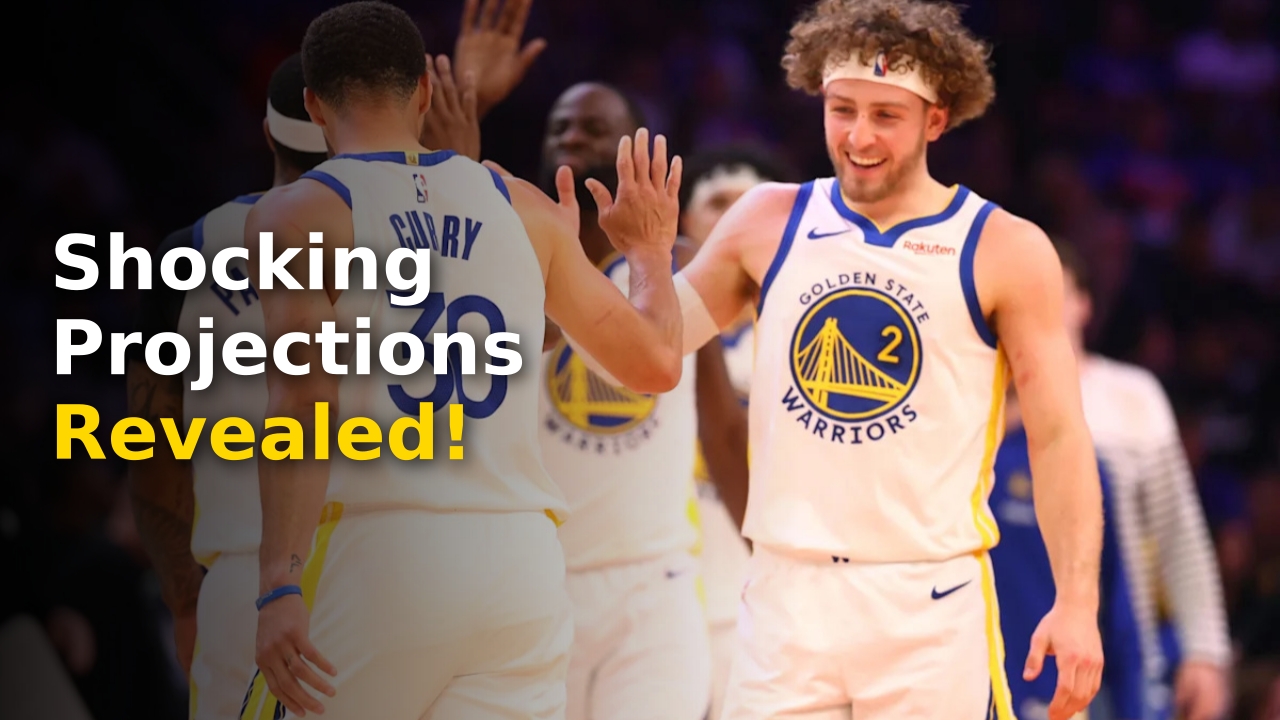
Warriors standings predictions have ignited a firestorm among NBA analysts, as ESPN projects a regression for Golden State despite an expected climb in the Western Conference rankings. You might find it baffling that a team projected to win fewer games could actually improve their position, but the competitive landscape of the 2026-27 season paints a complex picture for the franchise. Despite the disappointment of the 2025-26 campaign, where injuries derailed any hope of a deep playoff run, the organization remains a central focus of sports discourse.
You are witnessing a pivotal moment in the history of this legendary dynasty, as they pivot away from past glories toward a murky future. The reality of a 35-47 record projection serves as a sobering reminder of how quickly the tides can turn in the brutal Western Conference. As a fan, understanding these projections requires a deep dive into the roster dynamics, coaching philosophy, and the inevitable aging curve of star players like Stephen Curry.
The Shifting Warriors standings Reality
The core issue facing the team is the durability of its veteran stars. When both Jimmy Butler III and Stephen Curry missed significant time during the 2025-26 season, the team lacked the depth to survive the gauntlet. Finishing as the No. 10 seed with a 37-45 record was a symptom of a larger struggle to maintain relevance in a conference defined by rising youthful squads. The dependency on an aging core has created a glass-ceiling effect that management is struggling to break through.
Critics often point toward the lack of frontcourt production as the primary reason for these grim outlooks. While the perimeter play remains elite when healthy, the modern NBA demands versatility that the current roster, built in a bygone era of spacing and small-ball, simply cannot provide consistently. Every possession feels like a battle against the natural progression of time, placing immense pressure on the coaching staff to innovate within tight margins.
This stagnation has led to a fascinating paradox where the team could theoretically ‘improve’ its standing while seeing its win total drop. This is a direct consequence of the Los Angeles Clippers undergoing a rebuild following the departure of Kawhi Leonard. By essentially losing less ground than their immediate competitors, the squad finds themselves in a precarious position where success is defined more by the failures of others than by internal growth.
You should consider the psychological toll this takes on a locker room accustomed to championship rings. The shift from title contenders to fighting for play-in scraps is a transition few organizations handle gracefully. The front office is now tasked with balancing the desire to compete with the need to inject fresh, hungry talent into the rotation to avoid a complete collapse.
Strategic roster management will be the defining factor of this upcoming season. If the team opts to lean into youth, you might see erratic play early on, but it could build a foundation for the future. Conversely, doubling down on the veterans risks a repeat of last year’s injury-plagued disaster, potentially leading to a record even worse than the 15-victory floor of 2019-2020.
As you watch the season unfold, keep a close eye on the minutes per game for the older starters. If the medical staff insists on load management, the wins may become even harder to secure during the middle months of the winter schedule. 
Factors Impacting Season Outlook
- Persistent injury concerns surrounding the veteran leadership core.
- The massive power vacuum left in the Pacific Division following roster changes.
- The urgent need for interior defensive depth and rebounding efficiency.
- Rising competition from younger teams like the Thunder, Spurs, and Grizzlies.
- Salary cap limitations preventing high-impact free agency acquisitions this summer.
Comparative Data and Conference Projections
The statistical outlook for the 2026-27 season is based on a complex model that weighs historical efficiency against projected roster availability. According to ESPN, the predictive metrics suggest that the bottom half of the Western Conference is remarkably soft, allowing for a statistical rise even with a lower win percentage. You can see how the team stacks up against typical rebuilding franchises in the table provided below.
| Team | 2025-26 Wins | Projected 2026-27 |
|---|---|---|
| Golden State | 37 | 35 |
| LA Clippers | 36 | 32 |
| Portland | 28 | 30 |
These numbers highlight the volatility inherent in predicting an entire season. When you look at the raw data, it is clear that the league’s competitive parity is shifting toward the middle-tier clubs. This compression of records means that any team capable of maintaining health for seventy percent of their games will likely punch a ticket to the play-in tournament.
The margin for error has effectively vanished for the franchise. If they underperform their expected 35-win total, they fall dangerously close to the league’s bottom-dwellers. In a league where the draft lottery incentive remains a factor, the middle of the pack is the worst possible place for a team with no clear path to a title.
History provides a grim template for teams in this situation. Look back at the history of the franchise during their lean years to understand the psychological fatigue that sets in for the fan base. You see a pattern of short-term fixes that ultimately delay the necessary rebuild. The current front office is walking a fine line between loyalty to the greats and the cold, hard logic of professional basketball.
As you analyze the stats, consider the impact of the schedule. A front-loaded schedule of games against Western Conference powerhouses could break the team’s morale before the All-Star break. For deeper insights into team culture, you can check out resources like Bright Celebrity to see how off-court narratives impact the internal focus of these athletes.
Data analytics now permeate every level of coaching. The team will likely rely on advanced metrics to determine player availability, which might frustrate fans who want to see their stars every night. Yet, this is the reality of the modern era where load management is as much a tactical decision as it is a medical one.
Ultimately, these numbers are mere projections. The actual outcome depends on the chemistry developed during training camp and the sudden emergence of unexpected talent. You should view these rankings as a roadmap for the season, rather than an absolute truth regarding the team’s destiny.
Navigating the Future of the Franchise
Transitioning from a championship culture to a developmental one is the greatest challenge any front office can face. The current roster is built for high-stakes playoff basketball, but the reality of the Warriors standings dictates a need for a total recalibration of expectations. You have to ask whether the current investment is yielding the necessary returns to justify the massive luxury tax bill associated with this squad.
Building a future around the existing core might satisfy the sentimental hearts of the fan base, but it poses significant risks to the long-term health of the organization. If the team refuses to move on from aging assets, they risk entering a decade-long cycle of mediocrity. This is a common pitfall that successful teams often fall into after a period of prolonged dominance.
You must also recognize the influence of the modern salary cap environment. With new collective bargaining agreements penalizing teams for excessive spending, the room for error has narrowed significantly. Every roster decision is now a high-stakes calculation involving future draft assets and cap space maneuverability that will haunt the organization for years to come.
The role of the coaching staff in this transition cannot be overstated. A leader capable of managing egos while integrating rookies into high-pressure systems is a rare commodity. The team needs someone who can bridge the gap between the championship veterans and the young players who have yet to prove their value in the league.
Investing in the scouting department is the only way to avoid the trap of drafting players who fail to develop. By identifying undervalued prospects in the draft, the franchise can replenish their depth without breaking the bank. This is a strategy that requires patience, a virtue that is often absent in the high-pressure environment of the NBA.
Looking ahead, the development of young talent will be the primary barometer for success. If the team shows progress in defensive efficiency and turnovers, you can count that as a moral victory, even if the win column doesn’t swell significantly. Sustained success requires a multi-year plan rather than constant band-aid solutions. 
Final Thoughts on Team Trajectory
The Warriors standings situation remains one of the most intriguing stories in the NBA heading into the new year. While ESPN predicts a slight decline in wins, the potential for a higher seed highlights the volatility of the conference as a whole. You should prepare yourself for a season of extreme highs and lows, as the team struggles to find a balance between its historic identity and the realities of a changing league landscape.
Whether or not the squad ultimately beats these expectations will come down to leadership and resilience. The road ahead is fraught with challenges, from injury management to the pressure of declining performance. As a witness to this evolution, you are in the unique position to watch the closing chapters of one era and the potential birth of another, marking a massive shift in professional basketball dynamics that will resonate through the sport for seasons to come.
More Like This
For more updates, check out our latest entertainment and sports news.