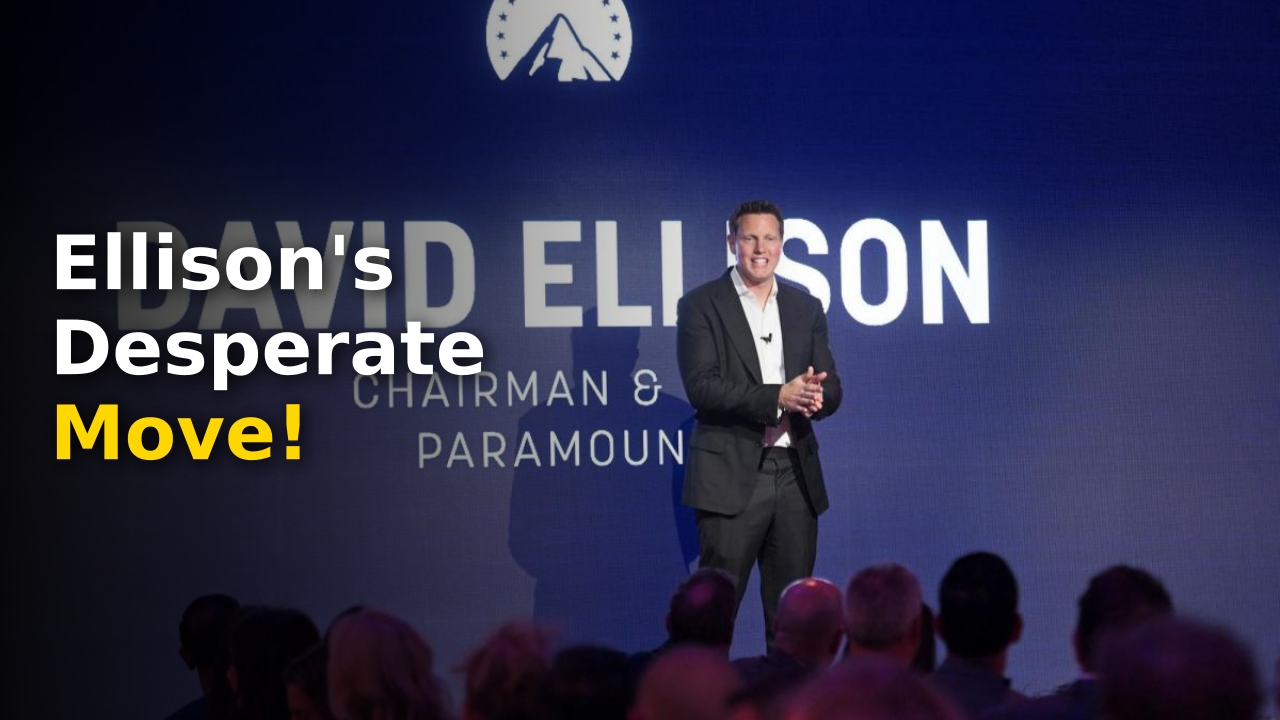
Warner Merger negotiations have officially devolved into a high-stakes game of corporate chicken that could forever alter the landscape of the entertainment industry. You are witnessing a historic pivot as David Ellison, the tech-scion-turned-mogul, attempts to steamroll through legal roadblocks using every weapon in his arsenal. With $111 billion on the line, the pressure has reached a breaking point that has Hollywood veterans and Wall Street analysts holding their collective breath. The fight isn’t just about movies anymore; it is about the very survival of traditional studio models in a tech-dominated world.
The current drama centers on a dizzying array of emotional outbursts and strategic threats from the Skydance leadership. Initially, Ellison exuded the cool confidence of a man who believed the Warner Merger was a foregone conclusion. That confidence evaporated when California Attorney General Rob Bonta launched a fierce antitrust challenge that could derail the entire acquisition. Now, the September deadline feels like a distant dream as legal costs and daily interest fees threaten to bleed the deal dry before it even crosses the finish line.
Warner Merger Legal Stalemate
The Warner Merger is currently stuck in a judicial quagmire that few predicted during the early stages of negotiation. Rob Bonta and 11 other Democratic state attorneys general have gained significant momentum in their lawsuit to stop the consolidation. This legal wall is designed to protect competition and prevent a single entity from having too much leverage over the California economy. Ellison and his legal team have tried to downplay these efforts, but the reality of a March 2 trial date has shattered their timeline.
Antitrust Hurdles
- Rob Bonta leads 11 states in a massive lawsuit.
- The core concern is illegal market consolidation.
- California’s economy relies heavily on the Hollywood ecosystem.
- Federal DOJ approval has already been secured under specific conditions.
Ellison’s frustration is palpable as he watches the Warner Merger trial date slip into next year. U.S. District Judge Araceli Martínez-Olguín delivered a crushing blow by rejecting the request for a November trial. This delay is not just a scheduling inconvenience; it is a massive financial burden that increases by the hour. Every day the deal remains in limbo, the price tag for Paramount and Skydance continues to skyrocket.
The defense strategy has shifted from legal jargon to a public relations blitz aimed at winning the hearts of the industry. Ellison recently attempted a reputation reboot by penning a guest essay in the New York Times. He spoke of his childhood love for the silver screen and his desire to save Hollywood from the clutches of tech giants like Netflix and Amazon. However, critics argue that his actions in court tell a very different story than his sentimental prose.
Former prosecutors suggest that the shift to a political and PR-heavy approach indicates a weakening legal case. When you cannot win on the merits of antitrust law, you begin to pressure the politicians who oversee the regulators. Ellison is clearly hoping that Governor Gavin Newsom will step in to prevent a mass exodus of jobs from the state. Whether Newsom will risk his political capital on a messy corporate merger remains one of the biggest questions in Sacramento.

Moving Hollywood to Tennessee
The most shocking development in the Warner Merger saga is the threat to relocate Paramount’s historic operations. Ellison has shared plans to move the company’s home base from Melrose Avenue to Tennessee or Texas. This is not just a minor office shift; it represents the uprooting of a century of cinematic history. The proposal includes selling the iconic 65-acre Paramount lot in Hollywood to generate much-needed liquidity for the transaction.
Relocation Risks
- Loss of thousands of specialized California jobs.
- Abandonment of soundstages that are nearly 100 years old.
- Potential sale of the Warner Bros. campus in Burbank.
- Massive disruption for creative talent and production crews.
This relocation strategy is a page taken directly from the playbook of Larry Ellison, David’s billionaire father and co-founder of Oracle. Oracle famously fled Redwood City for Austin and later Nashville to escape California’s regulatory environment. It seems the younger Ellison is willing to use the same scorched-earth tactics to get what he wants. By threatening to leave, he is essentially holding the state’s tax revenue hostage to force a settlement.
However, moving a movie studio is significantly more complex than moving a software firm. You cannot simply replicate the Hollywood infrastructure in the middle of Tennessee without losing the core talent pool. Producers, directors, and stars are deeply rooted in the Los Angeles ecosystem. Many Paramount executives are reportedly horrified at the prospect of leaving the West Coast for the South, even if the taxes are lower.
Industry observers like Gabriel Kahn have called out the hypocrisy of Ellison’s current positioning. One day he is the savior of theatrical releases, and the next he is planning to demolish historic campuses. This inconsistency has rattled the creative community, which is already suffering from a brutal cycle of job losses. The Warner Merger was supposed to provide stability, but it has only delivered further uncertainty for the rank-and-file workers.
Despite the backlash, the Paramount board has reportedly approved these contingency plans. The message to California is clear: get out of the way or lose one of your most valuable cultural exports. It is a bold gamble that could either force a quick settlement or leave Ellison with a fractured company and a ruined reputation. You can stay informed on [the latest celebrity business moves](https://brightcelebrity.com/) to see how these power plays develop in real-time.
High Stakes Financial Breakdown
The financial mechanics of the Warner Merger are becoming increasingly precarious as the clock continues to tick. Paramount has agreed to pay Warner investors $31 a share, but that is only the beginning of the expenditure. The deal includes “ticking fees” that act as a penalty for every day the closing is delayed past September 30. These fees are designed to protect shareholders, but they are becoming an absolute nightmare for Ellison’s balance sheet.
| Financial Metric | Estimated Value | Impact Level |
|---|---|---|
| Total Merger Value | $111 Billion | Extreme |
| Daily Ticking Fees | $7 Million | Severe |
| Quarterly Penalty | $650 Million | High |
| Breakup Fee | $7 Billion | Terminal |
| Absorbed Debt | $30 Billion | Critical |
The Warner Merger financial burden also includes $30 billion in debt inherited from the previous 2022 merger. Adding $2.1 billion in ticking fees by next spring will stretch Paramount’s cash reserves to their absolute limit. They currently report having $1.6 billion in cash on hand, which seems like a pittance compared to the looming obligations. The $3.2 billion revolving loan will likely be tapped out just to keep the lights on during the trial.
If the deal fails to close by June 4, Paramount will be hit with a staggering $7-billion breakup fee. This is the ultimate “poison pill” that makes walking away almost as expensive as completing the deal. Ellison is essentially locked into a room with no easy exit, forced to pay $7 million a day just for the privilege of waiting. This level of financial bleed is unprecedented in modern media history and shows just how much Skydance overplayed its hand.
To mitigate these costs, Ellison is looking at asset sales beyond just the real estate. There is talk of spinning off certain cable assets or selling minority stakes in production libraries. The goal is to muster enough funds to convince Warner shareholders that the deal is still viable despite the legal chaos. However, selling off pieces of the company before the merger is even approved could weaken the combined entity’s long-term competitive edge.

The Oracle Connection Strategy
David Ellison’s tactics are a direct reflection of his family’s legacy in the tech world. The Warner Merger strategy mirrors the aggressive expansionism seen at Oracle Corp. His father, Larry Ellison, has long been a master of using legal and political leverage to achieve dominance. By bringing this Silicon Valley mentality to Hollywood, David is disrupting the traditional “gentleman’s agreement” style of studio management. It is a cold, calculated approach that prioritizes market share over industry tradition.
The elder Ellison’s move to Nashville was predicated on the growth of the healthcare industry and Artificial Intelligence. David sees a similar opportunity to merge Warner‘s vast content library with Skydance‘s tech-forward production capabilities. He believes that by controlling the pipeline and the technology, he can compete with Netflix. This vision is grand, but the execution has been marred by the very regulatory hurdles his father once dodged.
There is also the Donald Trump factor to consider in this Warner Merger drama. The Ellison family has a friendly relationship with the former president, who has expressed interest in a shakeup at CNN. Paramount executives were banking on swift DOJ approval, which they received in June. Some analysts believe they expected federal support to override state-level opposition, but Rob Bonta has proven to be a far more formidable opponent than anticipated.
The “ace in the hole” with the DOJ backfired because the clearance looked too much like a rubber stamp. This perceived favoritism only emboldened the state attorneys general to take a harder line in their own lawsuit. They are now using the federal approval as proof that the Warner Merger needs even more scrutiny at the state level. It is a classic case of political maneuvering having unintended consequences in the courtroom.
Ultimately, Ellison’s Oracle-style strategy may be ill-suited for the personality-driven world of Hollywood. In software, you can move your servers and engineers with relative ease. In film, you are dealing with unions, guilds, and historical legacies that do not move for a tax break. The friction between Silicon Valley efficiency and Hollywood tradition is at the heart of this entire conflict.
Political Power and Influence
As the legal trial looms, the Warner Merger battle is moving into the political arena. Paramount Chief Legal Officer Makan Delrahim has been vocal about the need for a settlement. He recently spoke at a Politico Live conference, essentially begging state officials to avoid a courtroom showdown. Delrahim knows that a trial is a coin flip, and the $7 million daily penalty makes that a very expensive gamble for his boss.
The pressure is now squarely on Sacramento leaders like Xavier Becerra and Gavin Newsom. Becerra, the Democratic gubernatorial nominee, has signaled a preference for a settlement over a trial. He understands that a major company like Paramount leaving the state would be a massive blow to his future administration. However, the Attorney General’s office operates with a high degree of independence, and Bonta seems determined to make an example of this merger.
The history of [Warner Bros. Discovery](https://en.wikipedia.org/wiki/Warner_Bros._Discovery) is already a checkered one, marked by massive layoffs and controversial management decisions. Adding more turmoil via a botched merger is the last thing the industry needs. Bonta’s office has accused Paramount of “blackmailing the state” with its relocation threats. This hostile rhetoric suggests that a settlement may be much harder to reach than Delrahim and Ellison hope.
Furthermore, Gavin Newsom has a delicate balancing act to perform. He wants to keep jobs in California, but he cannot be seen as soft on corporate antitrust issues. If he intervenes, he risks alienating the progressive base that supports Bonta’s crusade against big business. If he stays silent, he risks watching a pillar of the California economy pack its bags for Nashville. It is a political lose-lose situation that Ellison is exploiting to its full extent.
The support of major theater chains like AMC and Regal has provided some cover for the Warner Merger. These companies are desperate for a steady stream of big-budget theatrical releases. Ellison has promised them a robust pipeline, positioning himself as the only person capable of saving the movie theater experience. While this wins him friends in the exhibition business, it does little to solve the legal questions regarding market competition.
Future of the Warner Merger
In the end, the Warner Merger will likely be decided not by a love of cinema, but by cold, hard math. The $2.1 billion in potential ticking fees and the $7 billion breakup fee are the real drivers of this drama. Ellison is a man who hates to lose, and he has tied his entire reputation to this deal. If he fails, it will be one of the most expensive and public defeats in the history of the entertainment industry.
The prospect of a March trial remains the biggest hurdle for everyone involved. If Paramount cannot settle with Bonta before then, the financial strain may become too much to bear. Even a billionaire’s son has limits when it comes to burning through billions of dollars in interest and penalties. You are watching a transformation of Hollywood that is as much about spreadsheets as it is about scripts.
What happens next will set a precedent for all future media consolidations. If Ellison succeeds in moving the company to avoid a lawsuit, other studios may follow suit, leading to a “race to the bottom” for state regulations. If he fails, it will prove that state-level antitrust enforcement is a powerful check on the ambitions of tech-driven moguls. The Warner Merger is truly the tipping point for the modern era of entertainment.
As we move toward the October relocation target, expect the rhetoric to become even more heated. The threat of leaving Melrose Avenue is the ultimate leverage, and Ellison will not hesitate to use it. Whether it is a genuine plan or an elaborate bluff, it has succeeded in making the Warner Merger the most watched corporate soap opera of the decade. Keep your eyes on the headlines, because the next scene in this drama is sure to be a blockbuster.
More Like This
For more updates, check out our latest entertainment and sports news.