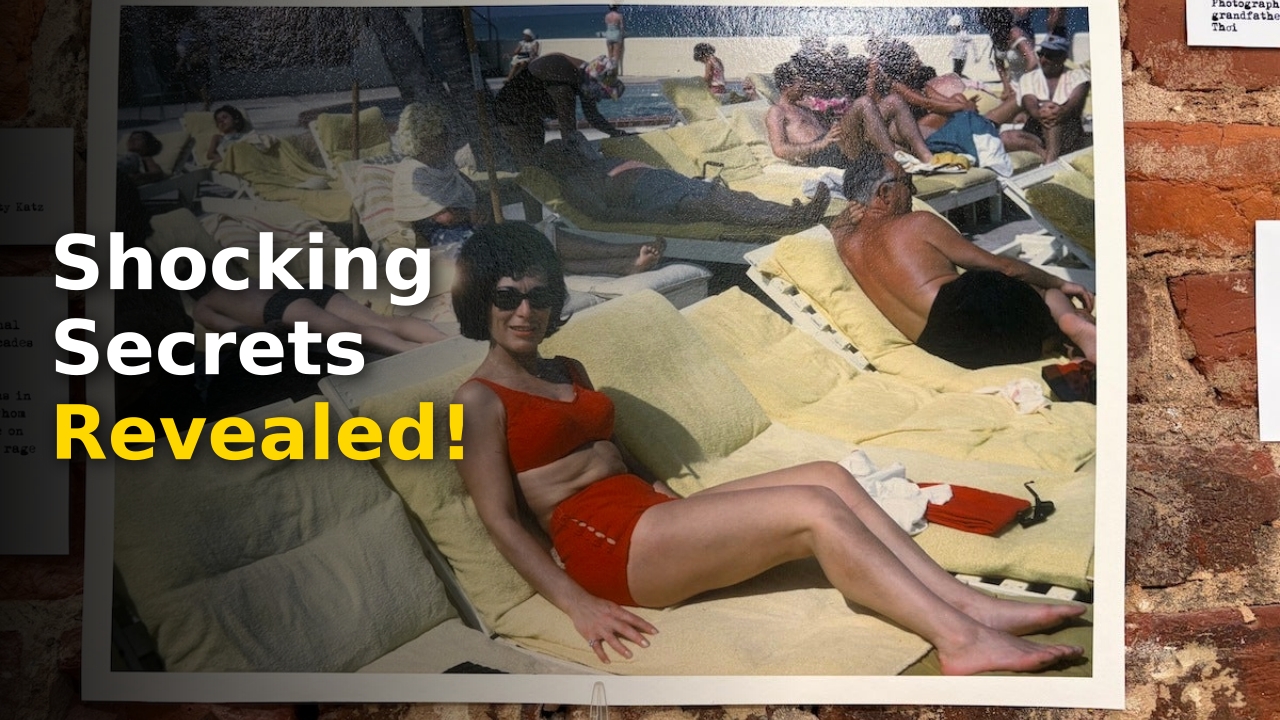
You probably think your last vacation was perfect because you spent three hours editing that one beach photo, but have you ever wondered what you are actually missing? Vintage Summer vibes are taking over Philadelphia as locals ditch the filters for raw, unedited family history. Imagine a time when you didn’t take 250 photos of your lunch just to prove you were there. Instead, you took one shot, hoped for the best, and waited a week to see if it even came out.
This shift back to reality is happening right now at the Photo Lounge on 17th Street in Philadelphia’s Center City. The exhibition, titled “That Summer Feeling,” features over 80 large-scale prints that capture the essence of vacations from 1931 to 2010. You will see everything from the Jersey Shore to Albania, proving that the sun and sand haven’t changed, even if our obsession with likes has. If you want to see how the world really looked before the Instagram era, this is your chance to step back in time.
Vintage Summer Memories Unlocked
The Photo Lounge has been a staple of the Philadelphia film-processing scene for nearly 30 years. Owned by Ravid Butz, the business has survived the digital revolution by building a hardcore community of 1,000 members who pay monthly fees for photography perks. These are people who value the slow, intentional process of chemical media over the instant gratification of a smartphone. The exhibition itself is a curated collection of submissions from these very customers and staff members.
When you look at a Vintage Summer photo, you are looking at a singular moment in time. Ravid Butz notes that back then, a photographer might only take one picture an hour, or even one a day. There was a weight to the shutter click that simply doesn’t exist when you have 512GB of storage in your pocket. This intentionality creates a different kind of beauty—one that isn’t about looking perfect for an audience, but about capturing a feeling for a family album.
The exhibition serves as a time capsule for the Jersey Shore, featuring iconic locations like Ventnor, Stone Harbor, and the Pine Barrens. It reminds us that before the age of the influencer, travel was about the experience, not the aesthetic. If you’re curious about how modern celebrities handle their public image vs their private lives, you can find more insights at Bright Celebrity which dives deep into the world of fame and reality.

The Power of Film
- Film encourages mindfulness because every shot has a literal cost associated with it.
- The colors and grain of analog film provide a warmth that digital filters try, and often fail, to replicate.
- Physical prints create a tangible legacy that digital files buried in a cloud drive rarely achieve.
The Raw Philadelphia Connection
One of the most striking images in the collection belongs to Wendy Goldberg. Taken in 1976 when she was just 7 years old, the photo shows her family on a beach in Ventnor, New Jersey. The star of the photo isn’t a sunset or a perfectly posed bikini shot; it’s her father’s feet. He is slumped in a chaise lounge, his wife sunning herself in a headscarf nearby. The photographer actually shifted the frame to make sure Dad’s “regal feet” were included in the shot.
This is the kind of Vintage Summer moment that social media has killed. Wendy Goldberg points out that the photo is perfect because nobody is trying to sit up straight or smile for the camera. They are simply relaxed, having a typical, boring, beautiful day at the beach. It’s an informal snapshot of a family just existing together without the pressure of a digital audience watching their every move.
Another legendary submission comes from Morgan Ryan, featuring a photo her mother took in 1981. A group of Philadelphia teenagers headed to Stone Harbor but ended up stranded on the side of the road with three flat tires. The 84-mile trip took six hours. The photo shows Ryan’s uncle holding a “Send Help” sign. It’s a hilarious, messy, and real moment that captures the chaos of youth before GPS and roadside assistance apps were a thing.
The exhibition also highlights how the Jersey Shore has remained a constant for local families. Whether it was the 1930s or the 1990s, the ritual of packing up the car the minute school ended remains a core part of the Philadelphia identity. These photos aren’t just art; they are a collective diary of a city that loves its summers down the shore.
Travel Statistics By The Numbers
To understand why this exhibition is so revolutionary, you have to look at how much travel has changed since 2010. According to data from The New York Times and travel site Hotelagio, the way we choose where to go is now dictated by the lens. We have moved from seeking experiences to seeking content. A well-placed travel influencer can now earn six-digit returns on a single post, which has fundamentally altered the tourism industry.
| Category | Pre-Social Media Era | The Instagram Era (Post-2010) |
|---|---|---|
| Destination Choice | Family tradition / Word of mouth | 75% influenced by social media |
| Photo Volume | 12-36 shots per roll of film | Unlimited (Average 250+ per trip) |
| Primary Goal | Personal memory / Family album | 40% prioritize “Instagrammability” |
| Editing Process | Darkroom / Zero modification | Heavy filters / AI enhancements |
This data highlights a growing disconnect between our digital lives and our physical experiences. When 40% of travelers aged 30-40 are choosing destinations based on how they will look on a grid, the Vintage Summer aesthetic becomes more than just a trend—it’s a form of protest. People are tired of the performative glamour that dominated the early days of social media and are starting to crave “beautiful, interesting, and small” moments instead.
Even big companies are getting in on the act. As regional tourism companies start using AI-generated avatars to promote travel, the value of a real, grainy, slightly out-of-focus 1970s photo skyrockets. It represents a truth that technology can’t fake. This is why Photo Lounge is seeing a massive surge in interest from younger generations like Hannah Feinberg, who find digital photos simply don’t feel as special.

The Rise Of Anemoia
Have you ever felt a deep sense of nostalgia for a time you never actually lived through? There is a specific word for this: Anemoia. It is the feeling that Emily Girgis, the marketing director at Photo Lounge, says defines the “That Summer Feeling” exhibition. When you look at a photo of a newlyweds on a beach in 1931, you aren’t just seeing two people; you are seeing the start of a family story that has been framed in every house they ever owned.
Hannah Feinberg, 24, submitted these oldest images to the show. One features her great-grandparents as newlyweds. For her, film photography is a mindful practice. It forces her to say, “This is going to be the one photo that I take in this moment.” This intentionality is what creates that lasting emotional weight. It turns a simple image into a legacy.
The show also features an international cast, proving that the Vintage Summer feeling is universal. From a young boy in an inflated pool in Albania in 2005 to a woman cooking on a camp stove in the New Jersey Pine Barrens in the 1970s, these images connect us to a shared human experience. They show us that while the locations change, the feeling of being relaxed, annoyed, or joyful during a summer break is a constant across cultures and decades.
This emotional depth is why analog media is making such a massive comeback. Just as vinyl records and physical books have seen a resurgence, film photography is being embraced by those who want to disconnect from the digital noise. You can learn more about historical preservation and culture by visiting high-authority resources like Wikipedia to see how analog technologies have shaped our modern world.
Why We Crave The Past
- Anemoia allows us to escape the pressures of modern social media perfection.
- Analog media provides a sensory experience that digital platforms lack.
- Historical photos remind us of our roots and the simplicity of previous generations.
The Final Vintage Summer Snap
As we move further into a world dominated by AI and curated digital personas, the Vintage Summer exhibition at Photo Lounge stands as a powerful reminder of what we’ve lost. It’s not just about the lack of Instagram; it’s about the presence of authenticity. These photos were taken for the people in them, not for a thousand strangers on the internet. They capture the “worst weed” stories, the “regal feet” of tired fathers, and the annoyed looks of sisters at a barbecue.
The exhibition will be on view until the end of August, making it the perfect final stop for your own summer adventures. It serves as an invitation to put down the phone, pick up a roll of film, and start capturing moments that actually mean something to you. Whether you are a fan of the Philadelphia Magic Gardens or the Fringe Festival, this photo show is a key piece of the city’s current cultural renaissance.
The bottom line is that your memories deserve better than a temporary spot on a social media feed. They deserve to be printed, framed, and passed down through generations. Take a page out of the Photo Lounge playbook and try to capture your next Vintage Summer with intention. Who knows? Maybe 50 years from now, someone will be looking at your unedited beach photo and feeling that same sense of anemoia for the world you lived in today.
Ultimately, the popularity of “That Summer Feeling” proves that we are all searching for something real. In a world of digital noise, the quiet, grainy truth of a film photograph is the loudest statement you can make. So, next time you’re down the shore, leave the filters behind and just enjoy the sun.
More Like This
For more updates, check out our latest entertainment and sports news.