⚡ Key Takeaways
- Toxic Reception: Former Dolphins franchise cornerstone Tua Tagovailoa was met with intense boos during his first game back at Hard Rock Stadium.
- Catastrophic Dead Cap: Miami absorbed a historic, record-shattering $99.2 million dead cap penalty to sever ties with their former top draft pick.
- Simulated Roster Shakeup: The dramatic matchup featured an alternate-universe landscape, with Kevin Stefanski coaching the Falcons and Jeff Hafley running the Dolphins.
- Encouraging Performance: Despite a botched snap, the veteran quarterback posted an outstanding 116.1 passer rating in his preseason debut for Atlanta.
You never truly understand the thin line between love and absolute betrayal until you watch an entire stadium turn on their former savior, a reality that crystallized during the highly anticipated Tua Return to Miami. Stepping onto the turf of Hard Rock Stadium in the red and black of the Atlanta Falcons, the Hawaiian-born signal-caller was greeted not with the warmth of a six-year tenure, but with a cascading chorus of boos that shook the concrete rafters. For years, local fans chanted his name as the promised savior who would resurrect this legacy franchise, yet this preseason reunion proved that professional sports has no memory for past promises. In this comprehensive post-mortem, we dissect the complex financial, emotional, and tactical factors that turned a once-beloved franchise cornerstone into an enemy of the state.
Tua Return Ignites Stadium Fury

This controversial Tua Return exposed deep-seated wounds that the South Florida fanbase had been harboring since his abrupt departure. As the starting quarterback ran onto the field for the Falcons’ opening series, the sparse preseason crowd unleashed a wave of raw emotion. It took only a few seconds for the hostile chanting to peak as he marched toward backup center Corey Levin. This homecoming was no friendly exhibition; it was a public trial of a quarterback who once held the keys to the city.
Prior to the Tua Return, fans debated online how they would react to seeing their former top-five draft pick in opposing colors. Any hopes of a polite, respectful golf clap were immediately shattered when he took his first snap under center. Even with Hard Rock Stadium only about one-third full, the concentrated noise made it sound like a high-stakes playoff game. The visceral reaction proved that the community has not yet healed from the messy divorce of the 2025 season.
The tension surrounding the Tua Return had been building for months as media pundits analyzed his transition to Georgia. Under the guidance of Falcons coach Kevin Stefanski, who now commands this dynamic offensive unit, the quarterback has fought to rebuild his reputation. In his brief appearance on Friday, he demonstrated remarkable composure by compartmentalizing the vocal hostility of the crowd. He completed seven of his eight pass attempts for 95 yards, showing flashes of the elite ball placement that made him a Pro Bowler.
During the actual play-by-play of the Tua Return, emotions ran hot on both sides of the ball. On his very first snap, he silenced the crowd temporarily by firing a crisp 11-yard strike to wideout Jahan Dotson. He followed that up with a spectacular 37-yard launch to tight end Kyle Pitts, moving the chains effortlessly against a physical Miami defense. These early completions showed a quarterback completely at peace with his surroundings, despite the hostile environment.
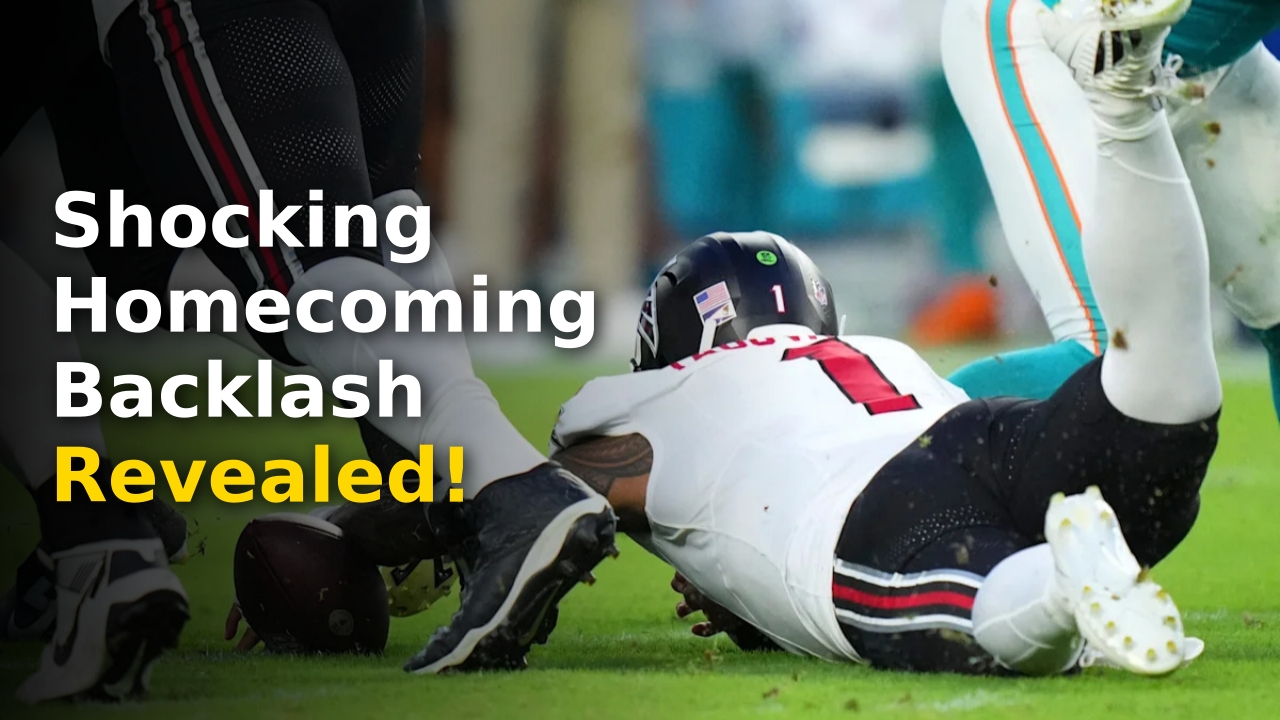
However, the crowd finally got the signature moment they were desperately waiting for on the second drive of the game. A miscommunication under center led to a botched snap with Corey Levin, sending the football bouncing across the turf. Miami defender Willie Gay pounced on the loose ball, sending the stadium into an absolute frenzy of cheers. It was a hauntingly familiar sight for local fans who remembered similar critical mistakes during his final months in a Dolphins uniform.
Reflecting on the play afterward, the veteran took full responsibility for the error while defending his preparation. He admitted he should have spent more time taking sideline snaps with his backup center before entering the game. Still, he could not resist taking a playful swipe at his detractors, suggesting that playing quarterback is far harder than it looks to someone sitting on a couch eating potato chips. This blend of accountability and subtle defiance has always defined his relationship with the media.
Analyzing Tua Return Financial Fallout
To understand the economics of the Tua Return, we must look at the unprecedented financial carnage left in his wake. Just 16 months prior to this preseason matchup, the Dolphins signed him to a staggering $167.1 million guaranteed contract extension. That deal, orchestrated by former general manager Chris Grier, was intended to lock down the position for the next half-decade. Instead, it became an anchor that dragged down the franchise’s entire salary cap structure.
The financial fallout of the Tua Return will echo through the halls of Miami’s front office for years. When the current regime of coach Jeff Hafley and general manager Jon-Eric Sullivan decided to move on, they were forced to absorb an NFL-record dead cap hit of $99.2 million. This massive sum is spread over the 2026 and 2027 seasons, meaning he will be the highest-paid player on the team’s books without throwing a single pass for them. It represents one of the most expensive contract terminations in professional sports history.
No other quarterback homecoming has carried the fiscal weight of this Tua Return to Hard Rock Stadium. While the Dolphins suffer through cap constraints, the Falcons are enjoying a high-reward, low-risk experiment. Atlanta secured his services on a one-year veteran minimum deal worth just $1.3 million. This vast discrepancy in value illustrates the volatile nature of NFL contracts and the premium placed on quarterback play.
By The Numbers: The contrast between his past earnings and current output is staggering. In Miami, his massive contract restricted the front office from signing top-tier defensive talent, ultimately leading to his benching after a slide in performance. In Atlanta, he operates with zero financial pressure, allowing coach Kevin Stefanski to deploy him as a tactical weapon. If he thrives, the Falcons will have secured a starting-caliber quarterback for pennies on the dollar, while Miami continues to foot the bill.
| Metric / Year | 2024 (Miami Dolphins) | 2025 (Miami Dolphins) | 2026 (Dead Cap Hit) | 2027 (Dead Cap Hit) |
|---|---|---|---|---|
| Guaranteed Contract Value | $167.1 Million | Benched / Released | $49.6 Million (Est) | $49.6 Million (Est) |
| Active Roster Salary | Starter Pay | $1.3 Million (Falcons) | $0 (With Dolphins) | $0 (With Dolphins) |
| Passer Rating / QBR | 98.2 Rating | 116.1 QBR (Preseason) | N/A | N/A |
This imbalance of cap distribution highlights why fans feel so much resentment toward their former leader. Every missed throw or botched snap is viewed through the lens of that remaining $99.2 million dead cap charge. When fans look at the current roster’s depth issues, they directly correlate those weaknesses with the bloated contract given to their former quarterback. The Tua Return served as a physical reminder of the financial handcuffs currently locking down the Dolphins’ rebuilding plans.
Anatomy of a Bitter Franchise Divorce

Leading up to the Tua Return, local sports radio was dominated by retrospective analyses of where things went wrong. The relationship began with the famous ‘Tank for Tua’ campaign, a multi-year organizational strategy designed to land the Alabama star. He was supposed to be the direct heir to Dan Marino’s throne, carrying the weight of a historic franchise on his shoulders. Instead, his tenure was plagued by devastating head injuries, inconsistent play, and constant coaching changes.
The roots of the hostile Tua Return trace back to the infamous 2024 season, where cracks in his relationship with both fans and teammates began to show. Following a painful one-point loss to the Arizona Cardinals, he publicly criticized center Aaron Brewer for a bad shotgun snap that resulted in a safety. He then turned his frustration toward the local fanbase, making comments that alienated the very people who had supported him through his physical rehabilitation. That moment marked the beginning of a rapid downward spiral.
Many analysts predicted the Tua Return would be a disaster because of how things ended in the winter of 2025. After struggling to meet expectations and failing to execute the offensive game plan, the coaching staff made the bold decision to bench him with three games left in the season. That benching was the final nail in the coffin, signaling to the league that Miami no longer believed in his long-term viability. The transition to the Jeff Hafley era cemented his departure, paving the way for his release.
Expert Take: Renowned sports psychologists and NFL insiders suggest that the fan hostility we witnessed is a classic case of projection. Fans are not just angry at the player; they are angry at the entire draft-and-develop process that failed to yield a championship. By channeling their frustration into loud boos, the crowd was attempting to rewrite the narrative of a lost era. For more insights on how high-profile sports contracts affect athlete branding and fan loyalty, you can explore detailed profiles on BrightCelebrity.
Despite the lingering bitterness, the quarterback showed immense maturity when discussing his former coaches and front office executives. He praised Jeff Hafley and Jon-Eric Sullivan for how they managed his release, calling their communication highly professional. He admitted that he had not played up to his personal standards during his final year, demonstrating a level of self-awareness that is rare among modern elite athletes. This diplomatic stance did little to calm the fans, but it preserved his professional reputation across the league.
A Crucial New Horizon in Atlanta
For the Falcons, the Tua Return was more than just an emotional narrative; it was a vital test of their offensive depth chart. He was thrust into the starting lineup after projected starter Michael Penix Jr. suffered a tragic torn ACL in Week 11 of the previous season. While Penix has made rapid progress and was recently cleared for full contact, the coaching staff wanted to see how the veteran would handle a high-pressure, hostile environment. The experiment yielded highly encouraging data for the Atlanta coaching staff.
If the Tua Return proved anything, it is that he still possesses the pinpoint accuracy needed to run a modern West Coast offense. After his initial misstep with the fumbled snap, he rebounded beautifully by completing consecutive passes to move the chains. His ability to find target Brian Robinson out of the backfield showed great pocket awareness under duress. His final passer rating of 116.1 was superior to almost every game he played during his final year in Miami, indicating a system that suits his strengths.
Coach Stefanski noted that the Tua Return allowed the team to evaluate how their quarterback operates under extreme psychological pressure. Navigating a hostile stadium where every mistake is cheered like a touchdown is the ultimate test of mental toughness. By remaining focused and driving the ball downfield, he proved he can be a reliable bridge quarterback or even a long-term starter if Penix’s recovery faces any setbacks. This performance has quieted local Atlanta critics who believed he was losing his roster spot during training camp.
As the preseason winds down, the battle for the starting job in Atlanta will intensify. With Penix fully cleared for 11-on-11 drills, the coaching staff faces a fascinating dilemma. Do they trust the expensive rookie with the future of the franchise, or do they lean on the battle-tested veteran who has seen it all? Regardless of their choice, having two competent quarterbacks is a luxury that few teams in the league can boast. The lessons learned during this hostile preseason game will undoubtedly shape their offensive strategy heading into Week 1.
Frequently Asked Questions
Why did fans boo during the Tua Return?
The primary reason for the hostile crowd during the Tua Return was the lingering resentment over his massive contract and subsequent release. Fans felt let down by his inconsistent performance, late-season benching, and comments criticizing the fanbase during his final years in Miami.
What was the financial impact of the Tua Return on Miami?
The financial impact of the Tua Return includes a historic $99.2 million dead cap hit spread over two years for the Dolphins. This record-breaking sum makes him the highest-paid player on Miami’s salary books for 2026 and 2027, despite playing for the Falcons.
How did he perform during the preseason game?
During the matchup, he completed 7-of-8 passes for 95 yards, leading the offense on a touchdown drive. However, he also fumbled a snap that was recovered by Miami’s Willie Gay, giving the home crowd a moment of celebration.
Who is the current head coach of the Miami Dolphins?
The Dolphins are currently coached by Jeff Hafley, who along with GM Jon-Eric Sullivan, made the decision to release the veteran quarterback and pivot toward a new franchise direction.
The Unforgiving Legacy of a Savior
Ultimately, the Tua Return will be remembered as a bittersweet milestone in modern sports history. It highlighted the brutal reality of the NFL, where yesterday’s hero can easily become today’s scapegoat. He remains the face of two distinct eras in Miami: the hope-filled rebuild that started with his draft selection, and the salary-cap purging rebuild that began with his departure. His legacy in South Florida is permanently cemented as a fascinating tale of what could have been.
As he continues his journey with the Falcons, he has the rare opportunity to rewrite his career narrative. By focusing on his health, refining his mechanics under Stefanski, and ignoring the noise, he could easily guide Atlanta back to postseason relevance. The boos he endured at Hard Rock Stadium may have been loud, but they also served as the ultimate motivation for a player looking to prove his doubters wrong.
For the Dolphins, moving past this era will require finding stability at the quarterback position without the benefit of cap flexibility. They must draft wisely and construct a competitive roster around their financial limitations. Only time will tell if releasing their former leader was a masterclass in roster management or a catastrophic mistake that will set the franchise back another decade.
In the grand theater of professional football, the Tua Return proved that emotion still drives the fan experience. Whether loved or hated, he remains one of the most compelling figures in the sport. As the season kicks off, both franchises will move forward, forever linked by a massive contract, a chorus of loud boos, and a rainy Friday night in Miami. For comprehensive team overviews, analysis, and breaking stories, keep your eyes on ESPN as the season unfolds.
More Like This
For more updates, check out our latest entertainment and sports news.