{
“title”: “Golf History: 7 Epic Secrets From The Shocking 1926 Championship Match”,
“content”: “
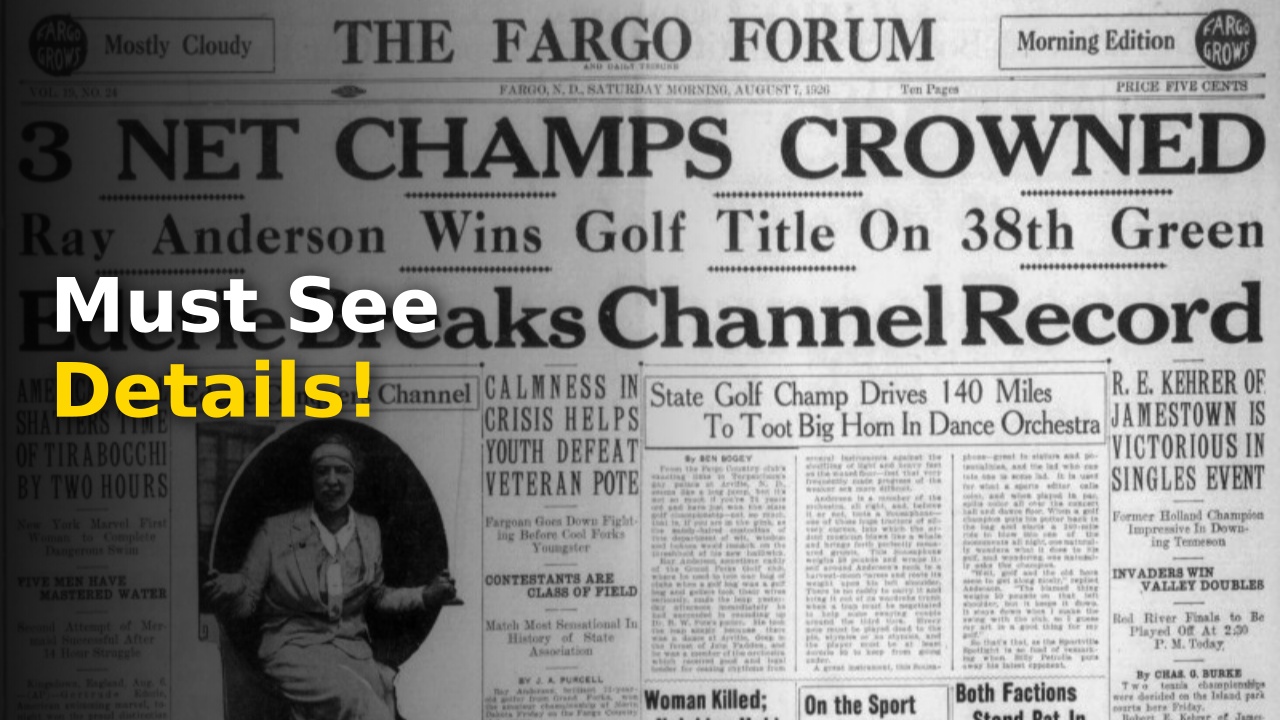
Can you imagine standing under a blistering summer sun for 38 agonizing holes of championship athletic pressure? Few moments in Golf History match the raw drama that unfolded on August 1926 at the prestigious Fargo Country Club. Two titans of North Dakota sports clashed in a spectacular showdown that tested grit, composure, and raw physical endurance.
21-year-old Ray Anderson of Grand Forks faced off against local favorite R. W. Pote of Fargo in the state amateur final. What was originally scheduled as a standard 36-hole championship duel quickly transformed into a heart-pounding extra-hole sudden-death thriller. The sheer level of resilience demonstrated by both players captivated sports fans across the entire region.
Here is the untold story of how a cool-headed underdog delivered clutch shots under intense heat to claim one of the most legendary state golf titles ever recorded in athletic history.
Epic Golf History Unfolds In 1926
The year 1926 was a golden era for American athletics, marked by iconic sporting legends and rapidly growing public fandom. Golf was sweeping across the nation, transitioning from an exclusive elite pastime into a intensely competitive individual sport. The state amateur championship in North Dakota served as the ultimate pinnacle of regional athletic achievement.
The environmental conditions at Fargo Country Club on that summer day were punishingly harsh for both competitors. A fierce Prairie wind whipped across the fairways throughout the entire afternoon session, disrupting drives and iron play. The extreme heat tested the physical stamina of both competitors to their absolute physical limits over hours of continuous play.
Despite these severe elements, hundreds of passionate local fans followed every single stroke along the gallery lines. Local sports reporters and regional news wires monitored the scorecard updates with breathless anticipation. Everyone in attendance recognized that this historic battle was destined for the record books.
Golf equipment back in 1926 presented massive tactical challenges that modern professional players rarely encounter today. Drivers featured heavy hickory wood shafts that demanded immaculate swing tempo and exact strike alignment. Greens were fast, hand-manicured, and completely unforgiving to miscalculated putting lines or subtle green breaks.
Navigating strong wind gusts required surgical precision with forged iron clubs rather than modern high-launch technology. Players could not rely on engineered aerodynamic golf balls or ultra-lightweight graphite shafts. Every single stroke demanded pure mechanical skill, creative shot-shaping, and sharp spatial awareness.
Both players entered the final match possessing vastly different strategic styles and personal backgrounds. Ray Anderson arrived with an unshakeable composure that belied his youthful 21 years of age. R. W. Pote possessed seasoned veteran composure, backed by overwhelming hometown support from the local Fargo crowd.
The Thrilling Hole By Hole Showdown
The opening morning round saw both athletes execute top-tier shots across the challenging front nine layout. Ray Anderson established early rhythm by shooting a solid front nine score of 40 strokes. Meanwhile, R. W. Pote displayed mechanical consistency, firing dual scores of 39 for an impressive total of 78.
R. W. Pote controlled early momentum by recording seven smooth pars across the upper nine holes. His drives hit narrow fairway landing zones consistently, placing continuous pressure on his younger competitor. However, the resilient challenger from Grand Forks remained completely unphased by the early scoreboard deficit.
The defining moment of the morning round occurred unexpectedly on the demanding 13th hole. R. W. Pote hit two textbook shots to secure a comfortable par four on the scorecard. Ray Anderson mishit his second shot, pushing his golf ball 35 yards left of the green into deep rough behind a sand trap.
Key Highlights From Morning Play
- 13th Hole Miracle Pitch: Anderson pitched over a bunker, hit the flagstick directly, and dropped the ball for a birdie three.
- Pote Precision Play: Pote recorded seven solid pars on the front nine to keep tight pressure on the leader.
- Harsh Prairie Winds: Gusts over 25 mph forced constant strategic club changes and low trajectory knock-down shots.
- Morning Leaderboard Advantage: Anderson completed the back nine in 37 strokes to take a slim one-up lead at lunch.

When the afternoon 18 holes commenced, the psychological stakes escalated dramatically with every single swing. R. W. Pote mounted a fierce late-game comeback as the sun began to dip on the horizon. Trailing by two holes with only two remaining, the veteran faced imminent elimination on the 34th hole.
Showing incredible competitive heart, R. W. Pote won both the 35th and 36th holes back-to-back to force extra holes. The cheering spectators surged forward as the dramatic contest entered sudden-death extra holes. Both contenders matched brilliant par scores on the high-stress 37th hole.
That set the stage for the historic 38th hole, where an unexpected stroke of fate decided the state crown. R. W. Pote unexpectedly hooked his tee shot into thick rough guarding the left side of the fairway. Ray Anderson remained perfectly relaxed, launching a flawless tee shot squarely onto the putting surface.
Shocking Battle Statistical Matchup Breakdown
Analyzing the numerical performance data reveals just how remarkably close this 1926 title match truly was. Both athletes played at an elite level through grueling heat and fierce physical exhaustion.
| Match Category | Ray Anderson (Grand Forks) | R. W. Pote (Fargo) |
|---|---|---|
| First 18 Score | 77 (Out 40, In 37) | 78 (Out 39, In 39) |
| 13th Hole Result | Birdie 3 (Pitch-In from Rough) | Par 4 (Standard Play) |
| Late Game Comeback | Surrendered 2-Hole Lead | Won 35th & 36th Holes |
| 38th Hole Drive | Center Green Tee Shot | Hooked Left into Rough |
| Championship Result | State Champion | Runner-Up Finalist |

The statistical balance between both players underscores the razor-thin margin separating victory from defeat. Neither golfer allowed their opponent to build a commanding lead throughout the entire 38-hole battle. It was a true war of attrition settled by a single missed drive in extra holes.
Walking nearly 10 miles across sun-baked terrain while swinging hickory-shafted clubs required supreme athletic conditioning. Modern golf championships utilize electric golf carts and specialized support staff. In 1926, players carried their own mental fortitude through every single step of competition.
When R. W. Pote pulled his tee shot on the final hole, it shocked the gallery. He had driven the ball with robotic consistency for nearly seven straight hours of play. That momentary error handed Ray Anderson the decisive opening he needed to claim victory.
The young star capitalized instantly without a single moment of hesitation or self-doubt. He calmly positioned his ball on the green surface, forcing his opponent into a high-risk recovery shot. When Pote’s chip rolled past the cup, Anderson sank his short putt to officially clinch the state championship.
The emotional sportsmanship shared immediately after the final putt earned universal acclaim from news outlets nationwide. Both competitors warmly embraced beside the hole, demonstrating immense dignity and mutual athletic respect. Their display epitomized the noble spirit of early 20th-century amateur competition.
Young Prodigy Against Seasoned Legend
The personal dynamic between these two golfers created a compelling narrative that captured regional headline news. Ray Anderson represented the rising generation of energetic Midwest athletes coming of age in the 1920s. His ice-cold mental poise under pressure earned him immense respect from older peers.
R. W. Pote stood as an established sports icon within the Fargo athletic community. His technical accuracy and strategic course management made him the heavy favorite among local golf bettors. He approached every match with tactical discipline and absolute composure.
The clash between youthful talent and veteran experience produced unforgettable tactical drama across every hole. Fans debated whether youth endurance would outlast veteran tactical wisdom in a long marathon. The final outcome proved that composure during pressure moments transcends age or competitive tenure.

As match reports spread across regional newspapers, commentators praised both competitors for their sportsmanship. Historical archives note that Pote earned as much applause in defeat as the young champion received in victory. Handling heartbreaking defeat with class remains the true mark of great athletic character.
Sports fans intrigued by iconic moments in sports entertainment can explore exclusive sports history features covering legendary athletic achievements. Early sports coverage laid the essential groundwork for modern sports entertainment broadcasting today.
Understanding how competitive rules and equipment evolved provides valuable historical perspective on early tournament play. Readers can study detailed information regarding historical golf evolution through extensive digital sports reference libraries online.
The thrilling match also intensified the competitive athletic rivalry between Grand Forks and Fargo. Regional bragging rights were deeply tied to state amateur tournament victories during this decade. The thrilling win gave Grand Forks sports fans a legendary victory to celebrate for years to come.
The Lasting Golf History Legacy
This remarkable 1926 championship match remains permanently immortalized in Golf History as an unbelievable feat of mental toughness. Winning a punishing 38-hole endurance duel required far more than simple mechanical skill with a golf club. It required extraordinary psychological strength, unwavering composure, and relentless tactical execution under pressure.

North Dakota Golf Association executives frequently referenced this match as the ultimate gold standard of competitive play. The duel established an inspiring precedent for future state amateur tournaments for decades to come. Modern sports analysts still cite the contest when studying historical sudden-death match play dynamics.
The spectacular pitch-in birdie on the 13th hole instantly entered local sports mythology as a legendary shot. Club members at Fargo Country Club attempted to recreate the miraculous trick shot for decades afterward. Very few could ever match the perfect speed and luck required to strike the flagstick directly from deep rough.
The historic match also accelerated the rapid growth of golf participation throughout Midwestern communities during the 1920s. Public courses began opening rapidly, allowing young athletic talent to learn the game affordably. Ray Anderson’s victory inspired hundreds of teenagers to take up competitive golf across the region.
Both players maintained lifelong dedications to supporting youth sports development programs in their home communities. They coached junior players, hosted exhibition matches, and promoted competitive integrity throughout their adult lives. Their enduring legacy extends far beyond a single championship trophy in a display case.
Whenever historians compile records of classic 1920s athletic rivalries, this 38-hole classic stands out brightly. It represents the pure passion, athletic integrity, and timeless drama that makes sport so captivating across generations.
Final Legendary Lessons From 1926
What enduring lessons can modern sports enthusiasts take away from this epic 1926 title match? Mental resilience is undeniably the single most critical asset an athlete can possess under pressure. Ray Anderson lost his late lead, weathered a furious comeback, yet maintained sharp focus when it mattered most.
Likewise, R. W. Pote demonstrated how to fight back relentlessly when facing seemingly impossible odds. Down two holes with two left to play, he refused to give up, pushing his rival into extreme sudden-death play.
Whether you follow modern tournaments or classic sports stories, this iconic match highlights why athletic rivalries endure. True champions are revealed not just by winning trophies, but by how courageously they perform when everything is on the line.
As we analyze this extraordinary milestone in Golf History, the 38-hole battle between Ray Anderson and R. W. Pote serves as a timeless reminder of human courage, grace under pressure, and pure sportsmanship.
“,
“parent_category”: “Sports”,
“sub_categories”: [
“Golf”,
“Sports History”,
“1920s Culture”
],
“focus_keyword”: “Golf History”,
“slug”: “golf-history-1926-north-dakota-amateur-championship”,
“tags”: [
“Golf History 2026”,
“Ray Anderson Grand Forks”,
“R W Pote Fargo Golf”,
“1926 North Dakota Amateur Golf Championship”,
“Fargo Country Club History”,
“38 Hole Golf Match Record”,
“North Dakota Golf Association Legacy”,
“Historic Golf Matches 1920s”,
“Grand Forks Sports Classics”,
“Fargo Sports History”,
“Hickory Shaft Golf Records”,
“Vintage Golf Championships”,
“Great Midwest Golf Rivalries”,
“Classic Sudden Death Golf Matches”,
“Amateur Golf Champions 1926”
],
“seo_description”: “Golf History was made in 1926 when Ray Anderson defeated R.W. Pote in an extraordinary 38-hole thriller at the North Dakota amateur golf championship.”,
“thumbnail_text”: “Shocking 38-Hole Historic Duel!”,
“body_image_alt_tags”: [
“Ray Anderson classic golf swing 1926 championship golf history”,
“Fargo Country Club golf course historic 1926 golf history match”,
“Ray Anderson and RW Pote historic hand shake golf history”,
“North Dakota state amateur trophy historic golf history display”
]
}
More Like This
For more updates, check out our latest entertainment and sports news.