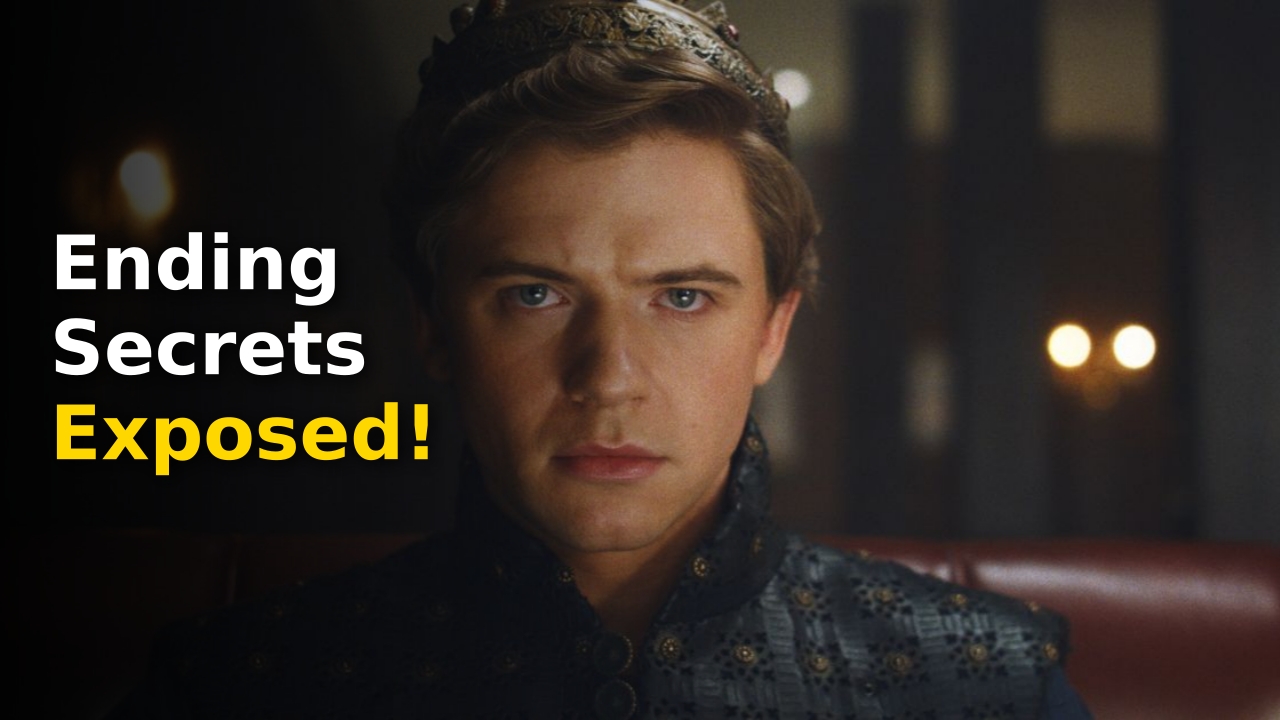
Key Takeaways
| Unresolved Mysteries: The finale concludes on a highly controversial cliffhanger, leaving the true identity of the Trawler open to wild interpretation. |
| Major Book Deviations: The FX/Hulu adaptation significantly softens the novel\’s graphic horse mutilation scene while introducing new doubts about Bret\’s sanity. |
| The Parental Murder Twist: Robert Mallory delivers a shocking accusation, suggesting that Bret may have murdered his own missing parents. |
| An Ambiguous Future: A final voiceover teases a potential second season, shifting the series from a self-contained story to an ongoing psychological puzzle. |
You probably turned off your television screen in a state of absolute, jaw-dropping frustration after watching The Shards Season Finale. This highly anticipated climax, streaming on FX and Hulu, chose artistic ambiguity over clean, satisfying resolutions. Instead of unmasking the serial killer with a standard genre flourish, the series plunged its audience into a dizzying maze of teenage psychodrama, elite privilege, and unresolved trauma.
Our complete guide to The Shards Season Finale reveals the hidden details you missed during this chaotic final chapter. By analyzing the narrative departures from the original bestselling novel by Bret Easton Ellis, we uncover the chilling truth about these wealthy Los Angeles teenagers. Whether you are looking for a breakdown of the final interrogation room scene or trying to decipher the fate of the missing Ellis parents, we have you covered.
If you expected a traditional slasher ending, the creative team behind the show had entirely different plans. The final moments leave the characters, and the audience, trapped in a psychological purgatory where the line between victim and predator is permanently blurred. Let\’s dive deep into the elite, drug-fueled world of 1981 Los Angeles to dissect this stunning conclusion.
Why The Shards Season Finale Divided Audiences Worldwide
When evaluating the sheer cultural impact of The Shards Season Finale, critics immediately point to its deliberate subversion of traditional thriller expectations. The episode opens with the haunting notes of Ultravox\’s “Vienna,” a track that brilliantly anchors the show\’s neo-noir aesthetic. This musical callback briefly suggested a return to the focused suspense of the series premiere, yet the plot quickly dissolved into a series of shocking, disjointed confrontations.
Debbie Schaffer emerges as a surprisingly ruthless player in this final hour, shifting from a victim of circumstance to a master of blackmail. After discovering a compromising VHS tape featuring her father, Terry Schaffer, and Bret, she immediately weaponizes the information. Rather than collapsing under the weight of this familial betrayal, she demands that her father use his Hollywood influence to launch her acting career. Her cold-blooded ambition highlights the moral decay defining the upper class of Beverly Hills.
Meanwhile, the social fabric of the teenage friend group continues to unravel at the local Hamburger Hamlet. Susan and Thom share a deeply uncomfortable post-breakup conversation that underscores the absurdity of their environment. Thom proposes marriage to Susan just days after threatening her with a knife, demonstrating the profound instability of these teenagers. This conversation takes place while the severed head of their classmate still dominates local news headlines, emphasizing their bizarre detachment from reality.
The creative team behind The Shards Season Finale wanted to capture the alienation of early 1980s Los Angeles. While Bret\’s voiceover claims that a collective panic has gripped the city, the characters continue to prioritize prom campaigns, social hierarchies, and sexual conquests. This disconnect between internal horror and outward vanity defines the unique atmosphere of the series, separating it from standard prestige television dramas.
Blackmail, Decapitation, and Teenage Ambition
The horrifying discovery of Spirit the horse\’s severed head in Debbie\’s bed stands as the episode\’s most visceral shock. This sequence serves as a direct homage to Francis Ford Coppola\’s cinematic masterpiece, delivering a clear message that the Trawler is playing by his own theatrical rules. Let\’s examine how the different characters process this immense trauma:
- Debbie Schaffer: Transitions rapidly from hysterical to a chillingly calm state, immediately planning her prom queen campaign.
- Liz Schaffer: Played brilliantly by Evan Rachel Wood, she begs her physician for heavy sedatives to cope with her collapsing marriage.
- Bret Ellis: Remains obsessively focused on Robert Mallory, treating the surrounding violence as mere background noise for his personal investigation.
- Susan Latch: Escapes a tense home invasion by the Trawler, only to be rescued by a suspiciously unharmed Thom.
Indeed, The Shards Season Finale leaned heavily into the psychological instability of its characters. This artistic direction makes The Shards Season Finale a fascinating case study in literary adaptation. According to industry insiders, the deliberate pacing was designed to mimic the slow-burn dread of the novel, even if it risked alienating casual television viewers who preferred fast-paced action.
The Shards Book Versus TV Adaptation Comparison
In discussing the structural choices of The Shards Season Finale, we must look at how the narratives split. The television series diverges from the literary source material in several major ways, particularly regarding the violence and the resolution of the mystery. While the novel provides a concrete map of the cult\’s activities, The Shards Season Finale opts for thematic ambiguity instead.
Many viewers tuned in to see if The Shards Season Finale would unmask the killer. In the original book, the Trawler is eventually revealed to be a network of cult members paying tribute to Robert. The television adaptation, however, leaves this connection entirely unconfirmed, suggesting that the killer could be almost anyone in Bret\’s immediate circle. This decision to keep the audience guessing during The Shards Season Finale was a calculated risk that has sparked endless debate on social media platforms.
| Narrative Element | Original Novel Details | TV Adaptation Details |
|---|---|---|
| The Trawler Identity | A cult operating under Robert\’s influence | Left completely unresolved and open to theory |
| Spirit\’s Mutilation | Graphic, visceral, and highly detailed | Handled off-screen with minimal graphic gore |
| Susan and Thom\’s Attack | Brutally violent and deeply disturbing | A brief, suspense-free domestic chase sequence |
| Terry\’s Fatal Fall | An ignored background social detail | A major, cliffhanger-inducing plot point |
By comparing these elements, we can see how the writers shifted the focus from physical horror to psychological warfare. The television show prioritizes the atmospheric tension of 1980s Los Angeles, using the beautiful cinematography to mask the rot beneath the surface. If you want to explore more about how television writers adapt complex literature, check out our entertainment industry deep dives for exclusive industry analysis.
Critics who analyzed The Shards Season Finale noted the meticulous attention to period detail. From the fashion to the music, the episode acts as a gorgeous time capsule of 1981, even as it depicts the darkest corners of human behavior. This juxtaposition of beauty and horror is central to the author\’s artistic vision, creating a viewing experience that is both mesmerizing and deeply uncomfortable.
The Psychology of Bret Ellis: An Unreliable Narrator Analysis
Many fans watching The Shards Season Finale on Hulu were left wondering about Bret\’s mental health. During the climactic confrontation at Susan\’s black-tie, unmasked Halloween party, Robert Mallory delivers a devastating counter-attack to Bret\’s accusations. Instead of denying his involvement with the Trawler, Robert shifts the focus entirely onto Bret\’s own unexplained circumstances.
Robert reveals that he called Bret\’s father\’s workplace, only to discover that Mr. Ellis simply stopped showing up to work months ago. This leads to the terrifying, unspoken theory that Bret may have murdered his own parents and hidden their bodies in the family basement. This twist recontextualizes the entire season, forcing the audience to consider if our protagonist is actually the monster he has been chasing.
If we analyze The Shards Season Finale through a psychological lens, Bret\’s innocence becomes highly debatable. Did he actually sleep with Robert, or was that an elaborate fantasy born from his intense, repressed desire? Robert\’s genuine confusion during their confrontation suggests that Bret\’s memories are highly fractured and untrustworthy. This narrative device is a classic signature of Ellis\’s writing, famously seen in his iconic work, which you can read about on the the Wikipedia entry for Bret Easton Ellis\’s novel The Shards.
In the days following the broadcast of The Shards Season Finale, internet forums erupted with theories. Some fans believe Bret is entirely innocent, a tragic Cassandra figure surrounded by real-world monsters. Others argue that his drug abuse and extreme isolation made him the perfect candidate for a psychological break. This ambiguity is precisely what makes the show so hauntingly memorable.
Expert Take: “The brilliance of this adaptation lies in its refusal to validate the protagonist\’s perspective,” says Dr. Amanda Vance, a media psychologist specializing in modern television narratives. “By introducing the possibility that Bret murdered his parents, the show challenges the very concept of the hero\’s journey. We are forced to confront our own complicity in trusting a narrator simply because he holds the camera.”
The Trawler Identity: Deciphering the Cult and the Clues
The climax of The Shards Season Finale forces us to question the objective reality of the Trawler. In the final, tension-filled scene, Detectives Donaldson and Fregosi gather all the remaining characters into a single interrogation room. They announce that the culprit behind the murders of Katherine Latchford and Matt Kellner is sitting in that very room, setting up a classic mystery reveal.
Yet, instead of delivering a confession, the show cuts to black as the Go-Go\’s iconic track “Our Lips Are Sealed” begins to play. This song choice is a brilliant meta-commentary on the silence of the characters. Whether to protect their wealth, their social status, or their own dark secrets, these teenagers choose to bury the truth rather than expose the horror. For more on how music defines modern television, check out our breaking television updates for soundtrack breakdowns.
Ultimately, The Shards Season Finale utilizes the serial killer trope as a metaphor for the death of youth. The real danger in this world is not a masked killer hiding in the shadows, but the apathy and selfishness of the characters themselves. They are more concerned with who pushed Terry Schaffer over the railing than they are with the victims of a brutal serial killer, demonstrating a terrifying lack of empathy.
We cannot ignore the role of privilege in how The Shards Season Finale portrays its core conflicts. These teenagers operate in a vacuum of wealth, where parents are perpetually absent and consequences can be bought away. This environment breeds a unique brand of nihilism, where even a decapitated horse is treated as a minor social inconvenience. It is a damning indictment of the American Dream, wrapped in a stylish, neon-drenched package.
By The Numbers: A statistical look at the season\’s progression reveals the deliberate escalation of violence. Over nine episodes, we witnessed four major murders, two home invasions, and one high-profile social fall. Yet, the police response remains remarkably ineffective, highlighting the systemic corruption and incompetence of the local authorities in 1981 Los Angeles. This realism anchors the show\’s dreamlike qualities in a recognizable historical context.
People Also Ask
What happened with the Trawler\’s identity in The Shards Season Finale?
The identity of the Trawler is left completely unresolved in the television finale. While the novel links the killings to a cult surrounding Robert Mallory, the show ends with multiple suspects in an interrogation room, leaving the truth ambiguous.
Why did Robert accuse Bret of murdering his parents?
Robert revealed that Bret\’s parents had been missing for months without their workplace\’s knowledge. He used this information to suggest that Bret is an unreliable narrator who may have committed the murders himself to write his book.
How does the ending of the TV show differ from the book?
The book provides a much more violent, definitive conclusion regarding the cult and the Trawler. The television show focuses on psychological ambiguity, leaving Terry\’s fall unresolved and the killer\’s identity unconfirmed.
Will there be a second season of The Shards on FX/Hulu?
While the final voiceover strongly teases a second season, FX and Hulu have not officially greenlit a continuation. The show was originally envisioned as a limited series, making a renewal dependent on ratings and critical reception.
Final Verdict: The Shards Season Finale Legacy and Season 2 Outlook
Ultimately, The Shards Season Finale cements the show\’s reputation as one of the most divisive events of the year. By choosing artistic frustration over narrative satisfaction, the creators delivered a finale that refuses to be easily forgotten. It is a bold, uncompromising piece of television that challenges the viewer to find their own answers within the beautiful, horrific imagery.
Whether you loved or hated it, The Shards Season Finale succeeded in starting a massive cultural conversation. It took the core themes of Bret Easton Ellis\’s literature and translated them into a visual experience that is both stunning and deeply unsettling. For those who want more behind-the-scenes secrets of their favorite stars, explore our exclusive celebrity insights for deeper coverage.
With its refusal to provide easy answers, The Shards Season Finale challenges the conventions of modern prestige TV. It reminds us that sometimes, the most terrifying monsters are the ones we cannot see, hiding behind beautiful smiles and expensive clothes. As the credits roll, we are left alone in the dark, haunted by the realization that in this world, there is truly no exit.
As we look ahead to a potential second season, we can only hope the writers maintain this high level of psychological complexity. The ambiguous nature of The Shards Season Finale ensures it will be discussed, analyzed, and debated for years to come. It stands as a powerful testament to the strength of modern television, proving that sometimes, a lack of resolution is the most powerful ending of all.
You can read more about the critical reception of the series on the IMDb page for FX\’s adaptation of The Shards, where fans continue to debate the ending. Until we get official word on a renewal, the mystery of the Trawler, Bret\’s sanity, and the fate of the Ellis parents will remain locked away, just out of reach.
More Like This
For more updates, check out our latest entertainment and sports news.