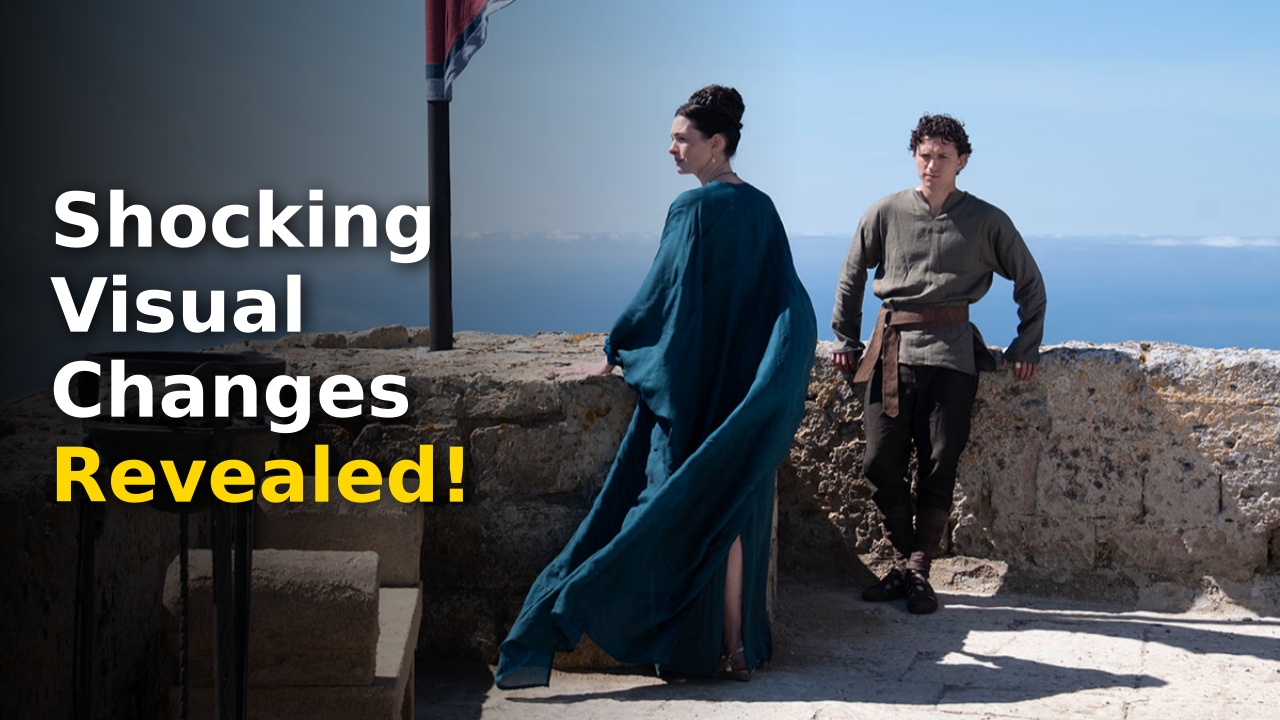
The Odyssey home video release is sparking intense debate as fans realize their screens might be missing a slice of Christopher Nolan‘s cinematic vision. You expect the full theatrical experience when you drop your hard-earned money on a premium disc release, but the news that the film will be locked at a 1.78:1 aspect ratio has sent ripples through the enthusiast community.
Why should you care about the shape of the image on your screen? Because for a visionary like Nolan, who painstakingly framed his shots for the towering majesty of IMAX, every inch of screen real estate is a deliberate creative choice that impacts how you perceive the story.
The Odyssey Aspect Ratio Controversy
When you hear that a movie was filmed entirely in IMAX, you likely imagine a visual feast that demands the largest canvas possible. The reality of home theater projection is often a compromise between what the director captured and what your living room hardware can actually display. By opting for a 1.78:1 ratio, the home video release effectively crops the top and bottom of the original 1.43:1 footage to fit the standard 16×9 shape of most modern televisions.
This technical decision is not new, but it feels particularly heavy for a production of this scale. When you watch a film, you are subconsciously reading the frame, and when the edges are trimmed, you lose the vertical scale that makes IMAX sequences feel so immersive. Many cinephiles argue that for a movie that breaks technical boundaries, the distributor has an obligation to preserve the director’s intent at any cost.
Critics of this decision point toward previous home video releases that handled switching ratios with varying degrees of success. When you look back at Batman v Superman: Dawn of Justice, the constant flickering between aspect ratios was criticized for being distracting. However, purists argue that even a jarring transition is preferable to a cropped image that diminishes the scale of the original photography.
Is the industry prioritizing convenience over artistic integrity? You might find it easier to fill your screen without black bars, but you are effectively ignoring a significant portion of the visual data. This trade-off is the central friction point for collectors who view their discs as archival quality artifacts rather than just casual viewing media.
Christopher Nolan has built his career on pushing the limits of the medium, utilizing analog film stock and massive IMAX cameras to achieve a level of detail that digital alternatives simply cannot replicate. By reducing these images to 1.78:1, the home video transfer is essentially filtering the raw power of the source material. It is a decision that favors mass-market compatibility over the boutique experience that Nolan fans have come to expect.

Technical Limitations and Expectations
- Standard HDTV displays are physically fixed at a 16×9 (1.78:1) resolution.
- The 1.43:1 IMAX ratio provides roughly 25% more image information vertically.
- Consumer demand for ‘full screen’ images has historically dictated home media cropping.
- Future-proofing physical media remains a top priority for serious movie collectors looking for high-fidelity content.
Ultimately, the discussion regarding The Odyssey highlights a growing divide between casual streamers and dedicated physical media enthusiasts. If you are interested in the deeper implications of this technology, you can find more analysis on major industry standards here. The upcoming October announcements will likely clarify whether alternate versions are planned or if this fixed ratio is the final word.
Data Analysis of Aspect Ratios
| Ratio | Common Usage | Immersive Quality |
|---|---|---|
| 1.43:1 | Native IMAX | Maximum |
| 1.78:1 | Standard HDTV | Moderate |
| 2.39:1 | Anamorphic Widescreen | Cinematic |
Analyzing this data reveals why the shift from 1.43:1 to 1.78:1 is so contentious. When you remove that vertical height, you lose the sense of scale that defines the IMAX experience. It is a loss of visual scale that changes how you interact with the environment presented on screen.
Furthermore, the economic implications of producing multiple masters for a single disc release cannot be ignored. Studios must balance the cost of authoring complex discs with the relatively small, though vocal, market share of purist cinephiles. Christopher Nolan has previously lobbied for high-quality standards, and his influence remains a massive factor in these negotiations.
As you wait for the November release, consider how your own display setup influences your enjoyment. A high-end OLED or a specialized projection system can mitigate some of these concerns, but the source material itself remains the master key. Your satisfaction with the final disc will likely depend on whether you value the fill-the-screen aesthetic or the historical preservation of the frame.

Deep Dive into Cinematic Vision
The history of film is essentially a history of changing aspect ratios. From the square frames of the silent era to the massive widescreen epics of the 1950s, filmmakers have always sought to manipulate the viewer’s gaze. By confining The Odyssey to a single ratio, the studio is choosing uniformity over flexibility.
Is this the end of the 1.43:1 dream for home theater? Probably not, but it certainly signals a shift toward simplified consumer experiences. Whether this is a positive move depends entirely on your stance as a viewer—do you want the smoothest experience possible, or the most authentic?
The Odyssey Future Outlook
As we move into the final months of the year, the conversation surrounding The Odyssey will only intensify. You should stay tuned for further updates regarding special editions or potential ‘Director’s Cut’ releases that might include the original IMAX aspect ratio. The dedication of Christopher Nolan to the physical format ensures that this conversation is far from finished.
Ultimately, the battle for the perfect aspect ratio is a battle for the soul of the cinema. When you choose to support physical media, you are making a statement about how films should be seen and preserved for posterity. The Odyssey might be the current flashpoint, but it represents a much larger struggle in the age of digital consolidation.
More Like This
For more updates, check out our latest entertainment and sports news.