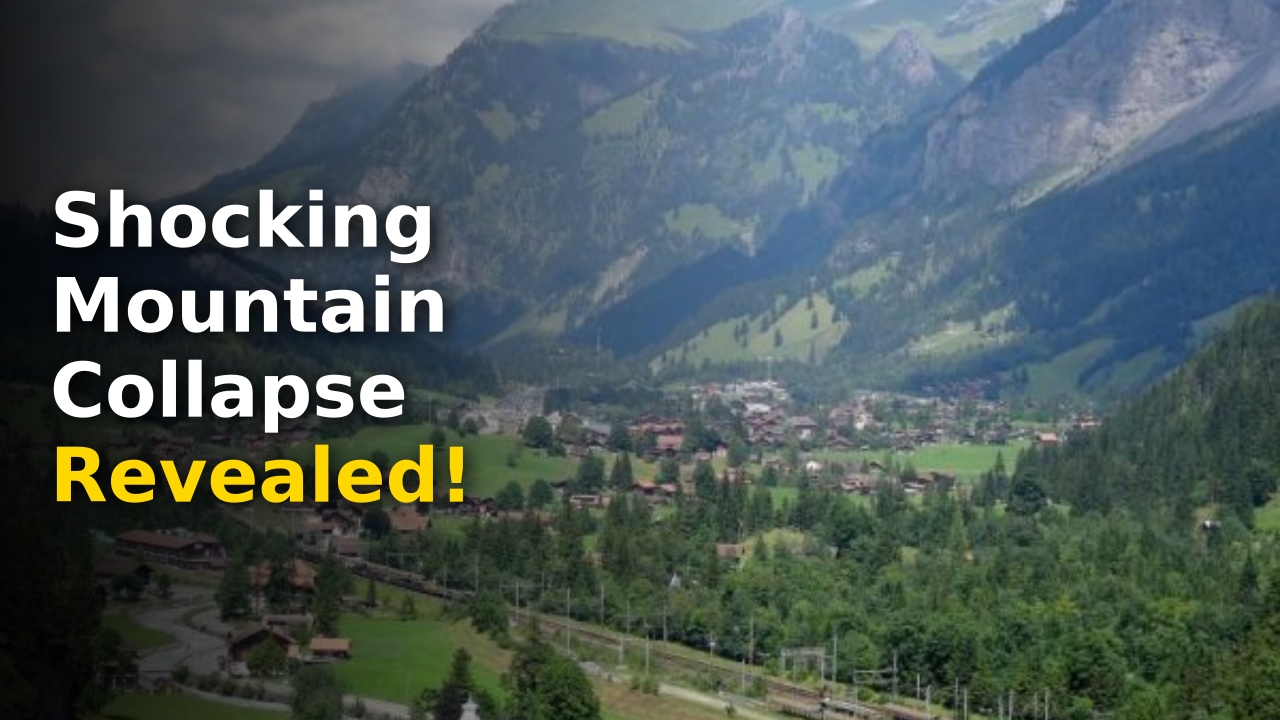
Thawing permafrost is silently reshaping the very foundations of the Swiss Alps, turning once-stable mountains into ticking time bombs for local residents. You likely consider the mountains to be permanent, timeless monoliths, yet current climate shifts are proving that the solid ground beneath your feet is anything but fixed.
As the ice that acts as a natural glue for massive rock formations melts, we are entering a terrifying new reality. When you look at the village of Kandersteg, you aren’t just seeing a postcard-perfect destination; you are witnessing a community holding its breath against a potential geological catastrophe.
Understanding Thawing Permafrost Dangers
The science behind this phenomenon is chillingly simple yet devastatingly effective at dismantling human infrastructure. At high altitudes, permafrost functions as the cement holding together porous mountain ridges and peaks. When global temperatures rise, this ice transitions into liquid water, effectively removing the structural integrity of entire cliffs. You should know that this isn’t a sudden, one-time event; it is a slow, creeping process of erosion that has been observed for years.
In the shadow of Spitze Stei, the residents of Kandersteg have lived with the persistent sound of tumbling boulders, a constant reminder that their home is literally falling apart. Unlike the Blatten disaster, where an entire village was destroyed by a singular, massive collapse, the situation here is a gradual death march for the landscape. Scientists are currently using advanced satellite imagery and ground-based sensors to track every millimeter of movement in the rock face above the village.
For you, the implications are profound, as it challenges how we define safety in the age of rapid climate change. The structural failure of these mountains isn’t just a local Swiss issue; it represents a global trend that threatens communities built on unstable, high-altitude terrain. Experts warn that the economic costs of retrofitting these areas are often astronomical, often exceeding the total value of the homes themselves. This creates a difficult cycle of investment, risk, and inevitable abandonment.

History provides us with a grim precedent for what happens when we ignore the warning signs of geological instability. When the village of Blatten was evacuated last year, it served as a wake-up call for the entire Alpine region. The loss of that community wasn’t just a statistic; it was the erasure of centuries of culture and heritage. You can see why local authorities are taking no chances with Kandersteg, implementing rigorous monitoring protocols that keep the residents on high alert.
The emotional toll of being told your family home is located in a “high-risk zone” is something few of us have to consider in our daily lives. Yet, for these Swiss residents, this is their mundane reality. They are navigating a complex web of insurance battles, government intervention, and the psychological weight of knowing their property value is tied to the stability of a melting mountain. It is a stark reminder of the fragile balance between human civilization and the raw, unyielding power of nature.
When you seek to understand the broader implications of these environmental shifts, it helps to look at the stories of people living through them. You can find more updates on how global climate shifts are impacting various regions by visiting luxury property climate risks to see how even the wealthiest enclaves are struggling to mitigate these geological threats. It is a fascinating, if sobering, look at how the world is preparing for a future defined by radical instability.
The Role of Monitoring
- Deployment of high-frequency seismic sensors to detect minute cracks.
- Utilizing GPS trackers to measure surface movement across the ridge.
- Implementation of early-warning siren systems for immediate evacuation.
- Routine drone inspections to map the structural integrity of the mountain.
- Public awareness campaigns to ensure villagers remain prepared for emergencies.
Economic Impacts and Data
| Category | Impact Level | Risk Factor |
|---|---|---|
| Infrastructure Cost | High | Asset Devaluation |
| Evacuation Costs | Extreme | Public Safety |
| Property Damage | High | Uninsurable Risk |
The financial burden facing these communities is staggering. According to reports from AP News, the transition from stable mountain architecture to high-risk zones has rendered many insurance policies void. You should understand that this isn’t just about the physical building, but the collapse of the local real estate market. When the ground underneath you is no longer a permanent asset, the economy of the entire region shifts toward survival rather than growth.
We see a trend where homeowners are forced to accept that their life’s work may be claimed by the mountain within the next decade. Governments are forced into a corner, having to choose between massive infrastructure projects like dams or reinforced retaining walls versus managed retreat. This process is expensive, controversial, and deeply emotional for residents. You might wonder if there is a solution, but the reality is often that the mountain will always win given enough time.
Insurance companies are pulling out of these regions at an unprecedented rate. This means that if a disaster occurs, homeowners are often left with nothing. This creates a vacuum of leadership, where local towns are left to manage their own fate without the backing of federal or international funds. It is a modern tragedy playing out in slow motion against the backdrop of the beautiful Swiss Alps.
Investment in technology is the only shield against these mounting costs. Towns like Kandersteg are pioneers in using predictive AI to model rockfall patterns. While this doesn’t stop the mountain from moving, it provides the data necessary to buy residents time, which is the most precious commodity during an evacuation. You see here that data is not just about numbers; it is about survival.
The psychological profile of people living in these areas is also changing. There is a collective anxiety that permeates the culture. Every spring, as the temperature rises, the fear returns. It is a way of life that demands a high degree of resilience, yet it takes a toll on the mental health of the aging population who have lived there for generations. The idea of “home” is being redefined from a static location to a transient experience.
Government subsidies for relocation are becoming the standard conversation in parliamentary halls. The cost of moving a town is less than the cost of losing it, but the social cost of uprooting a culture is impossible to calculate. This conflict between economic logic and human experience is the defining story of the 21st century for these mountain villages. You can see why this issue is attracting so much attention from climate scientists and policymakers worldwide.
Future Outlook and Resilience
As we look toward the year 2026, the situation remains fluid. You should stay informed as technology evolves, providing us with better tools to predict these events before they result in tragedy. Resilience isn’t about stopping the thawing permafrost entirely, but about adapting to the changes it brings. This includes better urban planning, relocation assistance, and a shift in how we perceive the permanence of our natural world.
The resilience of the Swiss people is legendary. They have dealt with avalanches and floods for centuries, adapting their architecture and their habits to survive in a harsh environment. This current challenge is simply the next iteration of that historic struggle. By investing in science and maintaining a transparent dialogue, these communities hope to endure, even as their landscape shifts underneath them. For you, it serves as a lesson in preparation, adaptability, and the importance of scientific literacy.
In the final analysis, we are all living on a planet that is changing faster than our systems can account for. Whether it is the mountains of Switzerland or the coastlines of Florida, the instability of the earth is becoming a shared human experience. Our ability to face these realities directly, with the help of experts and technological innovation, will determine our success in the decades to come. Stay vigilant, stay curious, and continue to pay attention to the changing world around you.
More Like This
For more updates, check out our latest entertainment and sports news.